Puffy Paw Pads? It Might Be 'Pillow Foot'
Is your cat's paw looking puffy or 'mushy'? Discover the hidden condition that could be behind those swollen pads, and how to help your feline feel better fast.
Reviewed by Dr. Arielle Walton


Join the Bark & Whiskers™ Family
Sign up today for our FREE newsletter, packed with expert advice and insider tips to keep your beloved pet in tip-top shape.
View our Privacy Policy and Terms of Service.


STORY AT-A-GLANCE
- Pillow foot is a condition where a cat’s paw pads become soft, swollen, and “mushy” due to an overactive immune response
- The swelling often affects multiple paws at once and may cause color changes, cracks, ulcers, or limping as the condition progresses
- Immune triggers such as allergies, chronic inflammation, and viruses like feline immunodeficiency virus (FIV) or feline leukemia virus (FeLV). can contribute to the development of pillow foot
- Treatment depends on the severity of swelling and whether the pads are ulcerated. Conventional treatment methods include doxycycline (an antibiotic), steroids, and cyclosporine. However, take note that medications may cause side effects
- You can support your cat at home by keeping their paws clean, offering soft litter and surfaces, reducing stress, and monitoring for changes
Cats are known to be masters at hiding discomfort, which is why any sudden change in their paws can be surprising. One of those changes is a soft, swollen paw pad that looks more like a tiny pillow than a firm, springy footpad. This condition, often called “pillow foot,” is formally known as plasma cell pododermatitis. Even though it may look alarming, you can help your cat stay comfortable once you understand what causes it, how to recognize it, and what steps support healing.
Pillow foot can affect cats of any age, gender, or breed, and the swelling may appear on one paw or several at once. Some cats show almost no discomfort, while others limp or avoid walking. Knowing what to look for gives you the best chance of getting your cat the care they need as early as possible.
What Is Pillow Foot?
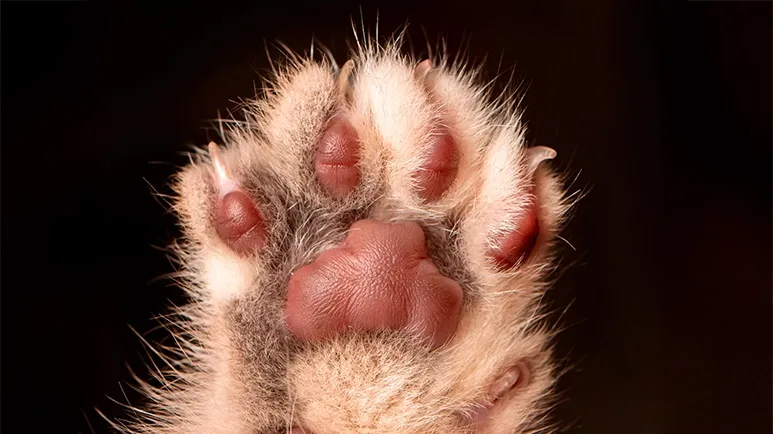
Pillow foot is a condition in which the paw pads become soft, swollen, and “mushy.” The pads often look or feel filled with fluid. The swelling occurs because plasma cells, a type of white blood cell involved in the immune response, accumulate in the paw pads rather than circulating through the body normally.
These cells produce antibodies and release them during infection or inflammation. When large numbers of plasma cells collect in the paw pads, the tissue becomes enlarged, inflamed, and sometimes discolored.1
The pads may develop a rounded, balloon-like shape and feel soft when pressed. Many cats show no pain during the early stages, but as the swelling increases or the skin begins to crack, discomfort becomes more noticeable.
In some cats, a single paw may be affected, although pillow foot often appears on several paws at the same time. The pads may shift in color, turning deep pink, purple, or even bluish. They may become smooth and shiny, or develop pale streaks or deep lines. As the condition progresses, the pads may ulcerate and bleed, leading to limping or sensitivity when walking.2
This unique combination of swelling, soft texture, and color change makes pillow foot distinct from other paw problems.
How Pillow Foot Develops
Even though pillow foot affects the paw pads, it begins within the immune system. Plasma cells are activated when the body encounters something that triggers inflammation or immune activity. This could include infection, irritation, allergies, or other immune challenges. Once activated, plasma cells rapidly produce antibodies.
In pillow foot, these plasma cells accumulate inside the paw pads, leading to swelling and thickening. The exact cause of this buildup isn’t completely understood, but several factors appear to play a role. Possible triggers include:3
- Immune system overactivity — The condition behaves like an immune-mediated response, meaning the immune system becomes unusually active in the paw pads.
- Viral infections — Some cats with pillow foot test positive for feline immunodeficiency virus (FIV) or feline leukemia virus (FeLV). Although the relationship isn’t fully understood, a significant number of affected cats are FIV-positive.
- Allergies — Food or environmental allergies may stimulate the immune system, contributing to inflammation and swelling. In some cats, dietary changes improve symptoms, suggesting that sensitivities or allergens may play a role.
- Chronic inflammation — Long-term irritation or inflammatory conditions may lead to the buildup of plasma cells.
- Environmental exposure — Outdoor cats may be more likely to develop pillow foot due to increased contact with allergens, irritants, and rough surfaces, as well as higher exposure to infectious agents.
Because several triggers may overlap, each cat’s case can be different. What remains consistent is how these triggers activate plasma cells and cause swelling in the paw pads.
Noticeable Symptoms of Pillow Foot
Cats often hide discomfort, so pillow foot can stay unnoticed until the paw pads become visibly swollen. Here are the signs you may observe:4
- Puffy, mushy paw pads — A classic sign is swelling that makes the paw pads look enlarged or inflated. They may appear rounder, fuller, or more bulbous than usual. The texture often feels soft or “mushy,” especially when pressed gently. Pads may also look smooth or stretched.
- Multiple feet affected — Pillow foot often affects more than one paw. While injuries or insect stings typically involve a single foot, pillow foot may appear on two, three, or all four paws. This pattern helps distinguish it from other conditions.
- Color changes — The paw pads may turn dark pink, purple, bluish, or have smooth white lines or streaks. Deep fissure lines may appear early on, even before cracking or bleeding. As swelling increases, the pad’s surface may appear shiny due to stretching.
- Limping or lameness — Your cat may walk stiffly, favor certain feet, hesitate to jump, or just move more slowly. Lameness becomes more common as the pads crack or ulcerate.
- Excessive paw licking — Cats may lick or chew the affected pads due to swelling, irritation, or discomfort.
- Cracks, ulcers, or bleeding — More advanced pillow foot may lead to open sores, cracked skin, scabs, bleeding, and areas that appear red and raw. Once ulcers form, discomfort increases significantly, and infection becomes more likely.
- Rare systemic signs — Some cats with severe immune involvement may also show symptoms such as swelling on the bridge of the nose, mouth inflammation, upper respiratory signs, and kidney-related issues linked to high antibody levels. These symptoms are uncommon but appear in some cats with widespread plasma cell activation.
Why Early Recognition Matters
Pillow foot is manageable when treated early. Over time, the continued buildup of plasma cells can cause deeper inflammation, painful cracking, and an increased risk of infection.
If left untreated, the inflammation and antibody levels may begin affecting other organs, including the kidneys. In rare cases, severe and untreated pillow foot can even become life-threatening.
Spotting swelling or color changes early gives your cat the best chance of quick improvement and prevents the condition from progressing into a painful stage.
How Veterinarians Diagnose Pillow Foot
Diagnosis usually begins with a physical exam. The distinctive swelling and texture changes often provide strong clues. Because the condition behaves like an immune reaction, lab tests help confirm what’s happening inside the body. Diagnostic steps often include:5,6
- Bloodwork — Cats with pillow foot may show elevated lymphocyte and globulin (antibody proteins) counts, as well as low platelet counts. These findings support the diagnosis and help rule out other causes of swelling.
- Viral testing — Testing for FIV and FeLV is common because of the possible link between these viruses and plasma cell activity.
- Needle aspirate or biopsy — A small sample may be taken from the swollen pad. An aspirate can show whether plasma cells are present in large numbers, confirming the diagnosis. A veterinarian recommends a biopsy when swelling appears unusual or when it is necessary to rule out tumors, eosinophilic granulomas, or bacterial or fungal infections.
Biopsy results help determine the exact cause of the swelling and guide appropriate treatment.
How to Treat Pillow Foot at Home
Treatment depends on the severity of swelling and whether the pads are ulcerated. Conventional treatment methods include doxycycline (an antibiotic), steroids, and cyclosporine. However, take note that medications may cause side effects.
Some cats with mild cases may not need treatment right away if symptoms are mild and no pain is present. Here are several simple ways you can support your cat’s comfort at home. These steps help protect sensitive pads and promote healing.7
- Keep paw pads clean — Gently wipe your cat’s paws with a soft, damp cloth to remove dust, litter, or debris. Clean pads are less likely to crack, bleed, or become infected.
- Choose soft, low-dust litter — Switch to a softer, dust-free litter to protect sensitive paws. Gritty or rough litter can irritate swollen pads and worsen discomfort.
- Reduce stress in the home — Stress affects the immune system. Provide quiet resting areas, predictable routines, and enrichment that reduces tension. Creating a calming environment can support healing.
- Support the immune system with good nutrition — High-quality foods rich in omega-3 fatty acids may help reduce inflammation naturally. Always talk to your veterinarian before making dietary changes, especially when you consider a food trial.
- Provide soft surfaces for walking and resting — Offer padded beds, rugs, or soft mats to protect swollen paws from rough flooring. Avoid letting your cat walk on abrasive outdoor surfaces during flare-ups.
- Monitor paw health daily — Check for increased swelling, bleeding, cracked or open sores, limping, and excessive licking. Early changes help you act quickly before the condition worsens.
Severe ulceration or tissue breakdown of the paw pads requires surgical removal of damaged tissue. This helps prevent infection and allows healthy tissue to heal. Some cats also need ongoing treatment to prevent flare-ups; However, others may remain in remission for long periods. Just keep in mind that pillow foot can return, even after successful treatment.
Your Cat’s Comfort Starts with Awareness
Pillow foot may look dramatic, but with the right care, your cat can recover and remain comfortable. Early recognition, supportive home care, and appropriate medical treatment help keep the condition under control. Whether the symptoms are mild or advanced, your awareness allows your cat to receive help before discomfort worsens.
If you notice unusual swelling, color changes, or sensitivity in your cat’s paw pads, schedule a veterinary appointment. With timely care, most cats return to normal activity and enjoy a healthy, happy life even after a pillow foot diagnosis.
Sources and References

Better Health Begins in the Bowl

Better Health Begins in the Bowl
The Ultimate Pet Nutrition Guide was created to help dog and cat parents understand what truly supports lifelong health.
In this free guide, you’ll discover:
-

How your pet’s biology influences their nutritional needs
-
Why conventional feeding advice often falls short
-
Practical ways to choose better food for your dog or cat
View our Privacy Policy and Terms of Service.