The Hidden Superpower Behind Your Furry Friend's Nose
Discover what makes your pup's nose so incredible and how you can help your furry friend flex their sniffing skills every day.
Reviewed by Dr. Arielle Walton



Join the Bark & Whiskers™ Family
Sign up today for our FREE newsletter, packed with expert advice and insider tips to keep your beloved pet in tip-top shape.
View our Privacy Policy and Terms of Service.


STORY AT-A-GLANCE
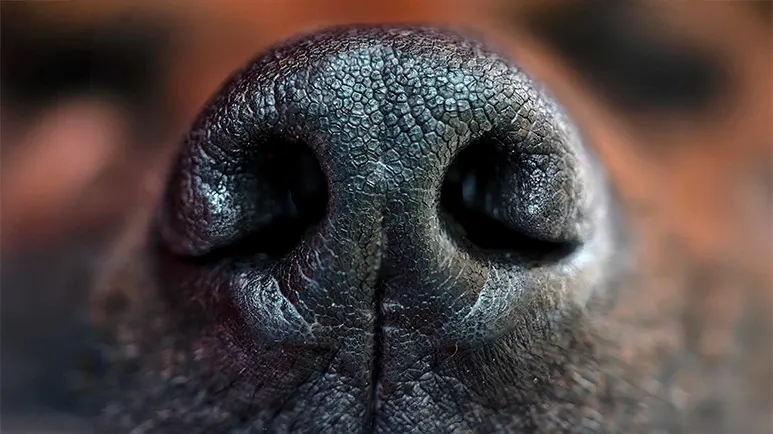
- With up to 300 million scent receptors and a brain wired for scent, your dog’s nose is 40 times more powerful than yours. It’s strong enough to detect a teaspoon of sugar in two Olympic-sized pools
- Dogs use scent like a social network, picking up detailed information about other animals, people, and places, including detecting your mood and emotions by smell alone
- Under the right conditions, a dog’s nose can track scents across long distances and time, making them perfect for search-and-rescue, medical alerts, and tracking
- A special organ in your dog’s mouth picks up pheromones, invisible chemical signals that reveal fear, mating readiness, and even family bonds
- Letting your dog explore the world through scent keeps them mentally sharp, happy, and relaxed. Think of it as reading the daily news with their nose
Have you ever wondered why your dog’s nose is always to the ground, sniffing out every corner, bush, and sidewalk crack? What may look like aimless curiosity is actually a powerful ability that dogs use to understand the world. In fact, your dog’s nose isn’t just a sensory tool; it’s their superpower. From detecting emotions to tracking missing people, your dog’s sense of smell is one of nature’s greatest wonders.
A Nose That Puts Ours to Shame
Let’s start with the numbers. The average human has about 5 to 6 million scent receptors in their nose. Sounds impressive? Not when you compare it to dogs. Your dog has up to 300 million scent receptors, depending on the breed — that’s about 50 times more than you have.1,2
But it’s not just about the number of receptors. Dogs also have a much larger portion of their brain devoted to analyzing smells. In fact, the part of your dog’s brain responsible for smell is about 40 times bigger than the same part in your brain, relative to size.3 That means when your dog is sniffing, they’re collecting and processing a massive amount of information, similar to how we use our eyes and ears.
Imagine if you could smell a teaspoon of sugar in a swimming pool. Dogs can smell that not just in one pool, but two Olympic-sized pools worth of water.4 Now that’s a super-snout.
2 Nostrils, 2 Jobs
Here’s something cool: dogs can actually sniff with each nostril separately. It’s called sniffing lateralization, and it lets them figure out exactly where a smell is coming from.5
They usually sniff through their right nostril, especially when something is new or exciting. If the scent is familiar, such as food or a friend, they may switch to the left nostril. This clever trick helps them quickly decide whether something is safe or dangerous, interesting or boring.
Their nose also separates the air they breathe into two paths — one for smelling and one for breathing. This mechanism allows your pup to sniff continuously without needing to stop and catch their breath.6
A Scent-Based Social Network
You use words to talk. Your dog uses smells. When your dog sniffs another dog’s behind or spends extra time smelling a tree, they’re actually reading a kind of scent message. From just a whiff, your dog can tell the other dog’s age, gender, health, and even what they had for lunch.7
It’s not considered rude, it’s just how dogs gather information. Smelling is a way for dogs to “talk,” figure out if someone’s a friend, and learn what’s been happening in their territory. That fire hydrant they sniff every day? It’s like checking social media to see who’s been in the neighborhood.
Your Dog Knows You by Your Smell
To your dog, your scent is like your fingerprint, one-of-a-kind. Whether it's your sweat, skin, shampoo, or even what you eat, your dog knows your smell better than anyone.8
In one study, researchers placed dogs inside an MRI scanner and showed them different human and dog scents. The part of the brain linked to reward and affection lit up only when they smelled their favorite person. That’s right, your smell makes your dog feel good.9
Your dog can also smell your emotions. When you’re anxious, stressed, or scared, your body releases certain chemicals, and your dog picks up on those. That’s why they may come to cuddle you during tough times they can smell that you need comfort.10,11
Dogs as Medical Heroes
Some dogs have jobs that go far beyond being companions. With their amazing noses, they can sniff out conditions like cancer, low blood sugar, seizures, COVID-19, and Parkinson’s disease.
Trainers teach these detection dogs to detect subtle changes in body chemistry, sometimes even before medical tests can detect them. In one study, dogs were able to smell stress on people’s breath and sweat with over 93% accuracy.12 That’s better than most high-tech devices!
Super Sniffers: How Far Can They Smell?
The average dog can smell a scent from a mile or more away. But under perfect conditions, some dogs can pick up smells from as far as 12 miles.
Factors such as wind, humidity, and terrain affect how far a scent can travel. Dogs standing downwind can catch a scent from much farther than dogs standing upwind. Moist air also helps scent molecules stick around longer, giving your pup more sniffing success.
When dogs are tracking scents in the air, they can follow trails that are hours or even days old. That’s why search-and-rescue dogs are so effective, they can find missing people using only the scent left behind in footprints or clothes.13
A Special Organ for Special Smells
Dogs have a secret smelling weapon: the vomeronasal organ, also called Jacobson’s organ. It’s located just above the roof of the mouth and is designed to detect pheromones, chemical signals that animals use to communicate. Pheromones help dogs:
- Recognize other dogs
- Detect emotions like fear or readiness to mate
- Strengthen bonds between mother dogs and puppies
This special organ detects smells we can’t even detect; some have no odor at all. It’s like your dog has a sixth sense.14,15
Why a Wet Nose?
A cold, wet dog nose isn’t just cute; it’s functional. The moisture on the nose helps trap scent particles, making it easier for dogs to smell. The wet surface works like flypaper for smells.
And when dogs exhale, air goes out through the side slits in their nose. This helps keep the incoming smells from getting blown away, so they can keep sniffing without interruption.16,17
Dogs Who Lead the Pack in Smelling
All dogs have a great sense of smell, but some breeds are natural-born sniffers. Here are some of the top dogs when it comes to olfactory power:18,19
- Bloodhound
- Beagle
- German Shepherd
- Labrador Retriever
- Belgian Malinois
- Dachshund
- Golden Retriever
- Bluetick Coonhound
Even though flat-nosed breeds like Bulldogs and Pugs may not have the same sense of smell due to their short snouts, they still use their noses to experience the world in amazing ways.
Sniffing Is Brain Food
Sniffing isn’t just fun; it’s a mental exercise. Letting your dog stop and smell the roses (or fire hydrants) stimulates their brain, reduces boredom, and helps relieve stress. Here are a few ways to encourage your dog’s sniffing superpower:
- Go on “sniffari” walks — Let your dog take the lead and explore with their nose.
- Hide treats or toys — Create a scent game by hiding their favorite goodies around the house or yard.
- Use scented chew toys — Even if odorless to you, many toys are flavored in a way dogs can detect.
- Try scent-based games — Activities like nose work or scent tracking can give your dog a fun job to do.
Celebrate Your Dog’s Amazing Nose!
Your dog’s sense of smell is one of the greatest tools in the animal kingdom. It helps them connect with the world, communicate with other dogs, find their way home, protect you, and even save lives.
So next time your dog stops to sniff for what seems like forever, remember — they’re not wasting time. They’re reading a rich world of stories written in scent, just for them. Let them enjoy it. Their super-sniffer is one of nature’s most powerful gifts.
Sources and References
- 1,4,7,10,18 Nylabone, Incredible Facts About Your Dog’s Sense of Smell
- 2,3,5,9,11,12,15,16,19 Well U, March 27, 2023
- 6,8,13,14,17 Whole Dog Journal, December 31, 2025

Better Health Begins in the Bowl
Better Health Begins in the Bowl
The Ultimate Pet Nutrition Guide was created to help dog and cat parents understand what truly supports lifelong health.
In this free guide, you’ll discover:
-

How your pet’s biology influences their nutritional needs
-
Why conventional feeding advice often falls short
-
Practical ways to choose better food for your dog or cat
View our Privacy Policy and Terms of Service.