The Little 'Cherry-Like' Mystery in Your Pup's Peepers
A red bump in your dog's eye might look scary, but it's more common (and treatable) than you think. Discover what causes 'cherry eye' and how to help your pup see clearly again.
Reviewed by Dr. Elizabeth Hardoon



Join the Bark & Whiskers™ Family
Sign up today for our FREE newsletter, packed with expert advice and insider tips to keep your beloved pet in tip-top shape.
View our Privacy Policy and Terms of Service.


STORY AT-A-GLANCE
- That small pink or red bump in your dog’s eye, often called “cherry eye,” is caused by a prolapsed tear gland in the third eyelid, a structure that helps keep your dog’s eyes moist and healthy
- Certain breeds like Bulldogs, Cocker Spaniels, Beagles, Pugs, and Boston Terriers are more prone to cherry eye, especially when they’re under 2 years old
- The condition can cause irritation, swelling, or infection if left untreated, and may lead to dry eye, a chronic problem requiring lifelong care
- Surgical correction is the preferred treatment, as removing the gland can permanently reduce tear production and lead to long-term eye issues.
- With prompt treatment and proper aftercare, most dogs make a full recovery and keep their eyes bright, healthy, and comfortable for life
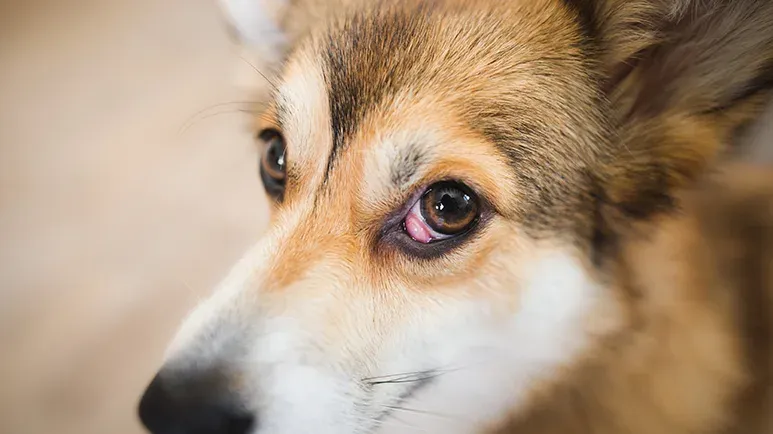
If you’ve ever noticed a small pink or red bump peeking out from the inner corner of your dog’s eye, your heart probably skipped a beat. It looks strange — almost like a tiny cherry lodged in the corner of your pup’s eye — and it’s easy to imagine the worst. But don’t panic. What you’re seeing is not a mass, but a common condition in dogs known as “cherry eye.”
Though it can look alarming, cherry eye is rarely painful, and with the right care, most dogs make a full recovery. Understanding what it is, why it happens, and how it’s treated will help you take the right steps for your dog’s comfort and long-term eye health.
What Exactly Is Cherry Eye?
Unlike humans, dogs have an extra protective third eyelid, called the “nictitating membrane,” located in the inner corner of each eye. It slides diagonally across the eye, like a tiny windshield wiper, to help keep the eye moist and free of debris. It’s especially important for working dogs and hunting breeds, whose eyes are often exposed to wind, dirt, and vegetation. So while it might sound strange, that hidden eyelid is one of your dog’s best built-in defenses against irritation and injury.
Hidden within this membrane is a tear gland (nictitans gland) that produces 30% to 60% of your dog’s tears.1 When the connective tissue holding this gland in place weakens, the gland slips (or prolapses) out of its normal position. The result is a smooth, round, pink or red lump bulging out from the inside corner of your dog’s eye. Because it looks like a small cherry, the nickname “cherry eye” stuck.
While it might not cause pain at first, the prolapsed gland can easily become irritated, swollen, or infected. Left untreated, it can interfere with tear production and lead to more serious problems like dry eye, which causes chronic irritation and discomfort.
Why Dogs Get Cherry Eye
The exact cause of cherry eye isn’t fully understood, but experts agree that genetics and anatomy play major roles. Certain breeds are predisposed to developing this condition, particularly those with shorter muzzles and flatter faces, or “brachycephalic” breeds. It is also more common in spaniels and hounds among other breeds that are predisposed to cherry eye include:
- English and French Bulldogs
- Pugs
- Boston Terriers
- Lhasa Apsos
- Shih Tzus
- Pekingese
- Boxers
- Spaniels — English or Cocker
- Hounds — Beagles and Bloodhounds
- Mastiffs
- Great Danes
- Shar Peis
- St. Bernards
Cherry eye is most common in young dogs under 2 years old, and studies show that purebred dogs, especially those who are brachycephalic, are more likely to be affected than mixed breeds.2 In fact, a 2022 study of over 900,000 dogs found that most cases occurred in puppies under 1 year of age and that hereditary factors likely influence which dogs are at risk.3
Sometimes, allergies or environmental irritation can contribute to the problem by causing inflammation around the gland. But in many cases, the gland prolapses spontaneously — without any clear trigger.
Spotting the Signs — What Cherry Eye Looks Like
Cherry eye is one of those conditions you can often spot at a glance. The most obvious sign is a pink or red bump at the inner corner of one or both of your dog’s eyes. It may make your dog’s eye look red and irritated.
The bump may appear suddenly, or it might come and go — slipping back into place for a while before reappearing. Sometimes both eyes are affected and sometimes just one eye. Other signs include:
- Watery discharge or increased tearing
- Redness or irritation of the eye
- Your dog rubbing or pawing at their face
- Occasional blinking or squinting
Even if your dog seems unbothered, it’s important to have a veterinarian check it out right away. The gland plays a key role in tear production, and prolonged prolapse can cause lasting damage or inflammation. However, call your vet right away if you notice:
- A red or pink bump in the eye that doesn’t go away within 24 hours
- Yellow or green discharge
- Swelling, squinting, or visible discomfort
- Signs of infection or dry eye (redness, cloudiness, or crusting)
The sooner cherry eye is addressed, the easier it is to fix and the less likely it is to cause lasting problems.
Cherry Eye vs. Look-Alikes
Cherry eye is usually easy to recognize, but there’s another condition that can look similar: scrolled (or everted) cartilage of the third eyelid. In this case, part of the cartilage that supports the third eyelid grows abnormally and bends outward, creating a bulge that can resemble cherry eye.
Scrolled cartilage tends to occur in giant breeds such as Great Danes and may appear alongside a true prolapsed gland.4 Only a veterinarian can tell the difference, often through a detailed eye exam, and sometimes under anesthesia.
What to Do When You Notice It
If you suddenly spot that red bump, don’t panic — but don’t ignore it either. The first step is to protect your dog’s eye from further irritation. Here’s what you can do while waiting to see the vet:
- Keep your dog from rubbing or scratching at the eye. Make them wear an Elizabethan collar (cone) if needed.
- Apply a sterile eye lubricant, such as gel-based artificial tears (available at most pharmacies), to keep the gland moist.
- Schedule a vet visit promptly. Cherry eye isn’t an emergency, but quick treatment helps prevent complications.
If it’s your dog’s first episode, the vet may try gently massaging the gland back into place. Sometimes this works, especially if the prolapse is mild and recent. Your holistic vet may also recommend acupuncture and herbal therapy to help prevent relapse. However, if the gland pops out again or refuses to stay in place, surgery is the best option.5
How Vets Diagnose Cherry Eye
Diagnosing cherry eye is usually straightforward. During your dog’s exam, your vet will look for that classic pink or red mass in the corner of the eye. They might also perform tests to evaluate your dog’s overall eye health, such as:
- Schirmer tear test — It measures tear production to ensure the eye stays properly lubricated.
- Fluorescein stain test — This test checks for scratches or ulcers on the cornea.
- Eye pressure test (tonometry) — It measures intraocular pressure to rule out glaucoma.
- Third eyelid evaluation — It ensures there’s no underlying cartilage deformation or, in rare cases, tumors.
These steps help your vet confirm that the issue is truly cherry eye and not another eye condition.6,7
Why Surgery Is the Best Fix
In the past, some veterinarians simply removed the prolapsed gland. But this approach has fallen out of favor for a crucial reason: that gland is responsible for a large portion of your dog’s tear production. Removing it greatly increases the risk of a lifelong condition called keratoconjunctivitis sicca (KCS), better known as dry eye.8
Dogs with dry eye can suffer from constant irritation, redness, discharge, and even vision loss. Managing it requires daily eye medications for life, so preserving that gland is always the goal.
Today’s preferred treatment is a surgical repositioning of the gland. During the procedure, your vet or a veterinary ophthalmologist creates a small pocket or fold in the surrounding tissue and tucks the gland back into place, securing it with tiny absorbable sutures.9
There are several surgical techniques, and the best one depends on your dog’s anatomy and the surgeon’s preference. After surgery, your dog will typically go home with eye drops or ointment to prevent infection and reduce inflammation. Most dogs recover quickly and comfortably, although in a small percentage of cases the gland may re-prolapse requiring another surgical procedure.
Recovery and Aftercare
After cherry eye surgery, your dog may need to wear an Elizabethan collar for a couple of weeks to prevent pawing or rubbing at the eye. Your vet will also prescribe antibiotic and anti-inflammatory eye medications to support healing.
You can expect mild swelling or redness for a few days, but most dogs bounce back within a week or two. Keeping follow-up appointments is essential so your vet can make sure the gland stays in place and functions properly.
The prognosis is excellent, especially when surgery is done promptly. The sooner the gland is replaced, the better the chances it will continue to produce tears normally.10
That said, recurrence can happen. About 5% to 10% of dogs experience a relapse, particularly in breeds like Boxers, Mastiffs, and Bulldogs. If that happens, a second surgery or a different surgical technique may be necessary.11
When to See a Veterinarian
Most general veterinarians can perform cherry eye surgery successfully, but there are times when a veterinary ophthalmologist is the best choice. Your vet may refer you to a specialist if:
- The gland has been prolapsed for several months or longer
- The gland keeps popping out despite attempts to massage or repair it
- Your dog has already had surgery and the prolapse recurred
- Your dog’s third eyelid cartilage is abnormally shaped or bent
- Your vet isn’t experienced with your dog’s breed
Breeds like Bulldogs, Great Danes, and Cocker Spaniels can present extra challenges because of their unique eye structures, so seeing an eye specialist ensures the best outcome.12
Possible Complications
While the surgery itself is safe and routine, a few complications can occasionally arise. The most common include:
- Recurrence of cherry eye, requiring a repeat surgery
- Scarring at the surgical site
- Reduced tear production if the gland has been inflamed too long
- Dry eye (KCS) if the gland is removed or damaged
Long-term eye lubrication, using appropriate herbal therapy and giving supplements containing omega-3 fatty acids, lutein and astaxanthin all help to maintain eye health. Periodic checkups with your veterinarian will also help with early detection of any issues. If you notice renewed redness, swelling, or discharge after recovery, contact your vet promptly.
Can You Prevent Cherry Eye?
Unfortunately, there’s no guaranteed way to prevent cherry eye. Because it’s often genetic, there’s not much you can do to stop it from happening. However, there are steps you can take to reduce irritation and keep your dog’s eyes healthy:13
- Treat allergies early — Allergies can cause inflammation that makes the gland more likely to swell.
- Keep the eyes clean and moist — Wipe away discharge gently with a damp cloth and use lubricating drops if your vet recommends them.
- Avoid trauma or rough play around the face, especially in young puppies.
- Monitor the other eye — If one eye develops cherry eye, the other might follow. Up to half of affected dogs eventually develop it in both eyes.
- Work with a holistic vet to make sure your pet is getting appropriate nutrition and supplements for optimal eye health.
If your dog’s other eye still looks normal, resist the urge to perform preventive surgery. Operating on a healthy gland can actually trigger a prolapse. Instead, keep an eye on it and let your vet know if anything changes.
Living with and Beyond Cherry Eye
It’s natural to worry when your dog develops something that looks so unusual. But the good news is that cherry eye is highly treatable, and once repaired, most dogs go on to live completely normal, happy lives.
The key is early action. The longer the gland stays out, the higher the risk of inflammation and long-term damage. By acting quickly, you protect not just your dog’s comfort but also their long-term vision.
After surgery and recovery, most dogs show no lingering signs of the condition. Their eyes stay bright, comfortable, and healthy, and their tear glands continue doing their important job.
A Gentle Reminder
Cherry eye might look dramatic, but it’s one of the most fixable conditions in canine eye care. Quick attention, the right surgery, and a little patience during recovery can make all the difference.
Your dog depends on those big, beautiful eyes to explore their world, so when something seems off, trust your instincts. A prompt visit to the vet ensures that the little “cherry” in your pup’s peeper doesn’t turn into a bigger problem later on.
Sources and References

Better Health Begins in the Bowl

Better Health Begins in the Bowl
The Ultimate Pet Nutrition Guide was created to help dog and cat parents understand what truly supports lifelong health.
In this free guide, you’ll discover:
-

How your pet’s biology influences their nutritional needs
-
Why conventional feeding advice often falls short
-
Practical ways to choose better food for your dog or cat
View our Privacy Policy and Terms of Service.