Snowed In? These Tricks Keep Paws Busy
Discover simple, fun, and affordable ways to keep your dog active indoors. No fancy equipment required — just your time, imagination, and a few tasty treats.
Reviewed by Dr. Elizabeth Hardoon


Join the Bark & Whiskers™ Family
Sign up today for our FREE newsletter, packed with expert advice and insider tips to keep your beloved pet in tip-top shape.
View our Privacy Policy and Terms of Service.

STORY AT-A-GLANCE
- When cold weather or rain keeps you indoors, your dog still needs exercise to stay healthy, calm, and mentally sharp, and you can provide it at home
- Mental workouts like treat hunts, scent games, and puzzle feeders tire dogs out just as effectively as long walks, keeping their minds engaged and focused
- Turn your home into a dog-friendly gym with simple activities like tug of war, hallway fetch, and homemade obstacle courses that strengthen body and bond
- Keep things fresh with treadmill training, playgroups, or short car trips for new sights and smells — perfect for high-energy dogs needing variety and stimulation
- Consistent indoor play builds confidence, prevents boredom, and deepens your connection with your pet, proving that even snow days can be fun-filled adventures
When the temperature drops and snow piles high against the door, it’s easy to curl up under a blanket and let the day slip away. But while you can cozy up with a hot drink and a movie, your dog still needs activity to stay healthy, happy, and calm. Whether you’re snowed in, stuck indoors because of rain, or bracing against summer heat, your dog’s body and mind crave stimulation.
The good news? With a little creativity, you can turn any living room, hallway, or staircase into your dog’s favorite gym and playground.
Why Exercise Matters More Than Ever
Every dog owner has heard the saying, “a tired dog is a good dog.” But beyond preventing restlessness or chewed-up slippers, regular exercise helps your dog live a longer, happier life. When your dog stays active, you’re not only strengthening muscles and maintaining a healthy weight — you’re also supporting joint health, heart function, and emotional balance.
Dogs who don’t get enough stimulation often show signs of frustration, such as barking, pacing, or destructive chewing. Indoor exercise helps release pent-up energy and reduces anxiety, especially during cold snaps or storms when outdoor walks aren’t possible. It also boosts your dog’s confidence and trust in you — every playful challenge strengthens the bond between you both.
And here’s something many pet parents forget — Mental exercise tires dogs out just as effectively as physical play. Nose games, problem-solving toys, or short training sessions can leave your dog ready for a nap even without a long walk.1,2
Start with the Mind — Brain Games for Bored Pups
Before pulling out the toys or rearranging furniture, remember that a sharp mind leads to a happy dog. Dogs naturally love to use their noses and brains to explore, hunt, and solve problems. That instinct doesn’t disappear just because they’re indoors — it just needs new outlets.3,4
- The treat hunt — Hide small treats around the house before your dog wakes up or while they’re in another room. Start easy — place treats in visible spots on the floor — and gradually increase difficulty by tucking them under furniture or behind doors. Follow your dog’s search with enthusiasm, offering praise when they find each treasure. This simple game mimics natural foraging behavior and helps burn energy through focus and excitement.
- Food puzzles, snuffle mats, and slow feeders — Puzzle feeders or snuffle mats turn mealtime into a mini adventure. Your dog has to nudge, paw, or roll the toy to release food, engaging their brain and slowing down eating. If your pup tends to gulp food, a slow-feeder bowl can also reduce bloating and stomach upset. Rotate puzzles regularly so they stay challenging and fun.
- The “Which Hand?” game — This one’s quick and easy. Hide a treat in one of your closed fists and let your dog guess which hand it’s in. Use verbal praise when they guess right. Over time, you can increase difficulty by using smaller treats or switching hands faster. It’s a great way to practice patience and impulse control.
- Indoor scent games — Dogs experience the world primarily through smell, so scent-based games can be deeply satisfying. Try hiding your dog’s favorite toy or a piece of clothing with your scent, and encourage them to “find it.” You can even train specific commands, like “search” or “seek,” to turn sniffing into a rewarding mental challenge. There are even formal scentwork classes you can take to train your dog to use his/her nose.
Turn Your Home Into an Indoor Gym
Physical activity indoors may sound tricky, but with the right adjustments, your home can easily double as a safe exercise zone. These ideas let your dog stretch, move, and strengthen muscles without ever stepping outside.5,6
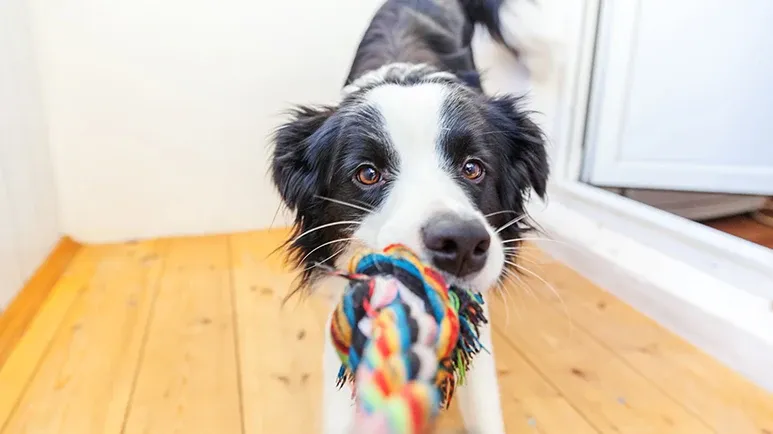
- Tug of war — A timeless favorite, tug of war gives your dog a solid workout and an outlet for playful energy. Choose a sturdy rope or soft tug toy that’s gentle on the teeth. Remember to set ground rules — teach your dog to “drop it” when asked, and reward them when they obey. A good tug session engages both body and mind, and even gives you a little arm workout in the process.
- Hallway fetch — If you have a long hallway or open space, clear away obstacles and throw a pet-safe ball or plush toy for your dog to fetch. If you are concerned about broken items or injuries, you can try rolling the ball instead of throwing it. Tennis balls or lightweight rubber balls are ideal for indoor use. For young or energetic dogs, try tossing a toy gently up a carpeted staircase — this adds a cardio boost without needing much room.
- Stair climbs — Speaking of stairs, this everyday feature can become an excellent exercise tool. Have your dog walk up and down the steps a few times or place a toy at the top for them to fetch. Supervise closely and avoid overdoing it, especially if your dog is elderly, has joint problems, or is a puppy whose bones are still developing.
- Indoor obstacle course — You don’t need agility equipment to create a fun course. Books, pillows, cushions, broom handles, and stools can become tunnels, jumps, and weave poles. Encourage your dog with treats as they navigate through or over each obstacle. Start with one at a time before connecting several together into a mini circuit. It’s like doggy parkour right in your living room!
- The Flirt Pole game — A flirt pole is basically a large cat wand toy for dogs — a stick with a string and a lure at the end. Swing the lure gently to make your dog chase it, and reward them when they “catch” it. This activity mimics prey movement, giving your dog a satisfying outlet for instinctive chasing behavior. It’s perfect for energetic breeds like terriers and herding dogs.
Keep It Simple — Everyday Indoor Play
When cabin fever strikes, even the simplest games can become your dog’s favorite part of the day. These quick activities can fit into your daily routine — no special setup required.7,8
- Hide and seek — Hide behind a door or in another room and call your dog to find you. When they do, shower them with praise or a small treat. As your dog improves, choose more challenging hiding spots. This game builds trust, strengthens recall training, and offers both mental and physical stimulation.
- Scavenger hunt — This variation of hide and seek encourages independence. Hide toys or treats around the room and let your dog find them on their own. Start with strong-smelling items to make success easier, and always supervise if food is involved — you don’t want forgotten snacks hiding under the couch later.
- Training sessions — Short training bursts can work wonders on gloomy days. Practice basic commands like “sit,” “stay,” or “come,” or teach new tricks like “touch,” “spin,” “shake,” or “roll over.” Keep sessions short (five to 10 minutes) and upbeat. You’ll improve communication and strengthen your bond, all while giving your dog a mental workout. If you find that this is something you and your dog really likes, you can take it to the next level and train your dog for canine Rally. A Rally competition involves a course with your dog performing different tricks and behaviors for a prize.
Creative Extras — When You Need Something New
Once you’ve mastered the basics, these creative options can keep things fresh and exciting.9,10
- Treadmill training — If your dog is high-energy or weather keeps you indoors for days, a treadmill can be a safe alternative. Start slowly — let your dog explore the stationary treadmill first, then encourage short, low-speed sessions. Always supervise and use positive reinforcement to keep the experience fun, not stressful.
- Indoor playgroups or doggy daycare — If your area has indoor dog parks or doggie daycare, these can provide valuable socialization. Dogs grouped by size and temperament can enjoy supervised play that helps them burn energy and make friends. Make sure to check the requirements before signing up, as most facilities will require your dog to be up to date on vaccines before joining group activities.
- Short field trips — When it’s safe to travel, take short drives to pet-friendly stores or cafes. The new smells, sights, and people provide mental stimulation. Even a car ride can give your dog a change of scenery and prevent boredom.
Stay Safe While Playing Indoors
Safety should always come first, especially in small or cluttered spaces. Before you start any indoor exercise routine, do a quick home “safety sweep.”
- Clear the area — Remove breakable items, cords, or furniture that could cause injuries.
- Use non-slip surfaces — Rugs or yoga mats help prevent slipping on hard floors.
- Monitor fatigue — Stop if your dog pants heavily, drools excessively, or loses interest. Every dog has a different limit.
- Hydrate — Keep a bowl of fresh water available, even during short play sessions.
- Mind the temperature — Avoid overheated rooms, especially if you’re using a treadmill or playing active games.
If your dog has existing health conditions, is overweight, or recovering from an injury, talk to your veterinarian before starting a new exercise routine. Your vet can suggest low-impact options or adjustments to protect joints and muscles.
Games for Dogs of All Ages
Just like people, dogs’ exercise needs change with age. The best part about indoor activities is that you can tailor them to your dog’s energy level and physical condition.
- Puppies — They have short attention spans and growing bones, so short bursts of play are best. Games like “find the treat” or gentle tug of war can burn energy without overstraining young joints. Avoid long stair climbs or high jumps until your puppy is over 18 months of age.
- Adults — Adult dogs thrive on variety. Mix mental and physical games to keep them balanced. Alternate puzzle time with tug games or mini obedience drills to work both brain and body.
- Seniors — Older dogs may move slower, but they still need mental engagement. Soft toys, scent games, and gentle stretching exercises can maintain mobility and prevent boredom. Avoid slippery surfaces, stairs, and high-impact movements.
Making It a Routine
Consistency matters more than duration. A few short sessions spaced throughout the day can be just as beneficial as one long workout. Try creating a simple routine — morning sniff games, midday tug or fetch, and evening relaxation with puzzle feeders.
Pair activity time with positive cues, like a cheerful “Let’s play!” to signal fun ahead. This helps your dog look forward to daily exercise and makes it easier to maintain during long winters or hot summers.
If you live in an area with harsh weather, consider creating a small “indoor adventure zone.” Keep your dog’s favorite toys, puzzles, and training treats in a basket for easy access. Rotate items weekly to keep things fresh and stimulating.
The Mental Health Bonus for You and Your Dog
Exercise doesn’t just benefit your dog — it helps you, too. Playing and training together strengthens your emotional connection and provides structure to your day, especially during long indoor stretches. Your dog’s joy and enthusiasm are contagious, lifting your own mood in the process.
Research has shown that spending time with pets releases endorphins, which are the same “feel-good” hormones triggered by laughter or physical activity. When you and your dog move together, you both experience stress relief, better sleep, and even improved focus.
Keeping It Fun When You’re Snowed In
Cabin fever doesn’t stand a chance against a motivated dog and a creative owner. When the snow keeps falling, try a schedule of mixing and matching games to prevent boredom. For example:
- Morning — Hide and seek with treats
- Afternoon — Tug of war or hallway fetch
- Evening — Puzzle feeder followed by gentle grooming or cuddles
These short sessions keep your dog’s body limber and their mind sharp. You’ll notice fewer signs of restlessness and perhaps even some improved manners as your dog channels energy into play instead of mischief.
And remember, variety is key. Rotate games weekly, reward curiosity, and celebrate effort rather than perfection. Every time your dog solves a puzzle or nails a new command, they’re building confidence and you’re reinforcing trust.
When the Weather Clears
Once the sun peeks out and sidewalks thaw, gradually transition back to outdoor fun. Combine indoor games with fresh-air activities like walks, hiking, or dog park visits. Now use the tricks you’ve practiced inside — like sit, stay and recall — outdoors for safer and more enjoyable adventures.11
Whether it’s a winter blizzard or a summer heatwave, you’ll now have a playbook ready to keep those paws busy and tails wagging all year long.
The Bottom Line
Keeping your dog active indoors isn’t just a backup plan — it’s an opportunity to deepen your connection, sharpen their mind, and boost their overall well-being. From tug of war to scent games, every small moment of play builds trust and happiness. With a mix of creativity, safety, and consistency, you can make even the snowiest day an adventure.
So next time you’re snowed in, grab some treats, clear the hallway, and turn your home into a playground. Your dog doesn’t care about the weather — they just want to play with you.
Sources and References
- 1,4,6,9 Animal Wellness Magazine, October 9, 2025
- 2,5,8 PetMD, January 15, 2025
- 3,7,10,11 Petfolk, January 3, 2023

Better Health Begins in the Bowl

Better Health Begins in the Bowl
The Ultimate Pet Nutrition Guide was created to help dog and cat parents understand what truly supports lifelong health.
In this free guide, you’ll discover:
-

How your pet’s biology influences their nutritional needs
-
Why conventional feeding advice often falls short
-
Practical ways to choose better food for your dog or cat
View our Privacy Policy and Terms of Service.