The Many Ways Your Dog Talks to You That Leave You Clueless
Why does your dog move away when you pet his head or blink after you give him a command? Those are just two of nearly three dozen communication signals that your dog may be sending you each day. How many of them do you understand?

Reviewed by Dr. Becker


Join the Bark & Whiskers™ Family
Sign up today for our FREE newsletter, packed with expert advice and insider tips to keep your beloved pet in tip-top shape.
View our Privacy Policy and Terms of Service.


STORY AT-A-GLANCE
- Even though your dog is your BFF, she’s a different species, which is why there are the inevitable dog-to-human communication breakdowns
- Whereas we communicate with words, dogs communicate in a variety of other ways
- Since we control every aspect of our dogs’ lives, it’s imperative that we learn their communication signals
- Refer to this handy dog-to-human language translator to better understand your dog’s behavior and the signals he’s sending
- Some of these behaviors are prewired in many dogs, but several are learned or encouraged through training (intentionally or inadvertently)
Editor's Note: This article is a reprint. It was originally published April 15, 2019.
Our dogs’ behavior doesn’t always make sense to us, but then, ours doesn’t always make sense to them! And unlike humans, dogs are dependent on their humans for everything.
“That’s a hard position to be in,” writes Dr. Nicholas Dodman, world-renowned animal behaviorist, best-selling author of several books about dogs and director of the Animal Behavior Clinic at Tufts University’s Cummings School of Veterinary Medicine, “because your dog’s world is controlled by you.”1
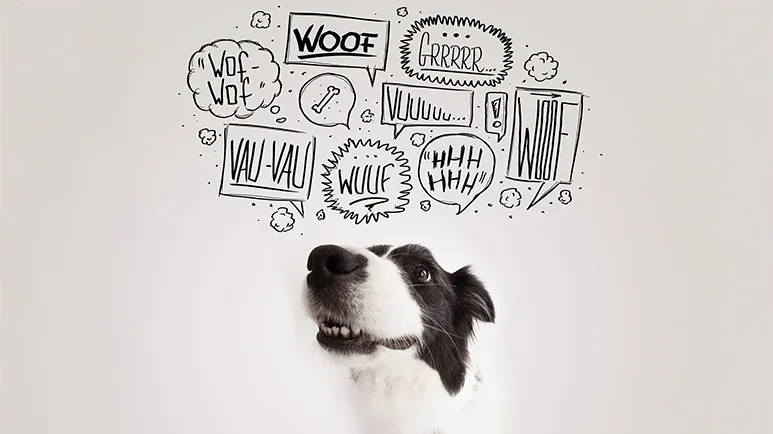
In addition, there’s the canine-to-human language barrier. Whereas we communicate with words, dogs communicate in a variety of other ways. That’s why it’s incredibly beneficial for dog parents to learn to understand what their pooch is “saying” to them.
“The better you understand how he experiences his world, the less likely you’ll be to become frustrated or angry (and perhaps treat your charge unfairly),” says Dodman. “And, ultimately, the better and stronger the bond between the two of you will be.”
And this is true for all pet parents — those who are adjusting to life with a new dog and those who’ve always had a dog. As science is undeniably proving, our canine companions are extremely attentive to our moods, body language, tone of voice and words. Hence, the least we can do in return is take the same interest in their communication with us.
Interpreting Your Dog’s Communication Signals
The following dog-to-human language translator is excerpted from Dr. Dodman’s book, “Puppy’s First Steps: The Whole-Dog Approach to Raising a Happy, Healthy, Well-Behaved Puppy:”

Some of these behaviors are prewired in many dogs, but several are learned or encouraged through training (intentionally or inadvertently). The best way to ensure your dog develops or maintains positive social and behavior skills is to address training issues as they arise.
Sources and References

Better Health Begins in the Bowl

Better Health Begins in the Bowl
The Ultimate Pet Nutrition Guide was created to help dog and cat parents understand what truly supports lifelong health.
In this free guide, you’ll discover:
-

How your pet’s biology influences their nutritional needs
-
Why conventional feeding advice often falls short
-
Practical ways to choose better food for your dog or cat
View our Privacy Policy and Terms of Service.