Is Your Best Friend Wagging a Little Too Hard?
The red droplets on your baseboards aren’t a cut paw. They’re a sign your dog’s enthusiastic wag has turned into a stubborn, painful injury. Here’s what’s actually happening and how to break the reinjury loop before it turns your hallway into a crime scene.
Reviewed by Dr. Elizabeth Hardoon



Join the Bark & Whiskers™ Family
Sign up today for our FREE newsletter, packed with expert advice and insider tips to keep your beloved pet in tip-top shape.
View our Privacy Policy and Terms of Service.


STORY AT-A-GLANCE
- Happy tail syndrome happens when big, enthusiastic waggers crack open the tip of their tail against walls, doorframes, and furniture
- Larger breeds with powerful, whip-like tails, such as Pit Bulls, Am Staffs, Labs, Golden Retrievers, Boxers, Greyhounds, and Great Danes, are the most common patients, especially those spending time in crates or kennels where every wag connects with something hard
- The condition is self-reinforcing: Scabs form during rest, then shear off the next time the tail hits a surface, which is why wounds can keep reopening for weeks without the right protection plan
- Treatment comes down to two parallel goals: Clean and treat the wound while physically protecting the tail from reinjury with lightweight padding, a purpose-built tail sleeve, or an e-collar to stop chewing
- When nothing breaks the cycle after months of trying, partial tail amputation ends the suffering decisively — most dogs recover and go back to wagging just as happily, minus the blood splatter
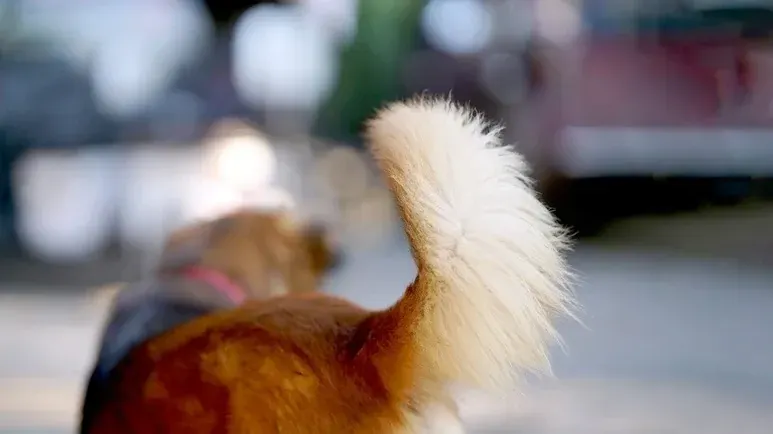
The first clue is often a few mysterious red spots on the baseboards or a tiny streak on the hallway wall. You check your dog over, and then you see it: The tip of their tail is cracked, a little raw, and lightly bleeding. By the time you've grabbed a paper towel, they've wagged with excitement about being noticed, flung the tail against the nearest doorframe, and the bleeding starts again. Welcome to the strange, splatter-paint-adjacent condition veterinarians call happy tail syndrome.
Although the name is deceptively cheerful and is the result of your dog's happiness; hence wagging tail — there is nothing happy about it from your dog's end. It's actually a stubborn and painful injury. And because your dog cannot simply decide to stop wagging, the cycle can go on for weeks or months without the right plan. Here's what happy tail actually is, how to break the reinjury loop, and when it's time to talk to your vet about more serious options.
What Happy Tail Syndrome Actually Is
Happy tail syndrome happens when a dog with a long, strong, whip-like tail wags enthusiastically and repeatedly strikes the tail tip against hard surfaces, such as walls, doorframes, furniture, crate bars, or floors. The constant impact damages the thin skin at the end of the tail, where there's little muscle or fat to cushion blows. Small cracks become open wounds. Scabs form during rest and then shear off the next time the tail connects with something solid. The wound reopens, and it bleeds, often dramatically, because the tail is a highly vascular area and so tail injuries bleed much more than may be expected.1,2
Larger breeds with powerful, skinny tails are the most common patients. Veterinarians see this condition most often in Pit Bulls, Am Staffs, Labs, Golden Retrievers, Boxers, Greyhounds, and Great Danes and other big-bodied, high-energy dogs. Any breed can develop it, but tail length and tail strength are the biggest risk factors. Dogs housed in crates, kennels, or boarding facilities where there's less room to wag freely are especially vulnerable.3
The Signs Beyond the Blood
The hallmark is a cracked, bleeding tail tip, but earlier signs can show up before the splatter stage. These include:4,5
- Red droplets on walls, furniture, baseboards, or the floor — often the first clue
- Hair loss or a dried, scabbed-looking tail tip
- Cracked, dry skin at the end of the tail
- Visible swelling, crusting, or an unpleasant smell (which suggests infection)
- Your dog licking or chewing at the tail more than usual
- In severe cases, blackened or dead tissue, which is a veterinary emergency
Dogs with happy tail usually behave completely normally otherwise — eating, drinking, playing, and insisting on their walks. The injury is painful once the skin opens, but it rarely slows a cheerful dog down from doing the exact thing that causes it. That's part of what makes the condition so hard to break.
Why the Cycle Is So Hard to Stop
The frustrating math of happy tail is simple: Dogs wag their tails to communicate joy, excitement, affection, and dozens of other emotions. You can't ask them to stop. The moment a scab forms and the wound starts to close, the next excited greeting or play session reopens it.
Trainers call this a self-reinforcing injury — the behavior that caused the wound is also the behavior that keeps it from healing. Add to that a few complications that make the condition worse:6,7
- Bandages often don't stay on wagging tails and may fall off almost immediately.
- There is a risk that some dogs may chew bandages off and swallow them, which can cause intestinal blockages.
- Soaked bloody bandages can be irritating and may trigger obsessive chewing at the area.
- The warm, moist environment under a traditional bandage can promote bacterial growth.
- Confined spaces (crates, kennels, or small hallways) multiply the number of impacts per day.
Breaking the Loop: What Actually Works
Treatment comes down to two parallel goals: letting the existing wound heal and preventing the tail from being struck again. Both have to happen at the same time, or nothing improves. Here's what to do:8,9
- Clean the wound well — Gently irrigate the injured tip with an antiseptic to remove dirt and debris. Avoid harsh chemicals, as they can damage already-fragile tissue. Pat dry with a clean cloth. A moisturizing hydrogel-based spray or natural healing remedies using honey or those containing calendula or micro silver can be reapplied twice daily to control infection and support healing.
- Think twice about bandaging — Traditional tail bandaging is a classic first instinct but may not be the answer. Fresh bandages wrapped too tightly can cut off circulation to the already-fragile tail tip. Loose ones fly off within minutes of a good wag. Bloody bandages invite chewing.
If you use a bandage at all, use it short-term — a sterile gauze pad secured with vet wrap for one to two hours to control acute bleeding — and remove it as soon as the bleeding slows. Never leave a dog alone with a bandage on. - Protect the tail with something lighter and more secure — Creative solutions such as toilet paper rolls, cut water bottles, pool noodles, foam pipe insulation or syringe cases — under veterinary guidance — may be useful to protect the tip of the tail from damage. The guiding rule: keep it lightweight. The heavier the device, the more likely it'll go flying with the next wag. White first-aid tape running the length of the tail can give whatever you use more "grab" to stay on. Keep it loose enough for air circulation to the tip.10
- Commercial options exist too — Purpose-built tail protectors use padded, breathable, washable sleeves designed to stay on through bathroom breaks and play, allow wound care access, and avoid the chewing problem that plagues bandages. For dogs with chronic recurrence, this kind of long-term protection often outperforms any DIY solution.11
- Use an e-collar — The Elizabethan collar isn't glamorous, but it reliably stops the licking, chewing, and bandage-eating that derail healing. For dogs who are determined to get at their own tail, this is often the difference between recovery and a trip to the ER for intestinal obstruction.
Managing Pain and Calming the Environment
Your vet can prescribe appropriate pain relievers and anti-inflammatories for tail injuries and may add antibiotics or appropriate herbal or homeopathic therapy if there's any sign of infection and to help stop the bleeding. Never give human pain medications — many are toxic to dogs, including acetaminophen (Tylenol) and ibuprofen (Advil). For severe or stubborn cases, sometimes a short course of sedation or anxiety-relieving herbals can stop the wagging and give the tail a few weeks to heal. At home, you can lower the daily impact count by following these tips:
- Keep greetings calm, especially at the door.
- Pad the obvious offenders — foam bumpers on walls, doorframes, and crate corners.
- Give your dog more open space to wag; avoid tight hallways and crates during healing when possible.
- Reduce overall excitement triggers until the tail has closed up.
- A soft, comfortable bed away from hard surfaces helps during rest.
- If you need to crate, keep the tail protected inside a secure device, not a bandage.
A Role for Nutrition and Topicals
Some veterinarians recommend omega-3 fatty acid supplementation to support skin healing and reduce inflammation, and topical vitamin A or E oil to keep the tail tip from drying and cracking in the first place. These are supportive measures, not standalone treatments — but for dogs with recurrent happy tail, they're reasonable additions to the long-term plan.12
When to Call the Vet
Mild cases can sometimes be managed at home. The following situations need professional attention:
- Bleeding that won't stop with 10 to 15 minutes of pressure
- Signs of infection, such as swelling, odor, discharge, or spreading redness
- Blackened or dead-looking tissue
- Extreme pain or sudden behavior changes
- Wounds that keep reopening after a week or more of diligent care
- Obsessive chewing or self-mutilation of the tail
- No visible improvement after several days of treatment
When Amputation Becomes the Right Answer
For some dogs, no amount of padding, protection, or patience is enough. The wound keeps opening, the scabs keep flying off, and the infection comes back. In those cases, veterinarians may recommend partial amputation — shortening the tail to a length where it can no longer reach surfaces with force. Nobody loves this option, but for a dog living with chronic, painful, bleeding tail trauma for months on end, it often ends the suffering decisively.
Healing time is similar to a spay or neuter, and most dogs bounce back to their usual happy selves — wagging their shorter tail just as enthusiastically, minus the blood.13,14
Preventing the Next Round
Once a dog has had happy tail once, they're more likely to have it again. A few basic precautions can help lower the odds:
- Keep a tail protector on hand for high-risk situations: boarding, daycare, crating, holiday chaos.
- Giving anti-anxiety medication or herbal therapy in specific situations that may cause your dog excessive excitement.
- Maintain the household padding changes you made the first time around.
- Pay attention to early warning signs — licking the tail, small flecks of blood, hair loss at the tip.
- Act fast on any new injury. The first 24 hours of good protection prevents weeks of trouble later.
The Wag You Want to Protect
A dog's tail is one of the most expressive parts of their body — the way they tell you they're happy, excited, relieved to see you home. Happy tail syndrome is the small, painful irony of that joy: the thing you love most about them becomes the thing that keeps them hurting. The good news is that most cases heal fully with the right combination of protection, calm, and care. The hard part is being patient enough to break the cycle before it entrenches.
If your best friend has been wagging a little too hard — and your walls are starting to look like a crime scene — don't wait for things to escalate. Clean the wound, protect the tail, keep arrivals calm, and talk to your vet if the cycle doesn't break within a week or two. Your dog's tail is doing exactly what it's supposed to do. The job is just to make sure the surfaces around it are a little kinder than they've been.
Sources and References
- 1,8,10,13 Whole Dog Journal, October 6, 2026
- 2,3,4,6,9,12,14 PetMD, June 27, 2022
- 5,7,11 K9 TailSaver, October 16, 2025

Better Health Begins in the Bowl
Better Health Begins in the Bowl
The Ultimate Pet Nutrition Guide was created to help dog and cat parents understand what truly supports lifelong health.
In this free guide, you’ll discover:
-

How your pet’s biology influences their nutritional needs
-
Why conventional feeding advice often falls short
-
Practical ways to choose better food for your dog or cat
View our Privacy Policy and Terms of Service.