What Does Their Belly Have to Do with Their Kidneys?
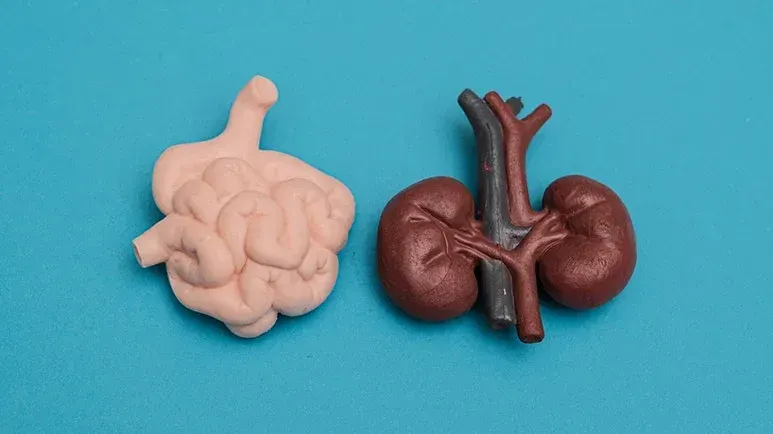
Your pet’s belly and their kidneys have more to say to each other than you might think — and when that conversation goes sideways, it may be silently driving one of the most common health problems, particularly in senior cats.
Reviewed by Dr. Elizabeth Hardoon



Join the Bark & Whiskers™ Family
Sign up today for our FREE newsletter, packed with expert advice and insider tips to keep your beloved pet in tip-top shape.
View our Privacy Policy and Terms of Service.


STORY AT-A-GLANCE
- New veterinary research reveals the gut and kidneys are in constant chemical conversation — and when that conversation breaks down, it actively drives chronic kidney disease forward in cats and dogs, not just marks its progression
- Gut microbes produce over one hundred uremic toxins, with indoxyl sulfate and p-cresol sulfate the most studied; they build up as kidneys fail and worsen inflammation, muscle wasting, and kidney scarring
- Cats as early as IRIS Stage 2 CKD already show elevated indoxyl sulfate levels, meaning this gut-driven damage begins long before most pet parents realize their cat’s kidneys are struggling
- Targeting the gut has become a legitimate CKD treatment strategy — modified-protein diets, soluble fiber, prebiotics, carbon-based adsorbents, and essential amino acid support can reduce the toxin burden on failing kidneys
- Constipation is a bigger deal than it looks: it keeps toxin-producing bacteria working longer and raises harmful uremic toxins in circulation, so treating it may help slow kidney disease progression
Most pet parents believe that the gut and the kidneys live in two separate mental compartments. The gut is where you worry about diet, diarrhea, and digestion, while the kidneys are connected to hydration, bloodwork, and, for a lot of senior cats especially, the slow drift into chronic kidney disease (CKD).
It turns out those compartments aren't really separate at all. The gut and the kidneys are in constant chemical conversation with each other, and when one side of that conversation goes sideways, the other one feels it.
The growing body of veterinary research now describes what's called the gut-kidney axis: the complex network of interactions between the gut microbiome, the lining of the intestines, the chemical byproducts of microbial digestion, and kidney physiology. The finding is that disruptions in this axis contribute meaningfully to the development and progression of CKD in cats and dogs, and that the gut itself is now considered a legitimate therapeutic target.
A Primer on the Gut-Kidney Connection
Your pet's gut hosts trillions of microorganisms: bacteria, fungi, and other microbes — that work alongside the body to digest food, synthesize nutrients, train the immune system, and maintain the gut lining. When that community is balanced, the system runs smoothly.
But when it's out of balance — a state called dysbiosis — harmful substances can leak into the bloodstream, forcing the kidneys to work harder to filter them out. Over time, this additional workload can contribute to kidney inflammation and damage.1
The relationship runs in both directions. As kidney function declines, waste products build up in the gut and shift the microbial community further out of balance, which creates more harmful byproducts, which puts more pressure on the kidneys. It's a loop — and once it starts turning, it's hard to break without targeted intervention.2
Uremic Toxins: The Specific Culprits
Researchers have identified over one hundred uremic toxins, which are waste products that accumulate in the blood as kidney function declines, and found that a sizable portion of them are generated by gut microbes. The most-studied in veterinary medicine is indoxyl sulfate (IS), with p-cresol sulfate (pCS) close behind. Both come from microbial breakdown of dietary protein in the colon.3
Normally, the kidneys clear these compounds out through urine. In pets with CKD, kidney filtration drops, so the toxins build up in circulation. And once they do, they cause real damage: they drive systemic inflammation, impair immune function, contribute to muscle wasting and weakness, injure the lining of blood vessels, and promote fibrosis — the scarring that progressively damages kidney tissue itself. In other words, these gut-derived toxins actively push CKD forward, not just mark its presence.4,5
Studies in cats have found that even those in the initial stages of CKD — IRIS Stage 2 — already have significantly higher indoxyl sulfate concentrations than healthy cats, meaning this imbalance begins early in the disease. In both cats and dogs, higher IS concentrations are associated with faster disease progression.6
What Dysbiosis Looks Like in a Pet with CKD
Cats with CKD have a measurably different gut microbiome than their healthy senior counterparts, with reduced microbial richness and shifts in the balance of bacterial species. Dogs with CKD show similar patterns, with higher relative abundance of some problematic bacterial genera (like Klebsiella and Clostridium) and lower abundance of beneficial ones (like Ruminococcus).
What drives these shifts? Several factors: the direct effect of urea breakdown raising the pH inside the colon, frequent use of antibiotics and phosphate binders in CKD pets, and dietary changes — especially reduced fiber intake. The leaky, inflamed gut lining that develops in CKD patients also lets more bacterial toxins slip into circulation, which perpetuates the whole cycle.7
Why This Changes the Treatment Conversation
For decades, veterinary CKD management has been largely symptomatic — controlling blood pressure, managing anemia, prescribing therapeutic diets, and addressing complications as they arise. The gut-kidney axis perspective looks at this from a different angle: if gut-derived toxins actively drive disease progression, then reducing those toxins becomes a direct way to slow the disease itself.
Several therapeutic strategies target this axis. None is a cure, but together they offer tools that didn't exist in the standard playbook a decade ago:8
- Dietary management — Reducing dietary protein is already standard in CKD care, and the gut-kidney research helps explain why it works: Less protein in the colon means less raw material for microbes to convert into uremic toxins. Studies in both cats and dogs confirm that higher-protein diets lead to higher IS and pCS concentrations.
For cats especially, who are obligate carnivores, the goal is a careful balance: enough high-quality, highly digestible protein to maintain lean body mass, but not so much that it feeds toxin production. Pairing modified protein with increased soluble fiber helps further by feeding beneficial bacteria and encouraging the production of helpful short-chain fatty acids. - Prebiotics and probiotics — Prebiotic soluble fibers feed beneficial bacteria and have been shown to reduce uremic toxin concentrations in CKD cats and dogs when added to a renal diet. Probiotic results have been more mixed in veterinary studies — one commercial probiotic (Enterococcus faecium SF68) didn't shift the microbiome or toxin levels in cats, while a different synbiotic product has shown contradictory results across studies. The honest state of the science: prebiotics look more consistently useful than probiotics in CKD pets right now, but research is ongoing.
- Adsorbents — These are compounds that bind uremic toxin precursors in the intestinal tract so they can't be absorbed. A carbon-based adsorbent marketed for cats with kidney disease has been shown to reduce indoxyl sulfate levels in senior cats and cats with Stage 2 and 3 CKD after eight weeks of use.
- Essential amino acids support CKD cats who commonly lose weight and muscle mass over time. A condition called protein-energy wasting has been found to worsen outcomes in CKD cats. Studies have found that fortifying renal diets with essential amino acids can help cats maintain lean body mass even while on protein-restricted food. The take-home: the quality of the protein matters at least as much as the quantity.
Don't Overlook Constipation
One of the more surprising pieces of the gut-kidney story is how much constipation matters. Cats with CKD tend to have less frequent bowel movements and are more likely to end up in the emergency room for constipation than healthy cats. The underlying mechanism makes sense: as the kidneys lose their ability to concentrate urine, the body compensates by reabsorbing water from the colon, which dries out the stool.
Constipation isn't just uncomfortable — it keeps fecal matter in the colon longer, giving microbes more time to convert amino acids into uremic toxin precursors. Human CKD patients with constipation have significantly higher serum concentrations of pCS and other toxins.
Treating constipation with hydration support, soluble fiber (like psyllium husk), osmotic stool softeners, and promotility agents may do more than just make your cat more comfortable — it may reduce the toxin burden their failing kidneys are trying to filter.9
What Pet Parents Can Watch For
Signs that your cat's gut or kidneys may be struggling — or that both systems are starting to pull each other down — include:10
- Increased thirst or urination
- Loss of appetite or fussy eating
- Vomiting, especially in cats
- Weight loss or visible muscle loss over the spine and hips
- Lethargy or weakness
- Changes in litter box habits — less frequent stools, straining, or very dry stools
- A dull or unkempt coat
- Breath that smells unusually strong (uremic breath)
None of these signs on their own confirm kidney or gut disease. But together, especially in a middle-aged or senior pet, they warrant a vet visit that includes bloodwork — not just a basic chemistry panel, but a full renal workup that includes SDMA (symmetric dimethylarginine), which can detect reduced kidney function earlier than creatinine alone and a urine sample.
Where That Leaves You
The gut-kidney axis isn't a wellness buzzword — it's a legitimate shift in how researchers are thinking about chronic kidney disease, and it's starting to shape how integrative and progressive vets manage it. The practical implications for pet parents are reasonable to act on now: feed a species-appropriate, highly digestible diet; include soluble fiber (through the diet itself or a vet-approved prebiotic); keep your pet well-hydrated; don't ignore constipation; and have an honest conversation with your vet about whether something like a carbon-based adsorbent or essential amino acid supplementation makes sense for your particular animal.
For senior cats especially — the population most likely to develop CKD — a yearly conversation about gut health alongside kidney bloodwork is a reasonable addition to the care plan. The two systems rise and fall together. Supporting both at once, rather than waiting for one to fail before paying attention to the other, is where the newest veterinary thinking is clearly pointing.
Your old friend's belly and their kidneys have more to say to each other than you might have realized. Learning to listen to both — and treating them as one connected system rather than two separate problems — is one of the more promising directions in senior pet care today.
Sources and References

Better Health Begins in the Bowl
Better Health Begins in the Bowl
The Ultimate Pet Nutrition Guide was created to help dog and cat parents understand what truly supports lifelong health.
In this free guide, you’ll discover:
-

How your pet’s biology influences their nutritional needs
-
Why conventional feeding advice often falls short
-
Practical ways to choose better food for your dog or cat
View our Privacy Policy and Terms of Service.