Your Best Friend Wants in on Your Self-Care Routine
More and more integrative veterinarians are using this ancient self-care routine with their canine patients. Here's what it does, which dogs benefit most, and the safety considerations to keep in mind before you share this 'beauty hack' with your best friend.
Reviewed by Dr. Arielle Walton


Join the Bark & Whiskers™ Family
Sign up today for our FREE newsletter, packed with expert advice and insider tips to keep your beloved pet in tip-top shape.
View our Privacy Policy and Terms of Service.


STORY AT-A-GLANCE
- A gentle Chinese bodywork technique called gua sha, the same scraping tool that’s taken over beauty routines, is quietly moving into integrative veterinary care, with some vets reporting better pain control in their patients
- Using a smooth jade or rose quartz stone, practitioners glide along a dog’s neck, back, and limbs to boost circulation, release fascia, support lymphatic drainage, and trigger the body’s own endorphin response
- Dogs most likely to benefit are those with muscle soreness, stiffness, arthritis, IVDD, slow surgical recovery, or age-related mobility issues — conditions where improved blood flow and fascia release can meaningfully ease discomfort
- Studies suggest gua sha also helps proprioception, the body’s sense of where its limbs are in space, which can support dogs with neurological deficits or chronic pain who’ve become unsure of their footing
- Gua sha is a complement to veterinary care, not a replacement, and should be learned from a vet trained in Traditional Chinese Veterinary Medicine before being done at home, especially on dogs with skin issues, tumors, or clotting disorders
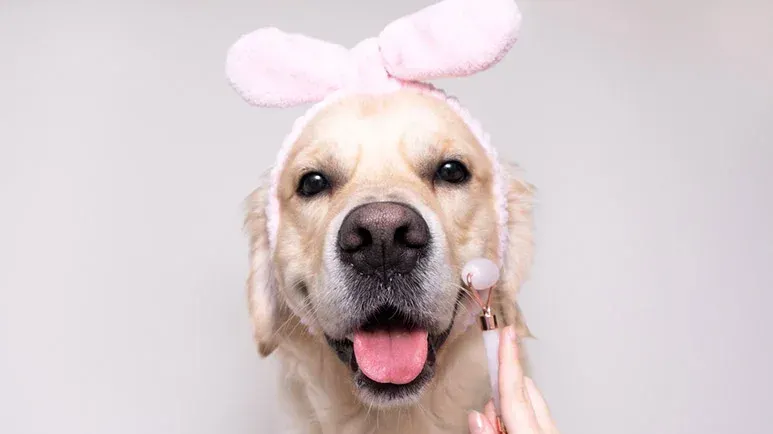
You've probably seen the gua sha stones that have taken over the beauty world, those smooth, flat pieces of jade or rose quartz that people glide along their cheekbones and jawline in the morning for a de-puffed, glowing look. What you may not have seen is a growing group of integrative veterinarians using those same tools, with the same gentle scraping motion, on dogs. And they're reporting something worth paying attention to: better pain control, calmer behavior, and dogs who seem to melt into the sessions the way their humans do during a spa facial.
Gua sha for dogs sounds like one of those wellness trends that's about to collapse under its own silliness. It isn't. The technique is thousands of years old, and the mechanics that make it useful for human faces — moving fluid, releasing fascia, nudging circulation translate reasonably well to the muscles and connective tissue running along a dog's back and legs. Here's what it is, what it may do for your dog, and an honest look at the safety picture.
What Gua Sha Actually Is
Gua sha is a bodywork technique that goes back thousands of years in Traditional Chinese Medicine. The name roughly translates to "scraping sand." In practice, it means using a smooth-edged stone tool, typically jade, rose quartz, or a similar material, to make long, gentle strokes along the skin. The pressure moves stagnant fluid, boosts blood flow, and encourages the body's own healing responses. In TCM terms, it unblocks stuck Qi, or vital energy, that practitioners describe as the source of pain, inflammation, stiffness, and buildup of metabolic waste.1,2
The adaptation for dogs changes the pressure and the technique to suit a four-legged body, but the underlying idea is the same. The tool stretches and compresses the fascia, the thin connective tissue wrapping muscles, nerves, and organs, which prompts collagen cells to produce healthier tissue, reduces adhesions under the skin, and helps break up scar tissue from old injuries or surgeries.3
Why Some Vets Are Reaching for a Stone
Dr. Tori Counter of the Balanced Pet Vet, who introduced many pet parents to the practice, reports better pain control in her own patients since she started incorporating gua sha into their care. The scraping motion over a dog's neck, back, and limbs appears to reduce pain response and encourage the release of endorphins, the body's own feel-good chemicals. It's a similar reflex to the one that makes you rub your elbow after you bang it on a doorframe: gentle, rhythmic pressure signals the nervous system to turn the volume down on discomfort.4,5
A few studies also suggest the technique can help with proprioception, the body's sense of where its limbs are in space. That matters for dogs with intervertebral disc disease (IVDD), chronic pain, or neurological issues that leave them unsure of their footing. Gentle stimulation of the skin and underlying fascia seems to help the brain reconnect with those less-responsive areas.6
What It May Help With
Gua sha is a complementary therapy meaning it's meant to work alongside veterinary care, not replace it. The dogs most likely to benefit are those dealing with:7
- Muscle soreness or stiffness from aging, over-exertion, or compensating for an injury
- Recovery from injury or surgery, where circulation and lymphatic drainage support healing
- Age-related mobility issues: stiff joints, slow mornings, that sense that getting up has become work
- Chronic pain conditions like arthritis or IVDD, as part of a broader pain management plan
- General stress, tension, or anxiety that lives in the body as tightness and bracing
It won't fix structural problems, cure disease, or replace what a veterinarian can diagnose and treat. It may make an older or hurting dog measurably more comfortable and give you a quiet daily ritual that supports whatever else they need.
The Tools Themselves
Gua sha tools are usually made from stone. Jade is a traditional choice associated with peace and good fortune. Rose quartz is linked to love and compassion. Some tools are also made from bian stone, bone, horn, and even stainless steel. For a dog, size and shape matter more than material. You want a smooth, rounded edge that glides along the body comfortably and fits well in your hand.8
Can You Do This at Home?
Here's where the two main schools of thought diverge, and it's worth hearing both.
Some integrative veterinarians, including Dr. Counter, teach clients to use gua sha at home. The appeal is practical: The cost is just the tool and some time learning the technique safely. Using it daily between professional sessions keeps movement flowing, speeds recovery, builds the bond between pet and parent, and costs far less than weekly acupuncture appointments. One guideline worth borrowing is to place your non-dominant hand over bony prominences like the spine, elbow, hips, or knees to protect them, so you're never scraping directly over bone.9
However, other veterinary experts urge caution about home use, pointing out that incorrect pressure or technique could cause bruising, discomfort, or injury. Their recommendation is to seek out a vet or certified canine rehabilitation therapist trained in Traditional Chinese Veterinary Medicine (TCVM) and let a professional handle it.10
For most pet parents, it’s best to start with a trained practitioner. Watch, ask questions, feel how much pressure is appropriate on your particular dog. Then, if your vet thinks it's safe, you can continue gentler maintenance sessions at home between appointments.
Where Not to Use It
Gua sha isn’t right for every dog or every situation, and their body usually tells you when something’s off. Avoid the technique on:11
- Broken, irritated, or infected skin
- Areas with tumors, lumps, or unexplained swelling
- Dogs with blood clotting disorders or those on blood-thinning medication
- Areas of acute injury or recent surgery not yet cleared by your vet
- Any part of your dog's body where touch clearly makes them uncomfortable
If your dog pulls away, stiffens, or shows the stress signals you know in them lip licking, head turn, whale eye stop. The technique only works if the experience feels good.
How Often Should You Do It?
Frequency depends on the individual dog and what you're working with. A dog recovering from surgery may benefit from short, frequent sessions, while a senior dog with arthritis may do best with two or three focused sessions a week. A healthy adult may just enjoy a weekly session as part of a bonding ritual.
Consult with a qualified integrative veterinarian who can help you set a schedule that matches your dog's needs. However, keep in mind that not every groomer, massage therapist, or wellness practitioner is trained in gua sha and training matters.
Again, remember to look for a veterinarian or certified canine rehabilitation professional with specific credentials in TCVM or integrative therapies. Your regular vet can be a good starting point for a referral, and the American Holistic Veterinary Medical Association (AHVMA) keeps a directory of integrative practitioners.
The Takeaway for Pet Parents
Your dog doesn't need a 10-step wellness routine. But if you're already picking up gua sha stones for your own face in the morning, the idea of extending that quiet, deliberate care to the dog curled up at your feet isn't as fringe as it may sound. Done thoughtfully, with proper training, and in partnership with an integrative vet who knows your pet, gua sha can be a gentle, inexpensive addition to a holistic approach one that supports circulation, eases tension, and gives you a few quiet minutes together that have nothing to do with vet bills or medication schedules.
Some of the best things we can do for our aging dogs are the simplest. A warm hand. A smooth stone. A few minutes of attention. Your best friend was going to want in on your self-care routine eventually. Turns out they might have been onto something all along.
Sources and References

Better Health Begins in the Bowl

Better Health Begins in the Bowl
The Ultimate Pet Nutrition Guide was created to help dog and cat parents understand what truly supports lifelong health.
In this free guide, you’ll discover:
-

How your pet’s biology influences their nutritional needs
-
Why conventional feeding advice often falls short
-
Practical ways to choose better food for your dog or cat
View our Privacy Policy and Terms of Service.