Is Their Water Bowl Hiding a Surprising Upgrade?
Your pet's water bowl has been sitting on the kitchen floor for years without you giving it a second thought. A growing body of veterinary research suggests one small upgrade to what fills it might support their aging process.
Reviewed by Dr. Elizabeth Hardoon




Join the Bark & Whiskers™ Family
Sign up today for our FREE newsletter, packed with expert advice and insider tips to keep your beloved pet in tip-top shape.
View our Privacy Policy and Terms of Service.


STORY AT-A-GLANCE
- Hydrogen water is regular water infused with dissolved molecular hydrogen gas, the smallest molecule in existence, which acts as a selective antioxidant that neutralizes only the most damaging free radicals without disrupting normal cell function
- A 2021 study in beagles found dogs drinking hydrogen-rich water healed wounds in 19 days versus 22 days for controls, with better tissue vascularization and elevated antioxidant enzyme activity
- Research and integrative veterinary practice point to potential benefits for wound healing, joint comfort, cognitive support in senior pets, gut health, coat quality, and athletic recovery in active dogs
- Recommended starting doses are 1 to 2 milliliters (ml) per kilogram daily for dogs and 0.5 to 1 ml per kilogram for cats, introduced gradually alongside regular water rather than replacing it entirely
- Skip or check with a vet first for pets undergoing chemotherapy, on diuretics, with congestive heart failure, immediately post-surgery, under eight weeks old, or cats with chronic kidney disease
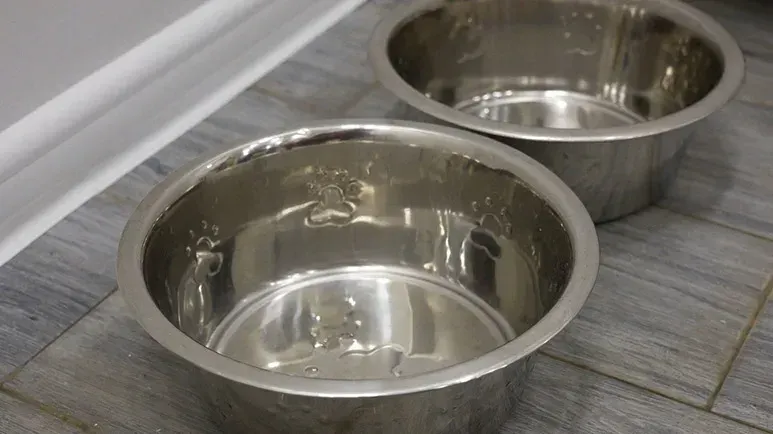
You've done the research on pet food. You've thought about supplements. You've even upgraded to a nicer stainless-steel dish. But have you ever given a thought to the water going into their bowl?
Most pet parents haven't given it a second thought beyond using filtered water. And yet a small but growing body of veterinary and integrative health research suggests there's a surprisingly simple upgrade happening in some kitchens right now — one that might do more for your pet's joints, healing, and even aging brain than most of the pricier supplements on the shelf.
What Hydrogen Water Actually Is
Hydrogen water is regular water (H₂O) with additional dissolved molecular hydrogen gas (H₂), which is the smallest molecule in existence. Not to be confused with hydrogen peroxide (H₂O₂), which is toxic, molecular hydrogen is an odorless, colorless, nontoxic gas that dissolves into water and behaves as a selective antioxidant once inside the body.
The therapeutic range studied in animals is roughly 0.5 to 1.6 parts per million (500 to 1,600 parts per billion) of dissolved H₂. What makes it interesting is how the molecule behaves in the body. Because it's so small, it slips through cellular membranes and can reach places where most conventional antioxidants can't, including the mitochondria, cell nuclei, and even brain tissue.
And rather than neutralizing every free radical in sight (which can cause its own problems), molecular hydrogen selectively scavenges the most damaging reactive oxygen species, specifically hydroxyl radicals and peroxynitrite, while leaving the beneficial signaling oxidation processes alone. Excess hydrogen simply exhales out through the lungs.1,2
Why Antioxidants Matter for Your Pet
Dogs and cats live in the same environmental soup we do. They breathe the same indoor air, walk on treated lawns, share exposure to household chemicals, and eat processed foods that generate reactive oxygen species during metabolism. Their built-in antioxidant defenses — enzymes like superoxide dismutase and glutathione peroxidase — gradually weaken with age.
That imbalance between free radicals and antioxidant capacity is what scientists call oxidative stress, and it's implicated in almost every chronic condition in aging pets: arthritis, cognitive decline, cardiovascular changes, cancer, kidney disease, and more.3,4
Anything that can gently support the body's antioxidant systems over the years your pet is with you is worth understanding. Hydrogen water is one of the more scientifically grounded options in the current pet wellness space.
What Research Actually Shows
The most rigorous pet-specific study on hydrogen water to date came out in 2021 in the journal Veterinary Sciences. Researchers worked with twelve male beagle dogs, created standardized skin wounds, and gave one group four hundred milliliters (ml) of hydrogen-rich water three times daily while the control group drank standard distilled water.5
The results were meaningful across every metric. The dogs drinking hydrogen water healed their wounds in an average of 19 days versus 22 days for the control group. At the 7-day mark, wound closure was 46.8% in the hydrogen group versus just 16.4% in the control group.
The tissue under a microscope showed significantly greater blood vessel density, which is what healing tissues need for oxygen and nutrient delivery. Biochemically, hydrogen water raised levels of SOD (superoxide dismutase) — an important antioxidant enzyme — and lowered markers of oxidative damage. It also activated the Nrf2 signaling pathway, which upregulates the body's own antioxidant defenses. And no adverse effects were reported throughout the study.6
Beyond that specific study, a large body of animal research — including hundreds of studies reviewed in a 2024 comprehensive review in Biochemistry and Biophysics Reports — supports molecular hydrogen's anti-inflammatory and antioxidant effects across multiple mammalian systems.7 Studies in rodent models have shown reductions in hippocampal oxidative stress, improved cognitive performance in age-related decline, reduced markers of periodontal (gum and dental) damage, and reduced levels of pro-inflammatory cytokines like TNF-α and IL-6.8
Where the Benefits May Show Up in Your Pet
Based on the current research, hydrogen water may support a surprisingly wide range of everyday pet health concerns. The common thread across almost all of them is the same mechanism — reducing oxidative stress and calming low-grade inflammation before they can start to compound over the years.
- Wound healing and post-surgical recovery — The strongest pet-specific research evidence links hydrogen water to faster wound closure and better tissue regeneration.9
- Joint comfort and mobility — Molecular hydrogen's anti-inflammatory action may reduce the oxidative damage that drives arthritis and stiffness in aging dogs and cats.10
- Cognitive support in senior pets — Canine Cognitive Dysfunction Syndrome affects roughly 28% of dogs aged 11 to 12 and over 68% of dogs aged 15 to 16. Hydrogen's ability to cross the blood-brain barrier and reduce oxidative stress in brain tissue is why some integrative vets believe that hydrogen may have healing potential for CCD.11
- Gut health and immune support — Reduced intestinal oxidative stress and modulated immune responses — may be potentially relevant for pets with inflammatory bowel disease or food sensitivities.12
- Coat and skin quality — The connection between oxidative stress and skin barrier function makes this a biologically plausible benefit, though controlled studies specifically on coat and skin health are lacking.13
- Athletic recovery for active dogs — Studies on performance animals — including horses in competitive racing — have shown reduced muscle inflammation and lower blood lactate levels after intense exercise.14
- Quality of life in older pets — Reduced anxiety, better mood, and improved nerve function have all been noted in human studies, and integrative vets increasingly extrapolate these to aging pets.15
How to Actually Give It
Introducing hydrogen water is simple, but a few practical notes matter — mostly because dissolved hydrogen behaves a little differently than any other supplement you might offer, and small mistakes in preparation or delivery can cancel out most of the benefits.
- Start low, go slow — A conservative starting dose for dogs is 1 to 2 ml per kilogram of body weight per day. For cats, 0.5 to 1 ml per kilogram. Introduce it at about 25% of the target amount and build up over one to two weeks. Watch for any digestive changes as your pet adjusts.16
- Don't replace all their water — Hydrogen water supplements the normal water bowl rather than replacing it entirely. This is especially important for cats, who can be stressed by abrupt changes to their drinking environment. Many pet parents offer hydrogen water in a separate bowl alongside their regular water and let their cat decide.
- Fresh is best — Dissolved hydrogen begins off-gassing immediately after production. At room temperature in an open bowl, most of it dissipates within 30 to 60 minutes. Prepare hydrogen water close to serving time and offer it right after generating. In sealed containers, it holds for a few hours.
- Morning delivery works well — Giving hydrogen water on an empty stomach in the morning appears to support the best absorption.
- Monitor — Mild, temporary increases in urination can happen as the body responds to the antioxidant support. That's usually not a concern. Persistent digestive upset warrants discontinuing use and checking with your vet.
Choosing a Device Worth Trusting
Not all hydrogen water products are created equal. The quality of the technology directly affects how much dissolved hydrogen your pet receives and whether harmful byproducts get in along the way. Here are factors to look for:
- Solid Polymer Electrolyte/Proton Exchange Membrane (SPE/PEM) technology — SPE/PEM electrolysis separates the electrolysis cell so that ozone and chlorine (toxic byproducts produced at the anode) are drained away separately. Single-chamber devices cannot separate these contaminants.
- Platinum-coated titanium electrodes — This is the industry standard. They don't corrode, don't leach metals, and maintain consistent hydrogen production over time.
- Verified PPB output — The device should specify its output in parts per billion or parts per million, ideally verified by independent laboratory testing rather than just manufacturer claims.
- Third-party certifications — Look for International Hydrogen Standards Association (IHSA) certification and H₂ Analytics testing.
- FDA-registered manufacturing facilities — are recommended for the device components that contact water.
Portable hydrogen water bottles work well for daily use and for taking on hikes or trips. Countertop pitchers or jugs are convenient for multi-pet households or families who also drink hydrogen water themselves. Regular carbon filters and reverse osmosis systems do not produce hydrogen water — you need a specific device that generates and dissolves molecular hydrogen. Hydrogen tablets exist too but tend to produce less predictable concentrations.17
When to Skip It or Ask Your Vet First
Hydrogen water has a strong safety profile, and no serious adverse events have been reported across human or animal studies. But there are situations that warrant extra caution or veterinary conversation before introducing it:18
- Pets undergoing chemotherapy — Hydrogen's antioxidant effects could theoretically interfere with the effectiveness of chemotherapy. Talk to your veterinary oncologist first.
- Pets on diuretic medications — Any increase in fluid intake could alter dosing or hydration status.
- Pets with congestive heart failure — Increased fluid intake can be harmful for heart failure cases, so monitor your pet closely.
- Immediately post-major surgery — Although it assists in wound healing, contact your vet to make sure it is safe for your pet’s particular surgery.
- Young animals (under eight weeks) — Puppies and kittens should stick with species-appropriate milk or plain water during this window.
- Cats with chronic kidney disease — May benefit from hydrogen water's antioxidant support (since oxidative stress drives CKD progression), but reduced fluid intake can be harmful for cats with kidney disease so monitor your pet closely.
For all pets, an integrative or holistic veterinarian who's familiar with hydrogen therapy is the best person to help decide whether it makes sense for your specific animal, especially if they are on medications or have chronic health conditions.
Honest Limits of the Science
It would be misleading to present hydrogen water as fully established therapy. The evidence base is promising but still developing. However, it’s worth acknowledging that most animal research has been short-term — days to weeks rather than years. Long-term multi-year safety data specifically in cats and dogs is still lacking.
Species-specific dosing standards haven't been formally published by major veterinary associations yet. Condition-specific efficacy trials in dogs and cats — for arthritis, IBD, CKD, cognitive decline — are limited compared to the human literature. And some of the more enthusiastic claims in the online pet wellness space run ahead of what the evidence supports currently.
None of that means hydrogen water is ineffective. The scientific evidence is solid, the safety data is reassuring, and the 2021 study provides real proof of concept. But it does mean hydrogen water should be viewed as a supportive tool in a comprehensive wellness plan — not a stand-alone treatment for diagnosed disease. Your pet's diet, their environment, their exercise, and their overall care all matter more than any single supplement, including this one.
What to Watch For
Since pets can't tell you how they feel, watch for these signals over four to eight weeks of consistent use:
- Increased energy or playfulness, especially in senior pets
- Reduced stiffness after sleep or rest
- Improved coat sheen and less dry, flaky skin
- More regular digestion
- Calmer demeanor in anxious pets
- Faster healing of minor cuts, scrapes, or post-operative incisions
If you see no meaningful change after eight to 12 weeks of consistent, properly dosed use, hydrogen water may simply not be the right intervention for your specific pet, and that's useful information too.19
The Real Takeaway
Water is the one thing your pet drinks every single day of their life. That daily volume over their lifetime, adds up to a big opportunity to deliver something beneficial through a simple intervention. Hydrogen water represents one of the more scientifically grounded ways to make that daily bowl of water do a little more work — supporting antioxidant defenses, calming inflammation, and helping tissues heal a little faster.
It's not a miracle and it is not a replacement for a good diet, regular holistic vet care, exercise, or the many other pieces of a well-rounded wellness plan. But for aging pets dealing with joint stiffness or cognitive changes, active dogs needing better recovery, or pets healing from surgery or injury, it's a low-risk addition that a growing number of integrative and holistic veterinarians are watching closely. The research is still evolving. The safety profile is reassuring. And the setup is genuinely as simple as swapping a bottle of water.
Your pet's water bowl has been sitting quietly on the kitchen floor for years. It might be time to take a second look at what's actually in it.
Sources and References

Better Health Begins in the Bowl

Better Health Begins in the Bowl
The Ultimate Pet Nutrition Guide was created to help dog and cat parents understand what truly supports lifelong health.
In this free guide, you’ll discover:
-

How your pet’s biology influences their nutritional needs
-
Why conventional feeding advice often falls short
-
Practical ways to choose better food for your dog or cat
View our Privacy Policy and Terms of Service.