Have You Ever Checked Your Puppy's Belly Button?
That soft little lump on your puppy's belly is not necessarily something to panic about — it is one of the most common quirks in puppyhood. Knowing what to look for (and when it matters) can save you a lot of unnecessary worry.
Reviewed by Dr. Elizabeth Hardoon


Join the Bark & Whiskers™ Family
Sign up today for our FREE newsletter, packed with expert advice and insider tips to keep your beloved pet in tip-top shape.
View our Privacy Policy and Terms of Service.


STORY AT-A-GLANCE
- Dog belly buttons are hidden under fur on the midline of the belly, just below the rib cage — and a soft lump in that spot on a puppy is often an umbilical hernia, one of the most common minor quirks in puppyhood
- An umbilical hernia happens when the umbilical ring (the small opening in the abdominal wall that carried blood vessels before birth) doesn’t fully close after birth, allowing a bit of fat or, less commonly, other tissue to push through and create a soft bulge under the skin
- Umbilical hernias tend to run in family lines, suggesting a genetic component, though the exact inheritance pattern is not fully understood
- Trauma during birth can occasionally cause one too, but that is much less common than the genetic explanation
- Most umbilical hernias are painless, harmless, and cosmetic — small ones are often close on their own by 3 to 4 months of age — though larger hernias carry a small risk of strangulation (trapped tissue losing blood supply), which is a rare but genuine medical emergency
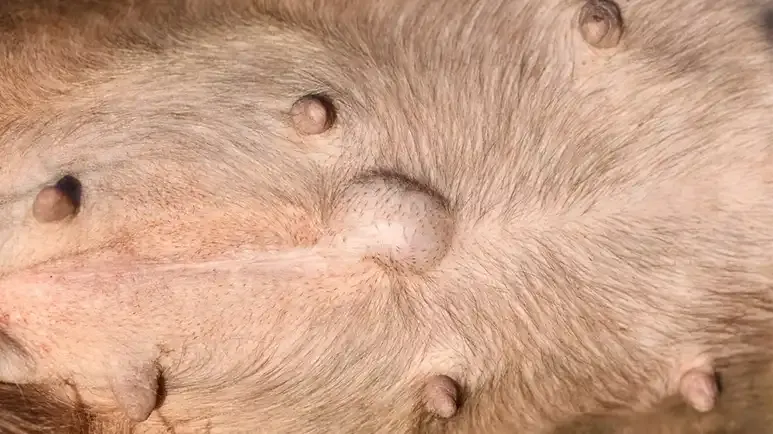
It usually happens during belly-rub times. You are scratching your puppy, they roll onto their back with joyful abandon, and there it is — a small, soft lump right in the middle of their tummy. Not on the surface, but under the skin. Like a tiny outie belly button.
If this is your first time noticing it, your first instinct is probably to panic. A lump? Is it a tumor? Is my puppy okay?
Do not panic — There's a very good chance what you are feeling is an umbilical hernia, which is one of the most common and, in most cases, one of the most harmless little quirks a puppy can be born with.
Wait — Do Dogs Even Have Belly Buttons?
The answer is yes. Every puppy is born with an umbilical cord, just like every human baby, and that means every dog has a belly button — it just is not as easy to spot on a furry animal as it is on a person.
You will find your dog's belly button on the midline of their belly, just below the rib cage. On most adult dogs, it is flat and hidden under fur. On a puppy with an umbilical hernia, it may show up as a soft little bulge you can feel with your fingers.1,2
What an Umbilical Hernia Actually Is
To understand what a hernia is, it helps to know what is supposed to happen in the first place. Before birth, a puppy is connected to their mother through the umbilical cord, which passes through a small opening in the abdominal muscles called the umbilical ring. Blood vessels run through this opening, delivering nutrients and oxygen and carrying away waste.
After the puppy is born, the umbilical cord breaks. In the case of a natural birth the mother chews it off, in the case of a C-section it will be clamped and cut. What is left is a small stump that dries up and falls off over a few days. Meanwhile, the umbilical ring in the abdominal wall is supposed to shrink and close completely.
Sometimes, it does not. When the ring does not fully close, a small hole remains in the abdominal wall. If that hole is large enough, a bit of abdominal fat — or in larger hernias, other tissue (which can lead to problems) can push through it, creating the soft lump you can feel beneath the skin. That is an umbilical hernia.3,4
What Causes It
Umbilical hernias are relatively common in puppies, and the main driver appears to be genetics. They tend to run in family lines and may be more common in certain breeds; and while the exact inheritance pattern is not fully understood, several genes may be involved, and many are thought to be passed on in a recessive way.
That has two practical implications. First, a puppy with an umbilical hernia may have parents who look unaffected. Second, breeding two dogs that both have the trait can result in a whole litter of puppies with hernias.
Trauma can occasionally cause an umbilical hernia too. If the umbilical cord is removed too aggressively — for example, if the mother chews it very close — it can leave a larger opening than would normally heal cleanly. This is relatively uncommon, though, and should not be used as an all-purpose explanation for hernias in a litter.
Signs to Look For
Umbilical hernias are typically easy to spot once you know what you are looking for. Most puppies are not shy about showing off their bellies during a good scratch, and that is often the moment a pet parent first notices something unusual. Here is what to check for:5,6
- Location — on the midline of the belly, just below the rib cage
- A soft swelling or lump under the skin, sometimes described as an outie belly button
- The bulge often becomes more noticeable when the puppy is standing, barking, crying, or straining
- Small hernias are often about half an inch across; larger ones can be considerably bigger
They are not usually painful, and most puppies act completely normal even with a fairly obvious hernia.
Reducible vs. Non-Reducible Hernias
Hernias fall into two categories, and the difference matters. Knowing which type your puppy has helps your vet decide whether to keep an eye on it or take a more active approach. It also gives you a better sense of what to expect in the weeks ahead. Your vet can tell the difference during a physical exam:
- Reducible hernias — The fat or tissue that has pushed through the opening can be gently pushed back into the abdomen. These are more common in puppies.
- Non-reducible hernias — The tissue is stuck in the opening, sometimes because scar tissue has formed around it. These require more attention because the contents cannot move freely, and treatment is more likely to be recommended.
Are They Dangerous?
No. Umbilical hernias are usually a cosmetic issue rather than a health one, and most dogs live their entire lives with a small hernia without any problems. But there are two risks worth knowing about:7,8,9
- Strangulation — In larger hernias, a loop of intestine or other tissue can slip through the opening and get pinched or twisted, cutting off its blood supply. This is a medical emergency that requires immediate surgery, and it is very painful. The reassuring part is that strangulation is extremely rare — many veterinarians never see a case over their entire career.
- Skin trauma — Because a hernia forms a raised bulge, the skin over it can get scraped or irritated if your dog drags their belly across rough surfaces.
Signs of a strangulated hernia include a hernia that suddenly becomes hard, painful, hot, or discolored, along with vomiting, lethargy, or a puppy who is clearly distressed. If any of that shows up, it is an emergency room visit.
Can They Close on Their Own?
Very small umbilical hernias (typically less than about a quarter inch across) may close on their own by the time a puppy is 3 to 4 months old. More commonly, umbilical hernias will not close and will persist throughout life unless they are surgically corrected.
Your vet will usually monitor an umbilical hernia over the first few months of life to see if it remains the same size, gets larger or whether it closes on its own
Treatment: Sometimes None, Sometimes Surgery
The right treatment depends on the size of the hernia, whether it is reducible, and your puppy's overall situation. Although small, reducible hernias often pose no problem, most veterinarians will recommend closure at the time that your pet is spayed or neutered. If your pet will not be spayed or neutered monitoring is recommended. If the hernia is reducible, remains the same size, and does not bother your dog, monitoring is a reasonable choice.
For larger hernias, repair is recommended. Even though the risk of strangulation may be low, it does exist and can lead to a medical emergency. Larger hernias are also more likely to be uncomfortable or to cause skin irritation.
The procedure itself is straightforward — The veterinarian makes a small incision over the hernia, gently pushes any tissue back into the abdomen, and then uses strong sutures to close the opening in the abdominal wall. For large hernias, surgical mesh may be placed over the opening for additional support. The prognosis is excellent. Recurrence is rare, and complications are uncommon.
Recovery Basics
Recovery is usually smooth, but a few things matter. The days right after surgery are when small missteps can turn into bigger setbacks, so a little extra attention during that window pays off well. Keep these basics in mind:10
- Keep your puppy from licking or chewing the incision — an Elizabethan collar, a recovery suit, or a snug onesie all work
- Restrict activity as directed — no rough play, no jumping, no long walks, swimming or bathing until your vet gives the all-clear
- Give any prescribed medications on schedule
- Watch for signs of trouble — redness, swelling, discharge, or a puppy who seems unusually painful
- Attend all follow-up appointments
If a puppy pulls out their sutures, they may need a second surgery, so the recovery cone (as unglamorous as it looks) is doing important work.
When to Call the Vet
A small, soft, painless bulge on a young puppy's belly is worth mentioning at their next visit but if your puppy is acting normally and is not in pain, it is not an emergency. Bring it up at the next appointment, and your vet can confirm what you are looking at and give you a plan. Call sooner — or head to an emergency clinic — if you notice:11,12
- A hernia that suddenly becomes hard, hot, discolored, or clearly painful
- Sudden vomiting, lethargy, or appetite loss along with a hernia
- A hernia that is growing rapidly
- Skin irritation, redness, or open sores over the hernia
Why This Lump Rarely Deserves Panic
If you have spotted a soft little lump on your puppy's belly, you've just discovered one of the most common minor quirks in puppyhood. Umbilical hernias are usually harmless, sometimes will close on their own before four months of age, and when they do not, they can be fixed easily during a routine spay or neuter.
The key is knowing what you are looking at, keeping an eye on it, and looping in your vet. Most puppies grow up with either a fully closed belly button or a small, quiet reminder that they, too, had an umbilical cord once upon a time.
So go ahead — during your next round of belly rubs, run your fingers gently over your puppy's tummy. If everything feels smooth and flat, wonderful. And if you find that little outie, now you know exactly what to do about it.
Sources and References
- 1,3,5,7,10,11 Chewy, July 23, 2026
- 2,4,6,8,12 VCA Hospitals, Umbilical Hernia in Dogs
- 9 Dr. Kelly’s Surgical Unit, March 10, 2025

Better Health Begins in the Bowl

Better Health Begins in the Bowl
The Ultimate Pet Nutrition Guide was created to help dog and cat parents understand what truly supports lifelong health.
In this free guide, you’ll discover:
-

How your pet’s biology influences their nutritional needs
-
Why conventional feeding advice often falls short
-
Practical ways to choose better food for your dog or cat
View our Privacy Policy and Terms of Service.