59% of American Dogs Share This One Problem
More than half of American dogs are carrying weight that is quietly stealing months or years from their lives, and the most effective fixes are smaller and simpler than most pet parents expect.
Reviewed by Dr. Arielle Walton


Join the Bark & Whiskers™ Family
Sign up today for our FREE newsletter, packed with expert advice and insider tips to keep your beloved pet in tip-top shape.
View our Privacy Policy and Terms of Service.



STORY AT-A-GLANCE
- About 59% of dogs in the United States are now classified as overweight or obese, according to the Association for Pet Obesity Prevention
- A 20-year study of more than 57,000 dogs found that dogs at a healthy weight lived significantly longer than overweight dogs between five months and 2.5 years more
- Obesity has surged in recent decades not because dogs lost willpower but because of an "obesogenic environment" — calorie-dense pet foods, treats, table scraps, indoor lifestyles, smaller spaces, and a cultural drift in what we think a "normal" dog looks like
- The highest-impact changes pet parents can make at home are simple: Measure every meal with an actual cup or scale, cap treats at 10% of daily calories, swap high-calorie snacks for vegetables, and add gentle daily walks
- The medical community now treats obesity as a chronic, multifactorial disease rather than a failure of willpower — so the best results come from working with your vet on a realistic Body Condition Score target, ruling out underlying issues, and approaching weight loss with patience and compassion rather than guilt
Look around the dog park, the vet waiting room, or your own living room, and you will see it. A little extra around the middle. A waistline that has quietly disappeared. A breath that comes a little harder after climbing the stairs. If that picture feels familiar, you are very much in the majority.
According to the Association for Pet Obesity Prevention (APOP), about 59% of dogs in the United States are now classified as overweight or obese. That is more than half of all American dogs carrying weight that is working against their health every single day.
The good news is that this is one of the most fixable health problems in veterinary medicine. Helping your dog get to a healthier weight is not about willpower or guilt, but about understanding what’s actually going on.
Why So Many Dogs Are Carrying Extra Weight
Fifty years ago, obesity in dogs was relatively uncommon. Today, it is everywhere. The shift is dramatic, and it is not about dogs suddenly losing self-control. It is about the world they live in.
Several modern factors layer together to create what researchers now call an obesogenic environment, one where the calories are easy to come by and the activity is not. For example:1
- Commercial pet foods, treats, and table scraps are abundant and calorie-dense
- Indoor lifestyles and smaller spaces mean less natural movement
- Spaying and neutering shift metabolism in ways that change calorie needs
- Many owners underestimate ideal body condition, so a normal-looking dog is often already too heavy
- Treats, chews, and bonus snacks add up fast
Major medical and veterinary bodies now classify obesity as a chronic disease, not a character flaw. It is influenced by genetics, biology, behavior, and environment. Approaching it with that framing actually makes the path forward easier.
What Extra Weight Actually Does to Your Dog
This is where the numbers really matter. Weight does not just affect how a dog looks, it affects how they feel, what they can do, and how long they live.2
A large study published in the Journal of Veterinary Internal Medicine followed more than 57,000 dogs over 20 years. The pattern was striking. Dogs at a healthy body weight lived significantly longer than overweight dogs, by five months to 2.5 years, depending on the breed. That is a meaningful amount of life with a dog you love.3,4
Beyond lifespan, excess weight contributes to a long list of health problems. The most common include:5,6,7
- Joint pain and arthritis (extra weight stresses bones and joints, and fat cells release inflammatory compounds that make arthritis worse)
- Heart and lung strain
- Higher anesthesia risk during surgery
- Increased risk of diabetes
- Higher cancer risk
- Skin and coat problems
- Reduced mobility and energy
- More frequent injuries
- Breathing trouble, especially in short-faced breeds
- Insulin resistance and high blood pressure
None of these are inevitable parts of aging or breed. Many of them improve, sometimes dramatically, when a dog loses weight.
Fat tissue itself is not just inert padding. It is metabolically active and releases inflammatory compounds that affect joints, blood vessels, and organs throughout the body. That is part of why weight loss tends to produce wider benefits than just an easier-to-fit harness.
The Body Condition Trap
One reason obesity has crept into so many homes is that what we think a healthy dog looks like has drifted over the years. A dog with a barely-visible waist now looks normal to a lot of pet parents, and a dog with a true tucked waist can look almost skinny by comparison.8
Veterinarians use a Body Condition Score, usually on a 1 to 9 scale, to assess weight more objectively. At a healthy BCS, you should be able to feel your dog's ribs easily without pressing hard, see a waist when you look down from above, and see an upward tuck in the belly from the side.9
If you cannot feel the ribs through a soft layer of fat, if the waist has rounded into a barrel shape, or if the belly hangs lower than the chest, your dog is likely carrying excess weight. Your vet can show you exactly where your dog falls and what target makes sense.
It is worth doing this check on your own dog every few weeks. Weight tends to shift slowly enough that the change is easy to miss day to day, but a hands-on assessment makes the trend obvious.
Where to Start at Home
You do not have to overhaul everything at once. In fact, small, consistent changes usually work best. Here are some tips to help you get started:10
- Measure every meal — This is the single highest-impact change most pet parents can make. Eyeballing portions or scooping with a coffee mug can quietly add hundreds of extra calories a week. Use an actual measuring cup or, better, a kitchen scale.
- Cap treats at 10% of daily calories — Treats add up faster than most owners realize. A handful of biscuits, a few training bites, a bedtime chew, they all count. One simple trick: Set aside a portion of your dog's regular food at the start of the day and use it for treats.
- Swap high-calorie snacks for vegetables — Green beans, baby carrots, slices of bell pepper, and plain canned pumpkin are low-calorie, satisfying, and often a hit with dogs who think they have won the lottery when something crunchy appears.
- Bulk up meals with safe extras — Adding green beans or a splash of water to kibble helps a dog feel full without adding meaningful calories. Some dogs love their kibble soup right away; others wait for the kibble to soften. Senior dogs especially seem to do well with this approach.
Move More, Gently and Consistently
Calories matter, but movement does too. Daily walks, low-impact play, and structured activity help your dog burn calories, preserve muscle, and stay limber.
Research has shown that the equivalent of a two-mile daily walk can let a dog eat about 10% more calories and still lose weight successfully. That is a meaningful margin, especially for dogs who really enjoy their food.
Start slowly, especially if your dog is already heavy or has joint issues. Short walks at a comfortable pace, gentle swimming if it is available, slow hill work, and indoor games like find-it with their measured food can all help build activity without overloading sore joints.11
Senior dogs benefit from movement too, arguably more than younger dogs. Keeping muscle on an older dog helps joints, balance, and overall comfort. Just keep sessions short, easy, and tailored to what they can handle.12
Should You Consider a Different Diet?
For dogs who struggle to lose weight on their current food, a diet change may be worth exploring with your vet. Options include weight-management formulas, lower-calorie complete diets, or carefully designed home-prepared meals built around lean proteins, vegetables, and a veterinary-approved vitamin and mineral supplement.
Home-prepared diets in particular need to be properly balanced. Working with your veterinarian or a board-certified veterinary nutritionist makes sure you are not unintentionally creating new gaps.13
Senior pets sometimes benefit from foods designed for older bodies, more digestible, with adjusted calorie levels and nutrients that support healthy aging. Whether your dog needs one is exactly the sort of question to bring up at your next vet visit.14
Watch for Sudden Weight Changes
A slow, gradual creep upward is the most common pattern, but sharp shifts in either direction are worth paying attention to. For example, sudden weight loss in an older dog or cat can point to hyperthyroidism, kidney disease, diabetes, or cancer. Sudden weight gain, especially with other changes like lethargy, hair loss, or increased thirst, can point to hormonal conditions like hypothyroidism. Either way, a quick call to your vet is the right next step.
Regular weigh-ins, even on a bathroom scale at home for smaller dogs, make these patterns easier to spot. Many vet clinics also welcome quick weight-only visits between exams, which can be a useful way to keep tabs on a weight-loss plan or to catch a sudden change early.15
Why This Is a Compassion Issue, Not a Blame Issue
It is easy to feel guilty when a vet says your dog is overweight. But obesity is not a sign of bad pet parenting. It is the predictable result of a food-rich, low-movement, treat-heavy environment combined with a dog who is hardwired to love calories.
The medical community now treats obesity in both humans and animals as a chronic, multifactorial disease, not a failure of willpower. Approaching your dog's weight from that angle tends to produce better, more lasting results than punishing portions or trying crash diets that nobody enjoys.16
Working with Your Vet
Your veterinarian is the right starting point for any real weight-loss plan. They can assess your dog's body condition, rule out any underlying medical contributors like thyroid issues, set a realistic target weight, and design a feeding plan tailored to your dog's age, breed, and activity level.
Many practices offer follow-up weigh-ins, sometimes for free, so you can track progress without guessing. Even small drops on the scale tend to translate to real improvements in energy, mobility, and mood.17
More Than a Slimmer Dog
If you take one thing away from the alarming statistic, let it be this: Weight is not just a cosmetic issue. It is one of the biggest levers you have for adding healthy years to your dog's life and quality to the years they already have.
A leaner dog is not just a leaner dog. It is a dog who can climb the stairs without panting, who chases the ball longer at the park, who handles arthritis better, who breathes more easily on a hot day. It is also, statistically, a dog who gets to spend more of those days with you.
So if the scale at the vet's office reads higher than you would like, take a breath. Most of America is right there with you. Then have the conversation with your vet, pick one or two small changes to start with, and give your dog the kind of fresh start that science says really does pay off.
Sources and References
- 1,5,16 Animal Web, June 25, 2026
- 2,4,6,9,10,11,13,17 Animal Wellness Magazine, June 25, 2026
- 3 J Vet Intern Med. 2019 Jan;33(1):89-99
- 7,8,12,14,15 Yahoo! Creators, June 26, 2026

Better Health Begins in the Bowl
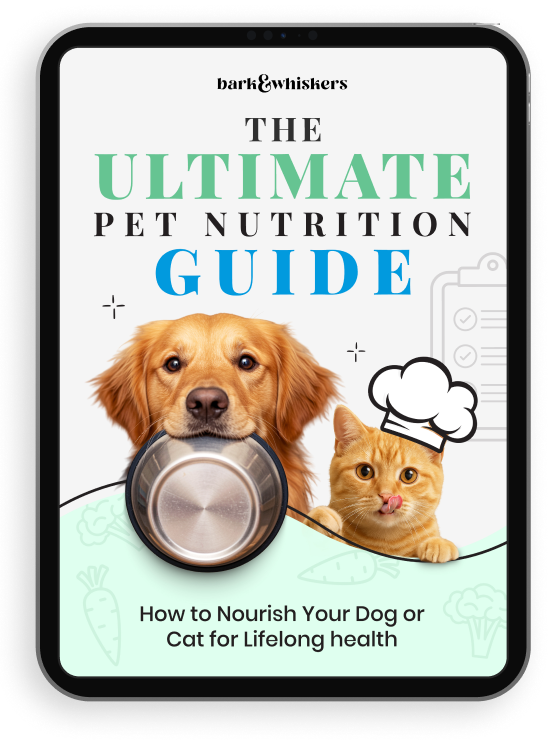
Better Health Begins in the Bowl
The Ultimate Pet Nutrition Guide was created to help dog and cat parents understand what truly supports lifelong health.
In this free guide, you’ll discover:
-

How your pet’s biology influences their nutritional needs
-
Why conventional feeding advice often falls short
-
Practical ways to choose better food for your dog or cat
View our Privacy Policy and Terms of Service.