Why Does Your Dog Hide Their Favorite Things?
Your dog is not being weird when they stash a chew toy under the couch — they are following an ancient survival script. Find out what this behavior means.
Reviewed by Dr. Elizabeth Hardoon



Join the Bark & Whiskers™ Family
Sign up today for our FREE newsletter, packed with expert advice and insider tips to keep your beloved pet in tip-top shape.
View our Privacy Policy and Terms of Service.


STORY AT-A-GLANCE
- Hiding and burying favorite things is one of the most universal canine behaviors — and it traces back thousands of years to your dog's wild ancestors
- The instinct made sense in the wild because cool, dark soil functioned as a natural refrigerator, kept the scent away from other predators, and gave the hunter's family a safe stash to return to later
- Certain breeds are especially prone because digging and stashing instincts stem from their hunting heritage; rescue dogs often hide food too, sometimes from earlier scarcity and sometimes as a self-soothing habit
- Hiding is usually harmless, but it can cross into compulsive territory or expose pets to unsafe chemicals and debris
- Dogs should never be allowed to eat what they dig out of the ground, since decomposing food can cause stomach upset, vomiting and diarrhea
You reach under the couch cushion for the remote and pull out a soggy rawhide. A favorite chew toy has gone missing for the third time this week, only to turn up tucked inside the laundry basket. Out in the yard, a fresh mound of dirt marks the spot where the new bone disappeared yesterday.
If this sounds familiar, you are not alone. Hiding and burying favorite things is one of the most universal — and most puzzling — dog behaviors. The good news is that there is an apparent reason behind it.
The Instinct Behind the Hiding
Burying and hiding go back thousands of years, long before kibble bowls and squeaky toys. Your dog's wild ancestors — wolves and other early canids — lived a feast-or-famine life. When they made a kill, they ate what they could and hid the rest to protect it from competitors and to save it for leaner days.1
That survival strategy got hard-wired into the canine brain. Even after generations of domestication, the instinct to protect valuable resources by stashing them away is still very much alive in your dog.2
Food Protection in the Wild
For wild dogs, finding food was challenging work. Hunting took time and energy, and a successful kill was a small jackpot. Once they caught their prey, they ate quickly and buried the rest — partly because their stomachs could only hold so much, and partly because other hungry mouths were always nearby.
Pack members would happily steal someone else's dinner if they caught the scent. Big cats, hyenas, jackals, and other predators would too. Tucking the leftovers underground was the safest way to make sure the hunter's family — and only the hunter's family — would get a second meal out of the kill.3
Why Dirt Is Nature's Refrigerator
There is another reason burying made sense: It kept the food from going bad. Direct sunlight makes meat spoil quickly, and the cool earth underground works a lot like a refrigerator. The deeper the hole, the cooler the temperature.
Buried meat is also harder for other animals to find, because the soil masks the scent, and in some cases the organic material in the earth adds a kind of "marinade" that some dogs find appealing later. In short, an underground stash kept food cool, safe, and out of reach until it was needed.4,5
Modern Dogs Still Follow Their Ancestors’ Habits
Your dog is not worried about scarce winters or competing predators. Their dinner shows up reliably, treats appear from the cabinet, and toys are unlimited. But the instinct to save valuables is still present.
So, when your dog grabs a food from their bowl and trots off to drop it behind the couch; or when they carry their new bone outside and start digging, they are doing exactly what their ancestors did.
This is also why dogs hide things that are not food. Toys, socks, slippers, chew bones — and yes, even the TV remote — are all fair game. Anything your dog considers valuable can become a "treasure" worth protecting.6
Why Dogs Hide Things Indoors
If your dog buries in the yard, that's instinct having a natural outlet. But what about the dog who tucks toys under the couch cushion or carries a bully stick to bed?
Dogs in multi-pet households often hide things indoors because they feel they need to protect their stash from another dog in the house, but they cannot get outside to bury it properly. The couch cushion becomes the next-best hiding place.7
Even single-dog households see this. A laundry basket, a bed, or a pile of blankets make a perfectly good hiding spot when there is no dirt available.
Breeds That Are Especially Prone
While almost any dog can develop a stashing habit, some breeds were practically designed for it. Terriers and hounds were originally developed to hunt and dig out small ground dwelling prey. Northern working breeds needed to stash food for survival in harsh winter conditions. These breeds carried those instincts into modern life.
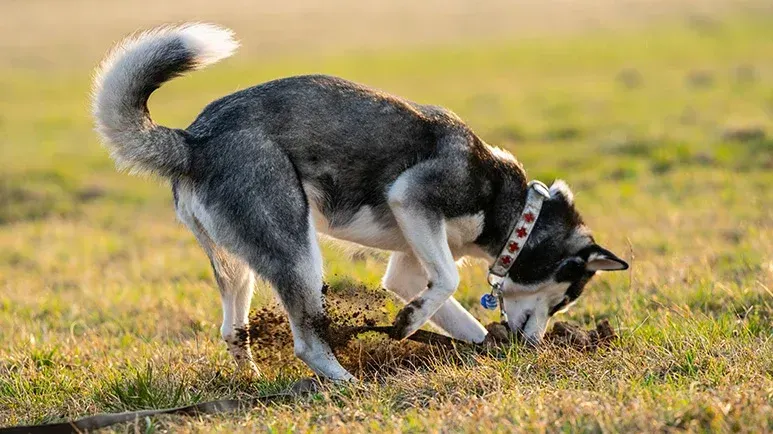
That is why it is more likely for you to see daily digging and stashing behaviors in terriers such as Jack Russell, Cairn, Scottish, and Airedales; hounds such as Dachshunds, Beagles, and Bassets; and Northern working breeds such as Siberian Huskies and Alaskan Malamutes. Although any dog breed or rescue may dig and hide food or toys, in these breeds it is part of their DNA.8
The American Kennel Club (AKC) adds that owners of hunting and working breeds tend to notice this behavior more often than owners of herding or non-sporting breeds, which lines up with the idea that the stashing instinct has roots in the hunt.9
Rescue Dogs and the Hiding Habit
Rescue dogs sometimes hide and bury food more than other dogs, and there are a couple of reasons which may be at play. Dogs who once went hungry — whether as strays, in overcrowded homes, or in shelter environments — may have learned to stash food for later whenever they had the chance. That early survival lesson sometimes sticks around long after meals become dependable.
Digging itself can also be self-soothing for an anxious dog, which is another common thread with rescues. If your newly adopted dog suddenly starts hiding food around the house, this may be a sign of anxiety. Often training, patience and regular routines can help dissipate anxiety and help them adapt to their new home.10
When Hiding Becomes a Problem
For most dogs, hiding and burying is a quirky but harmless part of life. But it can become a problem when it crosses into compulsive territory. In these cases, you may see your dog digging until their paws are raw, or destroying the yard or couch. This happens when the behavior becomes driven by anxiety rather than instinct.
Excessive digging can also expose your dog's paws to lawn chemicals, sharp debris, or pests in the soil. If hiding or digging is starting to look obsessive or causing physical harm, then it is time to loop in your veterinarian or a qualified trainer or behaviorist for help.11,12
The Trouble with Buried Bones
One important caution: Even if your dog stashes a bone like a pro, it is not safe for them to eat what comes back out of the ground. Buried food decomposes, and digging up an old bone or piece of meat days or weeks later can lead to diarrhea, vomiting, or even pancreatitis. If your dog has buried a bone, it is safest to quietly retrieve and dispose of it rather than letting them unearth it later to help prevent potential health issues.13,14
What You Can Do
Since the urge to stash comes from a sense that there is more than enough to protect, you can dial it down by making valued items feel a little less endless. The AKC suggests offering toys one or two at a time and rotating them weekly. This keeps your pet interested and prevents boredom. You also may want to avoid giving your pet bones or chews right after a meal when your dog's belly is already full, as they may be more likely to hide them for later.
If your dog clearly loves the hide-and-seek part, lean into it. Teach a "bury and find" game using blankets or a pile of pillows. Set up a dedicated “dirt box” in the yard where digging is allowed. Use gates or fences to keep the flowerbeds off-limits. Giving your dog a safe outlet for digging satisfies a deep instinct without taking apart your sofa or your garden.15
The Bottom Line
When your dog hides a favorite toy or buries a treat, they are not being sneaky. They are tapping into thousands of years of ancestral wisdom that taught their ancestors to protect what is valuable, save it for later, and do not let the neighbors find out where you put it.
The next time you find a tennis ball stashed in the laundry basket or a chew toy under the bed, take it as a little reminder that your couch-loving companion is still, on some level, the same resourceful animal who once roamed the wild — just with much better snacks and a lot more pillows to choose from.
Sources and References
- 1,5,9,15 AKC, December 4, 2025
- 2,7,8,10,12,14 Whole Dog Journal, June 9, 2026
- 3,4,6,11,13 VCA Hospitals, Why Do Dogs Bury Bones

Better Health Begins in the Bowl

Better Health Begins in the Bowl
The Ultimate Pet Nutrition Guide was created to help dog and cat parents understand what truly supports lifelong health.
In this free guide, you’ll discover:
-

How your pet’s biology influences their nutritional needs
-
Why conventional feeding advice often falls short
-
Practical ways to choose better food for your dog or cat
View our Privacy Policy and Terms of Service.