Is Your Furry Friend Trying to Tell You Something?
Your dog has been talking to you this whole time — here is how to finally start listening.
Reviewed by Dr. Tracy Duffner


Join the Bark & Whiskers™ Family
Sign up today for our FREE newsletter, packed with expert advice and insider tips to keep your beloved pet in tip-top shape.
View our Privacy Policy and Terms of Service.

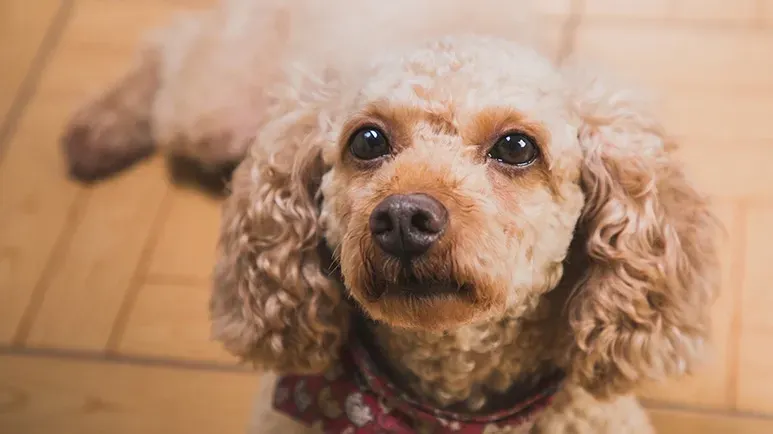
STORY AT-A-GLANCE
- Dogs are communicating constantly through body language, facial expressions, vocalizations, scent, and touch — but most of the message is non-verbal, which is why people are listeners while dogs are watchers
- Body language carries most of the meaning — a loose, fluid posture signals comfort, while shifting weight forward and standing tall signals arousal, and the universal play bow with front end down and rear end up is the canine invitation to play
- The popular wisdom about wagging tails is wrong — speed, height, and stiffness all matter, with research even showing that right-biased wags reflect positive emotions and left-biased wags reflect negative ones
- A growl is communication, not aggression — your dog is saying they are uncomfortable and need space, and punishing the growl only teaches them to skip the warning and go straight to snapping or biting
- The classic "guilty look" is not actually guilt — those crouching, head-lowered, eyes-averted postures are appeasement signals, your dog responding to your body language or past consequences and asking for the threat to stop
Watch your dog for the next 10 minutes and you will see it: an ear flick, a slow blink, a tail flop, a sniff of the air. Most of it looks like nothing. Almost none of it actually is.
Dogs are constantly communicating — sending and receiving signals through body language, facial expressions, vocalizations, scent, and touch. The catch? Most of what your dog is “saying” happens without words. People are listeners; dogs are watchers. Once you start watching, you will see a whole side of your dog you may have missed for years.
Body Language Is the Main Channel
If you only learn one fact about dog communication, make it this: body language carries most of the message. The position of your dog's body, how they hold their tail, the angle of their ears, and the looseness of their movements all carry meaning.
A confident, comfortable dog carries themselves loosely, with weight evenly distributed and movements that look fluid. An assertive or aroused dog shifts weight forward and stands tall to look bigger. An uncertain dog does the opposite — lowers their body, shifts weight back, sometimes rolls onto their side to signal they are no threat. The play bow — front end down, rear end up — is the universal “let's play” invitation, and it works as a reset when play gets too rough or when an interaction is getting tense.1
The Tail Tells a Story (But Not the One You Think)
Most people assume a wagging tail means a happy dog. Dogs know better. Tail wags can signal excitement, arousal, uncertainty — or even a warning. It is all about the speed, height, and stiffness of the wag.2
- A loose, mid-height tail wagging in a loping rhythm usually means a friendly, calm dog
- A loosely wagging tail held straight out often means calm and ready to play
- A high, stiff tail signals alertness and may warn of possible aggression
- A tail held low or tucked between the legs signals fear or uncertainty
Research even shows direction matters: Tails wagged with a bias to the right tend to reflect positive emotions, while a left-biased wag tends to reflect negative ones.3 Dogs appear to pick up on the difference, too.4
Watch Their Ears, Eyes, and Mouth
Ear position is a quick window into how your dog feels. Relaxed ears say “I'm calm.” Perked ears mean alertness. Ears flattened against the head usually mean fear or submission. Floppy-eared and pricked-eared breeds will look different, so context matters.
Eyes are surprisingly expressive. Soft, slightly squinted eyes signal comfort. A hard stare with the whites showing — what trainers call “whale eye” — is one of the clearest warning signs you will see. The mouth tells a story, too. A relaxed, slightly open mouth with a lolling tongue means a calm dog. A tight, closed mouth signals concentration. Bared teeth with flattened ears and a stiff body can point to aggression. And the “submissive grin,” where the lips pull back in something that looks like a smile, is often misread as a snarl — but it is actually a peace offering.5,6
Calming Signals: The Quiet Conversation
Some of the most important signals your dog uses are the easiest to miss. Norwegian trainer Turid Rugaas first described what she called “calming signals” — quiet behaviors dogs use to communicate peaceful intent and to defuse tension.7 These include:8,9,10
- Yawning, especially when the dog is not tired
- Lip-licking or nose-licking
- Slow blinking
- Turning the head or body away
- Sniffing the ground in the middle of an interaction
- Approaching another dog in an arc rather than head-on
These are not random behaviors. They are intentional messages that say, “I am not a threat,” or “I am uncomfortable.” When another dog responds appropriately — by softening up or backing off — the interaction stays safe. When the signals are ignored, tension can escalate quickly.11
What Your Dog's Voice Is Saying
Vocalizations are what people notice most — but they are a smaller piece of the picture than body language. Here is what you should know:12,13,14
- Barks are context-dependent: sharp and rapid can signal alarm, high-pitched and intermittent often means excitement or play, low and deep can be a warning
- Whining usually signals distress, frustration, or a need for attention
- Howling is often a response to sirens or other dogs, and some dogs howl when separated from their family
- Playful sneezes — short, light, paired with relaxed body language — are a way of saying “this is fun, keep going”
Growls deserve special attention. A growl is communication, not aggression — your dog is telling you they are uncomfortable and need space. Punishing a growl does not fix the discomfort. It just teaches the dog to skip the warning and go straight to snapping or biting next time. The growl is a gift.
The Hidden Language of Smell
Dogs experience the world primarily through their nose, so a huge portion of their communication happens through scent. Butt sniffing — politely called a “handshake and background check rolled into one” — lets dogs pick up information about another dog's age, gender, health, emotional state, and reproductive status in just seconds.
Urine marking is the neighborhood bulletin board — when your dog stops to sniff every tree, they are catching up on who has been by, then leaving some mail of their own. Dogs even have scent glands in their paws, so scratching the ground leaves a chemical signature behind. Pheromones, detected through a special organ called the vomeronasal organ, operate below conscious awareness and influence social behavior in ways researchers are still studying.15,16
The 'Guilty Look' Is Not What You Think
You have seen it — the trash is tipped over, your dog slinks down, ears back, will not make eye contact. The classic “guilty” face.
Veterinary behaviorists say it is almost never about guilt. Those crouching, head-lowered, eyes-averted postures are appeasement signals — your dog is responding to your body language or remembering past consequences and saying, in dog language, “please don't be mad at me.” It is not an admission of guilt. It is a request for the threat to stop.17,18
When Dogs Talk Past Each Other
Not every dog is a great communicator. Several factors can muddy the message, and these include:
- Poor socialization, especially missed windows in puppyhood, can leave a dog unsure how to “speak dog” fluently
- Different breed shapes — a flat-faced Bulldog and a long-snouted Greyhound have very different facial signals that do not always translate
- Docked ears or tails can make a dog harder for other dogs to read
- Pain, fear, or anxiety can scramble normal signals
- Dogs who are over-aroused may stop reading the room altogether
When subtle signals get ignored — by other dogs or by humans — the dog may escalate. A dog who has yawned, looked away, licked their lips, and tried to move away has run out of polite options. The next step is louder: a growl, a snap, or a bite. In most of those cases, the warning signs were there all along. They just were not seen or were ignored.
How You Can Be a Better Listener
The single most important thing you can do is learn to read and respect your dog's signals. Here are some pointers to remember:
- If your dog is yawning, turning away, or trying to move away during an interaction, give them space — do not force them to stay or push the encounter
- Never punish a growl — it is your dog's warning system, and you want to keep it working
- Give dogs time and space to communicate on their own terms during introductions
- Prioritize short, positive interactions over long ones that go badly
- If your dog consistently struggles to communicate with other dogs, consult a qualified behavior professional — these patterns rarely resolve on their own
Quality matters more than quantity. A few well-matched, positive interactions do more for a dog's confidence than a dozen chaotic ones at a busy dog park.
The Whole Picture
Dogs are sophisticated communicators. They just do not use the language we expect. Their words are tails and ears and yawns and sniffs and slow blinks and the subtle shifts in posture that say more than any bark ever could
The more fluent you become in their language, the better you can advocate for them — and the small signals you catch are often the ones that prevent big problems. So watch a little closer the next time your dog flicks an ear, licks a lip, or quietly turns their head away. They have been trying to tell you something. They always have.
Sources and References
- 1,4,5,8,11,12,15 Whole Dog Journal, May 15, 2026
- 2,6,9,13,16 Rover, How Do Dogs Communicate with Each Other?
- 3 Current Biology, Volume 17, Issue 6, pages R199-R201, March 20, 2007
- 7 On Talking Terms with Dogs — Calming Signals, 2nd Edition
- 10,14,17 VCA Hospitals, Canine Communication — Interpreting Dog Language
- 18 Behav Processes. 2015 Feb;111:97–100

Better Health Begins in the Bowl
Better Health Begins in the Bowl
The Ultimate Pet Nutrition Guide was created to help dog and cat parents understand what truly supports lifelong health.
In this free guide, you’ll discover:
-

How your pet’s biology influences their nutritional needs
-
Why conventional feeding advice often falls short
-
Practical ways to choose better food for your dog or cat
View our Privacy Policy and Terms of Service.