The Way Your Dog Stands Could Be Telling You Something
The way your dog is standing right now may be telling you something important, and here's how to decode it.
Reviewed by Dr. Arielle Walton




Join the Bark & Whiskers™ Family
Sign up today for our FREE newsletter, packed with expert advice and insider tips to keep your beloved pet in tip-top shape.
View our Privacy Policy and Terms of Service.


STORY AT-A-GLANCE
- The way your dog stands is one of the most underrated wellness checks you can do at home. Long before limping shows up, subtle postural changes can quietly reveal what's happening under the surface
- Healthy posture typically means standing evenly on all four paws, a relatively straight back, smooth movement, and the ability to sit and lie down without struggle
- The most common drivers of posture changes include intervertebral disc disease, pain anywhere in the body, muscle weakness from injury or aging, neurological issues, and even anxiety
- Breed matters. Labradors and German Shepherds have measurably different spinal angles, French Bulldogs, Pugs, and English Bulldogs are prone to spinal malformations, and long-bodied breeds like Dachshunds rely on extra spinal stiffness, so "normal" depends entirely on your dog's build
- Once a posture change is identified, treatment can include veterinary exams and imaging, anti-inflammatory medication, strict rest, weight management, professional rehabilitation, like underwater treadmill work, and simple home tweaks
You know your dog's tail wag, their happy bark, the way they greet you at the door. But when did you last really watch how they stand?
It might be one of the most underrated wellness checks you can do at home. The way your dog holds their body, distributes their weight, and lowers themselves into a sit can quietly reveal what's going on under the surface long before something obvious like limping shows up. Posture, in other words, is a language.
Why Posture Matters
In veterinary medicine, posture isn't just about how a dog looks. It's the biomechanical alignment of the body — how the head, neck, spine, and limbs all relate to each other and to gravity. A dog with good posture can maintain that alignment while burning the least amount of energy. A dog whose posture has shifted, even subtly, is usually compensating for something.1
Veterinary researchers note that a dog's general posture can point to pain, weakness, or poor neuromotor control. Postural changes can also reflect a dog's emotional state. An anxious or stressed dog may stand very differently than a relaxed one.2 Add it all up, and your dog's stance is a window into their comfort, their joints, their muscles, their nervous system, and sometimes their mood.3
What Healthy Posture Looks Like
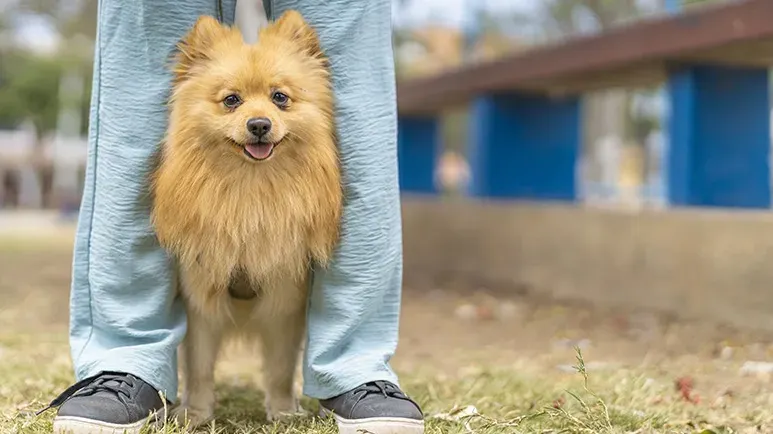
Every dog is built a little differently, but a few factors are generally true of a healthy, balanced stance. Here are some indications:4
- They stand evenly on all four paws, without favoring or lifting a leg
- Their back is relatively straight, not hunched, arched, or tucked
- Their movements are smooth and rhythmic, without stiffness or hesitation
- They can sit, lie down, and get back up without obvious struggle
- Their tail is carried in their normal position
It’s important to become familiar with what “normal” looks like for your dog when they're healthy. That mental baseline is what makes shifts easier to spot later.
Signs Something May Be Off
Because dogs can't tell you they're uncomfortable, their bodies often have to do the talking. Some posture and movement signals to keep an eye on:5,6
- Limping or favoring a leg (often joint or muscle discomfort)
- A hunched back (possible stomach pain, spinal issues, or general discomfort)
- Stiff or cautious movements, especially when getting up or down
- Whining or growling when touched in a certain spot
- Leaning or shifting weight to one side
- Persistent head tilting (sometimes an ear infection or neurological issue)
- A drooping tail in a dog that usually carries theirs high
- An arched or tucked body, which can also signal anxiety
- Reluctance to climb stairs or jump onto furniture they used to handle easily
- Struggling to sit or lie down comfortably
Veterinary physiotherapists describe one common dysfunctional posture in dogs as having an increased curve through the back, a tilted pelvis, a wide front-leg stance, and more crouched back legs — a stance that often signals the dog is shifting weight forward to take pressure off the back end.7
What's Actually Behind the Change
Posture changes don't usually appear out of nowhere. Here are a few common drivers:8,9,10
- Spinal disc problems — One of the most frequent causes of posture changes in dogs is intervertebral disc disease (IVDD), in which the cushioning discs between the vertebrae break down or get damaged. Dogs with IVDD often stand hunched, avoid turning their head in certain directions, or walk with an unusual gait. Some breeds are especially prone, including Dachshunds, Beagles, and German Shepherds.
- Pain anywhere — A dog with back, neck, or even abdominal pain will naturally rearrange their body to make it hurt less. That can mean stiff stances, an unusual head angle, or a sudden refusal to use the stairs or jump on the couch they used to love.
- Muscle weakness or injury — Injuries to muscles, ligaments, or bones can cause dogs to shift weight differently to compensate. Older dogs in particular may develop muscle weakness that quietly reshapes how they stand and move. In dogs with hip dysplasia, for example, the muscles around the hips can shrink, and the dog may shift their center of mass forward to take the load off the hind end.
- Neurological issues — When the nervous system isn't working as it should, posture and coordination can suffer. Watch for dragging toenails, frequent tripping, or trouble coordinating movements.
- Age — Postural control declines as dogs age, just as it does in humans. Older dogs tend to sway more when standing, which may reflect a combination of joint changes, muscle loss, and slower nervous system responses.
- Emotional state — Dogs in pain look a certain way, but so do anxious dogs. A tucked tail, a flexed back, and a crouched rear stance can all signal worry or stress rather than physical injury. Sometimes the answer is medical, sometimes it's emotional, and sometimes it's both.
Breed Matters
There's no single “correct” posture for every dog. Researchers studying canine biomechanics have shown clear differences between breeds. Labradors and German Shepherds, for example, have measurably different spinal angles in stance and trot.
Some breeds are also predisposed to spinal issues. French Bulldogs, Pugs, and English Bulldogs are prone to spinal malformations like kyphosis and scoliosis, which can shift weight distribution. Long-bodied breeds like Dachshunds rely on extra spinal stiffness to stay balanced.
The takeaway: “Normal” depends on your dog's breed and build. Your vet can help you understand what's expected and what's a real departure.
What to Do if Something Looks Off
A small shift here or there isn't always cause for alarm. But persistent changes or any sudden, dramatic ones deserve attention.11,12,13
Seeing your vet is the most important step. They can do a hands-on exam, watch your dog move, and decide whether further testing, such as X-rays, ultrasound, or more advanced imaging like an MRI is needed to figure out what's going on. Don't wait if your dog is showing severe symptoms, like an inability to move a leg or significant pain.
Next, follow the treatment plan. Depending on what's causing the posture change, that may include anti-inflammatory medications, pain relief, and strict rest, meaning no running, jumping, or rough play for several weeks. The goal is to give the body time to heal without piling on more compensation.
You should also consider physical therapy. Veterinary rehabilitation can be a game-changer for many posture-related issues. Treatments may include underwater treadmill work, laser therapy, and prescribed exercises designed to strengthen specific muscles and restore proper movement patterns. A trained rehab specialist watches for compensations, the kind of subtle posture shifts that can become permanent if not addressed.
Finally, help your dog at home. Small environmental tweaks make daily life easier on a body that's healing or aging:
- Use ramps instead of letting them jump on and off furniture
- Minimize stairs whenever possible
- Raise food and water bowls so they don't have to bend down uncomfortably
- Add supportive, well-cushioned bedding for joint comfort
- Place rugs or runners on slippery floors for better traction
Prevention Goes a Long Way
Helping your dog maintain good posture isn't just about reacting to problems — it's about heading them off. Here are some important tips to remember:
- Keep your dog at a healthy weight, extra pounds put extra pressure on the spine and joints
- Build in regular, gentle exercise to maintain muscle strength
- Avoid activities that put excessive strain on the spine, like repeated jumping or rough play on hard surfaces
- Ask your vet about joint-supportive options, especially for senior dogs
- Make rest as comfortable as the activity. A supportive bed matters more than people realize
The Quiet Check-In
You don't have to be a veterinarian to notice a posture change. You just have to be paying attention. Once a week, take a few seconds to really look at your dog, how they're standing, whether they're bearing weight evenly, the shape of their back, the way they get up and down.
Those small observations build a baseline that can become surprisingly useful — and that early signal is often the difference between a small fix and a much bigger problem.
The Bottom Line
Your dog can't say, “My back hurts,” or “My hip feels stiff today.” But their body says it all the time, in the way they stand, sit, walk, and rest.
Most posture changes can be addressed, sometimes with rest and weight management, sometimes with medication or rehab, sometimes with a few thoughtful home adjustments. The key is catching them while they're still small. So the next time your dog is just standing there, take a closer look. They may be telling you exactly what they need.
Sources and References

Better Health Begins in the Bowl

Better Health Begins in the Bowl
The Ultimate Pet Nutrition Guide was created to help dog and cat parents understand what truly supports lifelong health.
In this free guide, you’ll discover:
-

How your pet’s biology influences their nutritional needs
-
Why conventional feeding advice often falls short
-
Practical ways to choose better food for your dog or cat
View our Privacy Policy and Terms of Service.