Not Every Cat Sniffle Is Just a Cold
That cute little sneeze could be telling you more than you think — here is what your cat's runny nose might really mean.
Reviewed by Dr. Elizabeth Hardoon



Join the Bark & Whiskers™ Family
Sign up today for our FREE newsletter, packed with expert advice and insider tips to keep your beloved pet in tip-top shape.
View our Privacy Policy and Terms of Service.


STORY AT-A-GLANCE
- A persistent runny nose in cats is not always "just a cold" it is a symptom called rhinitis, and there are multiple possible causes
- Discharge color is a useful clue: clear and watery often points to viruses or allergies, thick yellow or green usually means bacteria are involved, and any blood in the discharge warrants an immediate vet visit
- Some signs are true emergencies — open-mouth breathing is a major red flag because cats are nasal breathers by nature; along with labored breathing, bloody discharge, high fever, or extreme lethargy
- Dental problems are an overlooked culprit; because the roots of the upper teeth sit so close to the nasal cavity, a tooth root infection or oronasal fistula can show up as one-sided nasal discharge that no antibiotic alone can fix
- Cats hide discomfort by nature, so a runny nose is one of the few clear signals they may give you — persistent sniffles, ongoing discharge, or noisy breathing always deserves a closer look from your vet
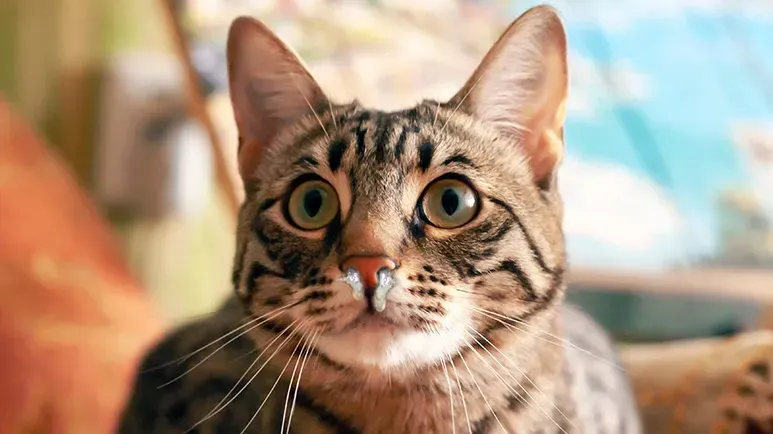
Your cat sneezes, and you think it is adorable. You laugh, maybe say “bless you,” and move on. A few days later you notice a little discharge from one nostril, or a soft snuffling sound when she breathes. Probably nothing, right? Just a cold.
Maybe, but not always. In cats, persistent or unusual nasal symptoms can point to a lengthy list of underlying problems — some minor, some serious. Here is what could be going on behind that sniffle, and when it is worth a closer look.
What's Really Happening
That sneezy, runny nose has a name: rhinitis, the inflammation of the lining of your cat's nasal cavity. It can come on suddenly (acute) or stick around for months or even years (chronic). And in cats, the reasons behind that inflammation tend to be more complicated than they are in people.
The Many Possible Culprits
This is where “just a cold” starts to fall apart. The potential causes of nasal symptoms in cats include:1,2,3
- Viral infections are some of the most common culprits, especially Feline Herpesvirus-1 and Feline Calicivirus. Upper respiratory infections show up often in kittens and in adult cats with weakened immune systems, and the symptoms can be long-lasting or recurring. The symptoms may also re-appear along with anything that stresses your cat’s immune system — such as change of seasons, a move, or even the addition of a new house mate.
- Bacterial infections — Harmful strains like Bordetella, Mycoplasma, and Chlamydia felis can sometimes cause rhinitis on their own, but they often show up as a secondary issue piggybacking on another problem.
- Fungal infections such as Cryptococcus and Aspergillus can infect a cat's nasal passages, usually when a cat inhales or contacts fungal spores. Left untreated, fungal infection can even destroy bone in the nose and face.
- Dental problems — This one surprises a lot of cat parents. The roots of the upper teeth sit remarkably close to the nasal cavity, so a tooth root infection, severe dental disease, or an oronasal fistula (an abnormal opening between the mouth and nose) can show up as nasal symptoms — often with one-sided discharge.
- Nasal polyps — These benign growths in the back of the nose can block airflow and cause inflammation. They are most often seen in younger cats and kittens.
- Foreign material — Small objects like blades of grass or seeds, can get stuck in the nasal passages of curious cats and can trigger sudden, intense symptoms.
- Allergies in cats are still being studied, but environmental triggers like dander, pollen, or grass can lead to a runny nose, watery eyes, and bouts of sneezing.
- Nasal tumors — This is the diagnosis no one wants, but it is worth knowing about. Benign and malignant tumors, including lymphoma and carcinoma, can cause chronic rhinitis, and may eventually lead to facial deformity or swelling and blood-tinged discharge.
There are also other less common causes, like acid reflux from the stomach, which can irritate the nasal passages. Narrowing at the back of the nose (nasopharyngeal stenosis) can cause chronic symptoms as well. Botfly larvae can lodge in the nasal cavity. And in some chronic cases — particularly with feline chronic rhinosinusitis (CRS), the cause is never fully identified.4,5
Signs Worth Paying Attention To
A single sneeze is not a crisis. However, there are a few patterns worth watching for:6,7
- Nasal discharge (clear and watery, thick yellow-green, or blood-tinged)
- Frequent or forceful sneezing
- Reverse sneezing (snorting or gasping sounds)
- Snuffling or snoring noises when breathing
- Eye discharge or excessive tearing
- Facial or nasal swelling
- Pawing at the face or nose
- Decreased appetite (due to the inability to smell their food)
Discharge color can be a clue. Clear, watery discharge often points to viral infections or allergies. Thick yellow or green discharge usually suggests bacteria are involved. Blood in the discharge always warrants a vet visit.8
When It Is an Emergency
Some signs mean do not wait. If you notice any of these symptoms, call your vet immediately:
- Difficulty breathing
- Open-mouth breathing
- Bloody nasal discharge
- High fever
- Extreme lethargy
Open-mouth breathing is a big red flag. Cats are nasal breathers by nature — unlike dogs, they do not typically pant or breathe through their mouths. If your cat is, it is an emergency.9
How Vets Figure It Out
Because the probable causes are so varied, accurate diagnosis matters. Your vet may use any combination of:
- A thorough physical and dental exam
- Skull, nasal and/or dental X-rays
- Nasal swab cultures and PCR testing
- Biopsy and lab analysis of tissue samples
- Blood work to check overall health and rule out other issues
- Referral to a specialist for more advanced testing such as CT scan (the preferred imaging for cat nasal passages) or rhinoscopy (using a small camera to look inside the nose)
Thorough testing may not be needed in all cases of nasal discharge, but is often essential for chronic or unclear cases.10,11
Treatment Depends Entirely on the Cause
There's no one-size-fits-all answer here. Once your vet identifies what is behind the sniffles, treatment is tailored to fit. Here are several options that may be considered:
- Antifungal medications for fungal infections
- Antiviral meds for certain viral infections (especially Feline Herpesvirus)
- Antibiotics for bacterial involvement
- Herbal therapy helps boost the immune system in the case of infection or to help clear up nasal congestion
- Anti-inflammatory medications to calm swelling
- Rhinoscopy to remove foreign objects
- Dental work, including extractions, when teeth are the source
- Radiation or chemotherapy for nasal cancer
- Supportive care, including nasal flushing, nebulization, gentle nostril cleaning, fluids, and appetite support
For cats diagnosed with feline chronic rhinosinusitis, a full cure often is not possible. The focus shifts to managing symptoms and protecting quality of life. With the right combination of medication, supportive care, and a little extra TLC at home, many of these cats live happy, comfortable lives — sometimes for years.12 Adjunct therapy such as acupuncture may be helpful in these cases.
Prevention Goes a Long Way
You cannot prevent every sniffle, but you can stack the deck in your cat's favor. Here are some basic yet important strategies to help keep colds away.
- Reduce stress, which can weaken the immune system
- In multi-cat homes, provide enough space and resources to avoid tension
- Keep food and water bowls clean, the litter box fresh, and the home well ventilated
- Quarantine new cats from your household until cleared by a vet
The Bottom Line
An occasional sneeze is not anything to lose sleep over. But persistent sniffles, ongoing discharge, noisy breathing, or any of the warning signs above deserve a real conversation with your vet.
Cats are quiet about discomfort. They do not complain, they do not show pain easily, and they tend to hide when something is wrong. A runny nose is one of the few clear signals they give us. Do not dismiss it as “just a cold.” It might be — or it might be the early sign of something that needs attention before it gets worse. Either way, you will feel a lot better knowing it for sure.
Sources and References

Better Health Begins in the Bowl

Better Health Begins in the Bowl
The Ultimate Pet Nutrition Guide was created to help dog and cat parents understand what truly supports lifelong health.
In this free guide, you’ll discover:
-

How your pet’s biology influences their nutritional needs
-
Why conventional feeding advice often falls short
-
Practical ways to choose better food for your dog or cat
View our Privacy Policy and Terms of Service.