These Hard Skin Bumps Could Signal a Hidden Problem
This mineral is commonly found in your dog's bones and teeth, however, there are certain cases where it can build up on the skin's surface. Find out what you can do to address this issue.
Reviewed by Dr. Tracy Duffner




Join the Bark & Whiskers™ Family
Sign up today for our FREE newsletter, packed with expert advice and insider tips to keep your beloved pet in tip-top shape.
View our Privacy Policy and Terms of Service.


STORY AT-A-GLANCE
- Calcinosis cutis causes hard calcium deposits in a dog's skin, often signaling underlying issues like Cushing's disease, kidney disease, long-term steroid use, or mineral imbalances
- Common signs include firm bumps, hair loss, inflamed patches, and in advanced cases, open sores that can become painful and prone to infection
- Diagnosis involves a skin biopsy and blood and urine tests. Sometimes, imaging tools are used to identify the root cause driving calcium buildup in the skin
- Treatment targets the underlying cause — adjusting any ongoing steroid regimens, managing Cushing's disease, or correcting mineral levels — while topical or oral medications help the skin heal faster
- With proper veterinary care and attentive home management, most dogs recover well, though full clearance of calcium deposits can take weeks or even months
- A newer therapeutic option using platelet rich plasma to resolve lesions more quickly shows significant promise in veterinary medicine and may be a good option for your pet
If you have ever felt rough, hard bumps on your dog's skin, it is easy to assume it is something minor, such as a bug bite, a rash, or just dry skin. But sometimes, those changes signal something deeper — and one example of these problems is what is called calcinosis cutis.
Once you understand what this issue is, it becomes much easier to recognize and manage. And here is the reassuring part — when the underlying cause is identified and treated, most dogs improve significantly, with their skin gradually returning to normal. Knowing what to look for helps you get your dog the care they need before things worsen.
What Is Calcinosis Cutis?
Calcinosis cutis occurs when calcium builds up in your dog’s skin, forming hard bumps, patches, or crusty areas.1 Normally, calcium belongs in your dog’s bones and teeth. But in this condition, it ends up in the skin instead. When that happens, it creates firm deposits that can irritate the surrounding tissue. They may start small, but they can grow over time. In some dogs, they stay mild and barely noticeable. In others, they can become widespread, uncomfortable, and even painful.
Calcinosis cutis usually is not a problem that develops on its own — it is often a sign that something else is going wrong in your dog’s body. The vast majority of cases are caused by high levels of corticosteroids, either from medications such as prednisone or from the body producing too much of its own hormones. Dogs with Cushing’s disease are especially prone to this problem because their bodies produce excess cortisol, a stress hormone that affects the skin.2,3
Corticosteroids break down the collagen fibers that give skin its strength and resilience. When that structural scaffolding deteriorates, it creates conditions where calcium crystals can accumulate. This is why dogs on long-term steroid treatment for allergies or autoimmune diseases are at higher risk.
Within the context of mineral interaction, calcium and phosphorus are tightly linked. When one rises, the other is pulled out of balance. In dogs with kidney disease, phosphorus builds up in the blood because the kidneys can no longer filter it properly. This disrupts the mineral balance throughout the body and eventually drives both calcium and phosphorus into soft tissues, including the skin, where they solidify into deposits.4
Skin damage also plays a role. Areas that have been injured, inflamed, or exposed to repeated pressure can become more vulnerable. Calcium may be collected in these damaged tissues even when blood calcium levels are normal.5 In rare situations, external factors, such as medications or environmental exposure, can introduce excess calcium into the body. And sometimes, even after thorough testing, the cause remains unknown.6
Some breeds appear more prone as well, including Boxers, Labrador Retrievers, German Shepherds, and Rottweilers.7 In addition, age is not a major factor, although younger dogs may develop a related condition called calcinosis circumscripta, which usually involves a single localized lesion and is generally limited to an extremity or a joint.8,9
A Closer Look at Calcinosis Cutis Symptoms
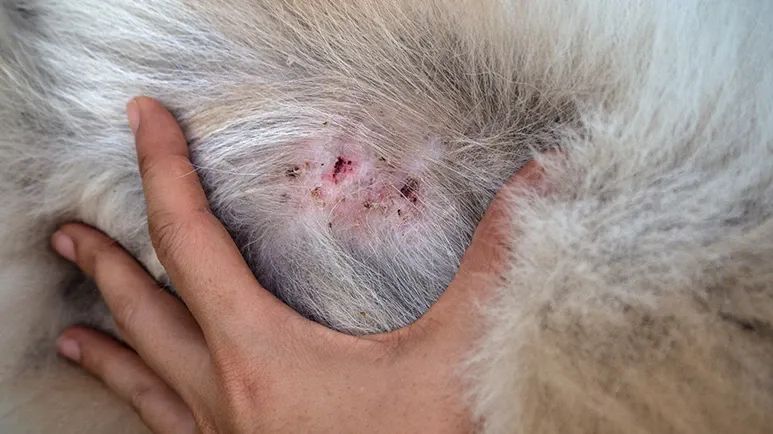
The appearance of calcinosis cutis can change depending on how advanced it is. In the early stages, you may notice small, firm bumps under your dog’s skin, usually on the neck, back, or groin. They may be slightly red, and your dog may scratch or lick them more often than usual. Hair loss in the area is also common. As the condition progresses, these can merge into larger patches that often feel hard and may look inflamed. Some develop a gritty or chalky surface, which is a clue that calcium is present.10
In more advanced cases, the skin may break open as the calcium pushes outward. This can lead to sores, crusting, and discharge. Affected areas are often painful and can easily become infected, which adds to your dog’s discomfort.110
You might also notice other changes in your dog’s health. Increased thirst, frequent urination, a bigger appetite, or a swollen belly can point to underlying conditions like Cushing’s disease.12
Types of Calcinosis Cutis
Calcinosis cutis is not a single condition — there are four distinct types, each with a different root cause. Understanding each can help your veterinarian identify the right treatment approach.13
- Dystrophic calcinosis cutis — Occurs when tissue is damaged first, usually from high cortisol levels due to long-term steroid use or Cushing's disease. Trauma and chronic inflammation can also trigger it.
- Metastatic calcinosis cutis — Driven by abnormally high calcium or phosphorus in the bloodstream. Associated conditions include vitamin D toxicity, hyperthyroidism, and kidney disease.
- Iatrogenic calcinosis cutis — Caused by an outside source introducing excess calcium or phosphorus, such as a medication or topical product applied to the skin.
- Idiopathic calcinosis cutis — A diagnosis of exclusion, meaning the cause remains unknown after all other types have been ruled out. There is no underlying tissue damage or abnormal lab values in these cases by definition.14
How Is Calcinosis Cutis Diagnosed and Treated?
Your veterinarian will usually start with a physical exam. To confirm the diagnosis, a skin biopsy is typically needed. This involves taking a small sample of skin and examining it under a microscope, and the presence of calcium deposits confirms the condition.15,16
Blood and urine tests are often also needed to look for the underlying cause. These procedures can reveal issues like kidney disease, hormone imbalances, or abnormal blood calcium or phosphorus levels. In some cases, more specialized testing may be needed to confirm conditions like Cushing’s disease. Imaging, such as radiographs (x-rays) or ultrasound, may also be used if deeper problems are suspected.17
Treating calcinosis cutis focuses on two main goals: fixing the underlying cause and helping the skin heal. If your dog is currently on steroid medications for an ongoing condition, your veterinarian may reduce the dose slowly or transition to a safer alternative, but this should always be done under veterinary supervision. When a dog has been on steroids for an extended period, the adrenal glands slow their own hormone production. Stopping abruptly leaves the body without enough cortisol to function, which can become a serious medical emergency.18,19
If Cushing’s disease is the cause, medications can help control hormone levels. When kidney disease or mineral imbalances are involved, dietary changes and medications may be used to bring those levels back into balance.20
Once the underlying issue is addressed, the body often begins to clear the calcium deposits on its own. However, additional treatments can help speed up the process. For example, topical treatments may be applied to help break down calcium in the skin.21,22 In some cases, especially when there is a single large lesion, surgery may be recommended to remove it.23 A newer therapy using treatments with platelet rich plasma is emerging and has shown great promise as a minimally invasive option that promotes quicker healing than standard topical treatments.24,25,26
How You Can Help Manage Symptoms at Home
Your daily care plays an important role in your dog’s recovery. To start, keeping affected areas clean is one of the most important things you can do. If you do not know how to start, ask your veterinarian about a gentle, fragrance-free shampoo — products containing colloidal oatmeal are commonly recommended for sensitive or compromised skin. Depending on the severity of the lesions, bathing every few days to once a week may be appropriate.
Just as important is giving your dog a comfortable place to rest. Soft bedding reduces pressure on inflamed or broken skin, particularly for lesions on the back, groin, or elbows. If your dog tends to scratch or lick affected areas, an Elizabethan collar or medical pet shirt can protect the skin while it heals.27
Most importantly, follow your veterinarian's instructions closely. Staying consistent with follow-up visits makes a big difference in how well your dog heals.
What to Expect — Prognosis and Recovery
The outlook for calcinosis cutis is generally positive when the underlying cause is identified and treated. Many dogs improve steadily, and their skin gradually returns to normal — though recovery takes time. It can be weeks or even months before calcium deposits fully clear depending on the underlying cause and the treatment plan utilized.28,29
In more severe cases, some dogs may be left with areas of scarring or permanent hair loss. If the condition is tied to a serious underlying illness, the overall prognosis depends on how well that illness responds to treatment, which is one more reason why early detection matters.
By working closely with your veterinarian and staying attentive to your dog's needs, you can play an active role in their recovery. Calcinosis cutis may begin as a skin problem, but it often reflects something deeper and addressing that root cause is what makes lasting improvement possible.
Sources and References
- 1,2,4,6,7,10,12,13,15,17,18,20,21,27,28 Toegrips, March 9, 2026
- 3,19,22,29 Dermatology Clinic for Animals, Calcinosis Cutis
- 5,8,11,16,23 VCA Hospitals, Calcinosis Circumscripta and Cutis
- 9,14 StatPearls [Internet], July 10, 2023
- 24 Arch Razi Inst. 2021 Oct 31;76(4):721–730
- 25 Great Scottie Veterinary Clinic, Find out how PRP therapy is being used to promote healing in pets with degenerative conditions like osteoarthritis
- 26 American Kennel Club, March 27, 2026

Better Health Begins in the Bowl

Better Health Begins in the Bowl
The Ultimate Pet Nutrition Guide was created to help dog and cat parents understand what truly supports lifelong health.
In this free guide, you’ll discover:
-

How your pet’s biology influences their nutritional needs
-
Why conventional feeding advice often falls short
-
Practical ways to choose better food for your dog or cat
View our Privacy Policy and Terms of Service.