Yellow Poop? Here’s What It Might Be Telling You
Don't take your dog's poop color for granted, especially when it becomes yellow. It could be a sign of an underlying condition that requires treatment.
Reviewed by Dr. Elizabeth Hardoon


Join the Bark & Whiskers™ Family
Sign up today for our FREE newsletter, packed with expert advice and insider tips to keep your beloved pet in tip-top shape.
View our Privacy Policy and Terms of Service.


STORY AT-A-GLANCE
- Yellow dog poop often is due to by food moving too quickly through the intestines, preventing bile from fully changing color during digestion
- Acute triggers include eating unusual items, recent diet changes, food intolerances, and stress or anxiety, disrupting your dog's normal digestive routine
- Underlying health conditions like parasites, bacterial infections, IBD, pancreatitis, or liver disease can also cause chronic persistent yellow stool in dogs
- Seek veterinary care if yellow poop lasts longer than 48 hours, appears alongside vomiting or jaundice, or if your dog seems unusually lethargic
- Supporting digestive health through consistent feeding, probiotics, stress reduction, and regular parasite prevention can help maintain normal, healthy stool color
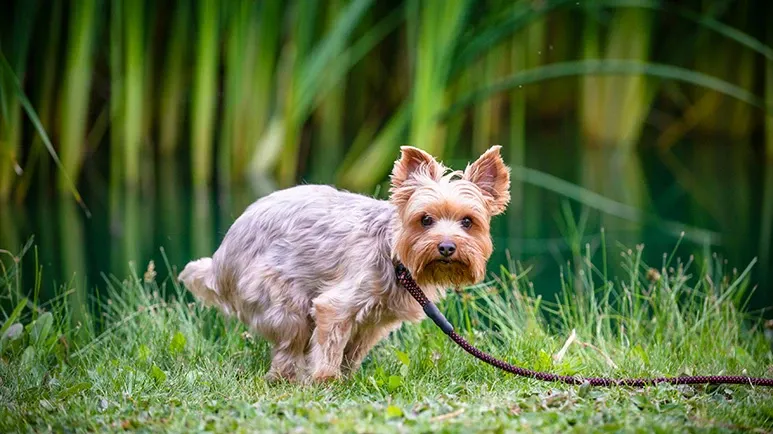
When was the last time you paid attention to your dog’s poop? While the smell is predictably unpleasant, observing the color can reveal a lot about their current health. And one shade that often raises concern is yellow poop.
If you have ever picked up after your dog and noticed it is unusually brighter instead of the typical brown, you are wondering if something is wrong. Sometimes yellow poop is harmless, but other times, it can signal a digestive problem that needs attention.
Brown Poop — The Standard Benchmark
During digestion, the liver produces bile, which helps break down fats and absorb nutrients from food. Bile is stored in the gallbladder and has a yellow-green color that is eventually released into the intestines. As food moves throughout this network, beneficial bacteria change the bile pigments. This process gradually turns the stool from yellow to the familiar brown color you expect to see.1
Now, one of the most frequent causes of yellow poop is food moving too quickly through the intestines. Normally, digestion takes time — as food travels through the gut, bile and bacteria gradually break it down. But when the journey speeds up — often due to stomach upset or irritation — bile doesn’t have enough time to change color, so stool will appear yellow.
So, what are the actual factors that lead to changes in poop color? Here are the identified culprits:2,3,4
- Eating something unusual — If your dog eats something with yellow coloring, it can pass through their digestive system and temporarily change the color of their stool. In these cases, you might even see small colored pieces in their stool. When your dog is acting normal, this type of yellow stool usually disappears within a day.
- Diet changes — Changing your dog’s food can upset their stomach. When you introduce a new food or treat, your dog’s digestive system may need time to adjust. During this transition period, food may move faster through the intestines, leading to yellow stool.
- Food intolerance — Just like people, dogs can develop sensitivity to certain ingredients. If your dog cannot properly digest a specific food, this may lead to intestinal inflammation and may result in yellow stools. Food intolerances often cause repeated stomach upset until the problem is resolved.
- Stress and anxiety — You might not think stress could affect your dog’s digestion, but it absolutely can. Triggers like changes in routine, traveling, loud noises like storms or fireworks, or new environments can lead to anxiety and upset your dog’s stomach. In these cases, digestion returns to normal once a routine has been established.
5 Risk Factors That Can Cause Yellow Dog Poop
Yellow poop can also be linked to more serious underlying health conditions. If the color change lasts more than a day or appears with other symptoms; bring your petto the vet to check for the following:5,6
- Parasites — Organisms such as hookworms, roundworms, tapeworms, and Giardia can lead to digestive problems in dogs. Aside from stool changes, other symptoms of parasite infection may include weight loss, dry or dull hair coat, vomiting, mucus in stool, and change in appetite.
- Microbial infections can affect your dog’s digestive system. When the intestines become inflamed due to infection, yellow diarrhea can form. Additional indicators include fever, vomiting, fatigue, and blood in the stool.
- Inflammatory bowel disease (IBD) — Yellow poop can also occur when your dog’s intestines become inflamed. IBD may also cause other symptoms including weight loss, bloating, abdominal pain, vomiting, and reduced appetite.
- Pancreatitis — This happens when your pet’s pancreas becomes inflamed. The pancreas normally produces digestive enzymes to help digest food. When the pancreas becomes inflamed, yellow stools may be present, along with vomiting, decreased appetite, and abdominal pain.
- Liver or gallbladder disease — If either of these organs are not working properly, bile may not be released or processed correctly and may pass into the stool, causing a yellow color. Dogs with liver or gallbladder disease may also experience yellowing of the eyes or gums (jaundice), as well as vomiting or bloating.
- Exocrine Pancreas Insufficiency — Less commonly, yellow, or pale stool may be due to a rare disease called “exocrine pancreas insufficiency” or EPI. In these cases, yellow or pale stool is caused by the pancreas not making a sufficient amount of enzymes for digestion. There are usually other symptoms that occur with this condition including weight loss; and it occurs more commonly in certain breeds such as German Shepherds. Your vet can do a blood test to check for this disease if it is a concern.
How to Tell if Yellow Dog Poop Needs Medical Attention
So, how do you know if your dog’s yellow poop is harmless or something more serious? The answer lies in context. Veterinarians often evaluate stool changes along with other factors such as your dog’s behavior, appetite, and energy level. Ask yourself the following questions for an accurate diagnosis:7
- Is this the first time you have seen yellow stools?
- Did your dog recently eat something unusual?
- Has your dog recently switched food?
- Is your dog acting normal otherwise?
If your dog seems healthy and the yellow stool happens only once, it may not be a problem. But if yellow poop continues or appears alongside other symptoms, it is time to contact your veterinarian. Some symptoms suggest your dog may need veterinary care right away, such as yellow stool lasting longer than 24 to 48 hours, vomiting, jaundice, and unusual tiredness.8,9
Your veterinarian will start with a physical exam and ask about your dog’s recent diet and behavior. They may also recommend diagnostic tools such as:10
- Fecal test — Checks for parasites or infections
- Blood test — Evaluates liver and organ function
- Urine test — Screens for systemic health issues
- X-rays or ultrasound — Looks for internal abnormalities
Treatment depends entirely on what is causing the yellow stool. Common treatments include:
- Dietary changes — Switching to a healthier diet and removing food triggers can help dogs with digestive sensitivity, pancreatitis, or IBD.
- Parasite treatment — Deworming medication can eliminate parasites affecting digestion.
- Supportive care — In more serious cases, like liver or kidney disease or some cases of pancreatitis, dogs may need hospitalization until their situation improves.
- Specific medications — For IBD, EPI or more serious conditions specific medications may be recommended to help your pet.
- Natural treatments — Your holistic vet may also recommend natural treatments such as laser (red light therapy), probiotics, ozone therapy, or acupuncture to help your pet depending on their diagnosis.
Tips to Keep Your Dog’s Digestive System Healthy
Your dog’s digestive system relies on beneficial bacteria living in their intestines, and their job is to help break down food and continue to maintain a healthy gut environment. When the balance becomes disrupted, digestion can be affected. Without enough healthy bacteria, bile pigments may not be processed properly, resulting in yellow stool.11
Supporting your dog’s gut health through species-appropriate nutrition and holistic care can maintain proper digestion and stool color. Recommendations include:12
- Feeding a consistent diet — It is better to introduce new foods gradually over several days. Consistent mealtimes also help.
- Promote a healthy gut environment — Nourishing your dog’s gut with high-quality supplement or foods rich in probiotics is key for proper digestion. For in-depth recommendations regarding this topic, read this article.
- Monitor food sensitivities — Pay attention to ingredients that may trigger stomach upset and avoid them as much as possible.
- Reduce stress — A calm routine and environment can help prevent stress-related digestive problems.
- Routinely test for parasites — Regularly testing for parasites (every 6 months or so) can help to catch them early and protect your dog from infection.
Your Dog’s Poop Matters
It may not be glamorous, but paying attention to your dog’s poop can help you spot health problems early on. Familiarizing yourself with unusual changes provides you with the power to act when something is affecting your dog’s digestive system.
So, the next time you take your dog for a walk, remember that a quick glance at their stool could provide valuable information about their health.
Sources and References
- 1,4,6,9,11,12 Animal Biome, October 25, 2025
- 2,5,7,8,10 Dogster, February 21, 2026
- 3 Poo Squad, July 14, 2025

Better Health Begins in the Bowl
Better Health Begins in the Bowl
The Ultimate Pet Nutrition Guide was created to help dog and cat parents understand what truly supports lifelong health.
In this free guide, you’ll discover:
-

How your pet’s biology influences their nutritional needs
-
Why conventional feeding advice often falls short
-
Practical ways to choose better food for your dog or cat
View our Privacy Policy and Terms of Service.