Are Your Pup's Elbows Working Overtime? Here's Why!
Have you noticed something growing out of your dog's elbows? Do not jump into a panic right away — it could be a hygroma. While it is not dangerous, it can cause discomfort, which is why it needs to be addressed right away.
Reviewed by Dr. Elizabeth Hardoon


Join the Bark & Whiskers™ Family
Sign up today for our FREE newsletter, packed with expert advice and insider tips to keep your beloved pet in tip-top shape.
View our Privacy Policy and Terms of Service.


STORY AT-A-GLANCE
- A hygroma is a fluid-filled swelling under a dog's skin, typically over bony areas, most commonly elbows, caused by repeated pressure. It is not a cancerous growth or tumor
- Large breeds, overweight dogs, senior dogs with arthritis, and dogs frequently resting on hard floors face the highest risk of developing a hygroma
- Early hygromas are usually soft, painless, and round. However, if left untreated, they can grow, become infected, rupture, and require medical intervention
- The most effective treatment is reducing pressure on the affected area by providing thick, supportive bedding like memory foam and using protective elbow pads
- Prevention focuses on soft padded resting surfaces, maintaining a healthy weight, managing arthritis, and encouraging regular movement to reduce prolonged pressure on bony areas
You are petting your dog when you notice something unusual — a soft, squishy lump on their elbow. It feels like a small water balloon under the skin. It does not seem to hurt, but it was not there before.
It is easy to panic when you find a lump on your dog. Your first thought might be cancer or a malignant tumor, but in many large and giant breed dogs, especially those who like to stretch out on hard floors, that soft swelling could simply be what is called a hygroma.
Do Not Panic — It Is Not a Tumor
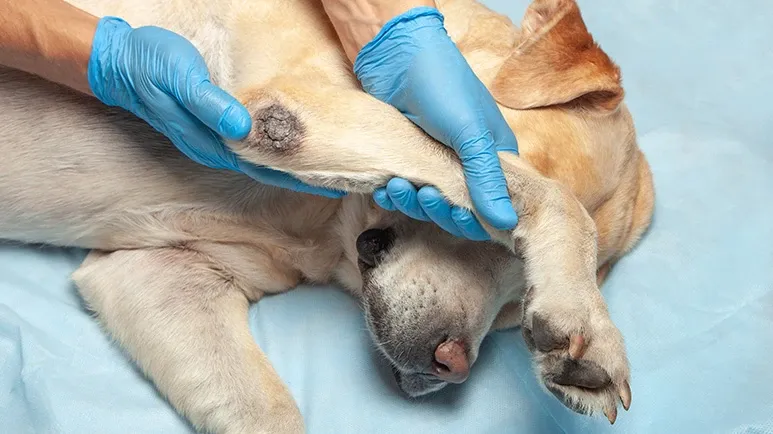
A hygroma is a fluid-filled swelling under your dog’s skin, usually found over a bony area like the elbow. It is surrounded by a thick wall of tissue and is usually not painful, at least in the initial stages. It can also form over other bony pressure points such as the hip, hock (ankle), or pelvis.1,2
Think of a hygroma as your dog’s body trying to build its own cushion. When your dog lies on a firm surface, their body weight presses their skin and soft tissue between the bone and the floor. Over time, this repeated contact and pressure causes irritation and swelling. So, the body responds by creating a small pocket of fluid to protect the area, which is the hygroma.3,4
A hygroma is not cancerous, however, there are other lumps that can mimic hygromas, so It’s always wise to have your veterinarian examine it to make sure it is not something more serious. The most common trigger for a hygroma is resting on hard flooring like wood, tile, or concrete. The following categories may predispose your dog to developing a hygroma:5,6,7
- Large and giant breeds — Great Danes, Mastiffs, and other large breeds are naturally heavier and put more pressure on their elbows when they lie down. If they are also overweight, this adds to the risk for hygromas.
- Lean or underweight dogs — You might think only overweight dogs are at risk, but very thin dogs can develop hygromas, too. They do not have much natural padding over their bones, so there is less protection when they lie down.
- Older dogs with arthritis — Senior pets with arthritis tend to lie down more often and may stay in one position for longer periods. That constant pressure increases the risk of hygroma forming.
- Sedentary dogs — Dogs that spend a lot of time resting on hard surfaces or dogs with weakness, pain or nerve problems that don’t change positions often, are more likely to develop hygromas. The longer pressure is applied to the elbow, the greater the chance of swelling forming.
- Dogs living in homes with hard floors — If most of your homes have tiles, wood, or concrete flooring, your dog may not have many soft resting options. This can lead to hygromas.
What Does Hygroma Look and Feel Like?
Typical hygroma has some very recognizable features. It is soft and squishy, and has a round or oval shape, and it is usually painless. In chronic cases pain may develop over time.8,9,10
In some dogs you may also notice rough, thickened skin over the elbow. This is a callus formation, which is another way the body responds to repeated pressure over bony areas. A callus appears as a rough, hairless patch of thickened skin and can be present long term without causing any issues, whereas a hygroma, is a fluid-filled swelling under the skin and often requires treatment. Interestingly, some dogs will have both.11,12
Although most hygromas are not painful at first, problems can develop if they are left untreated. A hygroma can grow large, become infected, rupture, and develop sores. If it is infected, it becomes red, warm, tender, and painful. Pus may drain from the area, and your dog may lick it frequently. At this stage, it becomes what veterinarians call a “complicated hygroma.” An infected hygroma requires medical treatment and may need draining, antibiotics or in severe cases surgery.13,14,15
How to Diagnoses and Treat a Hygroma
Often, your veterinarian can identify hygroma by examining it. However, because other lumps can look similar, your vet may recommend other tests, most commonly skin cytology. This test involves inserting a small needle into the area to collect cells and examine it under a microscope. In some cases, X-rays or other imaging may be necessary. This determines if the swelling is a hygroma or a more serious condition such as an abscess or a mass.16
The good news is that most uncomplicated hygromas can improve without surgery. The key is simple — reduce the pressure on the area. To achieve this, you will have to:17,18
- Provide soft beddings — This is the most crucial step. Soft, padded beds help prevent further trauma, and memory foam or thick foam beds are excellent choices. You can also place foam tiles or padded mats where your dog likes to rest. If your dog starts lying on softer surfaces, the hygroma often shrinks over a several weeks.
- Use elbow pads — There are special elbow protectors made for dogs that cushion the elbow area and help to prevent further pressure to allow the hygroma to heal.
- Avoid draining hygromas at home — Never try to pop or drain a hygroma yourself. Piercing it can introduce bacteria and cause infection. In fact, veterinarians avoid draining simple hygromas for this reason.
- Treat the infection when it is present — If the hygroma becomes infected, your vet may drain it and use bandages to keep the area clean. Laser therapy may also help.
If infection is severe or the area has large, open sores, surgery may be necessary. However, it carries risks and is usually a last resort because it does not fix the original cause — repeated pressure. Even after surgery, if your dog continues lying on hard surfaces, the hygroma can return. Healing can also slow down because elbows move constantly and do not rest easily. That is why soft bedding and pressure control are important.19,20
Preventing Hygroma from Appearing in the First Place
While treatments are available, prevention is still the more sensible approach. To do it properly, focus on protecting your dog’s elbows from hard surfaces by following these tips:21,22
- Provide thick, supportive bedding — Give your dog a soft, padded place to rest in every room where they spend time.
- Cover hard floors — Foam mats, rugs, and padded surfaces can help reduce pressure.
- Maintain a healthy weight — Extra bulk increases pressure on elbows and joints. Keeping your dog at a healthy weight lowers their risk.
- Encourage regular, gentle movement — Dogs who move around regularly and are encouraged to exercise will have a lower risk in developing a hygroma. If your dog is lying in one position for a long time, make sure to help them get up and move around and rotate position often to reduce constant pressure on one area.
- Manage arthritis — If your dog has arthritis, work with your veterinarian to manage pain. When your dog feels better, they are more likely to get up and shift positions instead of lying in one spot for hours. Many natural options are available to help with arthritis, including herbal remedies, acupuncture, and laser therapy.
Sources and References
- 1,3,6,9,14,17,19,21 VCA Animal Hospitals, Hygroma in Dogs
- 2,4,7,10,12,15,18,20,22 Veterinary Partner, Elbow Hygromas in Dogs
- 5,8,11,13,16 Toe Grips, February 9, 2026

Better Health Begins in the Bowl

Better Health Begins in the Bowl
The Ultimate Pet Nutrition Guide was created to help dog and cat parents understand what truly supports lifelong health.
In this free guide, you’ll discover:
-

How your pet’s biology influences their nutritional needs
-
Why conventional feeding advice often falls short
-
Practical ways to choose better food for your dog or cat
View our Privacy Policy and Terms of Service.