Could Your Pup Have a Nose for Saving Lives?
A dog's nose knows, and with the proper training, some can alert to health changes long before we feel them.
Reviewed by Dr. Arielle Walton


Join the Bark & Whiskers™ Family
Sign up today for our FREE newsletter, packed with expert advice and insider tips to keep your beloved pet in tip-top shape.
View our Privacy Policy and Terms of Service.


STORY AT-A-GLANCE
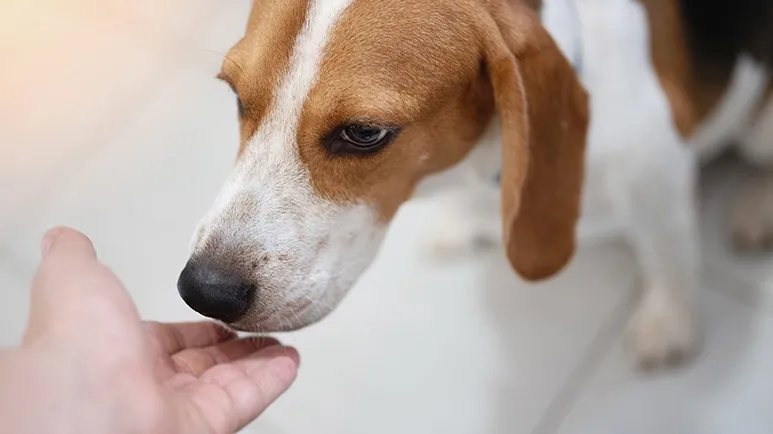
- Dogs have up to 300 million scent receptors and a scent-processing brain region about 30 times larger than ours, making smell their most powerful sense
- From the Middle Ages to today, dogs have gone from tracking criminals to detecting cancer, infections, seizures, and even viruses like COVID-19
- Breeds like Labrador retrievers, Golden Retrievers, Poodles, and German Shepherds often excel, but temperament and focus matter more than
- Dogs learn to give a clear, consistent signal, such as a sit, a focused stare, a nose target, or a gentle paw, when they detect a trained scent without disturbing its source
- Medical detection dogs don’t replace clinical care, but their early warnings help families feel more in control and respond faster
Dogs perceive their world mainly through their incredible sense of smell. When they breathe in, some of the air reaches a specialized area deep inside their nose, containing up to 300 million scent receptors. Their nose sends scent details to the olfactory bulb. This part of the brain is about 30 times larger than ours relative to size, which shows how important smell is to them.
Other animals, such as elephants and bears, have impressive noses too, but dogs bring something more to the table: They’re smart, eager to work with people, and love being part of a team. That combination of strong sniffing skills and a desire to help is what makes dogs so special for detection work, especially in health.1
A Fascinating Look at Smell‑Savvy Canines
If you think your dog’s only job is to be a receiver of belly rubs, you might be surprised — these smart, dependable creatures have a long history of helping people in various types of occupations. Detection dogs have served on duty since the Middle Ages, and artists even pictured some in armor beside knights. Today, you’re more likely to spot them at airports, train stations, or working with police, sniffing out contraband like drugs or explosives. In fact, there are around 10,000 of these hard-working dogs across the military and law enforcement in the U.S. alone.2
But what’s exciting is how their noses now sniff out health problems. It all started when pet parents noticed dogs obsessively sniffing moles, which later turned out to be cancerous. That sparked a whole new field. Now, medical detection dogs are working in university labs, helping detect everything from viruses and bacteria to certain cancers and even nerve disorders.3
It’s science‑backed, powerful, and pawsitively amazing what a dog’s nose can do, and it also helps explain why certain breeds tend to shine when this kind of important work is on the line.
Breeds That Make Good Detection Dogs
While some breeds are more noticeable, key qualities for medical detection dogs extend beyond pedigree. Animal Wellness Magazine states that ideal detection dogs should be calm, possess a strong sense of smell, and be highly trainable. That’s why breeds such as Labrador Retrievers, Golden Retrievers, German Shepherds, Standard Poodles, and Spaniels are often preferred.4
Realistically, not every dog is suited for this kind of work. Even if a pup has a strong nose, high levels of excitability, or a tendency to get distracted, these traits can make detection tasks harder. Research on specific traits of medical detection dogs indicates that many working dogs score above ideal on traits such as general excitability and focus.
Can I Train My Pet To Be a Detection Dog?
Now that you’ve learned about the breeds that excel in this field, you might wonder, "Does my four-legged friend have what it takes?” They might, but it’s important to remember that even the most promising dogs need to go through a step-by-step process that leverages their natural curiosity to explore new scents.
Trainers introduce the dog to the specific odor associated with a condition and reward the dog each time it correctly identifies it. Over time, trainers offer fainter samples or mix scents with everyday odors, helping the dog learn to focus even in the presence of distractions.5
As dogs gain confidence, trainers teach them to give a clear, consistent signal, such as a sit, steady stare, nose target, or gentle paw, whenever they locate the target scent without touching or disturbing its source.6 This stage takes patience: many dogs spend months to over a year learning and refining the skill, and they need ongoing practice throughout their working life.7
If you’re considering this path, be prepared to work closely with professionals, attend structured sessions, and maintain the training throughout your dog's life. Programs that train detection dogs can be costly — but for families with medical needs, the payoff may be invaluable.8
What Medical Detection Dogs Can Do
According to PetHelpful, medical detection dogs offer a kind of support that’s both practical and deeply personal. While they cannot replace doctors or lab tests, they can certainly add an extra layer of awareness, helping families act sooner, rest easier, and feel more in control day to day. Here are a few ways in which dogs can help in the medical setting:9
- Detecting cancers through scent — Dogs can be trained to identify several cancers, including lung, breast, colorectal, ovarian, prostate, and skin cancer. Cancer cells release unique chemicals called volatile organic compounds (VOCs), which dogs can smell in breath, blood, urine, or sweat. In some studies, dogs detected cancer with over 90% accuracy, even in early stages or when cigarette smoke and other conditions were present.
- Alerting before seizures — Some dogs can signal that a seizure is coming minutes in advance, likely by detecting subtle scent or behavior changes. These alerts allow the person to move to safety or get help.
- Recognizing changes in blood sugar — Diabetic alert dogs may detect scent changes caused by rising or falling glucose levels. Some can wake a sleeping person, fetch supplies, or alert a parent if a child’s blood sugar drops at night.
- Identifying infections like C. difficile — Dogs have been trained to detect dangerous bacterial infections in hospitals and care homes. In one study, a beagle correctly identified all C. diff–positive samples and cleared an entire hospital ward in 10 minutes, much faster than laboratory tests.
- Providing assistance during pandemics — During COVID-19, trained dogs detected the virus using saliva or sweat samples. While researchers aren’t sure which chemicals dogs are detecting, early studies show high accuracy — even in people without symptoms.
Not Every Alert Is a Medical Warning
While dogs’ alerts can be incredibly helpful, it’s essential to use due diligence. An alert is an early warning, not a diagnosis. Dogs often notice changes that humans cannot easily interpret, and those changes can come from many causes beyond illness, including stress, shifts in routine, or exposure to new environments.10
If your dog starts showing new alerting behavior, such as sniffing you more than usual, acting anxious, or focusing on a specific spot, don’t panic. Instead of reacting to a single moment, pay attention over time. Write down when it happens, what you were doing, and how you felt physically or emotionally.11 If the behavior keeps happening in similar situations, that’s your cue to follow up. These dogs are not a substitute for tests or diagnosis; they’re early warning helpers.
Final Thoughts
It’s well known that your furry friend loves you unconditionally; however, science is now uncovering something that pet owners have always instinctively believed: their loyalty goes even beyond mere affection.
As researchers continue studying medical detection dogs, they hope to understand exactly what our pups are noticing and how to support these abilities safely and consistently. Further discoveries could enable wider access, clearer training standards, and lower costs for families who could benefit.12
Sources and References

Better Health Begins in the Bowl
Better Health Begins in the Bowl
The Ultimate Pet Nutrition Guide was created to help dog and cat parents understand what truly supports lifelong health.
In this free guide, you’ll discover:
-

How your pet’s biology influences their nutritional needs
-
Why conventional feeding advice often falls short
-
Practical ways to choose better food for your dog or cat
View our Privacy Policy and Terms of Service.