Why Kitty Ears Deserve a Closer Look Now and Then
Found a lump in your cat's ears during routine checks? Don't panic right away — here's what you can do to help your cat overcome this hurdle.
Reviewed by Dr. Elizabeth Hardoon




Join the Bark & Whiskers™ Family
Sign up today for our FREE newsletter, packed with expert advice and insider tips to keep your beloved pet in tip-top shape.
View our Privacy Policy and Terms of Service.


STORY AT-A-GLANCE
- Finding a lump on your cat’s ear can be alarming, but many ear growths are treatable, especially when detected early and monitored carefully for changes
- Your cat’s ears support hearing, balance, and communication, and because the ear canal is sensitive, small bumps can worsen quickly if ignored
- Ear tumors are abnormal tissue growths that may appear inside the canal, on the ear flap, or in deeper structures; and can be benign (non cancerous) or malignant (cancerous)
- Common growths include inflammatory polyps, earwax gland tumors, squamous cell carcinoma, and apocrine cystomatosis, each with different risks and treatment needs
- Warning signs include swelling, scratching, discharge, bleeding, head tilt, balance issues, and hearing changes. Diagnosis may require scoping the ear, biopsies, or CT or MRI scans
Finding a lump on your cat’s ear can send a sudden shock down your spine, but it’s no reason to panic right away. While ear tumors in cats are not extremely common — and they do happen — knowing what to look for can make a real difference in your cat’s comfort, available treatment options, and long-term health.
The good news is that many ear growths are treatable, especially when caught early. The key is understanding what’s normal, what’s not, and when to act.
Why You Need to Pay Attention to Your Cat’s Ear
Your cat’s ears do a lot more than help them hear. They play an important role in balance, communication, and overall comfort. Because the ear canal is warm and sensitive, problems there can worsen quickly if ignored.1
Ear tumors often start small. At first, they may look like a harmless bump or seem similar to a routine ear infection. Over time, though, these growths can block the ear canal, cause pain, lead to infections, and in some cases spread to nearby tissue. That’s why paying attention to changes — even subtle ones — matters.
Veterinary experts agree that ongoing ear problems that affect only one ear or don’t improve with treatment aren’t to be ignored, as they can be a warning sign of a deeper issue like a tumor.2,3
What Is an Ear Tumor?
An ear tumor is an abnormal growth of tissue inside or around your cat’s ear. These growths can appear:
- Inside the ear canal
- On the ear flap
- Around the ear opening
- Inside the ear in deeper ear structures
Some ear tumors are benign or non-cancerous, meaning they won’t spread to other parts of the body. Others are malignant or cancerous, meaning they are can invade nearby tissue or spread to other organs if left untreated. Among cats, ear tumors are more likely to be malignant than in dogs, especially older ones.4,5
Common Types of Ear Growths in Cats
Not all ear growths are the same. Understanding the most common types can help you to better understand what your veterinarian may be looking for:
- Inflammatory polyps — These are non-cancerous growths most often seen in young cats, usually under 5 years old. They are soft, pink growths that can develop in the ear canal or throat area. While not cancerous, they can still cause discomfort, balance problems, and recurring infections if not removed.6
- Earwax gland tumors —These grow from glands that produce earwax. In cats, these tumors are more likely to be cancerous, especially in cats over 11 years old. Long-term ear inflammation is believed to increase the risk.7
- Squamous cell carcinoma — This is one of the more serious ear cancers in cats. It can appear as sores, crusty areas, or firm lumps that don’t heal. These tumors may bleed easily and become infected.8,9
- Apocrine cystomatosis — This condition involves fluid-filled cysts that develop from sweat glands in the ear. Certain breeds, such as Persians and Abyssinians, may be more likely to develop these cysts. While usually benign, they can still cause irritation or blockage.10
Signs That Could Indicate Trouble with Your Cat’s Ears
Cats are experts at hiding pain, so ear tumors can go unnoticed for a long time. Many of the early signs look like routine ear issues, which is why ongoing or unusual symptoms need to always be checked. Watch for these warning signs:11,12,13
- A lump, bump, or swelling on or inside the ear
- Head shaking or frequent ear scratching
- Thick, smelly, bloody, or pus-like discharge
- A non-healing wound on the ear
- Redness or darkened skin around the ear
- Bleeding from the ear
- Sensitivity when you touch the ear
- Head tilt or balance problems
- Hearing loss or disorientation
There is no single cause of ear tumors. Most develop due to a combination of factors, including age, inflammation, and chronic ear disease. If the inner ear is affected, your cat may stumble, walk in circles, or seem dizzy. These signs mean the problem is more advanced and needs immediate veterinary care.14,15,16
One of the strongest links seen across all three sources is long-term ear inflammation or infection. When the ear canal stays irritated for months or years, the tissue can begin to change in unhealthy ways. Over time, this may lead to abnormal growth. Older cats are also at higher risk, especially for malignant tumors.17
How to Diagnose and Treat Ear Tumors
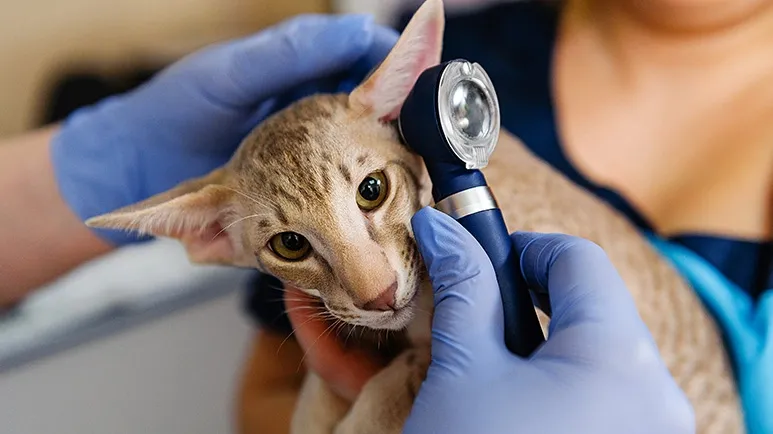
Diagnosing an ear tumor isn’t always simple, especially if the growth is deep inside the ear canal. Your veterinarian will typically do any of the following:18
- Examine the ear using an otoscope
- Gently clean the ear to see the area clearly
- Check nearby lymph nodes and inside your cat’s mouth
- Perform an ear cytology if indicated
- Recommend bloodwork or X-rays to rule out any related issues
- Perform a needle biopsy of the mass or tumor
- Recommend advanced imaging such as computerized tomography (CT) or magnetic resonance imaging (MRI) scans
As for treatment options, it depends on the type, size, and location of the tumor, as well as your cat’s age and overall health. Here are three common examples:
- Surgical removal — Surgery is the most common treatment. For benign growths, removing the mass often solves the problem completely. Malignant tumors may require more extensive surgery, especially if deeper ear structures are involved.19,20
- Laser procedures — Some tumors can be removed using specialized tools that allow precise removal with less damage to surrounding tissue.21
- Cryotherapy — Small benign masses that are not deep inside the ear canal can be effectively treated with cryotherapy.
- Ozone therapy — A more natural treatment that can be used to help heal the ear along with other therapies.
- Radiation or chemotherapy — If the tumor is cancerous and cannot be fully removed or has spread, these treatments may be recommended to slow growth or reduce discomfort.22
- Adjunct treatment — Acupuncture or herbal therapy to help strengthen your cat’s immune system and resolve symptoms.
Why Early Detection Matters
It goes without saying that early detection improves outcomes. Smaller tumors are easier to treat, less painful for your cat, and less likely to cause permanent damage. If your cat has repeated ear infections, one ear that never fully heals, or any unexplained ear changes, it’s worth asking your veterinarian if further testing is needed.23,24,25
That said, you don’t need special tools or training to help protect your cat. Simple awareness goes a long way. Here are some tips to remember:
- Check your cat’s ears regularly
- Watch for changes in behavior or balance
- Don’t ignore chronic ear infections
- Follow treatment plans fully
- Schedule regular veterinary checkups
Hearing the word “tumor” is frightening, but arming yourself with the proper knowledge gives you power. Many cats with ear tumors go on to live comfortable, happy lives — especially when problems are caught early and treated promptly. By staying alert, acting quickly, and working closely with your veterinarian, you give your cat the best outcome.
Sources and References
- 1,3,5,6,7,8,12,15,17,18,20,21,24 Merck Manual, Tumors of the Ear Canal in Cats
- 2,4,10,11,14,23 Animal Wellness Magazine, January 15, 2026
- 9,13,16,19,22,25 VCA Animal Hospitals, Ear Canal Tumors

Better Health Begins in the Bowl

Better Health Begins in the Bowl
The Ultimate Pet Nutrition Guide was created to help dog and cat parents understand what truly supports lifelong health.
In this free guide, you’ll discover:
-

How your pet’s biology influences their nutritional needs
-
Why conventional feeding advice often falls short
-
Practical ways to choose better food for your dog or cat
View our Privacy Policy and Terms of Service.