A Quirky Pet Habit That Reveals More Than You'd Expect
Your dog or cat might be 'right-pawed' or 'left-pawed' — here's what that means for their personality, emotions, and daily behavior.
Reviewed by Dr. Elizabeth Hardoon


Join the Bark & Whiskers™ Family
Sign up today for our FREE newsletter, packed with expert advice and insider tips to keep your beloved pet in tip-top shape.
View our Privacy Policy and Terms of Service.

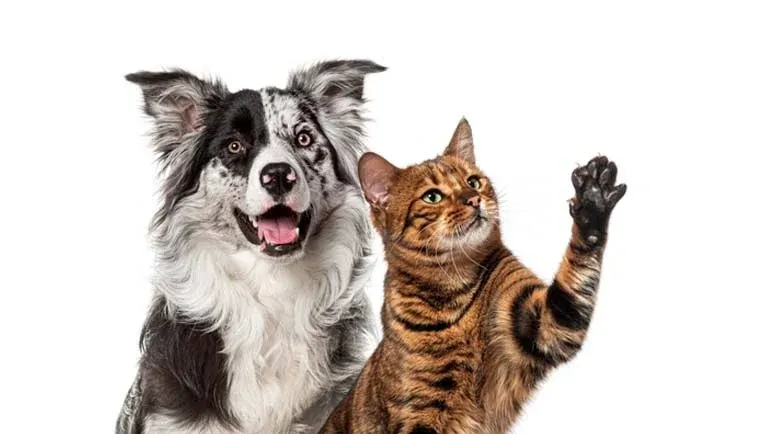
STORY AT-A-GLANCE
- Many dogs and cats naturally favor one paw, and this “laterality” shows up in everyday actions like stepping down, playing, exploring, or holding objects around the home
- Research shows most cats display strong paw preferences, with females tending to use their right paw and males their left, even during simple spontaneous behaviors
- Some dog studies suggest paw choice may reflect optimism or caution, but larger research shows these emotional links are inconsistent and may depend heavily on the specific task
- Dogs often use different paws for different activities, showing that “dominant paw” may not be universal; balance, body position, and task type all influence paw use
- Understanding your pet’s paw preference can improve training awareness, help detect early mobility issues, and deepen your appreciation of their unique behavior — even if it doesn’t reliably predict personality
If you’ve ever noticed your dog always reaches out with the same paw, or you’ve watched your cat repeatedly swipe at a toy with one paw over the other, you might have wondered — Is my pet right-pawed or left-pawed?
The answer is surprisingly important, and more fascinating than most pet parents expect.
Just like humans show a preference for using one hand over the other, many dogs and cats choose one paw more often during daily tasks. Scientists call this laterality, and it’s more than just a fun fact. In some cases, paw choice may give you clues about how your pet thinks, how they respond to stress, and even how they experience the world emotionally.
What ‘Paw Preference’ Really Means
When your pet reaches with one paw first, steps off a ledge, holds a toy steady, or bats at something on the floor, their brain is doing something remarkable. Each side of the brain controls the opposite side of the body, so repeated use of one paw suggests more activity in the opposite hemisphere. Researchers have tested paw preference in several ways:
- Reaching for food inside a puzzle toy
- Stepping down from a surface
- Stepping over an obstacle
- Manipulating toys
- Playing or exploring
- Stabilizing a Kong or other object
These simple behaviors help scientists measure which paw your pet uses more often. Over time, patterns appear. Sometimes the preference is strong; other times it’s subtle. And in some pets, it changes depending on the task.
What’s most interesting is that, according to the findings, paw preference isn’t random. It often relates to gender, emotional style, and personality traits.
Cats — The Quiet Pros of Laterality
Cats may seem mysterious, but their paw preferences are surprisingly consistent. In a study published in Animal Behaviour, 44 neutered mixed-breed cats ranging from 1 to 17 years old, researchers observed how each cat behaved in its own home. Because cats tend to act differently in labs, watching them at home gave scientists a better view of real-life behavior.1,2 The research team used two types of observations:
- A guided task — Reaching for food in a 3-tier tower (Each cat had to reach into the tower to pull out food with a paw).
- Natural everyday behaviors — Researchers asked owners to record which paw their cat used when stepping down, stepping over objects or engaging in sleeping positions.
The scientists discovered that most cats showed a clear paw preference. The results found that 73% favored one paw when reaching for food, 70% favored one paw when stepping down, and 66% showed a preference when stepping over something.
The most interesting part? Gender differences were strong. Female cats tend to use their right paw more often while male cats tend to use their left paw. Sleeping positions were the one exception — neither males nor females favored a specific side there.
This was the first study to show that spontaneous, everyday actions, not just guided tasks, reveal dependable paw preferences in cats. That means if you quietly watch your cat move around the house, you might notice a pattern that hints at their natural brain wiring.
Paw Preference and Personality in Dogs — Is There a Link?
Research in dogs is even more extensive. Some studies suggest dogs’ paw choices might relate to their emotional tendencies, while others show a more complicated picture.
In one study published in the Journal of Comparative Psychology, summarized by DVM360, researchers set out to answer an intriguing question: Can paw preference reveal whether a dog has an optimistic or pessimistic outlook?3,4 To find out, dogs were tested in two stages:
- Stage 1: The Kong Paw Test — Dogs were observed at home while using their paws to hold down a Kong® toy filled with food. The researchers found that:
- Dogs that strongly preferred their right paw tended to be more optimistic.
- Dogs that preferred their left paw approached new situations more slowly and were considered to have a more negative or cautious outlook.
- The right brain hemisphere helps process fearful or cautious responses.
- The right hemisphere controls the left side of the body.
- Stage 2: The “Ambiguous Bowl” Test — Dogs were trained at a university behavior center to recognize one bowl location with food and another without any. Then, both bowls were moved to new positions. Researchers watched how fast dogs ran to the new, uncertain bowl and whether they acted hopeful (optimistic) or hesitant (negative expectations).
The results found that right-pawed dogs usually ran quickly, showing optimism, while left-pawed dogs hesitated, suggesting caution or low expectation.
This opened the door to the idea that shelters or adoption programs might one day use simple paw tests to identify animals who may need more emotional support.
Here’s Where It Gets Interesting — Not All Studies Agree
A large 2022 scientific study from the University of Lincoln and published in the journal Animals dug even deeper — and found that things aren't so simple. The researchers aimed to test several different paw-use tasks and compare which ones truly reveal a dog’s natural preference and if they relate to emotional style. They also aimed to explore whether “dominant paw” even makes sense in all tasks.5 The researchers used 86 dogs and performed:
- The Kong test — Dogs held a food-stuffed Kong while lying down.
- The first step test — Dogs were asked to start walking from a standing, sitting and lying position. They then recorded which paw lifted first.
- The hurdle test — Dogs stepped over a small hurdle from the same three start positions.
These tasks let researchers compare dynamic movement (stepping, walking), stationary support (holding the Kong) and different body postures and balance challenges.
This is where things get surprising — dogs showed strong individual preferences, but not consistent patterns across all tasks. The Kong Test results didn’t always match the stepping or hurdle tests.
Dogs also often showed different paws for different situations, possibly because each task uses different muscles and balance skills. Many dogs used one paw for fine movements and the opposite paw for body support — meaning "dominant paw" might not be a simple idea.
Finally, the researchers did not find a reliable link between paw preference and emotional traits using a validated emotional questionnaire.
Earlier studies hinted at emotional connections. But this large, detailed study suggested it may not be accurate to use paw preference as a predictor of fearfulness, anxiety, optimism, aggression, stress levels, and sociability.
Their conclusion — Paw preference might not be a dependable marker of emotional style after all, and may be highly task-specific — especially with tasks involving balance. However, this doesn’t mean paw preference never relates to personality — just that we shouldn’t read too much into it without more evidence.
What About Your Dog at Home?
Fortunately, you don’t need fancy equipment to get a sense of your dog’s natural tendencies. Most dog parents can spot patterns in everyday life — like when your dog gives their paw on command, holds down a bone or chew toy, or reaches for a treat under the couch. These small moments reflect very real brain behavior.6 Just remember:
- Paw preference may vary from task to task
- It may not reveal emotional traits
- It’s a normal part of your pet’s natural movement patterns
How to Check Your Pet’s Paw Preference at Home
You can use the same methods scientists use, right in your living room. Just keep it fun and casual. No pressure, no commands that make your pet anxious.
- The “first paw lift” test — Watch which paw your dog or cat lifts first when stepping forward, coming to greet you, or going down a stair. Record what you see at least 10 to 20 times over several days.
- The toy or treat reach test — Hold your pet’s favorite toy or treat slightly out of reach and see which paw they use to reach or swipe. (may work better with cats, as dogs may reach out with their nose instead of their paws).
- The object-holding test — For dogs, give them a Kong, bone, or chew toy and watch which paw they use to hold it steady. For cats, place a treat-filled puzzle feeder and see which paw they reach inside first.
- The step-over test — Put a low object (like a soft towel roll or broomstick lying flat) on the floor and guide your pet over it. Watch which paw your pet uses to step over first.
For accurate observation, don’t count times when both paws move together and note patterns, not one-time actions. You can also do the tests at different times of day. Don’t use treats alone — food can change motivation. Over time, the dominant pattern becomes clear.
Why Paw Preference Matters (Even if It Doesn’t Predict Personality)
Even if paw preference doesn’t offer a direct window into your pet’s emotional life, it’s still valuable information. Here’s why it matters:
- It helps you understand movement and comfort — If your pet suddenly stops using their usual paw, struggles with balance, or hesitates during familiar tasks, it may signal discomfort or pain. Changes in paw use can be early warning signs of joint issues, muscle injuries, nerve problems, or age-related decline.
- It deepens your bond — Understanding the small quirks of your dog or cat, like which paw they prefer, helps you appreciate their individuality. It’s fun, but also meaningful. These small details make your pet unique.
- It may help in training — If your dog consistently uses one paw:
- A right-pawed dog may find “shake with your right paw” easier
- A left-pawed dog may master tricks using that side faster
- Balance-based tricks (like “spin” or “weave”) may be easier if started on their naturally preferred side
- It may help identify stress in shelter animals — Even though emotional predictions aren’t reliable for household pets, shelter environments are different. Dogs who switch paws a lot (no clear preference) may show more signs of stress, while those with strong paw preferences may cope better with noise and novelty. This might someday help shelters provide better support for anxious animals.
Your Pet’s Quirky Habit Is Worth Celebrating
Paw preference may not predict personality perfectly, but it’s a fascinating part of who your dog or cat is. Watching which paw they choose can spark curiosity, encourage fun observation, and strengthen your bond.
So next time your dog stabilizes their toy with one paw, or your cat bats a ball across the room, take a moment to notice. You might be watching one of your pet’s most charming quirks in action.
Sources and References

Better Health Begins in the Bowl

Better Health Begins in the Bowl
The Ultimate Pet Nutrition Guide was created to help dog and cat parents understand what truly supports lifelong health.
In this free guide, you’ll discover:
-

How your pet’s biology influences their nutritional needs
-
Why conventional feeding advice often falls short
-
Practical ways to choose better food for your dog or cat
View our Privacy Policy and Terms of Service.