Why Your Dog Uses a Tail for Far More Than Wagging
That swishing, curling, wagging appendage is far more than a cheerful signal; it's a vital part of your dog's identity and health. Learn to 'read' it so that you can gain insight into their world and their feelings.
Reviewed by Dr. Arielle Walton



Join the Bark & Whiskers™ Family
Sign up today for our FREE newsletter, packed with expert advice and insider tips to keep your beloved pet in tip-top shape.
View our Privacy Policy and Terms of Service.


STORY AT-A-GLANCE
- Your dog’s tail is more than a happy signal, it’s a powerful tool for balance, movement, communication, and even temperature control, reflecting both health and emotion
- The tail acts as a counterbalance during running and climbing, helping dogs stay steady and agile, while also serving as a steering rudder for swimmers and fast runners
- Tail position and motion reveal emotional cues from confidence to fear but every wag needs to be read alongside posture, facial expression, and overall body language
- Injuries such as limber tail, happy tail syndrome, and fractures can cause pain or infection; regular checks and gentle handling help keep tails healthy
- Tail docking, once common for cosmetic reasons, is now discouraged by veterinarians for limiting communication and causing unnecessary pain, as tails play a vital role in canine well-being
You’ve probably noticed how your dog’s tail seems to have a language all its own, wagging furiously when you walk through the door, curling protectively around them on cold nights, or drooping low when they’re unsure. But that familiar wag isn’t just a sign of joy or excitement.
Your dog’s tail is a powerful multitool, part emotional signal, part steering rudder, part balancing beam, and an essential piece of their anatomy and well-being. Let’s take a deep dive into the story behind that tail — what it does, how it helps, and what it reveals about your furry friend’s inner world.
The Tail — A Built-In Extension of the Spine
A dog’s tail is not an extra limb, but a direct continuation of the spine. It’s made up of five to 20 small bones called caudal vertebrae, which grow progressively smaller toward the tip.1 These bones are surrounded by muscles, tendons, nerves, and blood vessels, all working together to make each swish, curl, and wag possible.
The tail is under voluntary control, meaning your dog can move it just like you can move your hand, but some tail movements are also automatic. For example, a startled dog might instinctively tuck its tail, without thinking about it. That’s because their tail is part of their body’s natural communication and defense system, tightly linked to emotional and physical responses.
The Many Jobs of a Dog’s Tail
A dog’s tail does a lot more than most of us realize. While humans often focus on the wag, that motion is just one small piece of a much bigger story. From balance and movement to communication and comfort, here are the tail’s key roles.
- Balance — Think of a dog’s tail as their personal balance bar, a tool that keeps them steady whether they’re sprinting across a field, climbing a rocky path, or walking along a narrow ledge. Much like a tightrope walker’s pole, the tail helps your dog shift weight and counterbalance movement.2
When your dog turns sharply during a game of fetch, their front legs move in the new direction while their back legs still carry forward momentum. To prevent tumbling, the tail swings in the same direction as the turn, acting as a counterweight to stabilize the body. This clever bit of physics helps them stay agile and sure-footed.
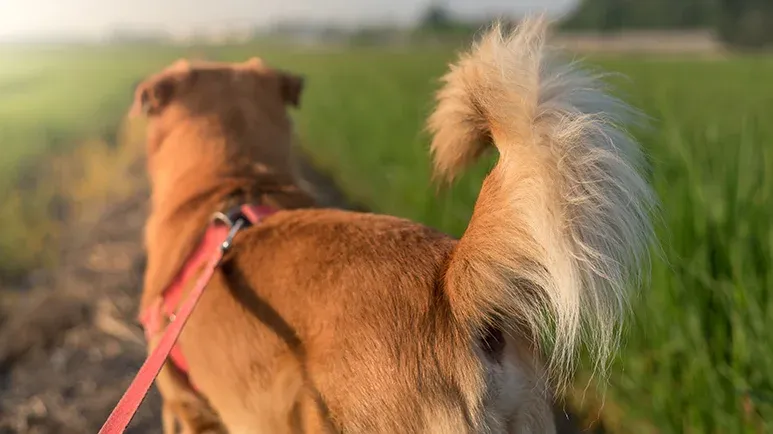
You can see the tail’s balancing act in action any time your dog walks along something narrow, like a fallen tree trunk or the back of your couch. Notice how their tail shifts from side to side, compensating for wobbles and helping them stay upright. - Swimming and speed — Dogs bred for work or hunting, especially those who swim, rely heavily on their tails for propulsion and steering. Labrador Retrievers and other water-loving breeds have thick, rounded “otter tails” that act as natural rudders, helping them steer through the water.3
For racing dogs like Greyhounds or Whippets, their tails’ sleek, whip-like shape improves aerodynamics and helps them maintain balance at high speeds. Every curve of the tail, whether long and sweeping or short and tight, serves a function tailored to the dog’s needs and natural environment.
Even among working dogs on land, tails assist with agility. Herding breeds, for example, use their tails to help make quick, precise movements when maneuvering livestock. The tail is, in many ways, an athlete’s secret advantage. - Emotion — A wagging tail is often seen as the symbol of a happy dog, but tail language is much more nuanced. Just like facial expressions in humans, tail position, motion, and speed reveal a lot about how a dog feels.
According to veterinarians and animal behavior experts, tail wagging can indicate excitement, friendliness, nervousness, or even aggression depending on the context.4,5 Here’s a breakdown of what different tail signals can mean:- High and stiff — A dog holding their tail high and rigid may be alert or feeling dominant. If it’s wagging quickly but stiffly, that could signal tension or even aggression.
- Low or neutral — A loosely wagging tail at mid-level often suggests relaxation or friendliness.
- Tucked between the legs — This is a universal sign of fear, anxiety, or submission.
- Broad, sweeping wag — A friendly, confident dog often wags their tail in broad, smooth arcs, the classic “happy dog” signal.
- Slow wag or low sweep — Uncertainty or mild discomfort.
- Communication — Tails aren’t just for us humans to interpret. Dogs use them primarily to communicate with each other. A raised tail helps spread their scent through the anal glands located just beneath it — a way of announcing their presence or dominance. A lowered or tucked tail, meanwhile, hides that scent, signaling submission or an attempt to avoid confrontation.7
Puppies don’t wag their tails immediately after birth; they start around 30 to 50 days old, once they begin socializing with littermates. That’s when they learn to use tail language as part of their social toolkit. From then on, tail movement becomes an essential part of every canine conversation.
When you see dogs meeting for the first time, pay attention to the tail exchange — the speed, position, and motion of each dog’s tail tells you a lot about how they’re feeling about each other. - Temperature control — In colder weather, many dogs instinctively curl their tails around their bodies or noses to conserve warmth. Breeds like Siberian Huskies or Malamutes, known for their thick, plumed tails, use them like built-in scarves to shield their faces from icy winds while sleeping.8,9
In hot climates, the tail may play a more minor role in body temperature regulation, but it can still assist with airflow and cooling as part of natural body language and posture shifts.
A Tail of Many Shapes and Sizes
Just as dogs come in countless shapes and sizes, so do their tails. Each type of tail serves its own function or reflects its breed’s heritage. Here are a few of the most common types:10
- Corkscrew — Found in breeds like Pugs, this tightly curled tail comes from the shape of the dog’s spine. It’s decorative primarily but can affect movement and hygiene.
- Whip — Sleek and tapered, like a Greyhound’s, making it perfect for high-speed chases and quick turns.
- Otter — Seen in Labradors and other water dogs, this tail is thick and round, built for swimming power.
- Sickle — Common in Northern breeds like Huskies. It’s full, fluffy, and curved forward to help conserve heat.
- Saber — Carried low with a gentle curve, like in German Shepherds, and is balanced and expressive.
- Bobtail — Naturally short due to genetics, common in breeds like the Pembroke Welsh Corgi. These dogs still use their tails for communication.
Each tail type tells a story, not just about the breed’s look, but its purpose, origin, and lifestyle.
When Wagging Goes Wrong — Tail Health Issues
Tails are powerful but not invincible. Because they’re exposed and always in motion, tails can easily get injured or develop certain conditions that affect a dog’s comfort and mobility. Here are some of the most common tail-related problems every pet owner should know about:11,12
- Limber tail (swimmer’s tail or cold tail) — This painful condition happens when the tail muscles are overused or strained, often after long swimming sessions, overexertion, or exposure to cold water. The tail becomes limp and hangs down, and the dog may have difficulty wagging or sitting comfortably. Rest, warmth, and veterinary care usually help it heal.
- Happy tail syndrome — Despite the cheerful name, this is not a happy situation. Dogs that wag their tails enthusiastically, especially large breeds with long, muscular tails, can injure themselves by repeatedly hitting hard surfaces like walls or furniture. Over time, this causes open wounds and bleeding at the tip. Treatment may involve bandaging, antibiotics, or in severe cases, partial amputation.
- Fractures and trauma — The tail contains delicate bones. An accident like a door closing on it or a car strike fractures these bones. Even a small break can be painful. If you see a limp or immobile tail, take your dog to the vet.
- Tumors and growths — Lumps or masses can form on the tail, some benign and others cancerous. Regular grooming and touch are key to catching these early. A vet should evaluate any swelling, hair loss, or unusual sores.
- Allergies and skin issues — Allergies can cause dogs to bite or chew their tails, leading to bald patches, sores, or infections. Parasites like fleas can make things worse, as dogs often target the base of their tails when scratching.
- Nerve damage — In rare cases, severe tail trauma can damage nerves, affecting mobility and sensation. Depending on the injury, some dogs may lose partial control of their tails.
Tail Docking — A Controversial Tradition
While many tails are left as nature intended, some breeds are still subjected to tail docking. Tail docking is the surgical removal of part or all of the tail, usually when the puppy is just a few days old. Historically, this was used to prevent injury in working dogs, such as hunting or herding breeds. Over time, however, it became more about appearance than function.
Modern veterinarians and animal welfare groups, including the American Veterinary Medical Association (AVMA) and the Royal Society for the Prevention of Cruelty to Animals (RSPCA), now strongly oppose cosmetic tail docking. Studies show that docking not only causes pain but also limits a dog’s ability to communicate clearly with humans and other dogs.
Without a tail, dogs lose a significant part of their “body language vocabulary,” which can lead to misunderstandings and even social tension in multi-dog environments.
Countries around the world, including much of Europe and parts of Australia, have banned or restricted the practice. In the U.S., however, some kennel clubs still list docking as a breed standard, creating an ongoing ethical debate within the dog community.
Reading Your Dog’s Tail
You can learn a lot from your dog’s tail if you pay attention, but it’s essential to read it in context. A wag doesn’t always mean “happy,” and a still tail doesn’t always mean “sad.” Just as tone of voice in human conversation makes sense only when you consider the whole body, tail movement makes sense only when you consider the whole body. Here’s how to look at the bigger picture:
- Pair the tail with posture — Is your dog’s body loose and wiggly, or stiff and tense? The tail often mirrors that.
- Check the ears and face — Pulled-back ears and wide eyes, plus a low wag, may indicate nervousness.
- Notice speed and range — A fast, side-to-side wag with relaxed hips often means excitement. A short, tight wag held high can be a warning signal.
- Consider the situation — Is your dog meeting someone new, guarding a toy, or greeting you at the door? Context shapes the meaning.
By learning to read your dog’s tail alongside other cues, you strengthen your bond and avoid miscommunication.
How to Keep That Tail Healthy
Your dog’s tail may seem tough, but it needs care like any other body part. Here are a few tips to keep it wagging strong:
- Inspect regularly — During grooming, gently check your dog’s tail for cuts, swelling, or bald spots.
- Mind the environment — Avoid slamming doors or letting your dog wag near sharp corners or heavy furniture.
- Prevent parasites — Flea and tick control helps prevent tail-base irritation.
- Exercise wisely — Avoid overexerting your dog in cold or wet conditions, as this can cause muscle strain.
- Address chewing early — If your dog chews or licks their tail excessively, see your vet to rule out allergies or anxiety.
A healthy tail is flexible, smooth, and responsive. If you ever notice drooping, excessive wagging, or visible pain, it’s best to consult your veterinarian.
The Tail’s True Purpose Is Connection
When you really think about it, a dog’s tail is more than just anatomy — it’s a bridge between two species. It’s how your dog speaks without words, how they express joy, concern, excitement, or fear. It’s how they navigate their world, both physically and emotionally.
So the next time your pup greets you with that joyful thump-thump-thump of their tail against the floor, take a moment to appreciate what’s really happening. Behind that wag is an ancient, instinctive language that connects dogs to their past and to you.
Sources and References

Better Health Begins in the Bowl

Better Health Begins in the Bowl
The Ultimate Pet Nutrition Guide was created to help dog and cat parents understand what truly supports lifelong health.
In this free guide, you’ll discover:
-

How your pet’s biology influences their nutritional needs
-
Why conventional feeding advice often falls short
-
Practical ways to choose better food for your dog or cat
View our Privacy Policy and Terms of Service.