Be a Hero in Your Pet's Eyes Without Making These Common Errors
They're popular for training and affection. But watch out for mistakes that can make your pet sick or obese. Five tips for being a hero to your pet, including one product to avoid due to unresolved safety issues — along with some DIY tricks they'll love.

Reviewed by Dr. Becker


Join the Bark & Whiskers™ Family
Sign up today for our FREE newsletter, packed with expert advice and insider tips to keep your beloved pet in tip-top shape.
View our Privacy Policy and Terms of Service.


STORY AT-A-GLANCE
- Treats are the fastest growing part of the pet food market, and dog owners buy them much more often than cat owners as rewards, snacks and holiday extras
- In 2014, over three-quarters of U.S. dog owners bought treats, along with almost half of cat owners, showing how common treat giving has become
- Finding treats that are species-appropriate, high quality and commercially available is possible, but it can be difficult because many products look better than they are
- The best treats are fed in small amounts and made with safe, trustworthy ingredients, avoiding fillers, sugars, byproducts, harsh additives and questionable sourcing
- Another option is making homemade treats, or using fresh foods, so your pet gets a healthier reward without the drawbacks of many store-bought products
Editor's Note: This article is a reprint. It was originally published December 14, 2015.
According to research, 70% of all U.S. households include at least one pet.1 Single-pet households account for 26% of the total, two-pet families are at 19%, and 25% own three or more pets.
Almost three-quarters (73%) of U.S. pet owners have a dog, 51% are owned by a cat, and 17% are fish fans. Less than 10% of the pet-owning population keeps small mammals, reptiles, amphibians, birds, and other types of pets.
Families with kids are more likely to have pets than those without young children. In fact, 84% of families with children under the age of 18 have pets, compared with 63% of households with no children under age 18.
Treats Are the Fastest Growing Type of Pet Food
Given all the households that include at least one four-legged family member, it's no surprise that pet treats are big sellers. People tend to offer treats as a way to show affection and love to their pets, and of course treats are an irreplaceable tool in positive reinforcement behavior training for dogs (and many cats as well).
This is the time of year when many pet parents are shopping for yummy treats to offer their dog or cat during the holidays. Interestingly, according to the analysts who keep track of such things, many more dog owners are in the habit of buying treats than cat owners.
In fact, in 2014, 78% of dog owners bought treats for their pets, compared to 46% of cat owners.2
There are countless types and brands of pet treats on the market today, but most fall into one of four main categories: jerky, rawhide/natural chews, dental chews, and "other." In 2015, the treats pet owners purchased most often were as follows:3
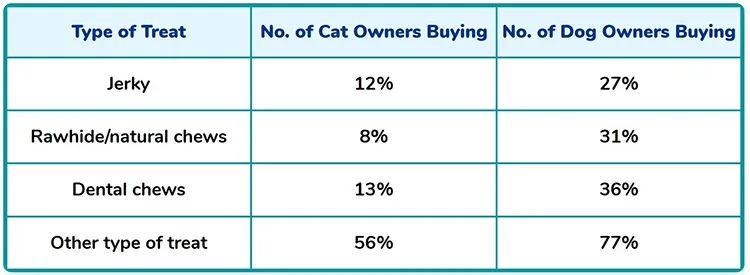
It’s somewhat surprising that so many dog owners continue to feed store-bought jerky treats. Ideally, they are doing their homework to avoid products that could make their dog or cat sick.
Fortunately, just as the number of high-quality commercial pet food brands has increased over the years, so has the quality of pet treats. You can now find all-natural treats formulated without grain, animal byproducts, or GMO ingredients. However, it's important to keep in mind that some of these treats still contain some type of starch, which isn't ideal.
How to Pick Safe, Healthy Treats for Your Pet
There's certainly no shortage of commercial pet treats on the market today. They come in every conceivable shape, size, smell, flavor, color and texture. The challenge is finding safe, high-quality, and species-appropriate treats in a sea of products claiming to be "all-natural" and "made in the USA."
The following recommendations will help point you in the direction of selecting safe, wholesome commercial treats for your furry family member.
- No. 1: Don't overfeed treats to your pet — Dog or cat treats — even very healthy ones — should not make up more than 15% of your pet's daily food intake, and ideally less than 10%. Try to limit them to training and behavior rewards, as a bedtime ritual, or as a "time to get in your crate" enticement.
Treats should be offered primarily as rewards during house training, obedience training, or other similar activities, and not because the rest of the family is having a snack.
Also keep in mind that treats are not a complete form of nutrition for your pet, and should never be used in place of balanced, species-appropriate meals. Overfeeding treats on top of daily food intake will result in an obese pet, and overfeeding treats while underfeeding balanced meals will result in nutritional deficiencies. - No. 2: Treats should be sourced in the U.S. and made in the U.S. — Legally, pet food manufacturers can make the "made in the USA" claim as long as the product was assembled in this country — even if the ingredients are imported. So when you're shopping for safe treats, it's not enough that a product claims to be made in the U.S. You want to be sure all the ingredients originated here as well.
The U.S., of course, produces its own share of tainted products, but as a general rule, the contaminating agent is quickly identified and these days, immediate action is taken to remove the product from store shelves.
The chicken jerky dog treats and other treats suspected of causing illness and death in so many pets have ingredients imported from China. Despite the efforts of the FDA and independent laboratories to isolate the contaminant, nothing has yet been identified. For this reason, it’s strongly advised to avoid any product containing ingredients sourced from China. It's important to know and trust your treat company's commitment to purity and quality control. - No. 3: Treats should be high-quality — A high-quality pet treat will not contain grains or unnecessary fillers, rendered animal byproducts, added sugar (sometimes hidden in ingredients like molasses and honey), chemicals, artificial preservatives, or ingredients known to be highly allergenic to pets. These criteria rule out the vast majority of commercial pet treats on the market.
Most excellent quality, human-grade pet food producers — typically smaller companies — also make a few types of treats. So if you're already feeding your dog or cat a high-quality commercial pet food you trust, see if the manufacturer also makes treats.
Another option is to shop online, especially if you've done your research and know exactly what you're looking for. - No. 4: Offer fresh human foods as treats — Avoiding all grain‑based treats is generally advised. Dogs and cats have no biological requirement for the carbohydrates found in these treats, and they can also contribute to inflammation.
Consider instead offering living human foods. Berries are a great treat because they're small and loaded with antioxidants. You can also offer small amounts — no more than 1/8 inch square for a cat or small dog and a 1/4 inch square for bigger dogs — of other fruits (melons and apples, for example) as well as cheese.
Many cats enjoy bits of zucchini or cantaloupe. You can also try offering some dark, green leafy veggies as treats for your kitty. It might even keep her away from your houseplants!
Excellent training treats for dogs include frozen peas and raw almonds, cashews, and Brazil nuts (but NEVER macadamia nuts). - No. 5: Prepare homemade treats for your pet — If your dog is crazy for dehydrated chicken strips (chicken jerky), you can make your own quite easily. Just buy some boneless chicken breasts, clean them, and slice into long, thin strips — the thinner the better. Place the strips on a greased or nonstick cookie sheet and bake them for at least three hours at 180 degrees. The low temp dries the chicken out slowly, and the strips wind up nice and chewy.
Let the strips cool, and then store them in plastic bags or another airtight container. You can also freeze them.
If you buy commercial canned food for your dog or cat, you can "repurpose" a can for use as a supply of healthy treats. Open a can of your pet's favorite brand, preferably something with a strong aroma, and spoon out little treat sized amounts onto a baking sheet covered with parchment paper.
Put the baking sheet into the freezer until the bite-sized bits of food are frozen. Then move them to an airtight container and put them back into the freezer until you're ready to treat your pet to a treat! (Most dogs will enjoy the treats frozen, but you'll need to thaw them to a chewy consistency for kitties.)
For more ideas on preparing special homemade treats for your furry companion over the holidays, be sure to request my free e-book "Homemade Treats for Healthy Pets," which is loaded with nutritious, super-simple recipes for both cats and dogs.
Sources and References

Better Health Begins in the Bowl
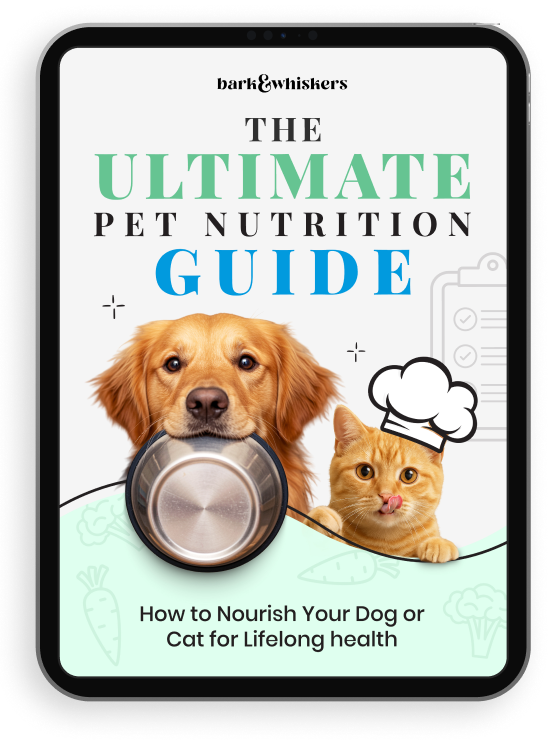
Better Health Begins in the Bowl
The Ultimate Pet Nutrition Guide was created to help dog and cat parents understand what truly supports lifelong health.
In this free guide, you’ll discover:
-

How your pet’s biology influences their nutritional needs
-
Why conventional feeding advice often falls short
-
Practical ways to choose better food for your dog or cat
View our Privacy Policy and Terms of Service.