Could Your Furry Friend Know Exactly What It Needs?
Cats may be drawn to different herbs at different times. Herbal self-selection lets them explore those preferences. Learn how to create a simple setup that gives your cat a variety of herbs to choose from.
Reviewed by Dr. Tracy Duffner




Join the Bark & Whiskers™ Family
Sign up today for our FREE newsletter, packed with expert advice and insider tips to keep your beloved pet in tip-top shape.
View our Privacy Policy and Terms of Service.


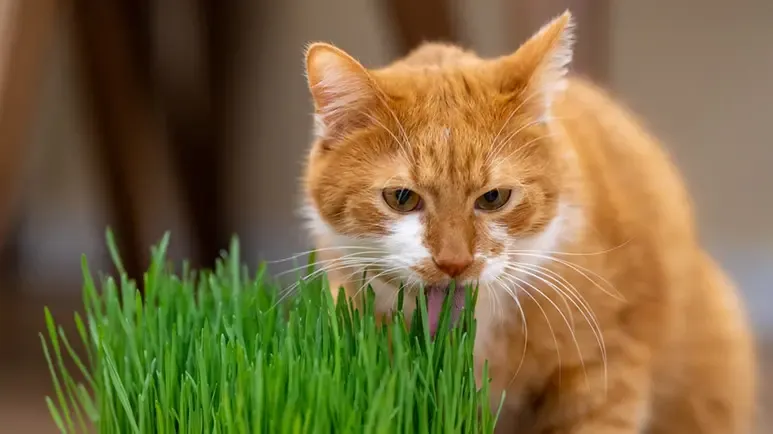
STORY AT-A-GLANCE
- Some animals in the wild seek out and interact with plants in ways that may support their health. Offering indoor cats a selection of dried herbs gives them an opportunity to exercise similar self-selection
- Cats can interact with herbs through both scent and ingestion, choosing whether to sniff, rub against, roll in, or nibble each plant. Walking away is also part of self-selection and simply means they are not interested in that herb at that time
- Six dried herbs commonly offered to cats are valerian root, chamomile, catnip, organic rose buds, lemon balm, and hops (used with caution)
- A cat herb “garden” requires no planting: simply arrange small, separate piles of dried herbs on a clean towel or blanket in a quiet, comfortable area and allow your cat to investigate freely
- Use plain, correctly identified dried herbs from a trusted source, avoid concentrated preparations such as essential oils, and consult your veterinarian if your cat has an existing health condition
Cats have a reputation for knowing exactly what they want, whether it is their food, their toys, or even their favorite person. That selectiveness may extend to plants as well. In nature, some animals seek out plants and other substances in ways that may support their health.
For instance, research has found that cats rubbing against certain plants transfer compounds onto their coats that help repel mosquitoes.1 This type of voluntary interaction with natural substances may be linked to self-selection, a concept explored within zoopharmacognosy, which studies how animals use naturally occurring substances.2
For indoor cats, this idea can have an interesting application. Much of your cat’s environment is chosen for them, from what they eat and where they sleep to when they receive supplements. Offering a selection of safe herbs gives them a chance to explore different scents and plants — a simple form of enrichment that is easier to set up than you might think.
How to Create an Herb ‘Garden’ for Your Cat
Despite the name, a cat herb garden does not require soil, pots, or any actual gardening. It can be as simple as placing several herbs on a clean towel or blanket. The “garden” simply refers to a small assortment of herbs arranged separately for your cat to explore, much like having several plants available in one space.
To set one up, place several dried herbs on a clean towel or blanket in an area where your cat already feels comfortable, ideally a quiet spot away from heavy foot traffic, loud appliances, or areas where another animal could make your cat feel cornered. Place about a tablespoon of each herb in its own pile, leaving enough space between them for your cat to investigate each one separately.
Keeping the herbs apart also makes it easier to see which ones attract your cat’s attention. Once the herbs are in place, let your cat approach on their own. Avoid placing your cat on the blanket, holding an herb under their nose, or directing them toward a particular pile. Instead, watch which herb they approach first, how they interact with it, and whether they return to it later.
You can leave the garden available in a safe, dry location and refresh the herbs once their aroma begins to fade. If you have more than one cat, consider setting up separate gardens so they can explore without competing for the same space.3,4,5
6 Feline-Friendly Herbs to Explore
Now that you know what a cat herb garden looks like, the next step is choosing what to put in it. Not every cat responds to the same plants, so offering several options gives your cat more room to explore what appeals to them. These six dried herbs provide a range of aromas and plant compounds commonly used for feline self-selection:6,7
- Catnip — The response to catnip is genetic, so about 30-40% of cats will not visibly react to it, but for those that do, it remains one of the most reliable enrichment herbs available.8 Catnip contains nepetalactone, the compound responsible for the familiar rolling, rubbing, licking, kicking, and playful behavior seen in responsive cats.9
- Valerian root — Valerian contains valerenic acid and other compounds that influence receptors for gamma-aminobutyric acid (GABA), a neurotransmitter involved in calming nervous-system activity. It also contains actinidine, an aromatic compound that can trigger a catnip-like response in some cats. In one feline study, about half of the cats responded to valerian, including some that did not respond to catnip.10
- Chamomile — Chamomile contains flavonoids such as apigenin, which has calming activity.11 Cats tend to interact with chamomile quietly compared to valerian or catnip. Rather than rolling or playing, they may rest beside the pile, rest their face near it, or fall asleep on that part of the garden.
- Rose buds — Rose has a long history in traditional herbal practice as an herb associated with emotional comfort,12 and it is ideal for sensitive, elderly, or easily overwhelmed cats. Choose plain, organically grown dried rose buds, since florist roses may contain pesticide residues, dyes, preservatives, or other treatments.
- Lemon balm — Lemon balm has a light, lemony scent and contains rosmarinic acid and other aromatic compounds. Research on lemon balm extracts has explored effects on GABA-related pathways and anxiety-like behavior in animals.13
- Hops — Hops have a stronger, more distinctive aroma and contain compounds including humulone and xanthohumol. Research suggests that some of these compounds may influence GABA-related pathways and sleep regulation.14 Some cats may be attracted to the scent, while others may take one sniff and move on. Please note, hops are dangerously toxic to dogs and can result in malignant hyperthermia which can be fatal. Do not offer hops if there are dogs in the home.
How Your Cat May Respond to Herbs
Cats interact with plant compounds through two main pathways. Aromatic compounds are detected by scent receptors when your cat sniffs a plant, while other compounds can be absorbed through digestion when they nibble or chew it. The same herb can produce different effects depending on how your cat engages with it — catnip, for instance, tends to be stimulating when inhaled and calming when eaten.
Other ways your cat may engage include rolling over the herb, stretching nearby, licking or nibbling a small amount, or settling beside it. Interest can also be much subtler, such as slow blinking, lip licking, swallowing, relaxed breathing, or simply choosing to remain close to the plant. Your cat may also ignore an herb altogether, which can simply mean that particular scent or plant does not appeal to them at that time.
Safety Tips for Offering Herbs to Your Cat
Quality and preparation matter when offering herbs to your cat. Choose organically grown, dried whole herbs from a trusted supplier. Avoid products treated with pesticides, fragrances, preservatives, dyes, or other added ingredients, and make sure you are buying the correct plant and plant part. The herbs need to be dried as some of these herbs contain essential oils in the fresh plant that can be toxic if touched or consumed.
It also helps to look for the herb’s botanical name on the package. Common names are sometimes used for more than one plant, so the scientific name provides another way to confirm exactly what you are offering. Use dried whole herbs only — do not use essential oils, fragrance oils, concentrated extracts, perfumes, and potpourri as substitutes.
If your cat tries to consume a large amount at once, remove the herbs and offer them again later under supervision. Your cat should also be able to leave the area whenever they choose. If they have an unusual physical or behavioral reaction to an herb, remove it and do not offer it again without professional guidance.
Finally, an herb garden is meant for enrichment and self-directed exploration and should never replace veterinary care. A cat’s interest in a particular herb does not explain why they may be feeling unwell. If your cat is ill, taking medication, or has an ongoing health condition, consult your veterinarian before offering any herbs.15,16
Sources and References
- 1 Sci Adv. 2021 Jan 20;7(4):eabd9135
- 2,3,6,15 The Natural Pet Doctor, August 14, 2026
- 4,7 Naturally Healthy Pets, October 25, 2021
- 5,16 Meowme, Let Your Cat Choose Her Own Herbs
- 8 Behav Processes. 2017 Sep:142:110-115
- 9 The International Cat Association, December 11, 2024
- 10 BMC Vet Res. 2017 Mar 16;13:70
- 11 Mol Med Rep. 2010 Nov 1;3(6):895–901
- 12 Biomolecules. 2021 Jan 19;11(1):127
- 13 Nutrients. 2024 Oct 18;16(20):3545
- 14 Journal of Ethnopharmacology, Volume 338, Part 2, 10 February 2025, 119019

Better Health Begins in the Bowl
Better Health Begins in the Bowl
The Ultimate Pet Nutrition Guide was created to help dog and cat parents understand what truly supports lifelong health.
In this free guide, you’ll discover:
-

How your pet’s biology influences their nutritional needs
-
Why conventional feeding advice often falls short
-
Practical ways to choose better food for your dog or cat
View our Privacy Policy and Terms of Service.