There's More Going On in That Purr Than You Think
That soft rumble your cat makes on your chest isn't just happiness — it's a low-frequency healing mechanism used in human vibrational medicine, and a small share of the benefit passes into your body too. What looked like pure companionship turns out to be something closer to reciprocal medicine.
Reviewed by Dr. Elizabeth Hardoon



Join the Bark & Whiskers™ Family
Sign up today for our FREE newsletter, packed with expert advice and insider tips to keep your beloved pet in tip-top shape.
View our Privacy Policy and Terms of Service.


STORY AT-A-GLANCE
- A cat's purr is produced by vibrating the laryngeal muscles and diaphragm at 25 to 150 hertz — remarkably close to frequencies used in human vibrational medicine for healing
- Cats purr not only when content but also when stressed, frightened, injured, or dying — suggesting the purr serves a self-healing function beyond simple emotional expression
- Low-frequency purring at 25 to 50 hertz corresponds exactly to the frequencies that promote bone growth and fracture healing — helping explain why cats rarely suffer skeletal issues like hip dysplasia or chronic fractures. Higher purr harmonics around 100 hertz correspond to therapeutic frequencies for pain relief, wound healing, reduced swelling, and easier breathing — a broader menu of self-repair while resting
- Human benefits include lower blood pressure, reduced stress hormones, increased oxytocin, and around 40% lower heart attack risk — plus a special "solicitous" purr that mimics baby cries to grab our attention
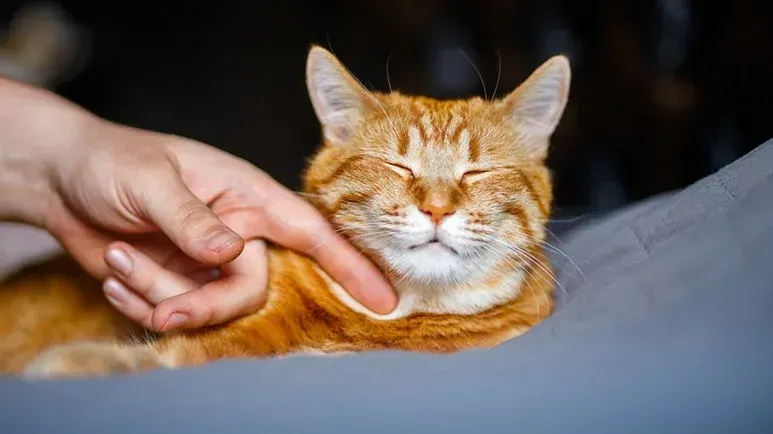
Your cat curls up on your chest, closes their eyes, and starts producing that low, rhythmic rumble that has become synonymous with contentment. It vibrates through your ribs and settles your nervous system — like a small furry engine of calm.
For most cat parents, this is where the story of purring ends: Cats purr when they're happy, and being purred on is one of life's small pleasures. But researchers have been uncovering evidence that the purr is doing far more than expressing pleasure. It may be one of the most sophisticated self-healing tools in the animal kingdom — and part of it may work on us, too.
What a Purr Actually Is
A cat's purr is a low-frequency sound produced by rapidly vibrating the laryngeal muscles in the voice box and the diaphragm. Those muscles contract and relax quickly, causing air to move through the larynx and produce that steady rumble on both the inhale and the exhale.1,2
The average domestic cat purrs at a frequency of about 25 to 150 hertz. That's low enough for you to feel the vibration through their body even when the sound is soft. And it stays remarkably consistent whether the cat is breathing in or breathing out — a smooth, continuous hum rather than a chopped-up rhythm.
Fun fact: Not every cat can purr. Domestic cats can, along with cheetahs, ocelots, servals, and pumas — but big cats like lions, tigers, leopards, and jaguars roar instead. And several non-feline species also purr, including hyenas, mongooses, guinea pigs, and even raccoons.3
Purring Isn't Only About Happiness
Here's the first surprise. Cats purr when they're happy, yes — but they also purr when they're stressed, frightened, injured, giving birth, or even dying. Anyone who has taken a cat to the vet has witnessed the phenomenon of a clearly terrified cat purring through the entire exam.4,5
If purring is just an expression of contentment, that doesn't add up. Something else must be at work here. This puzzle is exactly what led researchers to look more closely at what those low-frequency vibrations might be doing inside a cat's body.
The Frequency Sweet Spot
In a landmark study published by the Journal of the Acoustical Society of America, bioacoustic researcher Elizabeth von Muggenthaler recorded and analyzed purrs from 44 individual cats across five different species, including cheetahs, ocelots, pumas, domestic cats, and servals. Every single one produced strong frequency between 25 and 150 hertz.6
That range turns out to overlap almost perfectly with the frequencies used in human vibrational medicine — the same frequencies clinicians already use to promote healing in bones, joints, muscles, and soft tissue.
Specifically, purrs in the 25 to 50 hertz range correspond directly to the frequencies that best promote bone growth and fracture healing in human medicine. Purrs with a strong harmonic around 100 hertz correspond to frequencies used therapeutically for pain relief, wound healing, and reduction of edema and breathing difficulty.
In other words, cats appear to be walking around with a built-in vibrational medicine machine — one that runs on their own breath.
Bone Healing at 25 to 50 Hertz
The bone connection is the most striking piece of the puzzle. Research led by Leslie A. Lyons at the University of California School of Veterinary Medicine and others has established that low-frequency vibrations in the 25 to 50 hertz range stimulate bone density, promote fracture healing, and improve overall skeletal strength. Bones harden in response to that steady, gentle pressure.7,8
That happens to be the exact frequency at which cats purr most powerfully. And it may explain something veterinarians have long observed: cats have remarkably few of the skeletal issues — like hip dysplasia, elbow dysplasia, and chronic bone fractures — that plague their domestic counterpart, the dog. Their bones tend to stay strong even in old age.
It's not that cats are magical. It's that they may be receiving a low-dose, high-frequency skeletal treatment several times a day, every day, for their entire life.
Beyond Bones
Bone healing is only part of the story. The frequencies within a cat's purr have been linked to a broader menu of therapeutic effects:9,10
- Muscle repair and growth (25 to 50 Hz)
- Tendon repair and joint mobility (18 to 35 Hz)
- Pain relief (around 100 Hz)
- Wound healing and reduction of swelling (around 100 Hz)
- Improved breathing in respiratory distress (around 100 Hz)
- Reduced inflammation
Add it all up, and the purr starts to look less like a mood indicator and more like a survival mechanism. A stealthy, energy-efficient way for cats to keep themselves at peak physical condition without having to move very much.
The Self-Repair Theory
This is where the theory gets interesting. Cats spend an extraordinary amount of their day sleeping — often 12 to 16 hours. All that inactivity should, in theory, be bad for muscle tone, bone density, and joint mobility. In most animals, being that sedentary should lead to weakness and atrophy.11
But cats seem to counteract that risk with the purr itself. The low-frequency vibrations pass through their bones and muscles while they rest, doing the maintenance work their body would otherwise get from movement. When they finally do need to spring into action to hunt (or knock a glass off a table), everything is ready to go.
It's an evolutionary elegance: a predator that can conserve energy during long periods of rest while keeping its physical hardware in perfect working order. And it explains beautifully why an injured or frightened cat would purr. That's exactly when the body needs healing frequencies most.12
What the Purr Does for Us
Here's where the story circles back to you: When your cat is purring on your chest, those same vibrations are also passing into your body, and there is a growing body of research suggesting that human beings benefit from them too. Listening to and feeling a cat's purr has been associated with:13
- Reduced blood pressure
- Lower levels of stress hormones
- Increased release of oxytocin, a bonding and calming hormone
- Reduced feelings of loneliness and anxiety
- Improved cardiovascular health — one study found cat owners have around 40% lower risk of heart attack, and up to a third lower risk of stroke or heart disease
Whether the vibrations themselves are doing the medical work or whether it's the combination of vibration, warmth, purring, and companionship, the outcome is the same. Time with a purring cat helps to move your nervous system in a healthier direction.
The Solicitous Purr
Researchers at the University of Sussex also identified a special version of the purr — the solicitous purr — that cats use specifically to get their humans' attention, usually when they want to be fed.14
This purr layers in a subtle high-frequency component that's remarkably like the cry of a human baby. Even people without cats, when played a recording of this specific purr, reported feeling a sense of urgency. Your cat, it turns out, may have evolved a very effective form of manipulation targeted precisely at the human nervous system — and it's hard to blame them for it.
Kittens Learn from the Purr First
Purring also plays a foundational role early in a cat's life. Newborn kittens are born blind and deaf. Their eyes don't open and their ears don't function fully for about 10 days. What they can feel from the moment of birth is their mother's purr vibrating through her body.15
That vibration becomes their first form of communication — a signal of safety, of feeding time, of nearness. It's also a quiet form of communication that predators can't easily detect, giving it an evolutionary advantage. The mother purring while nursing may also be helping her kittens develop stronger bones and muscles right from the start.
A Sound That Heals
The next time your cat settles onto your lap and starts up that low, rhythmic rumble, take a moment to appreciate what's happening. Their laryngeal muscles are producing the same frequencies used in vibrational medicine. Their bones are being maintained. Their muscles and tendons are silently being repaired. Their nervous system is relaxing.
And you are receiving a small share of that same benefit. Your blood pressure is easing down a notch. Your stress hormones are ticking lower. Some part of your body is being invited to relax in a way that's almost impossible to achieve by other means.
Cats have been sitting on human laps for thousands of years, doing something we are only beginning to understand. What looked like pure companionship has turned out to be something closer to reciprocal medicine. They purr. We become calm. Our bones and hearts are subtly healthier together. The next time it happens, you might notice it feels less like being sat on and more like being tuned to a lower calmer frequency.
The purr is not just a sound. It's a signal. It's a survival tool. And it may be one of the most tranquil, elegant partnerships between species we've ever witnessed.
Sources and References

Better Health Begins in the Bowl

Better Health Begins in the Bowl
The Ultimate Pet Nutrition Guide was created to help dog and cat parents understand what truly supports lifelong health.
In this free guide, you’ll discover:
-

How your pet’s biology influences their nutritional needs
-
Why conventional feeding advice often falls short
-
Practical ways to choose better food for your dog or cat
View our Privacy Policy and Terms of Service.