Your Pup's Bath Schedule Might Surprise You
Good grooming is more than just keeping your dog looking tidy. Understanding what your pup needs can help you support their comfort, skin, and coat health year-round.
Reviewed by Dr. Tracy Duffner


Join the Bark & Whiskers™ Family
Sign up today for our FREE newsletter, packed with expert advice and insider tips to keep your beloved pet in tip-top shape.
View our Privacy Policy and Terms of Service.


STORY AT-A-GLANCE
- There is no one-size-fits-all bathing schedule for dogs, as their needs depend on breed, coat type, age, lifestyle, health, and the time of year
- Bathing too often can wash away the natural oils that protect your dog's skin and coat, leading to dryness and irritation
- Some dogs may need weekly baths, while others can go six to eight weeks or longer, depending on their coat, activity level, and individual needs
- Seasonal changes can affect bathing frequency, with muddy spring weather, summer swimming, fall shedding, and dry winter air all influencing grooming needs
- Regular brushing, spot cleaning, and fresh-water rinses can help keep your dog clean and maintain a healthy coat between full baths
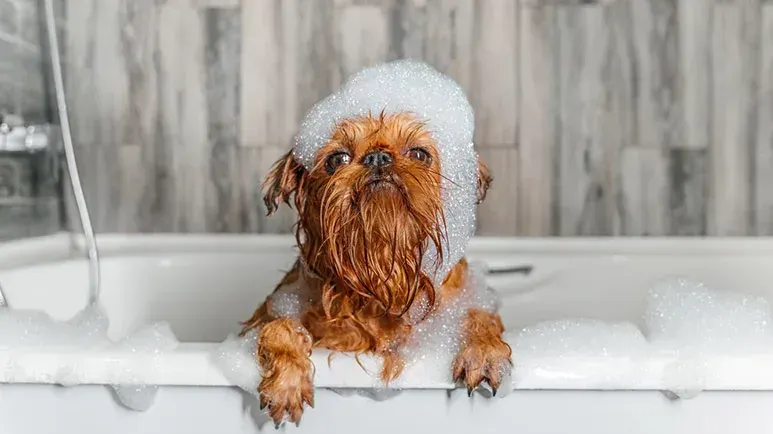
Bathing your dog may seem like a simple part of pet care, but figuring out how often they need a bath is not always so straightforward. While many dogs do well with a monthly bath, the ideal schedule can vary from one pup to another.
Of course, keeping your dog clean is about more than a fresh smell. Baths remove dirt, debris, and dead hair that collect in the coat over time — and doing it on a regular basis helps support healthy skin in the process. For dogs of all ages, understanding their bathing needs goes a long way toward keeping them comfortable, clean, and feeling their best.
Why There Is No Universal Bathing Schedule
If you have ever asked fellow pet parents how often they bathe their dogs, you have probably received a variety of answers. Some swear by monthly baths, while others only reach for the shampoo when their dog starts to noticeably smell bad.
According to PetMD, there are no hard-and-fast rules for bathing frequency, because several factors influence how often a dog needs a bath.1 Beth Cristiano, owner of Pretty Paws LLC, shared a similar perspective in an American Kennel Club article:2
"How frequently a pet needs a bath greatly varies based upon their breed, lifestyle, length of coat, and how much homework a pet owner is willing to do."
This helps explain why two dogs living in the same home may have completely different bathing schedules. A dog that spends most of its time indoors may stay clean for weeks, while an adventurous pup who enjoys digging, hiking, and exploring muddy trails may need more frequent cleanup.
What Really Determines How Often Your Dog Needs a Bath
When it comes to bathing frequency, coat type is one of the biggest factors to consider. It is easy to assume that dogs with less hair need fewer baths and dogs with longer coats need more, but the reality is a bit more nuanced. Different coat types come with different grooming needs, which can affect their bath schedule.3,4
- Hairless breeds — Dogs such as the Chinese Crested and Xoloitzcuintli may not have much fur, but they still require regular skin care. These breeds often need weekly baths to help maintain healthy skin.
- Long-coated breeds — Dogs with longer coats typically need more brushing and coat maintenance to prevent tangles and mats. However, they do not always require more frequent baths. As groomer Jorge Bendersky explains, "For dogs with medium-to-large coats, a bath could be needed from weekly to every four to six weeks, as long as the coat is properly maintained in-between baths."
- Corded breeds — Not all long-haired dogs need frequent baths. The Puli, for example, develops distinctive cords that require a different grooming approach. According to the Puli Club of America, "the Puli doesn't develop that typical doggie odor," and may not require as many baths as many other breeds.
- Double-coated breeds — Breeds such as Labrador Retrievers, Golden Retrievers, and Siberian Huskies have coats that naturally help regulate temperature and protect the skin.
Your dog's coat type is not the only thing that affects how often they need a bath. Weather and seasonal changes can influence everything from how dirty they get to how their skin and coat respond to grooming. According to Earthbath, adjusting your bathing routine throughout the year can help keep your pup comfortable and their skin in good condition:5
- Spring — This season brings mud, puddles, and a spike in environmental pollen, meaning allergens and debris can quickly build up in your dog's coat. Bathe your dog every four to six weeks during this time, using a soothing formula to calm irritated skin without over-drying.
- Summer — The sunny season means more time outdoors — hiking, beach trips, and swimming — exposing your dog to bacteria, chlorine, and salt along the way. That is why a full shampoo bath about once a month is recommended, plus a clean water rinse after every outdoor swim to prevent irritation from sitting moisture and water contaminants.
- Fall — Crispy leaf-season signals your dog's body to start growing a thicker coat for winter, often alongside a second shedding cycle. During this season, baths are best spaced out every six to eight weeks, to allow natural oils time to build up. Focus on thorough brushing to keep skin healthy.
- Winter — The snowy season combines freezing outdoor air with dry indoor heating, creating ideal conditions for dry, itchy skin. That is why baths should be kept to a minimum — roughly every eight weeks. When necessary, use a hydrating conditioner to lock in moisture against the harsh air.
Age, Lifestyle, and Health Matter Too
While coat length and the time of year can have a big impact on your dog's bathing schedule, age, lifestyle, and health also deserve a spot in the conversation. Younger dogs often need more baths simply because they tend to be more active and get dirty more easily.6 Puppies under eight weeks of age, though, should not receive full body baths unless absolutely necessary because they are not able to regulate their body temperatures yet and are at high risk for hypothermia. Instead of a full bath, spot clean these very young pups with a warm washcloth.
Senior dogs, on the other hand, tend to be less active and may naturally stay cleaner for longer — but that does not mean their grooming needs are simpler. Mobility issues can play a role, as some older dogs need extra grooming support to stay clean when getting around becomes difficult. Some senior dogs may also develop health issues such as urinary incontinence, which can cause them to soil their coat more easily.
Dogs with chronic illnesses such as allergic dermatitis or Cushing’s disease often have compromised skin barriers and require more frequent bathing. If your pet has problems with skin health or recurrent skin, paw, or ear infections, talk to your veterinarian about bathing frequency and specialized or prescription shampoos. Depending on the medical situation, your pet may need bathing weekly or even more frequently than once per week.
Finding the Right Balance Between Baths
While baths play an important role in keeping your dog clean and comfortable, giving them too many can sometimes do more harm than good by washing away the natural oils that help keep their skin and coat healthy. Here are a few easy ways to help your pup stay clean between trips to the tub:7,8,9
- Make brushing a regular habit — One of the easiest ways to keep your dog's coat looking its best is through regular brushing. Besides removing loose fur, dirt, and debris, brushing can help prevent tangles and mats from forming. It also distributes natural oils throughout the coat, which helps maintain healthy skin and fur. For double-coated breeds, a soft brush works well for the topcoat, while a de-shedding tool helps manage the undercoat.
- Use spot cleaning between baths — Not every muddy paw print or grass stain requires a trip to the bathtub. Grooming wipes are perfect for quick wipe-downs of muddy paws, dirty bellies, removal of pollen from the coat, and tear stains after walks. For a more thorough refresh, a waterless foam can be massaged directly into a dry coat and brushed out to break down odor and detangle fur — no water needed.
- Rinse after swimming and outdoor adventures — During the warmer months, many dogs spend more time swimming, hiking, and exploring. While getting wet is not the same as getting clean, a quick rinse with fresh water can help remove chlorine, salt, or other debris that may linger on the coat after outdoor activities. A deodorizing spray can also help neutralize any lingering odors between full baths.
- Pay attention to changes in your dog's skin and coat — Dryness, excessive scratching, unusual odors, or changes in your dog's coat may be signs that their grooming routine needs adjusting. Some dogs may benefit from medicated shampoos and a specialized bathing schedule, so it is important to speak with your veterinarian if any skin concerns develop.
Finding the right bathing routine may take a little trial and error, but it does not have to be complicated. By considering your dog's lifestyle you can build a grooming routine that works for their individual needs. The goal is not to bathe your dog as often as possible. It is to keep them clean, so they are always ready for the next walk, cuddle, or adventure.
Sources and References

Better Health Begins in the Bowl

Better Health Begins in the Bowl
The Ultimate Pet Nutrition Guide was created to help dog and cat parents understand what truly supports lifelong health.
In this free guide, you’ll discover:
-

How your pet’s biology influences their nutritional needs
-
Why conventional feeding advice often falls short
-
Practical ways to choose better food for your dog or cat
View our Privacy Policy and Terms of Service.