What if Their Behavior Problem Starts in Their Gut?
New research reveals that your dog or cat’s gut and brain are in constant conversation — and when that conversation goes sideways, the behavior you see at the end of the leash is often the result.
Reviewed by Dr. Tracy Duffner




Join the Bark & Whiskers™ Family
Sign up today for our FREE newsletter, packed with expert advice and insider tips to keep your beloved pet in tip-top shape.
View our Privacy Policy and Terms of Service.

STORY AT-A-GLANCE
- New research on the microbiota-gut-brain axis shows your pet’s digestive system and brain are in constant two-way communication, meaning gut imbalances can directly fuel anxiety, aggression, and other behavior problems
- Scientists have mapped four main communication routes between gut and brain: the vagus nerve, immune signaling, short-chain fatty acids from fiber fermentation, and neurotransmitters produced by gut microbes themselves
- Studies in dogs and cats link disrupted gut microbiomes to anxiety, compulsive behaviors, and stress reactivity, with early trials showing that probiotics and dietary changes can measurably improve behavior
- Gut-targeted interventions fall into four categories — probiotics, prebiotics, postbiotics, and synbiotics — each working through a different mechanism to restore the microbial balance behind calmer behavior
- Before reaching for medication for a behavior problem, consider whether your pet’s gut health is contributing — a species-appropriate diet, targeted probiotics, and reduced environmental toxins often produce changes conventional training cannot
Your dog gets anxious every time you leave the house. Or they are reactive on walks. Or they bark at nothing for hours. Your cat sprays, hides, hisses when nobody has done anything wrong.
For decades, veterinary behavior medicine has treated problems like these as mental health issues — anxiety disorders, aggression, cognitive dysfunction — and reached for behavioral training, environmental changes, and sometimes psychotropic medications. All of that still matters. But a rapidly expanding body of research is pointing to something unexpected underneath many of these behavior problems: the gut.
A growing collection of peer-reviewed studies — in dogs, cats, humans, and rodent models — now suggests that the trillions of microbes living in your pet's digestive tract are actively influencing their mood, stress response, cognition, and behavior. The connection runs through what scientists call the microbiota-gut-brain axis, and it may be reshaping how we think about behavior problems in companion animals.
The Gut-Brain Axis in Plain Terms
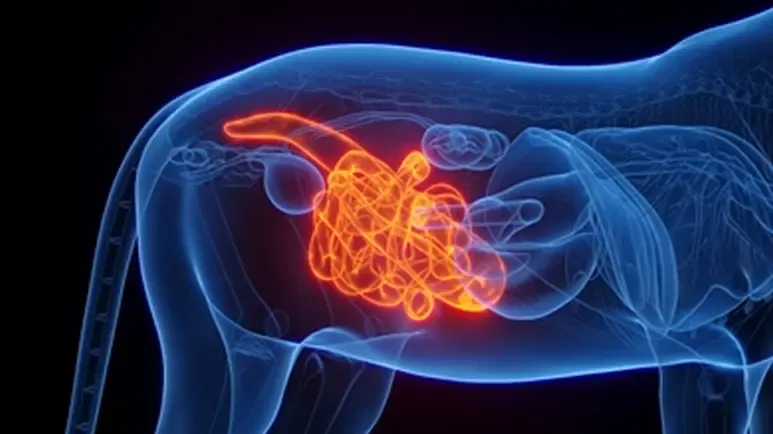
The microbiota-gut-brain axis is a two-way communication network linking your pet's digestive tract to their central nervous system. It runs through four interconnected pathways: neural signals (primarily via the vagus nerve), endocrine signals (hormones), immune signals (cytokines and inflammatory messengers), and metabolic signals (molecules the gut bacteria themselves produce). Each pathway influences the others, and the whole system runs continuously in both directions.1
The gut microbiome is not a passive resident. It is an active mediator — producing neuroactive compounds including short-chain fatty acids (SCFAs), neurotransmitters, and vitamins that influence brain development, emotional regulation, and cognitive function. When the microbial community is in balance, this communication supports a steady, resilient nervous system. When it is thrown off — a state called dysbiosis — the signaling goes sideways, and behavior often follows.2,3
How Microbes Talk to the Brain
The science is still developing, but the main communication routes are now well-mapped. Researchers have identified several distinct pathways through which the gut microbiome exerts its influence on brain function and behavior, and these pathways do not work in isolation:
- The vagus nerve — The longest cranial nerve in the body, running from the brainstem down through the chest and abdomen. Its sensory fibers in the gut wall detect microbial metabolites and transmit that information directly to the brain. Animal studies have shown that the behavioral effects of specific probiotic strains are abolished when the vagus nerve is cut — strong evidence that this nerve is a central pathway for gut-brain communication.4,5,6
- Neurotransmitter production — Gut microbes directly produce or regulate neurotransmitters that affect mood, cognition, and behavior. Approximately 90% of the body's serotonin is synthesized in the gastrointestinal tract. Lactobacillus and Bifidobacterium species produce GABA — the main inhibitory neurotransmitter involved in calming the nervous system — directly in the gut. Bacillus and Escherichia species produce dopamine precursors. Different microbial compositions produce different neurotransmitter profiles, which directly affects what your pet's brain has to work with.7
- Short-chain fatty acids — When beneficial gut bacteria ferment dietary fiber, they produce SCFAs — including butyrate, propionate, and acetate — that cross the blood-brain barrier, reduce neuroinflammation, support the integrity of that barrier, modulate neurotransmitter synthesis, and regulate the body's main stress-response system (the HPA axis). SCFAs are among the most important chemical messengers in the whole axis.8
- The HPA axis and stress response — The gut microbiota directly influences the hypothalamic-pituitary-adrenal axis — the body's central stress-response system. In germ-free animal studies, animals without gut bacteria show exaggerated stress responses and cognitive deficits. Introducing specific beneficial microbes normalizes those responses. In practical terms, this can mean that dysbiosis can keep a pet's stress system stuck in overdrive.9,10
- Immune signaling and inflammation — Dysbiosis can compromise intestinal barrier integrity (sometimes called "leaky gut"), allowing bacterial components and inflammatory signals to enter the bloodstream. Those signals activate systemic immune responses, promote neuroinflammation, and can disrupt neurotransmitter metabolism — all of which affect behavior. Anxiety and depression in multiple species are consistently associated with elevated pro-inflammatory cytokines.11
What Does This Mean for Dogs and Cats?
The research in companion animals is still catching up to the human and rodent work, but it is accelerating. Here is what has been established in dogs and cats so far:
- Anxiety behaviors — In a group of 42 dogs classified by a veterinary behaviorist as aggressive, phobic, or healthy, aggressive dogs showed a significantly lower abundance of Bacteroidetes bacteria, along with changes in several other microbial genera. Phobic dogs showed an unexpectedly higher proportion of Lactobacillus — a reminder that the picture is nuanced.12,13
- Aggression — A study of 31 American Pit Bull Terriers found aggressive dogs had a higher proportion of Firmicutes (particularly Lactobacillus) and lower levels of Proteobacteria and Fusobacteria. Non-aggressive dogs had higher levels of Bacteroides and Dorea strains.14
- Separation anxiety — A 14-day supplementation study using Lactiplantibacillus plantarum PS128 in dogs with separation anxiety produced measurable stabilization of anxious behavior and changes in serotonin turnover — strong early evidence that specific probiotic strains can shift the behavior picture.15,16
- Canine cognitive dysfunction — Older dogs show distinct gut microbiome patterns — lower proportions of Fusobacteria are associated with poor gut health and weight gain (and this finding is opposite that of aging humans), and lower levels of Actinobacteria are associated with improved cognition.17 Medium-chain triglyceride (MCT) supplementation has shown cognitive improvement in senior dogs, likely through microbial metabolism and ketone body production.18
- Feline conditions — Research in cats lags behind dogs. However, bile acid dysmetabolism — specifically loss of the bacterium Peptacetobacter hiranonis — has been linked to feline neuroinflammation and cognitive dysfunction. Direct behavior-gut connections in cats remain preliminary, but they are increasingly on researchers' radar.19
Treatment Options That Target the Gut
Researchers reviewing this field group gut-targeted interventions into four main categories. Each one influences the gut-brain axis from a different angle. Here is how they break down:
- Probiotics and psychobiotics — These are specific live bacterial strains administered for behavioral benefit. The best-studied in companion animals are Bifidobacterium longum BL999 and Lactiplantibacillus plantarum PS128, both of which have shown reductions in anxiety-related behaviors and stress hormone markers in canine trials. Not every probiotic strain does the same thing — strain specificity matters enormously, and most generic pet-store probiotics have no behavioral data behind them.20
- Prebiotics — These are non-digestible fibers that feed beneficial bacteria. Fructo-oligosaccharides (FOS), galacto-oligosaccharides (GOS), and inulin promote the growth of SCFA-producing bacteria. Prebiotic trials have shown reduced waking cortisol and improved emotional bias in humans, and anxiolytic effects in rodents. Emerging evidence shows that combined prebiotic-probiotic (synbiotic) approaches may work better than either alone.21,22
- Fecal microbiota transplantation (FMT) — This involves transferring microbial communities from healthy donors into dysbiotic recipients. It is still experimental in companion animal behavior medicine, but preliminary case reports in dogs with drug-resistant epilepsy and ADHD-like behaviors have shown improvement. FMT carries real risks — pathogen transmission, microbial disruption — and should be considered investigational, not routine.
- Diet — It is the most modifiable factor shaping gut microbes. High-protein diets shift the microbial community toward protein-fermenting bacteria; high-fiber diets favor SCFA-producing species. Specialized diets like the ketogenic or MCT-enriched diet are showing growing evidence for cognitive dysfunction and epilepsy management in senior dogs. From the holistic integrative veterinary perspective, this is the single most practical lever most pet parents have.23
The Integrative Perspective
Integrative and holistic veterinarians have been raising the gut-behavior connection for years, and the mainstream research is now catching up. The practical takeaway from both camps looks remarkably similar: fresh, species-appropriate whole-food feeding supports a healthier microbiome; targeted probiotic and prebiotic use may support anxious or reactive pets as part of a broader plan; reducing environmental toxin load, chemical exposures, and chronic stress helps the microbiome do its job; and dietary interventions, when thoughtfully chosen, work with the body rather than against it.
From this perspective, a behavior problem may not just be a brain problem. It may be a whole-system imbalance — one that benefits from looking at diet, gut health, stress load, environmental enrichment, and the overall ecology your pet lives in. Behavioral training and conventional treatments still matter. But the research now suggests they will work better when the gut is pulling in the same direction.
What You Can Actually Do
Nothing in the emerging research replaces working with a veterinarian or veterinary behaviorist for serious behavior problems. But practical steps that support a healthier gut-brain axis, based on the current evidence:
- Feed a fresh, whole-food, minimally processed diet with identifiable protein sources — this is the single biggest lever on microbiome composition
- Include fiber from vegetables, fruits, and quality carbohydrate sources that feed SCFA-producing bacteria
- Consider a quality probiotic matched to your pet's situation — ask an integrative vet about strain-specific choices with actual behavior data (like Bifidobacterium longum BL999 or Lactiplantibacillus plantarum PS128 for dogs with anxiety)
- Add prebiotic foods or a prebiotic supplement, especially for pets with anxiety or digestive issues
- Reduce ultra-processed kibble, which can promote dysbiosis over time
- Avoid unnecessary antibiotics and medications where possible, since both can significantly disrupt the microbiome
- Keep stress load manageable — predictable routines, adequate sleep, enrichment, calm handling
- For senior pets showing cognitive changes, discuss MCT supplementation with an integrative veterinarian
- Rule out underlying GI issues when a pet shows significant behavior changes — gut discomfort often shows up as behavior
What the Science Can and Cannot Say Yet
The researchers themselves are careful about overclaiming. Most of the current evidence base is correlative — showing that microbial differences and behavior differences coexist — rather than causal. Many studies have small sample sizes, variable methodology, and translate findings from rodents or humans to companion animals without direct canine or feline validation. The strain-specific effects of individual probiotics are still being mapped.
That said, the mechanistic science is solid, the direction of findings is consistent across species, and the practical interventions — diet, probiotics, prebiotics, reducing stress — carry low risk and growing benefit. The gut-brain axis is almost certainly going to be an increasingly important part of behavior medicine over the next decade. The pets whose humans start paying attention to this now are likely to benefit well before the field fully catches up.
Putting It All Together
The next time your pet exhibits a behavior problem that seems impossible to pin down, consider that the picture may extend beyond their brain. Trillions of microbes living in their gut are influencing their mood, their stress response, their cognition, and their day-to-day behavior through pathways science is still mapping. Supporting those microbes with thoughtful diet, strain-specific probiotics where appropriate, prebiotics, stress reduction, and an integrative approach to care may do more for your pet's behavior than any single intervention aimed at the brain alone.
Behavior starts somewhere. For a growing number of pets, that somewhere may be the gut. And that is genuinely good news — because unlike the brain, the gut is remarkably responsive to what you put into it every day.
Sources and References
- 1,2,8,16,18,19,20,23 Veterinary Medicine and Science, July 2026, Volume 12, Issue 4, e71105
- 3,7,9,11,21 Front. Microbiomes, 2026, 4:1701608
- 4 Proc Natl Acad Sci U S A. 2011 Sep 20;108(38):16050-16055
- 5 Neurogastroenterol Motil. 2015 May;27(5):663-671
- 6 Neurosci Res. 2021 Jul;168:20-27
- 10,12,14,15,22 Vet Med Int. 2024 Jan 23;2024:2856759
- 13 Heliyon. 2020 Jan 29;6(1):e03311
- 17 Animals (Basel). 2020 Aug 24;10(9):1488

Better Health Begins in the Bowl
Better Health Begins in the Bowl
The Ultimate Pet Nutrition Guide was created to help dog and cat parents understand what truly supports lifelong health.
In this free guide, you’ll discover:
-

How your pet’s biology influences their nutritional needs
-
Why conventional feeding advice often falls short
-
Practical ways to choose better food for your dog or cat
View our Privacy Policy and Terms of Service.