The Sweet Trick That Makes Life Harder for Bad Bacteria
There is a sweet, naturally occurring sugar that works with your pet's plumbing instead of directly against invading bacteria — making it nearly impossible for E. coli to hold on inside the bladder.
Reviewed by Dr. Tracy Duffner




Join the Bark & Whiskers™ Family
Sign up today for our FREE newsletter, packed with expert advice and insider tips to keep your beloved pet in tip-top shape.
View our Privacy Policy and Terms of Service.


STORY AT-A-GLANCE
- D-mannose is a naturally occurring simple sugar found in cranberries and other fruits that helps prevent E. coli — the cause of about 30% to 60% of pet urinary tract infections (UTIs) depending on the study — from sticking to the bladder wall, so bacteria get flushed out during normal urination instead of colonizing the urinary tract
- Unlike antibiotics, D-mannose does not kill bacteria; it works through a purely physical mechanism, which means it does not contribute to antibiotic resistance
- The strongest evidence comes from human studies in women with recurrent UTIs, where D-mannose reduced recurrence rates dramatically (down to about 15% versus 60% with no prophylaxis) and produced far fewer side effects than preventive antibiotics
- Veterinary research is more limited but supportive, and a 2022 AHVMA review recommends D-mannose as a standard preventive measure for pets with recurrent UTIs
- D-mannose is best suited for preventing recurrence in pets with a history of E. coli UTIs, not as a first-line treatment for an active infection — bladder stones, tumors, non-E. coli bacteria, and biofilm-protected infections all require separate veterinary evaluation and treatment
Your dog has been squatting to pee every few minutes and coming up with a dribble. Your cat is making frequent, unproductive trips to the litter box, and you notice a spot of blood. You have been through this before. The veterinary clinic, the culture, the antibiotics, and the wait for the next flare-up.
Recurrent urinary tract infections (UTIs) are exhausting for pets and pet parents alike. And while antibiotics still have their essential role, a growing number of veterinarians are also reaching for a much quieter tool. It is a naturally occurring sugar called D-mannose, and its job is simple: make life a lot harder for the bacteria trying to take up residence in your pet's bladder.
Why UTIs Are So Common in Pets
UTIs are one of the most frequent reasons dogs and cats end up at the veterinary clinic. Estimates suggest that 14%1 to 27% of dogs will have at least one UTI in their lifetime, with females at higher risk due to their shorter urethra. Cats are less commonly affected overall with bacterial urinary tract infection, but lower-tract urinary problems are still the No. 1 reason cats end up in the clinic.2,3,4
A frequent culprit is E. coli, which is responsible for about 80% of community-acquired UTIs in people and about 30% to 60% in pets.5,6 Common triggers include incomplete bladder emptying, bladder stones, diabetes, obesity, post-surgical catheter use, immunosuppressive drugs, and simply not drinking enough water.7,8
Some pets get one UTI and never have another. Others develop chronic patterns where infections keep returning despite antibiotics. It is that second group where D-mannose really shines.9,10
What D-Mannose Actually Is
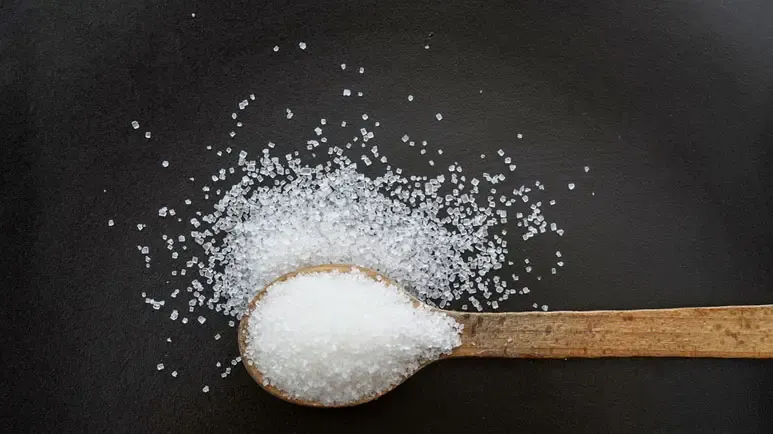
D-mannose is a simple, naturally occurring six-carbon sugar. It is found in small amounts in fruits like cranberries, apples, oranges, peaches, blueberries, and mangoes. It is closely related to glucose but behaves very differently once it is in the body.
The most important difference is that D-mannose is not really metabolized. In humans, about 90% of ingested D-mannose is absorbed and then quickly filtered out of the bloodstream by the kidneys, ending up in the urine largely unchanged. That is exactly where you want it.11,12
Because it is not metabolized like other sugars, it does not raise blood sugar or affect urinary pH in meaningful ways. That also makes it a reasonable option for pets with diabetes, though always with veterinary guidance.13,14
The Sweet Trick
Here is the elegant part. Most UTI-causing E. coli (and certain other types of bacteria) use tiny hair-like projections called fimbriae to grab onto the cells lining the bladder wall. Those fimbriae carry a specialized receptor (called FimH15) that looks for mannose-like sugars.
When there is enough D-mannose in the urine, the bacteria latch onto it instead of the bladder lining. Once they are bound to a sugar molecule floating in the urine, they can no longer stick to the bladder lining. They get flushed out during normal urination. Think of it like coating the inside of the bladder with something so slick that bacteria cannot get a grip — like “molecular Teflon.”16,17
Why This Approach Is Different
Antibiotics kill bacteria. Because of this, bacteria are under evolutionary pressure to survive by developing resistance. Every course of antibiotics used contributes to that pressure, which is why antibiotic resistance has become such a significant issue in both human and veterinary medicine.
D-mannose does not kill anything. It does not damage bacteria, disrupt their function, or interfere with their metabolism. It just makes them slippery. That means there is no meaningful path for bacteria to become resistant to it.
It also plays nicely with antibiotics. There are no known negative interactions between D-mannose and antibiotic therapy, and some veterinarians pair the two in stubborn cases for a multi-pronged approach.18,19
D-Mannose vs. Cranberry
Cranberry has a long history as a UTI supplement. And D-mannose is actually one of the compounds in cranberry that gives it its benefit. But cranberry contains other useful compounds too, most notably proanthocyanidins, which are antioxidants that may work through a slightly different mechanism to keep bacteria from adhering.20
Purified D-mannose is often preferred in pets for a few reasons. It is more concentrated, cranberry juice tends to be too sugary for pets, and D-mannose is generally considered better for quick action on an existing bacterial issue. Cranberry powder or extract is more often positioned for longer-term urinary support.21
Some veterinarians and integrative practitioners combine the two, since their mechanisms are different enough that they may work in synergy. Human studies have shown higher cure and remission rates when cranberry and D-mannose are used together alongside antibiotics.22
What the Research Actually Shows
Most of the strong human research on D-mannose has been in women with recurrent UTIs, and the results have been generally favorable. Multiple studies have shown that D-mannose reduces the rate of recurrence, extends the time between infections, and produces significantly fewer side effects than preventive antibiotics.
In one randomized trial in women, D-mannose reduced the recurrence rate to 14.6% compared to 60.8% in women receiving no prophylaxis, a result on par with the antibiotic nitrofurantoin.23,24
Dedicated placebo-controlled studies in dogs and cats are more limited, and much of the veterinary evidence comes from case series, reviews, and clinical experience. A 2022 AHVMA scientific review concluded that D-mannose should be considered a standard preventive measure when planning care for pets with recurrent UTIs, citing its low cost, low side-effect profile, and lack of resistance risk.25
You need to remember, though, that D-mannose is not a first-line treatment for an active UTI in dogs. However, it may be recommended as part of a broader plan to reduce risk in dogs prone to recurrent infections.26
Where It Fits Best
D-mannose is not a cure-all. It works well in specific situations and less well in others. Here is where it tends to shine and where it falls short.27,28,29
Where D-mannose is a strong fit:
- Preventing recurrence in pets with a history of E. coli UTIs
- Adding to antibiotic therapy for stubborn or repeat infections
- Long-term daily support for pets at increased UTI risk
- Pets with diabetes, since it is largely non-metabolized
- Situations where reducing antibiotic exposure is a priority
Where D-mannose is not the right answer:
- Active, complicated UTIs, which still need veterinary diagnosis and antibiotics
- UTIs caused by bacteria that do not have mannose receptors (some strains of E. coli, and many other species, are unaffected)
- Infections protected by bacterial biofilms, which can shield bacteria from both antibiotics and mannose
- Bladder stones, crystals, or urinary tumors, which are separate problems requiring their own workup
If D-mannose is going to help, most owners report seeing symptom improvement within 48 to 72 hours. If nothing has changed after about three days, that is your cue to head back to the vet.
Dosing and Administration
Standardized canine dosing has not been formally established, but veterinary sources have converged on a general range. Common suggestions include:30,31
- Small dogs (up to 15 pounds) — 250 to 500 milligrams (mg)
- Medium dogs (16 to 50 lb.) — 500 mg to 1 gram (g)
- Large dogs (51 to 95 lb.) — 1 to 1.5 g
- Giant dogs (96 lb and up) — 1.5 to 2 g
- Cats — About 250 to 500 mg once daily, twice daily if symptoms persist
Because D-mannose clears the bloodstream and lands in the urine quickly, splitting the daily dose into two or three servings helps keep steady levels in the bladder. Start on the lower end for prevention, and lean higher for a flare-up under veterinary guidance.32
The powder is inexpensive, tastes mildly sweet, and mixes easily into moistened food. Dog-specific formulations may include probiotics, cranberry, or other urinary support ingredients. Skip human-formulated supplements without checking with your veterinarian, since they may include ingredients that are not dog-safe.33,34
Safety and Side Effects
D-mannose is generally very well tolerated in dogs and cats. When side effects do occur, they are usually mild digestive changes such as loose stool or gas. If you notice any GI symptoms after starting D-mannose, stop the product and check in with your veterinarian. A few cautions worth knowing:35,36
- Talk to your vet before starting D-mannose in pets with kidney insufficiency, since reduced clearance may change how it behaves in the body
- Pregnant and lactating pets should only receive it under veterinary direction
- Diabetic pets can usually take it safely because it does not raise blood sugar meaningfully, but confirm with your veterinarian before starting
- Use a dog- or cat-specific product rather than a human supplement, and follow your vet's dosing instructions exactly
Beyond the Supplement: A Fuller Prevention Plan
Even the best supplement is only part of the picture. A well-rounded UTI-prevention plan for pets usually includes the following, and making adjustments here can dramatically lower the odds of a recurrence:
- Plenty of water — offer multiple bowls, consider a pet fountain, add water or broth to meals
- Wet or canned food for pets who need extra hydration, especially cats
- Frequent potty breaks so dogs are not holding urine for long stretches; ideally, a dog should have access to empty their bladder at least every 4 hours
- A clean, accessible litter box for cats — many cats will hold it if the box is dirty
- Keeping the rear-end area clean, trimming long hair around the vulva or prepuce
- Weight management — obesity has been associated with higher UTI risk
- A veterinarian-recommended diet if your pet is prone to struvite crystals or stones
- Routine urinalysis at annual or bi-annual checkups to catch trouble early
When to Call the Vet
D-mannose is a preventive and supportive tool, not a substitute for veterinary care. Some situations always call for immediate professional attention:
- Straining to urinate or producing only tiny amounts
- Blood in the urine
- A cat unable to pass urine at all — this can be a life-threatening emergency, especially in males
- Fever, vomiting, sudden lethargy, or abdominal pain
- No urine produced for 12 hours
- Symptoms lasting more than about three days despite D-mannose; remember, urinary tract infections are painful and we do not want our pets to be in pain
Blocked urethras are extremely painful and can be fatal within hours. When in doubt, treat urinary distress as an emergency.37
Small Sugar, Big Difference
There is something appealingly simple about a therapy that does not fight bacteria at all — it just makes them slide right out of the body. D-mannose works because of a small quirk of chemistry: the same receptors that let E. coli grip the bladder wall also happen to be a perfect fit for a sweet, safe sugar.
It is not a miracle. It does not replace a good veterinarian, a clean sample, a proper culture, or the right antibiotic when one is needed. But for pets who keep circling back to the clinic with the same infection, D-mannose is a well-tolerated, science-backed way to tip the odds back in their favor — and sometimes to skip the next round of antibiotics entirely.
If your pet has been dealing with recurring urinary trouble, talk with your veterinarian about whether D-mannose belongs in the plan. Sometimes the simplest tools turn out to be the ones that finally break the cycle.
Sources and References
- 1,5 Animals (Basel). 2025 Nov 30;15(23):3456, Result
- 2,7,12,14,16,19,29,30,32,36 Nature's Pure Edge, May 26, 2025
- 3,8,9,11,17,18,22,25,27,31,34 AHVMA Journal, Volume 67, Summer 2022
- 4,13,37 National Animal Supplement Council, January 10, 2015
- 6 Antibiotics (Basel). 2023 Aug 1;12(8):1269
- 10,26,28,33,35 Chewy, June 5, 2026
- 15 PLoS One. 2008 Apr 30;3(4):e2040
- 20,21 The Pet Health and Nutrition Center, January 10, 2026
- 23 World J Urol. 2014 Feb;32(1):79-84
- 24 BJU Int 2014; 113: 9–10 (PDF)

Better Health Begins in the Bowl

Better Health Begins in the Bowl
The Ultimate Pet Nutrition Guide was created to help dog and cat parents understand what truly supports lifelong health.
In this free guide, you’ll discover:
-

How your pet’s biology influences their nutritional needs
-
Why conventional feeding advice often falls short
-
Practical ways to choose better food for your dog or cat
View our Privacy Policy and Terms of Service.