Your Pet's Itch That Won't Quit
A relentless itch, a strange smell, and a cycle of temporary fixes that never seem to last. Here's what may really be going on.
Reviewed by Dr. Arielle Walton


Join the Bark & Whiskers™ Family
Sign up today for our FREE newsletter, packed with expert advice and insider tips to keep your beloved pet in tip-top shape.
View our Privacy Policy and Terms of Service.


STORY AT-A-GLANCE
- Yeast lives naturally on your pet's skin and inside their digestive tract, but when the balance breaks down, it can overgrow and cause that familiar pattern of relentless itching, paw chewing, and a distinctive corn-chip or musty smell
- The two main culprits in dogs and cats are Malassezia (the skin and ear yeast behind most flare-ups) and Candida albicans (more associated with gut imbalances)
- Yeast doesn't overgrow randomly; it takes advantage of triggers such as trapped moisture, food, environmental allergies, prolonged antibiotic or steroid use, hormonal conditions like hypothyroidism or Cushing's, high-carbohydrate diets, chronic stress, and a weakened immune system
- Many integrative vets now point to gut imbalances as a major driver of recurring yeast issues, which is part of why topical treatments alone often lead to a frustrating cycle of temporary fixes
- Real relief usually requires a multi-front approach: proper veterinary diagnosis, targeted topical care during flares, a lower-carbohydrate diet, supportive supplements such as omega-3s, probiotics, and caprylic acid, plus environmental and stress-reduction support
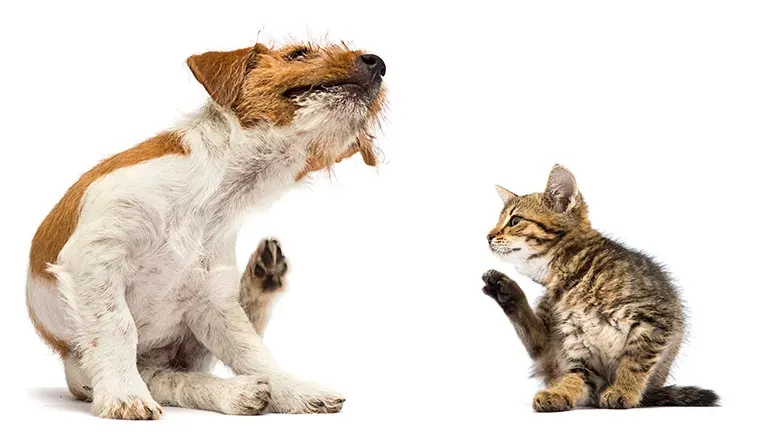
You know the scene. Your dog chews its paws on the rug while you're trying to watch a movie. Their bed starts to smell faintly like corn chips. Your cat over-grooms the same spot until it looks raw. You hear ear flaps shake at 3 a.m.
If your pet has a mysterious itch that just won't quit — one that medicated shampoo helps for a week, then comes right back — there's a good chance yeast is part of the story. Here’s what you need to know about this.
What Yeast Overgrowth Actually Is
Yeast is a type of fungus that naturally lives on your pet's skin and in their digestive tract. In small amounts, it's not a problem; it's just part of the normal microbial balance. The trouble starts when that balance breaks and yeast begins to multiply unchecked. Two yeasts come up most often in dogs and cats:1,2
- Malassezia — A yeast found primarily on the skin and in the ears. It's the most common cause of itchy, smelly, yeasty skin and ear problems.
- Candida albicans — This yeast is found mainly in the digestive tract and mucous membranes. It's less common but can show up when the intestinal balance is disrupted.
The term “candidiasis” is sometimes used as a catch-all for yeast overgrowth, but Malassezia is by far the more common culprit when pet parents start noticing skin and ear symptoms.
Where Yeast Likes to Show Up
Yeast thrives in warm, moist, low-airflow places, which is exactly the environment that a lot of dog and cat anatomy provides. Common hot spots include:3,4
- Ears, especially in floppy-eared dogs, where airflow is limited
- Skin folds of bulldogs, pugs, and shar-peis are especially prone
- Between the toes and on the paw pads, particularly if your pet's feet stay damp
- The groin, belly, and rear end
- The face, around the muzzle, and lips
Spring and summer tend to be peak yeast season, since higher humidity, swimming, and longer outdoor stretches all favor yeast growth.
Signs Your Pet May Be Dealing with Yeast
Yeast tends to build slowly, with small symptoms that pet parents often dismiss at first as quirks or seasonal allergies. But over time, the picture becomes harder to ignore, and once you know what you're looking at, the pattern is fairly easy to spot. Here’s what to look for:5,6,7
- Persistent itching, scratching, and rubbing (especially the paws, ears, belly, and rear)
- Excessive licking or chewing in one spot
- A distinctive yeasty odor, often described as smelling like corn chips, musty bread, or sour cheese
- Recurring ear infections, head shaking, or dark ear discharge
- Red, inflamed skin
- Darkened, thickened, or leathery skin (sometimes called lichenification)
- Greasy or oily coat, sometimes with flaky patches
- Hair loss in affected areas
- In cats, over-grooming and skin or ear changes can be more subtle
If these symptoms sound a lot like allergies, that's because the two are often connected. Underlying food allergies, environmental triggers, or fleas can disrupt the skin barrier and create the perfect conditions for yeast to take hold. A vet visit is essential to sort out which is which.
Why It Happens
Yeast doesn't just decide to overgrow for no reason. It takes advantage of conditions that knock the body out of balance. Common triggers include:8,9,10
- Trapped moisture: wet paws, damp ears, humid weather
- Food or environmental allergies that compromise the skin barrier
- Prolonged antibiotic use disrupts the balance of good bacteria
- Repeated steroid use can suppress the immune system
- A weakened immune system from illness, age, or genetics
- Underlying hormonal conditions like hypothyroidism, Cushing's disease, or diabetes
- A high-carbohydrate diet (yeast feeds on sugars and starches)
- Chronic stress, which can weaken immunity over time
- Environmental factors like mold exposure or damp living conditions
The Gut-Skin Connection
One of the more interesting parts of the yeast conversation is the link between gut health and skin health. Many integrative vets now talk about a “gut-skin axis,” the idea that an imbalanced digestive system can contribute to skin issues, including yeast overgrowth.
The logic goes like this: when the gut microbiome is out of balance from antibiotics, a carbohydrate-heavy diet, chronic stress, or other factors such as yeast in the gut, it can overgrow, inflammation rises, and the body has fewer resources to keep yeast in check elsewhere.
Some practitioners also point to “leaky gut,” a concept where the intestinal barrier becomes more permeable than it should be. The science around leaky gut in pets is still developing, but the broader connection between digestive health and skin health is increasingly recognized.11,12
Either way, the practical takeaway is the same: If your pet keeps having yeast flare-ups despite topical treatment, the body's bigger picture is worth looking at.
Why Shampoo Alone Often Isn't Enough
It's tempting to focus on what's visible — the ear flush, the medicated shampoo, the wipes — and call it a day. These tools can absolutely help in the short term, especially during a flare. But they don't usually solve the underlying problem on their own.13
That's because yeast isn't only living on the skin. It's part of a bigger imbalance involving immunity, diet, and the microbiome. Address only the surface, and the symptoms tend to come right back, often a little worse each time. The medicated shampoo cycle is a familiar one for many pet parents.
A More Complete Approach
Treating yeast effectively usually means working on several fronts at once. Always start with a proper veterinary diagnosis. Many other conditions can look like yeast, and getting it right matters. From there, here's what a more comprehensive approach often looks like:14,15,16
- Topical care — Medicated shampoos, ear cleaners, and topical antifungals (often containing ingredients such as chlorhexidine, boric acid, or essential oils, used under veterinary direction) can reduce yeast levels on the skin and reduce inflammation during a flare.
- Dietary changes — Yeast feeds on sugars and starches. Reducing high-carbohydrate foods, including some kibble formulas, even grain-free ones that rely on starchy ingredients like potatoes, peas, and chickpeas, can help starve the overgrowth. Many holistic vets recommend a fresh, gently cooked, or species-appropriate diet for yeast-prone pets, though changes should be discussed with your vet, especially for pets with health conditions.
- Supportive supplements — Several ingredients are commonly used to help support pets with recurrent yeast infections, though research is still developing in this area. These include:
- • Omega-3 fatty acids — Helps support skin barrier health and reduce inflammation
- • Caprylic acid (often from coconut or MCT oil) — It has natural antifungal properties
- • Probiotics — Helps support a healthy gut microbiome, especially during and after antibiotics
- • Antifungal herbs — Pau d'arco, oregano, and grapefruit seed extract are examples, but are advised to be used under professional guidance
- Environmental support — Reducing mold exposure, switching to fragrance-free or non-toxic cleaners, keeping bedding clean and dry, and improving home air quality can all lighten the load on your pet's immune system.
- Stress reduction — Chronic stress weakens immunity. A calm, predictable routine, plenty of enrichment, and a quiet retreat space all support the nervous system and, in turn, the immune system.
Remember: Set Realistic Expectations
Healing yeast overgrowth isn't usually a quick fix. As the body rebalances, you may see temporary flare-ups before improvement, and progress tends to be gradual rather than dramatic. Consistency over weeks and months is what creates lasting results; quick fixes tend to lead right back to the same cycle.
Working with a vet you trust, ideally one who is open to both conventional and integrative approaches, can make the process less frustrating.
The Bottom Line
That itch that won't quit, the corn-chip smell, the endless paw licking. Your pet is trying to tell you something, and yeast is often part of the answer. The good news is that with a thoughtful approach that addresses the underlying causes, not just the surface symptoms, most pets can find real, lasting relief.
Get the diagnosis right, look at the bigger picture, and give the process time. Your pet will thank you with quieter ears, calmer skin, and a body that finally feels like itself again.
Sources and References
- 1,3,5,8,14 Grace Animal Rehab Center, Dog Yeast Infection Treatment
- 2,7,10,11,16 Herbolario para Animales, June 8, 2026
- 4,6,9,12,13,15 Saving Pets One Pet at a Time, April 21, 2026

Better Health Begins in the Bowl
Better Health Begins in the Bowl
The Ultimate Pet Nutrition Guide was created to help dog and cat parents understand what truly supports lifelong health.
In this free guide, you’ll discover:
-

How your pet’s biology influences their nutritional needs
-
Why conventional feeding advice often falls short
-
Practical ways to choose better food for your dog or cat
View our Privacy Policy and Terms of Service.