What Your Pet's 'Senior Moments' May Really Mean?
Most people assume it is just aging. But your senior dog's brain changes have four distinct root causes and knowing them changes everything you can do.
Reviewed by Dr. Elizabeth Hardoon



Join the Bark & Whiskers™ Family
Sign up today for our FREE newsletter, packed with expert advice and insider tips to keep your beloved pet in tip-top shape.
View our Privacy Policy and Terms of Service.


STORY AT-A-GLANCE
- Up to 68% of dogs between ages 15 and 16 show signs of cognitive dysfunction — and changes can start as early as age 7
- Nighttime pacing, getting stuck in corners, house soiling, and increased anxiety are among the earliest and most telling warning signs of cognitive decline
- The DISHAA assessment evaluates your dog across six behavioral categories, helping you track cognitive changes so you will know when to talk to your veterinarian
- Fresh food, omega-3s, medium-chain triglyceride (MCT) oil, and targeted supplements support the gut-brain connection, fuel aging neurons, and may noticeably slow cognitive decline in dogs
- Four hidden causes — gut imbalance, low brain energy, oxidative stress, and metabolic disruption may be quietly fueling your pet’s brain decline long before symptoms appear
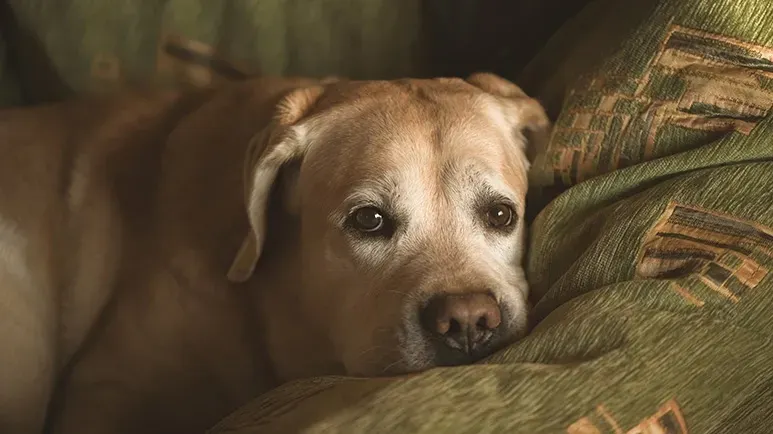
Have you stopped and really looked at your dog lately? — not just the quick glance when you pass by, but paused to watch them? Maybe their hearing is not quite what it used to be. Maybe they did not come running when you opened the door, or they wandered past their food bowl like they forgot it was there.
For a growing number of senior dogs, those minor changes are early signs of canine cognitive dysfunction (CCD). Think of it as the doggie equivalent of dementia or Alzheimer’s. And the earlier you recognize what is happening, the more you can do to help.
What Is Canine Cognitive Dysfunction Syndrome?
CCD is a progressive neurological condition that affects memory, learning, perception, and awareness. Dogs with CCD develop a buildup of a protein called beta-amyloid that forms plaques in the brain, interfering with how neurons send signals to one another.1 With damaged brain cells and reduced blood flow, your dog’s ability to navigate familiar spaces, recognize people, and respond to cues they’ve known for years gradually erodes.
Recent CCD research shows that 28% of dogs age 11 to 12 already show signs of cognitive dysfunction, and that figure climbs to 68% in dogs age 15 to 16.2 More concerning, is that in some pet’s early onset can occur beginning as early as age 7 — years before most pet parents would expect.3
The Warning Signs That Are Easy to Miss
Because the changes build slowly, CCD often slips past even attentive pet owners. The common early signs are pacing or wandering aimlessly (especially at night), getting stuck in corners or seemingly lost inside your own home, and whining, barking, or howling at nothing in particular.4 Your dog may become more anxious than usual, pant for no clear reason, or appear stressed in situations that never used to bother them.
Social changes are telling, too. A dog that used to follow you from room to room may suddenly seem indifferent. One that was always social may hide when guests arrive. Your dog might have accidents in the house or stop responding to commands they have known for years. Some dogs will develop changes in sleep cycles — becoming restless at night and sluggish during the day, like “sundowners’ syndrome” in people. These changes can build up slowly, which is why catching them early makes a difference in what you can do to help.
The Root Causes Working Against Your Dog’s Aging Brain
Most people think of cognitive decline as an inevitable part of aging. But there are actually several biological drivers that can cause internal changes long before symptoms become visible.5
- Gut imbalance and chronic inflammation — The gut and brain communicate constantly through what is known as the gut-brain axis. This happens through nerve signaling, immune responses, and chemical signals produced by gut microbes. When the gut lining is chronically inflamed, toxins can enter the bloodstream and trigger inflammation that reaches the brain. Dogs with a history of chronic digestive issues, long standing allergies, or chronic skin inflammation may be especially vulnerable through this pathway.
- Low brain energy from mitochondrial dysfunction — The brain is one of the most energy-demanding organs in the body, and when cellular mitochondria (the cell’s energy factories) are not working efficiently, brain cells cannot communicate properly. The result is confusion, slower responses, and disorientation that can look like “just getting old” but is due to an underlying cellular energy crisis.
- Oxidative stress and accumulated toxin load — Over time, an imbalance between damaging free radicals and a low level of antioxidants can harm brain cells and raise levels of inflammation. In dogs on chronic medications or with high exposure to environmental toxins, this burden can overwhelm the brain’s ability to repair itself.
- Metabolic and stress imbalance — Unstable blood sugar and chronically elevated stress hormones (cortisol) create a self-reinforcing feedback loop that, when compounded over the years, directly wears down brain function. When all four of these forces combine, the blood-brain barrier weakens, inflammation rises, and the ability for the brain to repair itself diminish. This is not something that happens overnight — it takes years to develop.
Assessing Your Furbaby at Home
Before your next vet appointment, it helps to have something more concrete than a general feeling that things have changed. That is where DISHAA comes in. DISHAA stands for the six behavioral areas it evaluates: Disorientation, Interactions with family and other pets, Sleep/wake cycles, House soiling, Activity levels, and Anxiety.6
For each of the six areas, rate your dog on a scale from 0 (no signs) to 3 (severe signs). This works as a checklist to evaluate your dog’s current symptoms: Are they getting lost in familiar spaces? Have they become more or less social? Are they sleeping through the night or whining and pacing at the end of the day?
A total score of four to fifteen suggests mild CCD; a score of 16 to 33 shows moderate dysfunction; and a score above 33 shows severe impairment. Share your pet’s results with your vet, so they have a clear, picture of what you have been seeing at home.
What You Put in the Bowl Matters
Your dog’s brain is made up of roughly 60% fat, which means that their diet has a direct and measurable effect on cognitive health.7 Starting to heal their brain with food is one of the most accessible ways to begin supporting your dog’s aging brain.
- Choose fresh, minimally processed foods — Highly processed kibble can drive chronic inflammation — one of the key forces behind cognitive decline. Shifting toward a fresh or raw diet reduces this burden on your dog’s brain and body.
- Add omega-3 fatty acids — Eicosapentaenoic acid (EPA) and docosahexaenoic acid (DHA) becomes part of the cell membranes of brain cells, improving flexibility and communication between neurons. They also reduce neuroinflammation and help support the brain’s own repair signals, which help brain cells grow and maintain connections.
- Consider MCT oil — MCT oil is rapidly converted into ketones, which are an alternative fuel source for the brain when glucose metabolism is disrupted. This disruption is common in aging pets and usually caused by neurodegenerative disease, mitochondrial dysfunction, or metabolic diseases. Clinical studies in dogs have shown cognitive improvement with MCT supplementation.
MCT oil is usually derived from coconut oil. A commonly used starting dose is around 1/4 teaspoon per ten pounds of body weight daily. Talk to your holistic veterinarian before starting any new supplement to confirm it is appropriate for your dog’s overall health.
Small Routine Changes Help Protect a Cloudy Mind
Beyond nutrition, how you structure your dog’s environment and daily routine makes a real difference. Keeping a predictable schedule — consistent mealtimes, regular walks, and familiar surroundings — helps reduce the confusion that comes with cognitive decline.8 Avoid moving food bowls or rearranging furniture. Keep the walking schedule as consistent as possible and maintain the same distance and route so your dog can navigate confidently.
Adding nightlights to the rooms your dog uses most reduces disorientation in the dark and eases the anxiety that can come with getting stuck. An extra walk right before bedtime is also worth trying — physically tiring your dog encourages longer, more restful sleep, which directly benefits the brain.9
Although there is no cure for doggie dementia, it can be managed. You can try using treat puzzles and other enrichment activities as mental exercises for your aging dog. This works their mind the way a crossword puzzle or sudoku can benefit the aging human brain.10 Scent-work games are especially appealing to older dogs, since their sense of smell tends to remain sharp even as vision and hearing fade.
What Your Veterinarian Can Add to the Plan
Some aspects of cognitive support require a professional’s guidance. Ruling out other conditions that can mimic CCD — such as liver disease, kidney disease, urinary tract infections, or arthritis — is an important first step before a diagnosis can be made.11 Your vet may also use the CAnine DEmentia Scale, or CADES, worksheet to formally assess how severely your dog’s cognition has changed.
Depending on your dog’s profile, your veterinarian may discuss treatment options for your pet. These might include a medication called selegiline, which works to protect nerve cells and enhance dopamine in the brain. In some pets improvement is noted with this medication in three to six weeks. Your holistic vet may also recommend herbal therapy and acupuncture for your pet as well as the supplement and diet changes mentioned above. Many pets will benefit from acupuncture and herbal therapy.
If your pet’s underlying cause is due more to arthritic pain and mobility issues, they may also benefit from laser therapy, and physical therapy. Rehabilitation protocols may include underwater treadmill sessions, exercises, and massage. These are all tools that may complement a well-rounded care plan, depending on your dog’s specific needs.
Your Dog Is Still in There
A diagnosis of cognitive dysfunction does not mean you have lost your dog. It means they need more thoughtful support. The choices you make — in their food bowl, in their daily routine, and in partnership with your veterinarian — can meaningfully shape how your dog experiences the time ahead. They have spent their whole life showing up for you in every small, loyal way they knew how.
Sources and References

Better Health Begins in the Bowl

Better Health Begins in the Bowl
The Ultimate Pet Nutrition Guide was created to help dog and cat parents understand what truly supports lifelong health.
In this free guide, you’ll discover:
-

How your pet’s biology influences their nutritional needs
-
Why conventional feeding advice often falls short
-
Practical ways to choose better food for your dog or cat
View our Privacy Policy and Terms of Service.