The Ingredient That Isn't Listed on the Label
Behind your pet's food bowl is a hidden compound linked to inflammation, aging, and chronic disease. Let's talk about what it is.
Reviewed by Dr. Arielle Walton




Join the Bark & Whiskers™ Family
Sign up today for our FREE newsletter, packed with expert advice and insider tips to keep your beloved pet in tip-top shape.
View our Privacy Policy and Terms of Service.


STORY AT-A-GLANCE
- Advanced Glycation End-products (AGEs), also called glycotoxins, are compounds formed when sugars bind to proteins or fats during high-heat cooking
- Commercial pet food processing creates significant dietary AGE exposure for two reasons: the multi-stage, high-heat processing that kibble and canned food undergo (sometimes four to six rounds of heat treatment) and the substantial carbohydrate content in most commercial diets
- A 2014 study found that the most studied type of AGE, hydroxymethylfurfural (HMF), had intake levels 122 times higher in dogs and 38 times higher in cats than in adult humans
- AGEs have been linked to inflammation, oxidative stress, diabetes, cardiovascular disease, kidney dysfunction, neurodegenerative disorders, and certain cancers. In dogs specifically, elevated tissue AGE levels have been observed in animals with diabetes, cataracts, osteoarthritis, cognitive dysfunction, vascular disease, and atherosclerosis
- You don't need a dietary overhaul to reduce your pet's AGE exposure — adding fresh, whole, non-starchy foods to even 10% to 20% of the diet, considering less-processed options, watching total starch content (not just grain), avoiding high-heat home cooking, and supporting overall metabolic health all make a meaningful difference
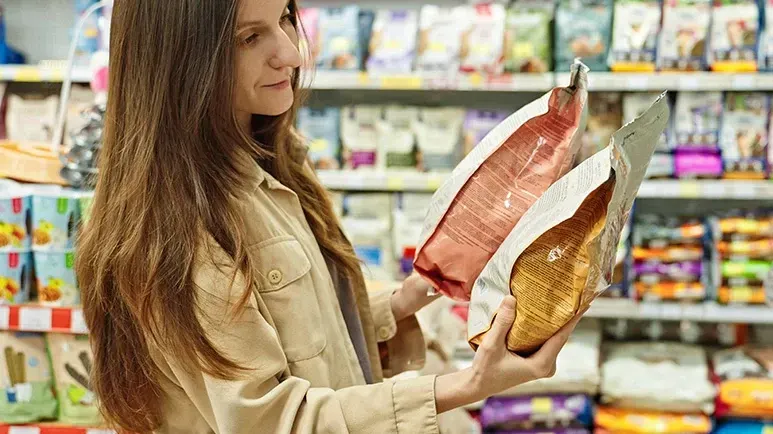
When you scan the back of your pet's food bag, you read a list of ingredients, a guaranteed analysis, and a feeding chart. What you don't see is one of the most studied — and most consequential — compounds in modern processed food. It isn't required to be listed, and it forms during the same cooking process that gives your dog's kibble its shelf life and your cat's canned food its long-lasting shape.
It's called advanced glycation end products (AGEs), sometimes referred to as glycotoxins. And the conversation about how they might affect the long-term health of dogs and cats is worth understanding.
What AGEs Actually Are
AGEs are compounds that form when a sugar molecule binds to a protein or fat. They occur naturally in the body as a byproduct of normal metabolism and also enter the body through food. In food, they're largely created through the Maillard reaction — the same chemical process that gives browned meat its color and caramelized sugar its flavor. When sugars and amino acids are heated together at high temperatures, they form compounds that taste appealing but carry health implications.
There are many types of AGEs, including acrylamide, carboxymethyl lysine (CML), and hydroxymethylfurfural (HMF). Some have been classified as probable carcinogens. Others have been linked, in human and animal studies, to inflammation, oxidative stress, and a range of chronic diseases.1,2,3
How AGEs Enter Pet Food
Two key features of commercial pet food processing make it a significant source of dietary AGEs. The first is heat. Kibble is typically processed at temperatures up to 400°F under pressure, then dried with heat and often sprayed with a heated fat coating to make it palatable. Canned food is sterilized at temperatures around 250 degrees Fahrenheit.
By the time finished products reach the shelf, the ingredients in a bag of kibble may have been heat-treated four to six separate times — during ingredient rendering or dehydration, during extrusion, during drying, and during fat coating.4
The second is starch. Most kibble contains a significant amount of carbohydrate — by some industry estimates, grain-based formulas are over 50% carbohydrate, and grain-free formulas often hover around 40%. Cats, who are obligate carnivores, may be eating commercial diets that contain more starch than protein. Starch is exactly the kind of substrate that drives AGE formation when cooked at high heat, and it also contributes to AGE production inside the body when digested.5,6
HMF, one of the most-studied AGEs in pet food, has been shown to form even during storage in dry foods sitting on shelves and in canned products held in metallic containers. Higher-fat foods exposed to heat tend to generate more HMF than their lower-fat counterparts.7
What the Research Has Found
Studies measuring AGE levels in pet foods, while limited compared with human nutrition research, have produced some striking comparisons. For example, a 2014 analysis of 67 commercial dog and cat foods by researchers at Wageningen University & Research in the Netherlands found that the average daily intake of HMF was 122 times higher for dogs and 38 times higher for cats than the calculated average intake for adult humans, with canned products containing the highest levels overall.8
Meanwhile, a 2021 study published in Fundamental Toxicological Sciences by researchers at Azabu University in Japan analyzed acrylamide levels across three categories of commercial dog food (dry, retort, and canned) and calculated that kibble-fed dogs take in approximately four times more acrylamide than humans on a per-kilogram-of-body-weight basis.9
And in an earlier 2020 doctoral dissertation from the University of Georgia by Siobhan Bridglalsingh, later published in the Journal of Animal Physiology and Animal Nutrition, measured plasma AGE concentrations in healthy dogs fed four differently processed diets and found a predictable pattern — wet (canned) food was associated with the highest plasma AGE levels, ultraprocessed dry kibble followed, air-dried food was significantly lower, and minimally processed mildly cooked food produced the lowest concentrations.10
It's worth noting that pet food industry research on these compounds remains relatively limited — most existing studies are short-term, test for only one or two AGEs at a time, and rarely address cumulative lifetime exposure.
The Health Concerns
AGEs have been linked, primarily in human and laboratory research, to a wide range of chronic conditions, including inflammation, oxidative stress, diabetes, cardiovascular disease, neurodegenerative disorders, kidney dysfunction, and certain cancers.
The mechanism is relatively well characterized: Once consumed, AGEs can be released in the gut, where they interact with the immune system by binding to receptors (appropriately named RAGE — Receptors for AGEs). That binding can activate inflammatory pathways, generate reactive oxygen species, and contribute to systemic inflammation and tissue damage over time.11,12
In dogs specifically, several studies have shown increased tissue levels of AGEs in animals with diabetes, cataracts, osteoarthritis, canine cognitive dysfunction, vascular complications, and atherosclerosis. In some cases, when dietary AGEs were restricted, improvements in these conditions were observed. AGEs have also been found to accumulate in the brains of older dogs and in the left ventricle of the heart, raising questions about their role in age-related dementia and cardiac disease.
Additional findings include effects on protein structure, gut permeability, food allergy responses, and the bioavailability of certain minerals.13,14
It's worth being measured here: Most of the evidence linking AGEs to specific diseases in dogs and cats is associative rather than definitively causal. The body of research is growing, but not yet conclusive. Still, the parallels with human nutrition research are striking enough that veterinary nutritionists are increasingly paying attention.
Why Pets May Be More Vulnerable
There's a reasonable case that dogs and cats may be more sensitive to dietary AGEs than humans are. Humans began eating cooked foods somewhere between 400,000 and 1.8 million years ago, giving the human metabolism time to adapt — at least partially — to the chemical byproducts of high-heat cooking.
Meanwhile, dogs were domesticated roughly 30,000 years ago, and cats only a few thousand years after that. Their evolutionary diets centered on raw, whole prey rather than heat-processed ingredients rich in starch and modified proteins. Cats, in particular, are obligate carnivores, with digestive physiology designed for animal protein and fat, not for diets in which starch can outweigh protein.15,16
Whether these evolutionary differences translate to greater AGE-related disease risk is still being studied. But the daily exposures documented in pet foods are substantial, and lifetime accumulation may matter more than any single meal.
The Information Gap on the Label
One reason the AGE discussion catches pet parents by surprise is the broader transparency gap in pet food labeling. The legal definitions of pet food ingredients differ from those used for human food. Carbohydrate content isn't required on the guaranteed analysis. AGE levels are never tested, disclosed, or regulated.
That means two foods with similar-looking labels can have very different AGE profiles depending on how their ingredients were processed, dried, stored, and combined. A pet parent comparing options on a store shelf has essentially no way to evaluate this dimension of food quality.
Practical Steps to Reduce Exposure
The science suggests several reasonable strategies for reducing dietary AGE exposure — none of which requires an all-or-nothing dietary overhaul: 17,18,19
- Add fresh, whole, non-starchy foods — Replacing as little as 10% to 20% of a kibble or canned diet with gently prepared additions like lightly steamed dark leafy greens has been shown to have a measurable positive impact.
- Consider less-processed options — Freeze-dried, gently cooked, dehydrated, or raw foods are processed at significantly lower temperatures and tend to contain fewer AGEs than extruded kibble or canned products.
- Look at total starch content, not just grain content — Grain-free formulas can still be high in starch from potatoes, peas, and legumes, all of which drive AGE formation.
- Avoid frying or baking home-cooked meals at high heat — Slow cooking, steaming, and gentle methods produce far fewer AGEs than searing or browning.
- Support overall metabolic health — Regular exercise has been linked to lower AGE buildup in the body, and maintaining a healthy weight, supporting circulation, and managing inflammation all play a role.
For pet parents who feel comfortable making a shift, it's reasonable to start by adding fresh additions or transitioning gradually toward less-processed options. For others, talking with a veterinarian, ideally one with nutrition expertise, about a balanced approach is the right next step.
The Bigger Picture
The AGE conversation sits in a broader context: A growing awareness that ultra-processed foods, in both humans and pets, may carry chronic-disease risks that don't show up on a guaranteed analysis or a marketing campaign. That doesn't mean every commercial diet is harmful, or that home-cooked and raw diets are universally safer — each approach has trade-offs in balance, food safety, convenience, cost, and the individual needs of the animal.
The point isn't to abandon kibble for fear of one class of compounds. It's to understand that what's on the label isn't the whole story.
Closing Thought
Your dog or cat has been eating the same diet day after day for years. Small differences in food quality compound over a lifetime. The more pet parents understand about how their pet's food is made, not just what it contains, but how it's processed, stored, and delivered to the bowl, the better equipped they are to support long-term health.
AGEs are an example of an ingredient that isn't listed on the label, but is very much in the bag. Knowing they exist and how to reduce them is a meaningful step toward feeding your pet with eyes wide open.
Sources and References
- 1,11,17 Dogs Naturally, May 29, 2026
- 2,5,14,16,18 Dogs Naturally, August 28, 2023
- 3,4,6,7,12,13,15,19 Goodness Gracious, The Rage of AGE (Advanced Glycation End Products) and Your Pet's Fight Against It
- 8 Journal of Agricultural and Food Chemistry, 2014, Vol. 62, Issue 35
- 9 Fundamental Toxicological Sciences, 2021 Volume 8, Issue 2, Pages 49-52
- 10 J Anim Physiol Anim Nutr (Berl). 2024 Jan 27;108(3):735–751

Better Health Begins in the Bowl
Better Health Begins in the Bowl
The Ultimate Pet Nutrition Guide was created to help dog and cat parents understand what truly supports lifelong health.
In this free guide, you’ll discover:
-

How your pet’s biology influences their nutritional needs
-
Why conventional feeding advice often falls short
-
Practical ways to choose better food for your dog or cat
View our Privacy Policy and Terms of Service.