The Closest Thing to a Reset Button for Tired Pups
This 10-minute, no-equipment wellness practice may be the closest thing to a reset button for your dog, and here's how to do it right.
Reviewed by Dr. Arielle Walton


Join the Bark & Whiskers™ Family
Sign up today for our FREE newsletter, packed with expert advice and insider tips to keep your beloved pet in tip-top shape.
View our Privacy Policy and Terms of Service.


STORY AT-A-GLANCE
- For anxious dogs, rescue dogs, seniors, and high-energy breeds, a few simple, evidence-backed at-home wellness practices can make a real difference
- Research published in the Journal of Veterinary Behavior shows that dog massage reduces cortisol and increases oxytocin in both the dog and the person giving the massage, actively shifting the nervous system out of fight-or-flight mode
- The benefits go beyond relaxation, including improved circulation, lymphatic drainage, easier joint motion, faster injury recovery, reduced pain in arthritic dogs, and an early-warning system for new lumps or skin changes you'd otherwise miss
- You don't need a certification, just slow hands, a quiet moment, and about 10 minutes of your undivided time
- The single most impactful "wellness treatment" of all isn't a bath, a supplement, or even a massage — it's 30 to 45 minutes of off-leash time in a low-stimulation natural environment, three or four times a week
Let's be honest about something: Most dogs don't actually want a spa day. They want a walk, a nap in a sunbeam, and for someone to please stop talking so loudly near the couch.
But that doesn't mean at-home wellness is a waste for them. For anxious dogs, rescue dogs with rough histories, senior dogs slowing down, and high-energy breeds who never quite seem to find their off switch, a handful of simple, evidence-backed practices can make a real difference. The trick is separating what genuinely helps from the Instagram version of dogs in fluffy robes posing next to cucumber water.
Why Massage Works (and It's Not Just Vibes)
Dog massage might sound more like an indulgence than therapy. However, the physiology behind it is well-documented.
When you massage your dog, their brain releases oxytocin, the so-called “cuddle hormone” associated with trust, bonding, and relaxation. At the same time, cortisol, the stress hormone, measurably drops. Research published in the Journal of Veterinary Behavior found that massage in dogs reduces cortisol and increases oxytocin in both the dog and the human giving the massage.1,2
In other words, it's not just pleasant. It actively shifts your dog's nervous system from “fight or flight” into “rest and digest.”
This is also where massage separates itself from regular petting. Petting tends to be quick, absent-minded. It might look like a scratch behind the ear, a pat on the head, or a vigorous towel rub after a bath. Massage is slow, rhythmic, and intentional. It focuses on the muscles and soft tissues, releasing tension your dog might be carrying from a hard play session or a stressful day. Most dogs pick up on the difference and settle into deep relaxation surprisingly fast.3
The Real Benefits
The mood-shifting effects of massage are the part most pet parents notice first but they're only one piece of what's actually happening. Beneath the calm, the body responds in measurable, physical ways that accumulate over time. Beyond the relaxation, massage offers some real physical perks:4,5,6
- Improved circulation, which helps deliver oxygen and nutrients to muscles and organs
- Lymphatic drainage that supports the immune system
- Looser, more supple muscles and easier joint motion, especially valuable for older dogs
- Faster recovery from injuries and longer-lasting benefits between veterinary rehabilitation sessions
- Reduced pain and lameness in dogs dealing with arthritis or hip issues
- An early-warning system: running your hands over your dog every week means you'll notice new lumps, sensitivities, or skin changes before anyone else
For senior dogs especially, a gentle massage can ease the discomfort of stiff limbs and help them stay mobile when high-energy play isn't an option anymore.
How to Actually Do It
You don't need a certification. You need slow hands, a quiet moment, and about 10 minutes:7,8
- Pick the right moment — Don't try to massage your dog when they're hyper-focused on a squirrel or expecting dinner. Wait until the house is calm and your dog is already winding down.
- Start with long, slow strokes — Use the flat of your palm. Move from the top of the head, down the neck, over the shoulders, and along the back. Keep the rhythm even. This is the “opening” stroke, it tells your dog something different is happening.
- Focus on areas that hold tension — Most dogs carry tension in the neck and shoulders. Use small, circular motions with your fingertips on either side of the spine (never directly on the vertebrae). For arthritic or senior dogs, slow circular work around the hips and lower back can ease pain and improve mobility. The chest is another favorite for many dogs.
For anxious dogs, a slow stroke along the spine and legs, called effleurage, is the technique most consistently associated with activating the parasympathetic nervous system. - End the way you started — Long, full-body strokes signal the session is wrapping up. Keep your hands on your dog as you finish rather than suddenly pulling away.
Reading the Cues
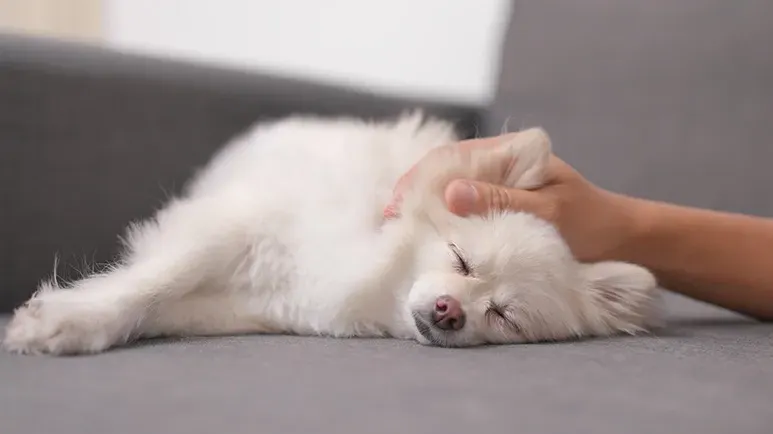
Consent matters. Watch how your dog responds. Some signs they're enjoying it include leaning into your hands, soft, droopy eyes, deep sighs, rhythmic breathing, stretching out, and occasional licking of your hand.
However, keep an eye out for signs to ease up or stop. These include stiffening up, looking back at your hand, yawning or lip-licking (often stress signals), or simply getting up and walking away. Never force a massage on a dog who isn't in the mood.
When to Skip It Altogether
Massage is generally safe, but a few situations call for a pause:9
- Recent injuries, surgery, or fresh wounds — Don't massage the area without your vet's okay.
- Fever or active infection — Your dog's body is already working hard.
- Hot spots, skin infections, or unexplained rashes — Rubbing can spread bacteria or worsen irritation.
- Aggression or extreme fear — Work with a behaviorist first, not your hands.
It's a Team Effort
If your dog is recovering from an injury, an illness, or surgery, at-home wellness routines work best alongside professional care, not in place of it. Veterinary rehabilitation therapists, vets, and trainers all bring tools that you can't replicate at home. But you're a critical part of the team: you know your dog best, you see them every day, and you're in the best position to spot the small changes that matter.
Recovery, especially from injury, takes consistency. One session will not acheive the desired effects. Daily massage, paired with whatever exercises your vet rehab team prescribes, is what makes the gains stick.10
The Most Effective 'Wellness Treatment' of All
Here's the honest ending to the dog wellness conversation, courtesy of One Green Planet: The single most impactful thing you can do for most dogs isn't a bath or a supplement or even a massage. It's 30 to 45 minutes of off-leash time in a low-stimulation natural environment, three or four times a week, with a human who isn't looking at their phone.
Shampoos, supplements, and massage are real and useful, but they're also secondary. The phone-down, fully-present time is the real reset button.11
A Small Daily Gift
If you've been wondering whether your dog would actually like a massage, the best way to find out is to try. Start short. Keep it slow. Watch their body. Most dogs settle into it within the first couple of minutes, and many become noticeably calmer in the hours and days that follow.
It costs nothing, takes 10 minutes, and uses no equipment beyond your own two hands. For a tired, anxious, achy, or simply overdue-for-some-stillness dog, it might be the closest thing to a reset button you'll ever find. And honestly, it's probably good for you, too.
Sources and References

Better Health Begins in the Bowl

Better Health Begins in the Bowl
The Ultimate Pet Nutrition Guide was created to help dog and cat parents understand what truly supports lifelong health.
In this free guide, you’ll discover:
-

How your pet’s biology influences their nutritional needs
-
Why conventional feeding advice often falls short
-
Practical ways to choose better food for your dog or cat
View our Privacy Policy and Terms of Service.