Can This Simple Therapy Help Your Pet Feel More Comfortable?
This hot-or-cold fix may help ease your dog's stiff joints and aching muscles, but make sure you know which one is right to use and when.
Reviewed by Dr. Arielle Walton




Join the Bark & Whiskers™ Family
Sign up today for our FREE newsletter, packed with expert advice and insider tips to keep your beloved pet in tip-top shape.
View our Privacy Policy and Terms of Service.


STORY AT-A-GLANCE
- Thermotherapy is the simple practice of using heat or cold to ease your dog's pain, reduce inflammation, and support healing
- Cold therapy narrows blood vessels and numbs pain, making it the right choice for fresh injuries, swelling, post-surgery recovery, and arthritis flare-ups within the first 24 to 48 hours
- Heat therapy boosts blood flow and relaxes tight muscles and stiff joints, making it ideal for chronic pain, morning stiffness, and loosening up arthritic joints before a walk
- Mixing them up can backfire. Heat on a fresh injury can increase swelling, and placing ice directly on the skin can cause frostbite, so always use a towel barrier and limit sessions to about 10 to 20 minutes
- Hot and cold therapy is a powerful comfort tool for dogs living with arthritis or recovering from injury, but it's not a substitute for veterinary care. Call your vet if your dog is limping, in pain, or showing signs of a serious injury
When your dog is sore, stiff, or recovering from an injury, you'd give just about anything to make them feel better. The good news is that one of the most effective comfort tools doesn't come from the pharmacy. It comes from your freezer or a heating pad.
It's called thermotherapy, the simple practice of using heat or cold to manage pain, reduce inflammation, and support healing. Used correctly, it can make a real difference in your dog's comfort and recovery.
The catch? Heat and cold do very different things. Pick the wrong one for the situation, and you can actually make things worse. Here's how to know which to reach for, and when.
Why Temperature Works
Heat and cold each affect the body in opposite ways. Heat increases blood flow to the area. That extra circulation brings oxygen and nutrients to the cells, helps move waste products out, relaxes tight muscles, and eases stiff joints. It's especially helpful for chronic pain, arthritis, and the kind of all-over tension that builds up in older dogs.
Cold does the opposite. It narrows blood vessels, reduces blood flow to the area, limits the production of inflammatory chemicals, and numbs pain. That makes it the right call for fresh injuries, swelling, and flare-ups. Think of it this way: heat helps things loosen up, cold helps things calm down.1,2,3
When to Reach for Cold
Cold therapy, sometimes called cryotherapy or ice pack therapy, works best in the first 24 to 48 hours after an injury. It's also helpful for certain situations, such as:4,5,6
- After your dog twists a leg, bumps into something, or has any sudden injury
- Providing relief for swollen, puffy areas
- After surgery (always check with your vet first)
- After long walks or intense exercise, especially if your dog has joint issues
- During flare-ups of chronic injuries or arthritis — if the area feels warm to the touch
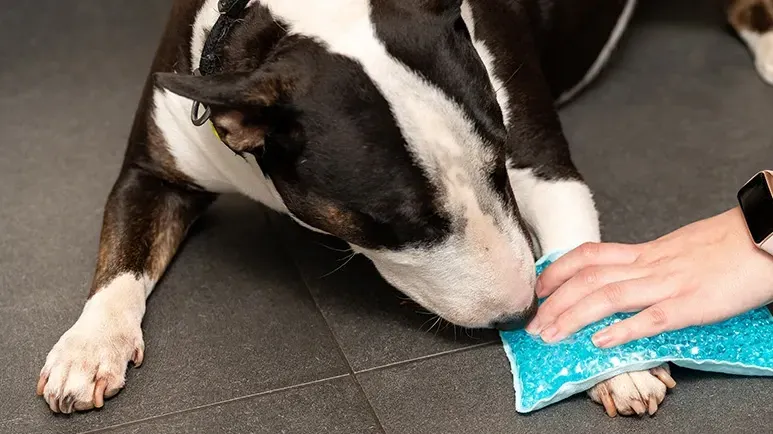
To use cold therapy safely: Wrap an ice pack or a bag of frozen vegetables in a thin or damp towel and place it on the affected area for about 10 to 20 minutes at a time. Never put ice directly on your dog's skin, since that can cause frostbite or ice burn. Cold can be used two to four times a day.
When to Reach for Heat
Heat therapy shines for chronic pain and stiffness — the everyday aches that come with arthritis or aging joints. It's ideal for:7,8,9
- Morning stiffness, especially in older dogs
- Tight, tense muscles from overuse
- Loosening up arthritic joints before a walk or activity
- Long-term joint discomfort
- Pairing with gentle massage or stretching
Use a warm, not hot, compress, a gel pack heated in the microwave, or a heating pad on low. Wrap it in a damp towel before placing it on your dog's body. Apply for 15 to 20 minutes, once or twice a day, and check the skin every few minutes to make sure it's only warm to the touch. If it feels too hot for your skin, it's too hot for your dog. Heat can be used one to three times a day, particularly in colder weather.
Don't Mix These Up
There are a few rules of thumb that matter, however. First is to never use heat on a fresh injury or right after surgery. Adding warmth to an already-inflamed area can increase swelling and make things worse. Save heat for chronic issues and stiffness, not acute flare-ups.
Next, always put a barrier between the pack and the skin. A thin or damp towel is enough to prevent burns and frostbite. Watch your dog the whole time. Check the skin every few minutes. If your dog seems uncomfortable, pulls away, or doesn't like it, stop. Never force a heat or ice pack on a dog who isn't into it.
Time it right. Most experts recommend 10 to 20 minutes per session, long enough to make a difference, short enough to avoid skin damage.
Making It Part of the Routine
Hot and cold therapy isn't a one-time trick. For dogs living with arthritis or chronic joint issues, it can become a regular part of their comfort plan: heat to loosen up before activity, ice to settle things down afterward.
It pairs well with other gentle care, too. Massage, stretching, and a diet tailored to your dog's age and needs can amplify the benefits.
Every dog is a little different. Some respond better to heat, some prefer cold, and some need both at different times. If you're not sure what's right for your pet, an integrative vet or a physiotherapist who works with dogs can help build a plan that fits your dog's specific situation.10,11
When to Call the Vet
Thermotherapy is helpful, but it isn't a substitute for veterinary care. If your dog is limping, in obvious pain, or showing signs of a fresh injury, get them seen by a vet. Your vet can guide you on whether hot or cold therapy is appropriate for your dog's specific issue, and show you the safest ways to use it at home.12
Small Tool, Big Comfort
There aren't many things you can do for your dog that cost so little and help so much. A gel pack from the freezer, a warm compress before a walk, a few minutes of gentle care, and your dog can feel noticeably more comfortable in their own body.
Whether your pet is bouncing back from a tweaked muscle or living with the slow ache of arthritis, this simple, low-tech therapy belongs in your toolkit. Used the right way, at the right time, it's one of the kindest things you can do.
Sources and References

Better Health Begins in the Bowl

Better Health Begins in the Bowl
The Ultimate Pet Nutrition Guide was created to help dog and cat parents understand what truly supports lifelong health.
In this free guide, you’ll discover:
-

How your pet’s biology influences their nutritional needs
-
Why conventional feeding advice often falls short
-
Practical ways to choose better food for your dog or cat
View our Privacy Policy and Terms of Service.