That Little Boopable Nose? Totally One of a Kind
Your dog's cute little nose is more than a boop target. Much like your thumbprint, it carries a distinct pattern that belongs to your dog alone and may even serve a practical purpose in identification.
Reviewed by Dr. Arielle Walton



Join the Bark & Whiskers™ Family
Sign up today for our FREE newsletter, packed with expert advice and insider tips to keep your beloved pet in tip-top shape.
View our Privacy Policy and Terms of Service.


STORY AT-A-GLANCE
- Every dog’s nose carries a textured pattern of ridges, bumps, and lines that form a distinctive print, giving each dog a biological signature
- In a small 2021 study of 10 littermate beagles, nose prints were established at 8 weeks of age and remained distinguishable and unchanged over the next year
- People used dog nose prints for identification long before anyone invented microchips. In 1938, the Canadian Kennel Club accepted them as proof of identity
- While microchipping remains the gold standard for pet identification, image-recognition tools may make nose-print databases a useful backup for lost dogs
- Simple habits like routine checks, gentle cleaning, avoiding harsh products, and using a humidifier when your indoor air is dry help protect your dog’s nose health
Many pet parents “boop” their dog’s nose without giving it a second thought. But that cold, slightly damp snout pressing into your palm or tapping your leg for attention carries a pattern so intricate and so specific that no other dog on the planet shares it — Not your neighbor's golden retriever, not the poodle at the park, not even a littermate from the same litter. Your dog's nose print is a one-of-a-kind biological signature, and science is finally catching up to what kennel clubs figured out nearly a century ago.
What Makes a Dog’s Nose So Distinctive
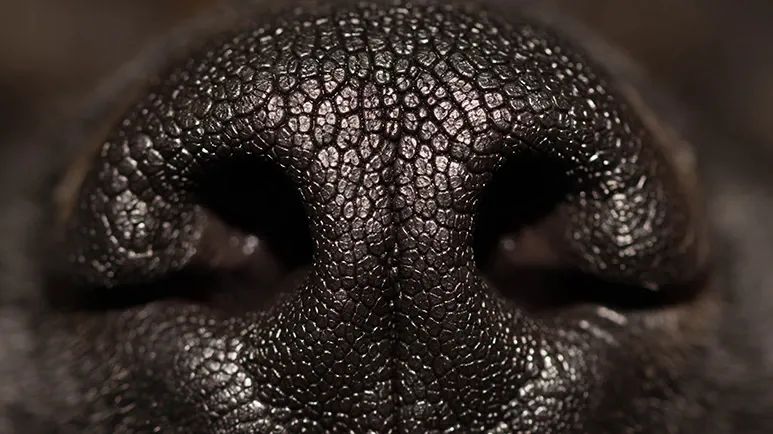
If you look closely at your dog’s nose in good light, you will see that the surface is far from smooth. It has a textured, leather-like appearance, with a complex web of ridges, bumps, dimples, and tiny lines crisscrossing in every direction. This textured area is called the rhinarium, the hairless patch of skin at the very tip of the nose. Together with the overall outline of the nostrils, these details create what people call a nose print.1
That pattern is not just the result of a lifetime of sniffing through grass, dirt, and backyard brush — it forms before a puppy is even born. Scientists who have examined canine nose prints say the level of detail rivals that of a human fingerprint. Even so, for many years, the claim that every dog’s nose print was unique rested on surprisingly little dog-specific research.2
Stronger evidence began to emerge in 2021, when a team of Korean researchers published a study in the journal Animals.3 The study followed two litters of beagles, totaling 10 dogs. By 8 weeks of age, each puppy had a fully established nose print. Monthly checks over the next 12 months showed no changes. The sample was small, but the fact that the dogs were littermates made the findings more compelling.
Despite shared genetics that might have produced similar patterns, each nose print remained distinguishable. The researchers also showed that computer software could reliably match nose prints to individual dogs. That raised the possibility that nose prints could one day be used in a searchable database, adding another layer to how dogs can be identified and tracked.
Could a Nose Print Help Identify a Lost Dog?
Long before apps and image recognition entered the picture, dog nose prints were already being used as a practical form of identification. The Canadian Kennel Club began accepting them as proof of identity in 1938, and the practice continued for decades. In parts of the United States, people also used nose prints to identify lost dogs and confirm ownership.
By the early 1990s, advances in microchip technology largely replaced nose printing as the standard method of canine identification. But the idea never fully went away — it just went digital. Some apps now let pet owners photograph their dog’s nose and register that print in a database. If a dog goes missing, the idea is that a shelter or veterinary clinic could photograph the found dog’s nose and compare it against registered images, much like a canine version of the fingerprint-matching systems used for people.
The challenge is that photographing a dog’s nose is easier in theory than in practice. The nose has to be clean and dry enough for the ridges to show clearly, and the dog has to stay still long enough for a sharp image. Anyone who has tried to photograph a wiggly dog up close already knows how difficult that can be. That is one reason microchipping remains the gold standard for identification. It works whether your dog is sitting politely or tearing through the yard at full speed.4
Even so, nose-print identification still has real appeal. As phone cameras and image-recognition tools improve, it could become a more practical backup for confirming identity and reuniting lost pets with their families.
Why That Nose Deserves a Little More Attention
A dog’s nose may be interesting as an identification marker, but it is also living tissue that deserves attention for health reasons. Because the rhinarium is exposed to the environment all day, it reflects your dog’s environment quickly. Dry air, cold weather, sun exposure, friction, dirt, irritation, and underlying skin problems may all show up there first.
Many pet parents get hung up on old myths about whether a nose should always be cool and wet, but the better question is whether it looks normal for your dog. Changes such as cracking, heavy crusting, sores, swelling, bleeding, pain, or discharge are far more important than minor shifts in temperature or moisture. A few simple habits can help protect the nose and make it easier to spot problems early:5,6
- Check the nose casually while you pet your dog, towel off muddy paws, or settle in for the evening.
- If the nose looks dirty, wipe it gently with a soft cloth instead of scrubbing, and skip harsh cleaning products.
- Avoid human lotions or ointments, as many are too harsh for a dog’s nose and some ingredients may be unsafe if licked. If you want to soothe dryness, ask your veterinarian about pet-safe options.
- Keep fresh, clean water available at all times, since dehydration may contribute to dryness.
- If your home air is very dry, use a humidifier to help maintain moisture and keep the nose and nasal passages from drying out.
Dogs with pale or lightly pigmented noses may be more prone to sun-induced irritation, and winter indoor heating may leave the surface looking rougher than usual. If you notice persistent changes in how your dog’s nose looks, schedule an appointment with your vet.
More Than a Keepsake
One of the nicest things about a dog’s nose print is that it is not just useful in theory. It can also become a small keepsake with real meaning. You do not need special equipment to capture it, just a few simple supplies and a little patience.
Start by gently blotting your dog’s nose with a paper towel to remove excess moisture. Then dab on a small amount of food coloring or other nontoxic, food-safe ink. Press a clean sheet of paper gently against the nose, rolling it slightly from side to side to pick up the full surface impression. It may take a few tries, especially if your dog is more interested in licking the ink than sitting still. If your dog becomes stressed, it is best to stop and try again later. Once you get a clear print, clean the nose right away.7
You will end up with more than a cute project. It is a one-of-a-kind imprint from the dog who shares your home and routines, fogs the window, and checks in on you without a sound. Whether nose-print technology eventually becomes a bigger part of pet identification or remains mostly a fascinating detail, that print captures something quietly remarkable: your dog carries something entirely their own right at the tip of the snout.
Sources and References

Better Health Begins in the Bowl

Better Health Begins in the Bowl
The Ultimate Pet Nutrition Guide was created to help dog and cat parents understand what truly supports lifelong health.
In this free guide, you’ll discover:
-

How your pet’s biology influences their nutritional needs
-
Why conventional feeding advice often falls short
-
Practical ways to choose better food for your dog or cat
View our Privacy Policy and Terms of Service.