When a Happy Tail Suddenly Goes Limp
Your dog's tail is a strong communicator of what they're currently experiencing at any given moment. When it suddenly goes limp, that's a sign something's not right and needs attention.
Reviewed by Dr. Arielle Walton




Join the Bark & Whiskers™ Family
Sign up today for our FREE newsletter, packed with expert advice and insider tips to keep your beloved pet in tip-top shape.
View our Privacy Policy and Terms of Service.


STORY AT-A-GLANCE
- Limber tail is a condition that causes a dog's tail to become limp or droopy. The underlying cause is muscle strain, which is usually temporary and not life-threatening
- Common triggers include intense swimming, sudden increases in activity, long crate confinement, cold weather exposure, and repeated tail trauma
- Additional symptoms include pain at the base, swelling, difficulty sitting, whining, lethargy, and licking the tail. A vet visit is necessary
- Treatment focuses on rest, pain relief, and warm (or cold) compresses, with most dogs fully recovering within a few days to a week
- Prevention includes gradually building activity levels, warming up before exercise, taking regular breaks, avoiding cold water swimming, and ensuring a properly sized, comfortable crate
You know that feeling, and it never gets old — you walk through the front door after a long day at work, and your dog greets you eagerly, tail wagging.
So, when your dog’s tail suddenly hangs down and refuses to wag, it can be alarming. You might even think that something serious has happened. But in many cases, the cause may be a harmless condition called limber tail.
What Is Limber Tail?
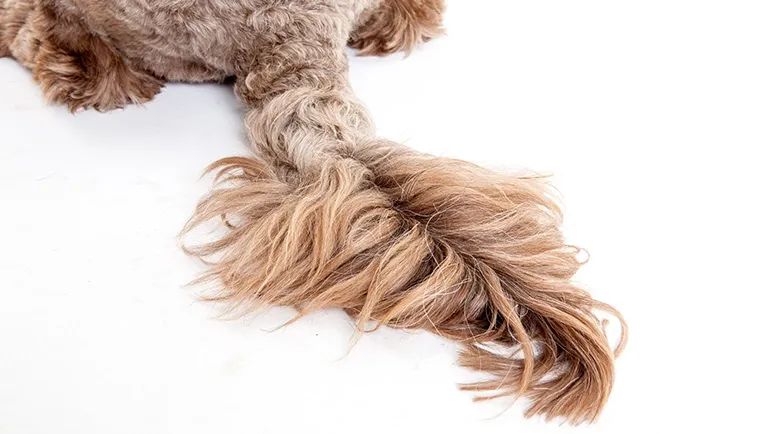
Limber tail is a condition where your dog’s tail suddenly becomes weak, droopy, or limp. Specifically, the tail may hang straight down or stick out slightly before drooping toward the ground. Many dogs also feel pain at the base of their tail.1
This medical condition is called acute caudal myopathy, but you may also hear your vet call it by other names, including:2
- Swimmer’s tail
- Cold water tail
- Limp tail
- Broken wag
- Rudder tail
- Sprained tail
Even though limber tail looks dramatic, it is usually not life-threatening, and any dog can get it. However, it is more common in active working dogs, including Labrador retrievers, golden retrievers, and beagles. Large, athletic dogs may also be more prone to the condition.3
The Underlying Cause of Limber Tail
Limber tail occurs when the muscles at the base of your dog's tail become strained or overworked. When these muscles are injured, your dog has difficulty moving their tail normally, which leads to the characteristic limp appearance. Several factors can trigger this condition:4,5,6
- Swimming — When dogs swim, they use their tails like a boat’s rudder to help steer and balance. That constant movement can strain the muscles if your dog stays in the water for a long time.
- Sudden increases in activity after being sedentary — Dogs who are usually less active can develop limber tail after a sudden increase in exercise. This often happens at the start of hunting season, during a first outdoor hike, or after a full day of running at the beach.
- Long periods in a crate — When dogs stay confined for long periods, such as during long-distance trips, the limited movement can cause stiffness and soreness. Once the dog finally becomes active again, the muscles may react with inflammation or strain.
- Cold weather exposure — When muscles are exposed to cold environments, blood flow to the extremities decreases, which means less oxygen reaches the muscle fibers. This makes them stiffer, less pliable, and more vulnerable to strain during activity.
- Trauma or repeated impact — Sometimes, limber tail can happen if a dog repeatedly hits their tail against a hard surface while wagging. A direct injury to the tail may also trigger muscle strain.
How to Spot and Diagnose It
Again, the most obvious sign is a limp or droopy tail. But there are several other symptoms, including:7,8,9
- Pain when the tail is touched
- Stiffness or swelling at the base of the tail
- Difficulty sitting or lying down
- Whining or whimpering
- Licking or chewing at the tail
- Low energy or lethargy
A veterinarian will usually perform a physical exam and ask questions about your dog’s recent activities. During this time, they’ll gently move the tail and check for tenderness or swelling. In some cases, your vet may recommend additional tests to rule out other medical problems that can cause limber tail-like symptoms, such as:10,11
- Tail fracture
- Spinal injuries
- Nerve damage
- Arthritis
- Prostate disease
- Inflammation of the skin around the tail
- Infection or inflammation of the anal glands
The good news is that limber tail usually improves quickly. Most dogs recover within a few days to a week with proper care. Here are natural strategies that can help manage this condition more easily:12
- Adequate rest — Limiting activity is essential. Your dog should avoid running, rough play, or swimming until the muscles have recovered.
- Pain relief — Your veterinarian may prescribe natural solutions to reduce pain and swelling.
- Warm compress — Applying a warm compress to the base of the tail may help soothe sore muscles and improve blood flow. In some cases, your vet may recommend alternating warm and cold compresses to reduce inflammation.
Although limber tail is usually mild, there are times when veterinary care is important. Contact your vet if symptoms last more than a few days, your dog seems to be in severe pain, refuses to eat, and displays clear signs of infection or injury.
Can Limber Tail Be Prevented?
You can’t always prevent limber tail, but you can take steps to lower your dog’s risk:13,14
- Build activity gradually — If your dog starts a new activity, such as swimming, hiking, or agility training, gradually increase the intensity.
- Give your dog breaks — Even highly active dogs need rest. During long play sessions or hikes, take breaks to allow your dog’s muscles to recover.
- Warm up before activity — Just like humans, dogs benefit from warming up. Start with gentle stretching before long walks or visits to the dog park.
- Be careful with cold water — If your dog loves swimming, plan activities when the water isn’t cold.
- Provide a properly sized crate — Your dog’s crate should allow them to stand, lie down, and turn around comfortably. Proper space helps prevent stiffness during travel or rest.
For some dogs, limber tail can happen more than once. However, by managing activity levels and following prevention tips, many dogs can avoid repeated problems. If your dog has had limber tail before, keep a close eye on their body language after long swims or exercise sessions.
Don’t Panic When Your Pet’s Tail Suddenly Stops Wagging
Seeing your dog’s tail suddenly go limp can be alarming, but again, the usual cause is just muscle strain. Most dogs recover fully within a few days with rest and supportive care.
By learning the signs and understanding what causes limber tail, you can respond quickly if it ever affects your dog. And with a little prevention and awareness, you can help keep that joyful tail wagging for years to come.
Sources and References

Better Health Begins in the Bowl

Better Health Begins in the Bowl
The Ultimate Pet Nutrition Guide was created to help dog and cat parents understand what truly supports lifelong health.
In this free guide, you’ll discover:
-

How your pet’s biology influences their nutritional needs
-
Why conventional feeding advice often falls short
-
Practical ways to choose better food for your dog or cat
View our Privacy Policy and Terms of Service.