Are Your Dog’s Skin and Muscles Sending a Warning Sign?
Your dog looks fine, then suddenly, scabs and sore patches show up on their face or paws. If their skin keeps flaring, it may be more than 'just allergies' and deserves a closer look.
Reviewed by Dr. Tracy Duffner




Join the Bark & Whiskers™ Family
Sign up today for our FREE newsletter, packed with expert advice and insider tips to keep your beloved pet in tip-top shape.
View our Privacy Policy and Terms of Service.


STORY AT-A-GLANCE
- Dermatomyositis is a condition that irritates a dog’s skin and sometimes the muscles, too. It often starts with redness, scabs, crusting, sores, or hair loss, then may affect movement
- This skin condition is believed to be inherited and linked to immune reactions, and often affects Collies and Shetland sheepdogs. It can also show up in Beauceron shepherds, Belgian tervurens, Portuguese water dogs, and mixes of these breeds
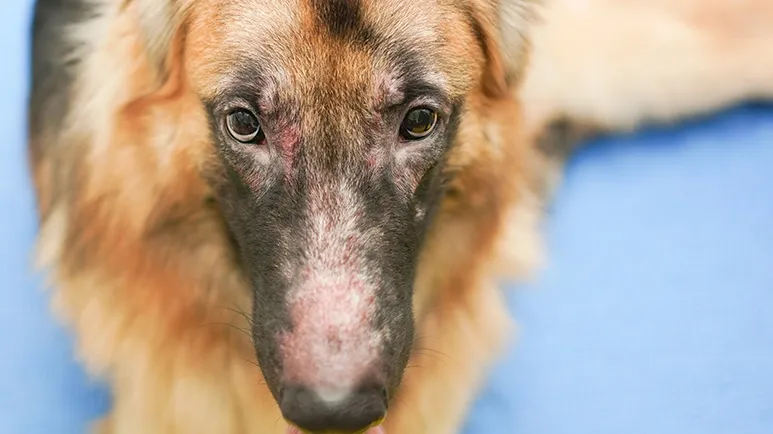
- Signs of dermatomyositis can be mild or serious. Many dogs get crusty patches, sores, or hair loss on the face, ears, feet, or tail.
- Veterinarians usually confirm this condition with a biopsy. They also check for other common causes of rashes and sores, like mites, infections, ringworm, or allergies
- You can support your pet by avoiding the sun, sticking with gentle veterinarian-approved shampoos, upgrading their diet, and creating a calmer routine to cut stress
Our dogs give everything they have every single day — enthusiasm in the morning, company when we are tired, and a steady comfort that does not ask for much in return. All they really know is how to show up with love and energy.
But underneath all that loyalty and liveliness, there are parts of their health we do not always see. And sometimes, even in the most well‑cared‑for pups, there can be hidden or inherited conditions we would never expect. That is where paying attention matters because some dogs are predisposed to rare issues that only reveal themselves when we know what to look for, such as dermatomyositis.
What Is Dermatomyositis?
Dermatomyositis is an inflammatory condition that affects a dog’s skin and, in some cases, the muscles underneath. As the name implies, “dermato” refers to skin, “myo” refers to muscle, and “itis” refers to inflammation. It often begins with visible skin changes, and some dogs later develop problems with chewing, walking, or overall muscle strength.1 According to Animal Wellness,2 this condition is believed to be linked to an inherited immune system trait, which is why it tends to run in certain family lines. Here is how it typically unfolds:
- It usually starts early in life — Most pups develop their first skin changes before 6 months of age, sometimes as early as 7 weeks. The most noticeable symptoms often show up around their first birthday.
- The skin is usually affected first — Look for redness, scaling, crusting, sores, or hair loss — most often on the face, ears, feet, tail, and other bony areas.
- Muscle involvement can follow — Some dogs develop weakness or muscle loss, especially in the jaw and legs, which can make eating, walking, or standing more difficult.
Which Breeds Are More Susceptible?
VCA Animal Hospitals3 notes that breeds most often affected by dermatomyositis include Collies, Shetland sheepdogs, Beaucerons, Belgian shepherds, Belgian tervurens, Portuguese water dogs, and mixes of these breeds. They also mention that scientists have associated the disease with mutations in three different genes.4
Dogs in other breeds can show similar signs, even if they don’t have the inherited form. In those cases, the immune system is believed to attack the blood vessels by mistake. Breeds that have shown these dermatomyositis-like signs include Welsh corgis, Lakeland terriers, Chow Chows, German shepherds, Kuvasz, Border collies, Jack Russell terriers, and Rottweilers.
Identifying Dermatomyositis in Your Pup
So, what does dermatomyositis actually look like on your dog? Here is what pet parents tend to notice first — the signs can range from very mild to more serious and every pup is a little different. Some dogs develop only a few crusty patches or small areas of hair loss. Others have deeper sores or more noticeable changes over time.5
Skin changes usually show up first. Look for scabs, hair loss, or sores — most often around the eyes, lips, ear tips, face, and tail tip. Foot pads and nail beds can also be affected. These patches may come and go, and some areas can develop scars over time.
As mentioned earlier, muscle changes can follow in some pups. If the facial muscles near the mouth are involved, your dog might struggle at mealtimes — chewing more slowly, dropping food, or losing interest in eating altogether. Some dogs develop a stiff, high-stepping walk that veterinarians sometimes call a "goose-step" gait. If you notice either of those things, that is your cue to call your vet.
In some dogs, the esophagus can stretch and weaken over time, making it harder to move food into the stomach. This can lead to food coming back up (regurgitation), which results in gradual weight loss, or, in more serious cases, accidentally inhaling food or liquid resulting in pneumonia.
Can Dermatomyositis Be Accurately Diagnosed?
According to the Collie Health Foundation,6 the only way to confirm dermatomyositis is through two tests: primarily, a skin punch biopsy and, often, electromyography (which checks how well the muscles are working) as additional confirmation.
For the biopsy, veterinarians try to take a sample from a newer spot with little scarring because it gives the most useful information. They use a small tool shaped like a pencil, and it removes a tiny circle of skin for the lab to examine. It may leave a small mark, but it helps veterinary pathologists see the microscopic changes happening in the skin — most often shrinking of hair follicles and inflammation around them.
For many years, there was no DNA test to help check whether a dog carried the genes for dermatomyositis. The condition was believed to be passed down in a way that meant even one parent could carry the gene, yet dogs could show it very differently. One dog might never have symptoms, while another could develop more obvious skin or muscle problems. Ultimately, the inheritance of dermatomyositis was found to be complex and in 2017, the DNA Risk Assessment Test was created and launched by Dr. Leigh Anne Clark and her team at Clemson University.7 This test looks at three gene loci (three specific areas on the DNA) and provides a risk assessment of low, moderate, or high for developing dermatomyositis.
Ways to Manage Your Pet’s Dermatomyositis
According to Animal Wellness Magazine,8 dermatomyositis cannot be prevented because it is a genetic condition, but pet parents still have several meaningful ways to reduce flare‑ups and protect their dog’s skin and muscle health. While natural strategies can be helpful, they work best when paired with integrative veterinary care.
The main goals of supportive care are to reduce inflammation, protect fragile skin, and help the immune system remain as stable as possible. Here is how each approach helps:
- Sun protection to prevent symptom flare-ups — Ultraviolet (UV) radiation can aggravate existing lesions and trigger new ones. Early‑morning and evening walks help limit UV exposure, and avoiding midday sun prevents unnecessary irritation.
- Nutrition that supports skin and muscle health — Omega‑3 fatty acids can help reduce inflammation and keep the skin barrier stronger, while high‑quality protein supports muscles that may already be weakened. A balanced diet helps stabilize the immune system and supports overall recovery.
- Stress reduction to minimize immune triggers — Stress can activate the immune system, which may worsen dermatomyositis. Gentle exercise, predictable routines, and calm environments help dogs avoid unnecessary immune stimulation.
- Gentle skin care to protect fragile tissue — Keeping affected areas clean with mild, veterinarian-approved products helps prevent secondary infections. Avoid over-bathing and harsh chemicals, which can worsen irritation and delay healing.
- Veterinary‑directed treatments that support healing — Your veterinarian may recommend vitamin E, essential fatty acids, or moisturizing topical treatments for added skin protection. Medical therapies, such as anti‑inflammatory medications — may be needed as a last resort to manage inflammation and prevent complications. Regular checkups help your vet adjust the plan as symptoms change.
- Alternative treatments may provide comfort — Traditional Chinese Veterinary Medicine (TCVM) views dermatomyositis as an imbalance involving heat, dampness, and deficiency. One example is using acupuncture to help reduce inflammation, support the immune system, and improve comfort. This can be augmented with traditional Chinese herbal formulas and food therapy. Treatment plans are tailored to each dog’s unique constitution and symptoms.
- Safe herbal and botanical support — Some veterinarians may use turmeric (curcumin) or botanicals like Berberis vulgaris to support immune balance. Because herbs can interact with medications, work only with a veterinarian trained in herbal medicine, and use products formulated specifically for dogs.
- Help your pet chew — If the chewing muscles are affected, the dog may need help eating. Hand-feeding or shaping softened food into small “meatballs” can make it easier to swallow.9
These home strategies can make a big difference, but flare-ups sometimes still need veterinary backup, especially when lesions become inflamed or infected. Some dogs benefit from hypoallergenic shampoos and treatment for secondary bacterial skin infections.10
If your veterinarian wants to calm immune-driven skin damage, they may recommend additional therapies that support healing from the inside out. Tetracycline and niacinamide can help regulate the immune system and reduce symptoms, while pentoxifylline can improve blood flow in the skin and may help resolve lesions.
In more severe cases, some dogs need additional prescription medicines. Your veterinarian may prescribe cyclosporine to calm an overactive immune system or oclacitinib to reduce inflammation and soothe irritated skin. Prednisone may be used for short‑term relief when quick relief is needed. For small, active sores, tacrolimus ointment can be applied directly to the inflamed spots. Always give these medications exactly as your veterinarian instructs.
What to Expect in the Long Run
When veterinarians discuss a dog’s prognosis, they are explaining what the future may look like. A dog is considered stable when symptoms are stable, not worsening, and well-managed with the current plan. An informative article from the Clinician’s Brief11 notes that some dogs have mild, recurring skin problems, and families can manage them at home with sun protection, gentle skin care, and regular visits to the veterinarian.
Other dogs experience more frequent flare‑ups, deeper sores, or muscle weakness, and they may need stronger medicine and closer follow‑up. A dog’s outlook depends on the severity of the symptoms and how well treatment controls inflammation without causing side effects. Even if a dog’s case is mild, breeding is not recommended because dermatomyositis is believed to have a genetic cause and can be passed to puppies.12
Dermatomyositis does not change how much joy your dog brings into your life. When you know what signs matter, you can stay ahead of flare‑ups with small, manageable steps. You are not meant to worry constantly — just to stay aware. And for a dog who loves you endlessly, that awareness is a beautiful way to love them back.
Sources and References
- 1,12 CIDD, Dermatomyositis and Ulcerative Dermatosis
- 2,8 Animal Wellness, February 18, 2026
- 3,5,9,10 VCA Animal Hospitals, Dermatomyositis
- 4 UC Davis, Veterinary Medicine, Susceptibility to Dermatomyositis (DMS)
- 6 Collie Health Foundation, Dermatomyositis
- 7 PLoS Genet. 2017 Feb 3;13(2):e1006604
- 11 Clinician's Brief, Canine Dermatomyositis

Better Health Begins in the Bowl

Better Health Begins in the Bowl
The Ultimate Pet Nutrition Guide was created to help dog and cat parents understand what truly supports lifelong health.
In this free guide, you’ll discover:
-

How your pet’s biology influences their nutritional needs
-
Why conventional feeding advice often falls short
-
Practical ways to choose better food for your dog or cat
View our Privacy Policy and Terms of Service.