What to Do When Playtime Turns Scary
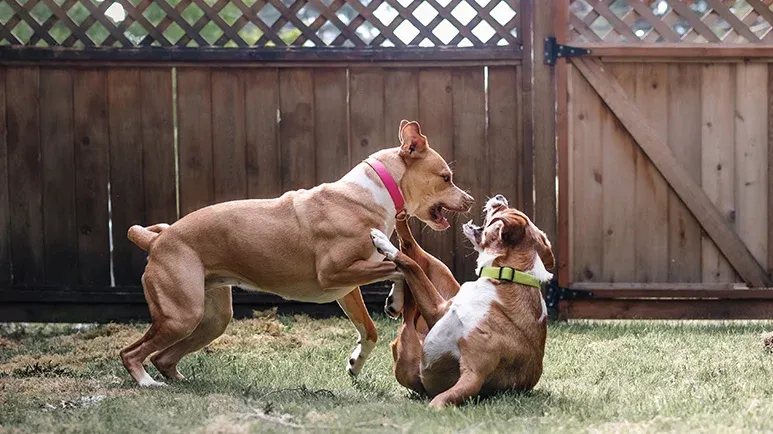
Even the sweetest dogs can have a bad moment. It can be scary when your pet suddenly becomes aggressive or comes across another aggressive pet, but with the right steps, you can help them feel safe again.
Reviewed by Dr. Tracy Duffner


Join the Bark & Whiskers™ Family
Sign up today for our FREE newsletter, packed with expert advice and insider tips to keep your beloved pet in tip-top shape.
View our Privacy Policy and Terms of Service.

STORY AT-A-GLANCE
- According to a recent study, about 49.9% of dogs show aggression toward unfamiliar dogs and 14.5% toward dogs they know. There were also over 19,000 dog-related injury insurance claims made in 2023 — yet most dog-on-dog bites go unreported or do not result in an insurance claim
- A large behavior study found clear breed patterns, showing that genetics and breeding lines can influence how likely some dogs are to react toward strangers, other dogs, or family members
- Dogs often give early “I’m uncomfortable” signals, such as lip-licking, yawning, pinned ears, stiff posture, whale eye, or trying to move away, long before they ever growl or bite
- If your dog gets bitten, keep calm, create space, check for bleeding or signs of shock, gently rinse the wound, and contact your veterinarian right away for a full medical evaluation
- Most dogs recover well after a bite; understanding their triggers, keeping routines predictable, and working with a trainer or behaviorist can help them feel safe and confident again
Dogs are family, and it can be really frightening when something unexpected happens — such as if another dog bites your canine bestie. Even the most loving, well‑trained dogs can have a rough moment, and sometimes things happen faster than you can step in.
Dog-to-dog aggression is more common than many paw-rents realize. According to a recent study, about 49.9% of dogs show aggression toward unfamiliar dogs, and 14.5% show it toward dogs they already know.1 And while over 19,000 dog-related injury claims were reported in 2023 for people, most dog-on-dog bites go unreported unless the injury is serious enough to require veterinary care.2
If your pup ever ends up on the receiving end of a bite, those numbers can feel unsettling — but this does not mean you are helpless or should jump straight into panic mode. These statistics simply show that dog behavior can be unpredictable, not that you are doing anything wrong as a pet parent.
Which Dogs Are Most Likely to Bite?
A large study published in Applied Animal Behavior Science3 used a well‑known behavior tool, the Canine Behavioral Assessment and Research Questionnaire (C‑BARQ), to examine dogs from more than 30 breeds to assess how often they show aggression toward strangers, other dogs, or even family members.
The results showed clear patterns. Some smaller breeds, such as Dachshunds and Chihuahuas, scored higher on aggression toward both people and dogs. Other breeds reacted mainly in specific situations. For example, Akitas and Pit Bulls were much more likely to show aggression toward unfamiliar dogs rather than their families. Jack Russell Terriers also showed high levels of serious aggression toward strangers and other dogs.
The study found that dog-directed aggression was the most common overall, followed by aggression toward unfamiliar people, and then aggression toward family members. On the low-aggression end, breeds such as Golden Retrievers, Labrador Retrievers, Bernese Mountain Dogs, Brittany Spaniels, Greyhounds, and Whippets were among the least likely to show any aggression.
The researchers also found differences within certain breeds. For example, English Springer Spaniels bred for conformation (show dogs) were more likely to show aggression toward people and dogs than field-bred Springers. Labrador Retrievers showed the opposite pattern — field-bred Labs showed slightly more owner-directed aggression than show-bred Labs. This suggests that genetics and breeding lines may play a role in the development of certain behaviors.
Signs That a Dog Is About to Bite
Even though some breeds show certain tendencies, the truth is that any dog can hit a point where they feel unsure, overwhelmed, or unsafe. A helpful guide at Northeast Veterinary Referral Hospital emphasizes that understanding the small hints dogs give before situations escalate is important. Dogs often communicate through their body language well before they resort to growling or snapping, and catching these early signs can be simple if you are paying close attention to them.4
An article from The People's Dispensary for Sick Animals (PDSA) advises pet parents to watch out for a sudden change in posture. A dog who is relaxed and active may suddenly stiffen or freeze. You might also see quick, subtle clues like lip‑licking, yawning when they are not tired, turning their head away, or trying to slowly edge out of the space. Their ears may pin back, their tail may tuck or go still, and their eyes might widen so you can see more of the whites (sometimes called “whale eye”).5
If a dog nearby starts showing these signs — even if they are quiet and not acting “aggressive” — it is your cue to gently guide your pup away. You do not need to rush or make a scene. Just create distance and, if possible, step behind something like a parked car, a bench, or even a tree. Giving that unsure dog more space can help prevent escalation and make both dogs feel safer.
‘Help! My Furbaby Got Into a Biting Scuffle’
Even when you are watching closely and doing everything right, dog scuffles can happen in an instant. Dog bites can be scary, but taking calm, steady action in those first few minutes can make a big difference in keeping your pup safe until you reach the veterinarian. Here are actionable steps you can take:6,7
- Create distance — Do not step between the dogs or make eye contact with the other dog. A loud clap or firm “hey!” can interrupt the moment long enough for you to call your dog to you.
- Get information if you can — Once things have calmed, ask the other owner for their phone number and whether their dog is current on vaccines. If they leave, take photos of the dog and the scene.
- Check your pup quickly — Look for heavy bleeding, deep punctures, limping, trembling, pale gums, or fast breathing. These can be signs of shock or serious injury.
- Control bleeding if needed — Use clean gauze or a cloth and apply gentle pressure. If possible, keep the injured area elevated.
- Clean the affected area — If you cannot get to the veterinary clinic immediately, gently rinse the area with mild soap and water. Skip hydrogen peroxide and alcohol as they can irritate the wound.
- Keep your pup calm and warm — Stress can make symptoms worse. Speak gently and limit movement while you prepare to go to the vet’s office.
Once you have handled those first steps, the next step is getting your dog to the veterinarian to have them checked. Bite wounds often look minor on the surface but have deeper problems beneath the skin, such as crushing and shearing of the underlying tissues. At the clinic, your veterinarian will usually check for the following:8,9
- Depth of the bite and any “dead space” — A single puncture can push bacteria deep under the skin. If the bite created a pocket beneath the surface (dead space), infection and abscesses can develop quickly.
- Hidden damage beneath the wound — Vets look for nerve injury, internal bleeding, muscle tearing or crushing, broken bones, and joint involvement, which are problems that are not always visible from the outside.
- The need for a deeper cleaning or bandage — A deep or even surgical cleaning and repair of the wound helps remove trapped bacteria and debris that simple rinsing at home cannot reach. The wound may be bandaged to protect it as it heals.
- Medications that support healing — Antibiotics are often given to stop bacteria from spreading. Pain relief is also common, helping your pup stay comfortable.
- Need for surgery — If the bite created a large pocket under the skin or the tissue is badly damaged, a surgery to debride and repair or to place a drain may be done to prevent fluid buildup and infection.
- Imaging to spot deeper injuries — Radiographs (X‑rays) or ultrasound can reveal trauma you cannot see like joint damage, tissue tearing, or signs of a crush injury.
- Protection for the wound — A cone may be recommended to keep your dog from licking or reopening the bite, which can push bacteria back in and slow or inhibit healing.
Dog bites can rattle both you and your pup, even after the moment has passed. Once your dog is in safe hands at the clinic, the focus shifts to understanding what the bite may have caused beneath the surface. Some wounds are simple, while others can carry hidden risks that are not visible right away.
Preventing Infections from Spreading
Dog bites can drive bacteria under the skin, even when the surface hole looks tiny. The most common germs are Staphylococcus, Streptococcus,10 and Pasteurella. These can cause skin infections, abscesses, or deeper problems if not treated. Some bites also damage tissue under the skin, which is why wounds that look “small” still need careful care.11
Give all prescribed antibiotics exactly as directed and do not stop early even if the bite looks better. Pain relief can help your dog rest, which supports healing. Watch for heat, swelling, pus, a bad smell, or your dog acting more painful or tired — these can be signs of infection that need veterinary attention.
To prevent licking and scratching, your vet will likely recommend an Elizabethan collar (often called the “cone of shame”) or a medical pet shirt to block access to the wound. A cone may feel awkward at first, but it stops re‑contamination and keeps bacteria from being pushed back inside. If the hard plastic cone is too much for your pup, ask about soft or inflatable versions that still protect the area while being easier and more comfortable to wear.12
Helping Your Pup Bounce Back After a Bite
Getting your dog back to their happy self takes patience and a plan. In a Pet MD article, Dr. Laurie Bergman, VMD, a veterinary behaviorist at NorthStar VETS, shares guidance on how to do this, starting with figuring out what set things off.13
Do not punish the dog that bit. It might stop the behavior for a moment, but it usually makes the dog more anxious. When a dog is scolded while already stressed, they may start to believe that something bad is about to happen. And a worried dog is more likely to go back to a negative behavior pattern.
It also helps to know your dog’s comfort zone. Some dogs only feel relaxed around one or two familiar, calm companion dogs — and that is okay. Stick with situations where your dog can succeed. If the dog park looks busy or rowdy, choose a quiet leash walk instead. Sniffing, exploring, and staying in a calm environment helps your dog decompress and feel safe again.
After a bite, it is common for dogs to seem nervous or touchy around other dogs. That does not mean it will last forever. A certified trainer or behaviorist can help you ease your dog back into social situations slowly and safely.
Pay attention to your dog’s body language. Soft eyes, relaxed ears, and a loose tail usually mean they are feeling okay. A stiff body, tucked tail, or wide “whale eye” is your dog’s way of saying they need more space. With gentle practice, predictable routines, and your steady reassurance, most dogs regain their confidence and return to normal life.
Sources and References
- 1 Animals, 2025;15(4):595
- 2 The Texas Law Dog, Bites by the Numbers: Geographic Hotspots for Dog Attacks
- 3 Appl. Anim. Behav. Sci., 2008;114(3-4):441-460
- 4,6,8 Northeast Veterinary Referral Hospital, October 5, 2020
- 5 PDSA, Dog attacks
- 7,9,11 Holistic Pet Care, When Your Dog Is Bitten
- 10 StatPearls [Internet], April 10, 2025
- 12,13 PetMD, What to Do When Another Dog Bites Your Dog

Better Health Begins in the Bowl
Better Health Begins in the Bowl
The Ultimate Pet Nutrition Guide was created to help dog and cat parents understand what truly supports lifelong health.
In this free guide, you’ll discover:
-

How your pet’s biology influences their nutritional needs
-
Why conventional feeding advice often falls short
-
Practical ways to choose better food for your dog or cat
View our Privacy Policy and Terms of Service.