Anxiety Relief Without Sedation? Here Is a Natural Option
Is your pet feeling down lately? Help brighten up their day with these natural essences.
Reviewed by Dr. Tracy Duffner


Join the Bark & Whiskers™ Family
Sign up today for our FREE newsletter, packed with expert advice and insider tips to keep your beloved pet in tip-top shape.
View our Privacy Policy and Terms of Service.


STORY AT-A-GLANCE
- Developed from Dr. Edward Bach's system in the 1920s, flower essences are gentle, plant-based remedies designed to support emotional balance in humans
- Integrative veterinarians have begun using flower essences to help animals cope with stress, anxiety, fear, trauma, grief, behavior challenges, and major life changes like moving to a new home or losing a companion
- Flower essences can be given orally, added to food or water, dabbed on ears or paws, or sprayed on bedding, with consistency being key to results
- Flower essences are meant to complement veterinary care, not replace it, and are considered low-risk for most pets; they do not treat, cure, or prevent disease
- Pet owners should consult an integrative veterinarian before use, especially for pregnant, nursing, or seriously ill animals; watch for rare reactions like swelling or breathing changes
Just like you, your pet’s emotional state can affect their physical health. When they begin to feel anxious, fearful, or overwhelmed, their body may have a harder time healing and staying strong. Here is where flower essence therapy comes in.
In a nutshell, flower essences are gentle, plant-based remedies that help support emotional balance. They have been used by people for decades and are now gaining popularity in veterinary health, with dogs, cats, horses, and even birds benefiting from these essences. In fact, many pet parents turn to them when their animals struggle with stress, fear, behavior problems, or major life changes.1
Your Pet’s Emotions Matter More Than You Think
Modern research in people shows that a positive mental outlook can improve immune strength and help the body heal faster.2 On the flip side, ongoing stress and negative emotions can make healing harder.3 Now, veterinarians have observed similar patterns in animals. Happy, relaxed dogs often seem healthier overall, and dogs that are anxious, fearful, or constantly on edge may be more prone to illness or injury.4
In the late 1920s, an English physician named Dr. Edward Bach developed a system of flower remedies based on the idea that emotional imbalance can open the door to disease. His belief was simple: when you remove fear, worry, and emotional stress, the body can return to its natural balance.5 Holistic veterinarians began using Dr. Bach’s work and applying this knowledge to animals in the 1980s.6,7
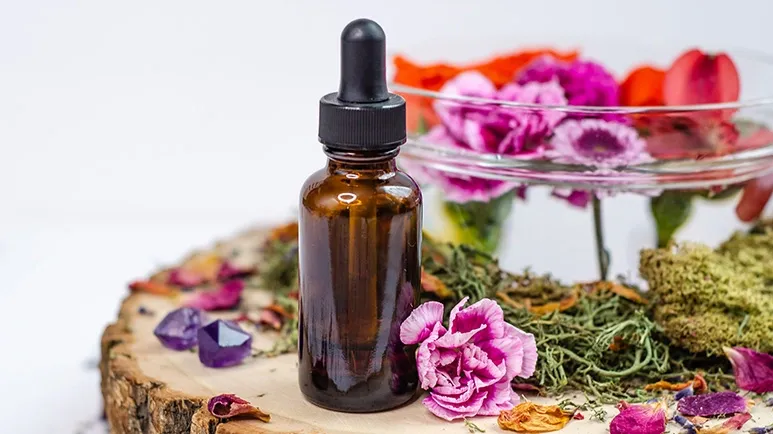
Flower essences are liquid extracts made from flowers. Unlike herbal remedies or essential oils, they do not contain plant material or fragrance. Instead, they are made by placing fresh flowers in pure water and exposing them to sunlight. The water is then preserved with a small amount of alcohol. The final product is highly diluted, and it is believed to carry the “energy pattern” of the flower rather than acting as a chemical drug.8
Dr. Bach originally developed 38 different flower remedies, each aimed at a specific emotional state, such as fear, grief, impatience, or lack of confidence. His most well-known blend, which has been popular for decades, is called Rescue Remedy. It contains five flower essences — cherry plum, clematis, impatiens, rock rose, and Star of Bethlehem.9,10,11
How Do Flower Essences Help Your Pets?
Again, flower essences are mainly used to support emotional balance. More importantly, they are not meant to replace veterinary care or cure disease. Instead, they help your dog cope better with stress and emotional challenges.12,13 Here are some of the most common situations where they are used:14
- Stress and anxiety — Dogs can become stressed due to many triggers, such as loud noises like thunderstorms or fireworks, visits to the veterinarian, car rides, separation from you, or moving to a new home. Flower essences may help your dog feel more settled during these stressful moments.
- Fear and trauma — Rescue animals or dogs with a history of abuse carry emotional scars. Some react strongly to storms, fireworks, or unfamiliar people. Flower essences are sometimes used to promote feelings of safety and calm in these situations.
- Grief and loss — Dogs grieve, too. If you have lost a family member, whether human or animal, you may notice your dog is also acting withdrawn, depressed, or restless.
Some flower essences were discovered to help manage grief. For example, honeysuckle is said to help ease the grief brought on by losing a loved one. - Behavior challenges — These often have emotional roots. For example, a dog who barks excessively, chews destructively, or acts aggressively may be dealing with fear, insecurity, or stress. That said, veterinarians have used specific flower essences for dogs that struggle to adjust to a new home, lack confidence, and repeat the same training mistakes.
- Physical recovery support — It is important to preface this statement by saying that flower essences do not treat physical illness. Manufacturers clearly state that these products are not intended to diagnose, treat, cure, or prevent disease.15
However, some holistic veterinarians believe that emotional support during illness, surgery, or recovery from injury may help the body’s natural healing process.16
Should You Try Flower Essences for Your Dog?
If your dog struggles with anxiety, fear, grief, or adjustment to change, flower essences may offer gentle emotional support. They are widely used in pets, considered low-risk when used appropriately, and non-reactive with most medications.17 But again, they are not miracle cures. They are not replacements for proper medical care or professional training.
The best approach is to talk with an integrative veterinarian, especially one familiar with flower essences. They will be able to help you decide whether this method is appropriate and ensure it fits safely into your dog’s overall care plan.
Flower essences are considered nondrug health products. In the United States, the Food and Drug Administration (FDA) does not review these products for safety or effectiveness before they are sold. Manufacturers need to ensure their products are safe and explicitly labeled saying that their products are not intended to diagnose, treat, cure, or prevent disease.
To stay on the safe side, do not use flower essences in pets that are allergic to any ingredient. Use caution in pets that are pregnant, nursing, very ill, or have liver, kidney, or heart disease unless an integrative veterinarian approves.18
How to Administer Flower Essences
Flower essences usually come in small liquid bottles. They may be given directly into your dog’s mouth, added to food or water, dabbed on the lips, ears, or paws, and sprayed onto bedding or living spaces.19,20
Some veterinarians prepare a diluted solution by mixing water and a small amount of alcohol with drops of the selected flower essences. This can then be given several times per day. In emergency or high-stress situations, doses may be given more frequently for short periods.21
If you miss a dose, simply give it when you remember unless it is almost time for the next one. Do not double up doses. Store flower essences at room temperature, away from light, and out of reach of children and pets. And even though serious side effects are rare, stop using the product and contact your veterinarian if you notice:22
- Irregular breathing
- Rash
- Swelling around the face
- Fever
- Any unusual behavior changes
If you suspect an overdose or reaction, contact your veterinarian or an emergency clinic right away. At home, monitor your pet for any abnormal changes and follow your veterinarian’s directions for follow-up care.
Setting Realistic Expectations
Flower essences are gentle. They do not act like sedatives or strong medications. You may not see dramatic changes overnight — effects may begin within a few hours, but full results may take several doses. Because they work on an emotional level, consistency is more important than the amount given.23,24
When used responsibly and alongside veterinary care, flower essences may be a gentle tool to help your dog feel calmer, more secure, and better able to cope with life’s challenges. And sometimes, helping your dog feel emotionally safe is one of the most powerful steps you can take toward better health.
Sources and References
- 1,6,10,12,15,18,19,22,23 VCA Hospitals, Flower Essences
- 2 Afr J Infect Dis. 2018 Mar 7;12(1 Suppl):54–61
- 3 Clin Cosmet Investig Dermatol. 2025 Jun 30;18:1625–1637
- 4,5,9,17,21 Whole Dog Journal, Flower Essence Therapy for Dogs, March 30, 2021
- 7 DVM360, April 1, 2008
- 8,11,13,14,16,20,24 Only Natural Pet, February 24, 2025

Better Health Begins in the Bowl

Better Health Begins in the Bowl
The Ultimate Pet Nutrition Guide was created to help dog and cat parents understand what truly supports lifelong health.
In this free guide, you’ll discover:
-

How your pet’s biology influences their nutritional needs
-
Why conventional feeding advice often falls short
-
Practical ways to choose better food for your dog or cat
View our Privacy Policy and Terms of Service.