Is Your Furry Companion Running Hot? How to Spot a Fever
Here is what you need to know about canine fevers: what causes them, how to spot the symptoms, how to check your dog's temperature at home, and when to call the veterinarian.
Reviewed by Dr. Tracy Duffner



Join the Bark & Whiskers™ Family
Sign up today for our FREE newsletter, packed with expert advice and insider tips to keep your beloved pet in tip-top shape.
View our Privacy Policy and Terms of Service.


STORY AT-A-GLANCE
- Dog fevers can be easy to miss, often showing up as tiredness, shivering, or warm ears — signs that may seem harmless but could signal something serious
- A normal dog temperature ranges from 99.5 to 102.5°F (37.5 to 39.2°C). Anything above that, especially over 103°F (39.4°C), could mean your dog has a fever
- Infections, wounds, toxins, or even vaccines can cause fever. Sometimes the cause is unknown, but all fevers mean your dog’s immune system is in action
- Taking your dog’s temperature with a digital rectal thermometer is the only accurate way to confirm a fever. Do not rely on a warm nose as a sign
- If your dog’s fever hits 104.5°F (40.3°C) or higher, it is a medical emergency. Call your veterinarian immediately and avoid using any human medications
As a pet parent, you know when something just is not right with your dog. Maybe they are suddenly quiet, refusing their favorite treat, or curled up in a corner instead of bouncing around the house. While it is easy to assume your pup might just be tired or having an off day, sometimes those subtle changes are signs of something more serious — like a fever.
But here is the tricky part: dogs cannot tell you they have a headache or chills. They cannot feel their own forehead or ask for a blanket. In fact, fevers in dogs often go unnoticed until they are dangerously high, simply because the signs are easy to miss unless you know what to look for.
That is why understanding how fevers work in dogs, and what they are trying to tell you, is so important. A fever is more than just a rise in temperature; it is your dog’s body fighting off something it sees as a threat, which can be a minor or a serious issue. Either way, early detection and the right response can make all the difference.
What Is a Fever in Dogs?
A fever is the body’s natural way of responding to something that is not right. It is like an internal alarm system that kicks in when your dog’s immune system is fighting off something — whether that is an infection, inflammation, or another health issue.
For dogs, a normal body temperature is higher than it is for people. While your average temperature might be 98.6 degrees F (37 degrees C), your dog’s normal range is between 99.5 and 102.5 degrees F (37.5 to 39.2 degrees C). Anything above that — especially over 103 degrees F (39.4 degrees C) — is considered a fever.1
If your dog’s temperature climbs over 105 degrees F (40.6 degrees C), it is considered a medical emergency. At this point, their organs could be at risk, and you should get them to a veterinarian right away.2,3 A temperature over 107 degrees F (41.7 degrees C) can be fatal as this leads to irreversible cellular disruption and organ failure.
What Causes a Dog’s Temperature to Rise?
Dogs can get fevers for all kinds of reasons. Some are relatively minor, while others could be life-threatening. Here are some common causes:4,5
- Bacterial, viral, or fungal infections — These infections may show up in different parts of the body, including the skin, ears, lungs, or urinary tract. Tooth abscesses or gum infections are also common fever triggers.
- Wounds or bites — An infected cut, scratch, or bite, even one you may not have noticed, can cause inflammation and heat in your dog’s body.
- Toxic exposure — Dogs that eat something they should not, like certain plants, human medications, or unsafe foods, may develop a fever as their body tries to fight off the harmful substance.
- Vaccines — Some dogs develop a mild fever after getting vaccinated. This is usually a sign that their immune system is responding, and it often goes away on its own.
- Autoimmune diseases and cancer — In more serious cases, a fever might be linked to autoimmune conditions, where the body mistakenly attacks itself, or cancer, which can trigger ongoing inflammation.
- Fever of unknown origin (FUO) — Sometimes, even with testing, the cause of a dog’s fever is not found. This is called a “fever of unknown origin” and may take more time and testing to figure out.
Signs Your Dog Might Have a Fever
You know your dog better than anyone. When something is off, you will usually spot it right away. The first signs of a fever often show up in their behavior. They might seem quieter, clingier, or just “not themselves.” Here are the most common symptoms to look for:
- Lethargy or tiredness
- Loss of appetite
- Shivering or trembling
- Panting (even when it is not hot)
- Red or glassy eyes
- Warm ears or nose
- Runny nose
- Vomiting or diarrhea
- Decreased energy or playfulness
- Coughing
Any of these signs should prompt a closer look. If your dog shows several symptoms at once, it is time to check their temperature.6,7
Do Not Rely on the Nose Trick — Here Is the Correct Way to Take Your Dog’s Temperature
Many pet owners believe that a dry, warm nose means their dog has a fever. But that is not reliable. Your dog’s nose can be warm or dry for lots of reasons, including the weather or how much they have been licking it.
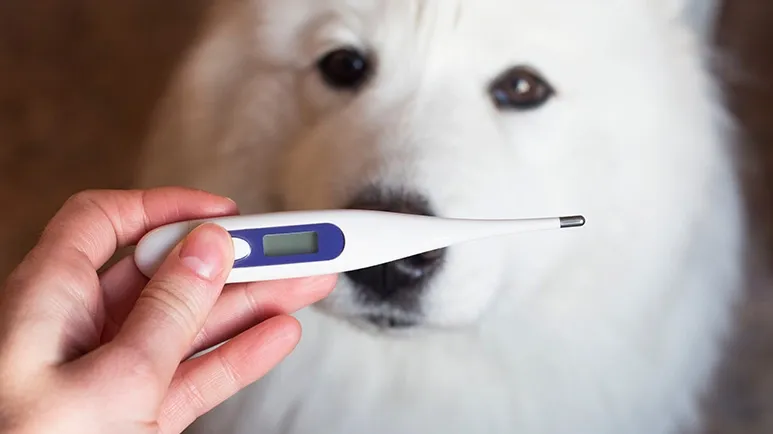
To know for sure if your dog has a fever, you need a thermometer. This might not be your favorite job, but it is the only way to know for sure if your dog has a fever. Here is how to do it safely:
What You Will Need:
- A digital thermometer (ideally one made for pets)
- Lubricant (like petroleum jelly or baby oil)
- A calm environment
- A second person to help, if possible
Steps:
- Lubricate the thermometer tip to make the process easier.
- Gently lift your dog’s tail and insert the thermometer about 1 inch into their rectum.
- Hold it in place until it beeps (or about a minute if using a traditional thermometer).
- Read the temperature, then clean and store the thermometer safely.
Having another person helps keep your dog calm can make things go more smoothly. Some dogs tolerate it well, while others may squirm or resist. If your dog seems extremely uncomfortable, call your veterinarian instead.
When to Call the Veterinarian
Here is a quick rule of thumb: If your dog’s temperature is over 102.5 degrees F (39.2 degrees C), call your veterinarian. If it is over 104.5 degrees F (40.3 degrees C), treat it as an emergency. You should also call your veterinarian if your dog:
- Seems extremely tired or weak
- Has bloody vomit or diarrhea
- Refuses to eat or drink
- Is shaking uncontrollably
- Seems disoriented or confused
Do not wait to see if they “sleep it off.” Fevers can move fast and cause serious complications. If your dog is refusing food or water, do not push them. Instead, keep offering small amounts and encourage them gently.
In addition, never give your dog human medicine. Over-the-counter medications like Tylenol (acetaminophen) or ibuprofen can be extremely dangerous for dogs. Even a small amount can be toxic and lead to kidney failure, stomach ulcers, or even death.8,9,10
How You Can Help at Home
If your dog has a mild fever (around 103 degrees F or 39.4 degrees C) and seems okay otherwise, there are a few things you can try at home — before or while heading to the veterinary clinic:
- Cool them down — Gently apply a wet washcloth to their ears and paws. You can also use a fan to help lower their body temperature.
- Encourage water — Offer small sips of fresh water to help them stay hydrated.
- Let them rest — Keep them comfortable in a cool, quiet room.
- Monitor their temperature — Check every hour to see if it goes down.
If their fever goes down below 103 degrees F and they perk up, great! But you should still call your veterinarian and let them know what is going on.
What Happens at the Veterinary Clinic
Once at the clinic, your veterinarian will do a full check-up and may run tests to figure out what is causing the fever. This could include:
- Blood tests
- Urine tests
- Radiographs (X-rays)
- Ultrasound
- Possibly other diagnostics depending on symptoms
Treatment options will depend on what is triggering the fever. These can include antibiotics for bacterial infections or antifungals if a fungus is the cause. IV fluids may also be recommended to prevent dehydration and reduce fever, and other medications may be prescribed to reduce inflammation. Specialized treatments may be needed if the fever is linked to cancer or an autoimmune condition.
If your veterinarian cannot pinpoint the cause right away, they might start with supportive care and monitor how your dog responds. Often, dogs improve with rest, fluids, and the right medications.
Can Dogs Get Better on Their Own?
Yes, sometimes. A low-grade fever without other symptoms might pass on its own, especially after something like a vaccine. But here is the catch: there is no way to be certain what is behind the fever without help.
That is why it is better to be cautious. If you notice anything unusual or your dog’s temperature keeps climbing, call your veterinarian. It is always better to be safe than sorry.11
Tips for Prevention
You cannot prevent every fever, but you can take steps to keep your dog healthy and lower the risk of illness. These include:
- Checking for ticks after walks in wooded areas
- Cleaning and disinfecting wounds promptly
- Keeping harmful foods and medications out of reach
- Scheduling regular veterinary checkups
Knowing your dog’s normal behavior and temperature also helps you notice problems sooner.
Final Thoughts
Your dog counts on you for everything — including knowing when something is wrong. Fevers can be tricky because the signs are not always obvious. But by staying alert and learning how to check their temperature, you will be ready to act when needed.
If your dog feels warmer than usual, is not acting like themselves, or shows other signs of illness, do not ignore it. Trust your gut, grab a thermometer, and check. And if you are still not sure? Call your veterinarian. It is always the right move when it comes to your best friend’s health.
Sources and References

Better Health Begins in the Bowl

Better Health Begins in the Bowl
The Ultimate Pet Nutrition Guide was created to help dog and cat parents understand what truly supports lifelong health.
In this free guide, you’ll discover:
-

How your pet’s biology influences their nutritional needs
-
Why conventional feeding advice often falls short
-
Practical ways to choose better food for your dog or cat
View our Privacy Policy and Terms of Service.