Could This Quiet Superfood Be Your Dog's Secret Shield?
Discover the benefits of this marine treasure, and why it is your dog's most powerful ally against disease and aging.
Reviewed by Dr. Tracy Duffner


Join the Bark & Whiskers™ Family
Sign up today for our FREE newsletter, packed with expert advice and insider tips to keep your beloved pet in tip-top shape.
View our Privacy Policy and Terms of Service.


STORY AT-A-GLANCE
- Astaxanthin, one of nature’s strongest antioxidants, helps to protect your dog’s cells from damage caused by free radicals, the “rust” that accelerates aging and disease
- This powerful red pigment from microalgae helps reduce inflammation, strengthen the immune system, and support healthy joints, eyes, skin, and brain function
- Studies show astaxanthin is thousands of times stronger than vitamin C, hundreds of times stronger than vitamin E, and has no known dangerous metabolites, making it a safe daily supplement for most pets
- Natural astaxanthin from algae or krill oil is far more effective than synthetic forms and is best given with food containing healthy fats for better absorption
- Starting early offers lifelong benefits, from shinier coats and sharper minds to better mobility and heart health, helping your dog stay vibrant well into their senior years
If you could give your dog one thing that protected their heart, joints, skin, eyes, and even their brain — all while slowing the effects of aging — would you do it? Most of us would not hesitate.
Surprisingly, that “one thing” might already exist. It is a natural, reddish compound found in the same tiny algae that give flamingos their pink feathers and salmon their bright coral color: astaxanthin.
What Exactly Is Astaxanthin?
Astaxanthin is a type of pigment called a carotenoid, similar to beta-carotene in carrots or lycopene in tomatoes. It is produced naturally by a microalgae called Haematococcus pluvialis when it is stressed by sunlight or lack of nutrients.1
This stress response helps the algae protect itself from harsh environmental damage, and when animals like salmon or krill eat the algae, they absorb that protection too. That is why wild salmon have incredible endurance — it is astaxanthin at work. And this same natural compound can offer impressive benefits to your dog.
How Astaxanthin Protects the Body
Every day, your dog’s body is busy running thousands of chemical reactions — digesting food, generating energy, fighting infections, and surveilling for cancer or injury. These normal processes create free radicals, unstable molecules that can damage healthy cells in their search for balance.
Exposure to pollution, pesticides, processed foods, or even too much sun adds even more of these harmful free radicals to the mix.2
When too many free radicals build up, they create oxidative stress, which acts like rust on the inside of the body. Over time, oxidative stress damages tissues, speeds up aging, and contributes to issues like arthritis, cognitive decline, and even cancer.
Here is where antioxidants come in. Antioxidants are the “good guys” that stop free radicals before they cause damage. Your dog’s body makes some antioxidants naturally, but as they age — or if their diet is not ideal — their internal defenses weaken. That is why supplementing with antioxidants like astaxanthin is so valuable. It helps neutralize free radicals, protecting every cell from the inside out.
Why Astaxanthin Is Called ‘Nature’s Strongest Antioxidant’
There are many antioxidants out there like vitamin C, vitamin E, and beta-carotene, but astaxanthin outshines them all. In fact, it has been shown to be:3
- 6,000 times stronger than vitamin C
- 800 times stronger than CoQ10
It also has no known dangerous metabolites, making it a safe daily supplement for most pets.4
Astaxanthin’s secret lies in its structure. Because it is fat- and water-soluble, it can work across the entire cell membrane — inside and out — creating full coverage protection. It does not just mop up free radicals; it shields cells before damage even begins. And unlike some antioxidants, it never becomes a “pro-oxidant,” meaning it never becomes oxidative in high amounts.
How Astaxanthin Helps Your Dog Thrive
So, what does this mean for your dog’s daily life? A lot more than you might imagine. Studies and clinical reports show that astaxanthin can have wide-reaching benefits — from better mobility to sharper eyesight.5
- Joint health and mobility — If your dog limps after playtime or struggles to get up after resting, inflammation and oxidative stress could be part of the problem.
Astaxanthin’s natural anti-inflammatory properties help reduce pain and swelling in joints, making it a great option for dogs with arthritis, hip dysplasia, or general stiffness.
In fact, some researchers call it a “natural non-steroidal anti-inflammatory drug (NSAID)” because it eases inflammation without the side effects that often come with these conventional medications. It also supports faster muscle recovery after exercise, so even younger, active dogs can benefit. - Immune system strength — Your dog’s immune system is their built-in defense army. When it is strong, it keeps infections and chronic diseases at bay. Astaxanthin boosts both cell-mediated immunity (the body’s ability to fight pathogens via white blood cells) and humoral immunity (its ability to create protective antibodies).
In simple terms, it helps your dog’s body recognize invaders faster and respond more effectively, without overstimulating the immune system.6 Dogs that take astaxanthin often show better resistance to illness, recover faster from stress, and maintain stronger vitality over time. - Glowing skin and coat — A shiny coat is not just for looks; it is a sign of internal health. Because astaxanthin fights oxidative stress, it helps reduce dryness, redness, and itching. It improves skin elasticity and moisture levels while promoting a deep, glossy coat.
In one case study, dogs treated with astaxanthin supplements for six weeks showed remarkable improvements in their coat texture and shine — especially those with hormonal conditions like Cushing’s disease.7 If your dog’s fur has lost its luster, this antioxidant could help bring it back. - Eye health and vision protection — Astaxanthin is one of the few nutrients that can cross the blood-retina barrier, allowing it to directly protect your dog’s eyes. It can shield delicate structures like the retina and lens from oxidative damage caused by UV exposure and aging. Astaxanthin does not convert to vitamin A in the body and therefore does not help with retinol-specific vision support.
In one controlled study, dogs supplemented with astaxanthin showed improved retinal function and reduced vision decline over six months. That is great news for breeds prone to eye issues, like Poodles and Dachshunds, as well as senior dogs with cloudy eyes. It is also used by holistic veterinarians to manage conditions like dry eye (keratoconjunctivitis sicca) and to help prevent cataracts.8 - Brain and cognitive health — As dogs age, they can develop canine cognitive dysfunction (the dog version of dementia), leading to confusion, anxiety, or changes in sleep and behavior. Astaxanthin supports brain health by protecting neurons and mitochondria (the “power plants” inside cells) from oxidative damage.
Because it can cross the blood-brain barrier, it reaches the central nervous system directly. This allows it to reduce inflammation and protect brain cells, keeping your dog alert, responsive, and emotionally balanced longer.9 - Heart and mitochondrial support — A healthy heart relies on steady energy production and minimal inflammation. Astaxanthin protects mitochondria from oxidative stress, improving overall endurance and heart efficiency.10
It has also been shown to reduce C-reactive protein (CRP), a marker linked to heart disease, making it beneficial for dogs at risk of cardiovascular problems.11 For senior pets or breeds with genetic heart risks, this can mean stronger circulation and more energy in daily life. - Cancer prevention potential — While no supplement can “cure” or completely prevent cancer, antioxidants play an important role in reducing cellular damage that can lead to mutations. Astaxanthin’s anti-inflammatory and DNA-protective effects help block free radicals before they can trigger cancerous changes in cells.12
Holistic veterinarians often include it as part of a preventive or supportive cancer-care plan, helping to minimize side effects from oxidative stress and improving overall vitality during treatment.
Why the Source Matters — Natural vs. Synthetic Astaxanthin
Not all astaxanthin is created equal. The natural form found in wild salmon and krill is highly bioavailable, meaning your dog’s body can absorb and use it easily.
Synthetic astaxanthin, often made for fish farms, is cheaper but less effective. It contains altered molecular shapes (stereoisomers) that the body may not recognize or absorb well. Some are even genetically modified or produced from petroleum-based chemicals. So when choosing a supplement, always look for:
- “Natural astaxanthin from microalgae” on the label
- A sustainable, reputable source
- No artificial colorings or fillers
Astaxanthin can come in several forms, such as soft chews, powdered supplements, and capsules. It is also found in krill oil supplements. Always follow your veterinarian’s advice, especially if your dog has existing medical conditions or takes other supplements.
Because astaxanthin is fat-soluble, it is best given with food that contains healthy fats like sardines or a little coconut oil to boost absorption.
Food Sources of Astaxanthin
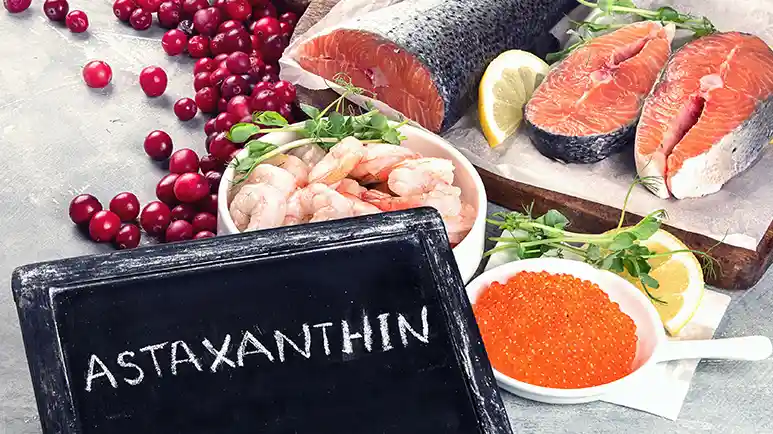
The richest natural source is wild-caught salmon, which can contain 4 to 40 milligrams (mg) per kilogram of fish. Other sources include:13
- Krill
- Shrimp
- Trout
- Red microalgae
Relying on fish alone will not provide a consistent dose, and feeding too much fish can introduce unwanted toxins. That is why a purified microalgae supplement is the safest and most effective option.
Many pet parents wait until their dog starts showing signs of aging before adding supplements, but that can be a mistake. Antioxidants like astaxanthin prevent damage as well as repair it, and it is best and most protective for your pet to start before problems appear. Starting early means your dog’s antioxidant “armor” stays strong, even as their natural defenses slow down with age.
Small Supplement, Big Impact
Modern life exposes dogs to more oxidative stress than ever before — processed foods, environmental toxins, pesticides, and even indoor air pollutants all add up. While we cannot eliminate these completely, we can strengthen the body’s ability to defend itself.
Astaxanthin may not be a household name yet, but its benefits are anything but quiet. From defending cells to improving longevity, it acts as a powerful, natural shield for your dog’s body and mind.
By fighting oxidative stress and inflammation — the two most common roots of most chronic diseases — this super antioxidant gives your dog the tools to thrive at every stage of life. Whether your pup is a playful 1-year-old or a wise senior, astaxanthin offers whole-body protection that works behind the scenes every single day.
Sources and References
- 1,5,7 RehabVet, Astaxanthin for Pets
- 2,9 Herb Smith Inc, September 29, 2020
- 3,8,11,12,13 Dogs Naturally, January 16, 2024
- 4 PharmaNutrition, October 2015, Volume 3, Issue 4, Pages 115-122
- 6 Veterinary Immunology and Immunopathology, 15 April 2011, Volume 140, Issues 3–4, Pages 199-206
- 10 Vet Med (Auckl). 2019 Feb 15;10:29–35

Better Health Begins in the Bowl
Better Health Begins in the Bowl
The Ultimate Pet Nutrition Guide was created to help dog and cat parents understand what truly supports lifelong health.
In this free guide, you’ll discover:
-

How your pet’s biology influences their nutritional needs
-
Why conventional feeding advice often falls short
-
Practical ways to choose better food for your dog or cat
View our Privacy Policy and Terms of Service.