They Studied 80 Lab Retrievers for 12 Years, and This Is What They Found
Their conclusions were completely mystifying. Especially given the long duration of the study. And their solution is even crazier. It ignores so much science and common sense it's unreal. Be wary and watch out for their methods to con you from your hard-earned cash.


Join the Bark & Whiskers™ Family
Sign up today for our FREE newsletter, packed with expert advice and insider tips to keep your beloved pet in tip-top shape.
View our Privacy Policy and Terms of Service.



STORY AT-A-GLANCE
- Research confirms older dogs can experience detrimental physiological changes just as aging human bodies do, including oxidative damage and increased inflammation
- Highly processed pet feed is typically animal‑grade, not human‑grade, and lacks the nutrients aging bodies need to help slow physical decline
- To help combat the effects of aging, it’s important to offer the right diet; the perfect fuel for most dogs, especially older ones, is a variety of living, whole foods suitable for a carnivore
- An antioxidant-rich diet will help reduce oxidative stress and DNA damage, and play an important role in your dog’s longevity
- Most older dogs can also benefit from joint support, brain health and digestive health supplements, as well as supplemental omega-3 fatty acids
Editor's Note: This article is a reprint. It was originally published October 15, 2018.
Researchers affiliated with and funded by pet food manufacturer Mars Petcare published a study that looked at how inflammation, immune responses and other factors change as dogs age.1
The study involved 80 Labrador Retrievers who were evaluated from adulthood, starting in 2003 or 2005, to death or old age in 2015 and 2016. Throughout the study, the researchers measured levels of certain chemicals in the dogs' blood, and observed the following changes as the dogs aged:
- 51% increase in DNA damage, specifically, increased 8-Hydroxydeoxyguanosine (80HDG) levels; 80HDG is a specific marker of oxidative damage to DNA
- 30% increase in C-reactive protein (CRP), which rises in response to inflammation
- 86% decrease in Heat Shock Proteins (HSP70), which measure the ability of the body to repair cellular damage
These results illustrate that, similar to humans, dogs experience damaging physiological changes as they age. The study was conducted by researchers affiliated with a pet food company, with the aim of developing marketable formulas for older dogs. However, supplementation added to processed pet food does not counteract the harmful effects of a poor‑quality diet.
Highly processed pet feed (most pet food isn't made from human-grade ingredients and is therefore, by definition, animal feed) does not nourish aging bodies in a way that slows degeneration. In fact, looking at food choices (fresh, canned and dry food) and the levels of advanced glycation end products (AGEs) in these foods (which can dramatically affect the aging process) is what the nonprofit organization CANWI is raising money to research.
It's also important to note that AAFCO (Association of American Feed Control Officials) hasn't established nutrient profiles for senior or geriatric pets. This means processed pet food diets with added supplements marketed for older dogs are formulated without guidance from AAFCO.
With that said, adding appropriate, high‑quality supplements to an older dog’s excellent‑quality, nutritionally balanced fresh‑food diet can be beneficial. These may include antioxidants to combat oxidative stress, joint‑support supplements, nutraceuticals for brain health, and others based on the dog’s individual needs.
Digestive enzymes and probiotics are often recommended for older pets. For dogs that require additional fiber, meals may be supplemented with natural fiber sources such as psyllium husk powder, ground dark green leafy vegetables, coconut fiber, or canned 100% pumpkin.
Additionally, an omega‑3 fatty acid supplement is also commonly recommended, such as krill oil, another fish body oil (excluding cod liver oil), or algal DHA for pets with seafood allergies.
First Things First — Feed Your Older Dog for Optimal Health
Contrary to what many pet parents and even veterinarians believe, aging pets need more protein than their younger counterparts, and the quality is of paramount importance. The more digestible and assimilable the protein is, and the higher the moisture content of the food, the easier it will be for aging organs to process.
Feed a nutritionally balanced, species-appropriate diet rich in healthy fats, including omega-3 fatty acids such as krill oil. The perfect fuel for an aging dog is a variety of living, whole foods suitable for a carnivore.
Eliminate all refined carbohydrates, which are just unnecessary sugar. No grains, potatoes or legumes, which foster inflammation in the body. Replace those unnecessary carbs with extra high-quality protein. Eliminate extruded diets (kibble) to avoid the toxic byproducts of the manufacturing process.
Most pet foods are manufactured in a way that creates byproducts that can affect cognitive health, including heterocyclic amines and acrylamides, in addition to AGEs. Fresh, biologically appropriate foods provide the whole food nutrients and amino acids an aging brain requires.
he right diet will also enhance your dog’s microbiome, which has been linked to improved cognitive health in humans, with similar improvements observed in pets as well.
Antioxidants Provide Longevity Benefits
Antioxidants are molecules that gobble up toxic free radicals floating around in your pet's body before they can harm healthy cells and tissue, thereby reducing oxidative stress and DNA damage. Antioxidants play a key role in longevity, and several studies of older dogs have proved the benefits of an antioxidant-rich diet for the aging canine brain.2,3,4,5 The more free radicals the body makes, the more antioxidants the body requires.
Most commercially available pet foods, even those of very high quality, contain synthetic vitamins and minerals that provide minimal nutrition, not optimum nutrition. Your dog's body is designed to absorb nutrients from fresh, living foods very efficiently. Antioxidants are contained in the vitamins in fresh foods, including:
- Vitamin A and carotenoids, which are found in bright colored fruits and veggies like apricots, broccoli, cantaloupe, carrots, peaches, squash, sweet potatoes and tomatoes
- Vitamin C, found in citrus fruits and strawberries, as well as green peppers, broccoli and green leafy vegetables
- Vitamin E, found in nuts and seeds
- Selenium, found in protein sources like fish, chicken, beef and eggs, as well as Brazil nuts
Phytochemicals also contain antioxidant properties:
- Flavonoids/polyphenols are in berries and tea (decaffeinated and cooled, for pets)
- Lycopene is in tomatoes and watermelon
Lutein sources are dark green vegetables like spinach, broccoli and kale
Supplements for Aging Joints
Keeping your dog at a healthy weight and physically active will help control arthritis and degenerative joint disease as he ages. Chiropractic adjustments, water exercises and acupuncture can also provide enormous benefits in keeping dogs mobile in their golden years.
There are a wide range of supplements that can be added to your dog's diet to help maintain healthy tendons, ligaments, joints and cartilage. These include:
- Glucosamine sulfate with MSM and eggshell membrane
- Omega-3 fats (krill oil)
- Ubiquinol
- Supergreen foods like spirulina and astaxanthin
- Natural anti-inflammatory formulas (curcumin, proteolytic enzymes and nutraceuticals)
Supplements for Brain Health
Nutraceuticals can significantly improve memory, and the effects are long-lasting. Krill oil and other healthy fats, including MCT oil, are very important for cognitive health. Studies of medium-chain triglycerides (MCTs) such as coconut oil show they can significantly improve cognitive function in older pets.
MCTs provide an alternative energy source for the brain in the form of ketone bodies versus glucose, which can dramatically improve brain metabolism and cellular energy within the central nervous system. Supplementing with MCTs is a great way to offer an instant fuel source for your dog's brain.
Ketone bodies can cross the blood‑brain barrier and efficiently nourish aging brains. A common guideline is 1/4 teaspoon per every 10 pounds of body weight, added daily to food. Because a pet’s brain is roughly 60% fat, that fat requires appropriate fuel as the pet ages.
Providing a source of SAMe (S‑adenosylmethionine) is also commonly recommended. Other supplements to consider include SOD (superoxide dismutase) and resveratrol, which is derived from Japanese knotweed. Japanese knotweed has been shown to help reduce free‑radical damage and beta‑amyloid deposits.
Ginkgo biloba may improve blood flow to the brain. Phosphatidylserine and ubiquinol, which is the reduced form of CoQ10, feeds your pet's mitochondria and improves cellular energy.
Sources and References

Better Health Begins in the Bowl
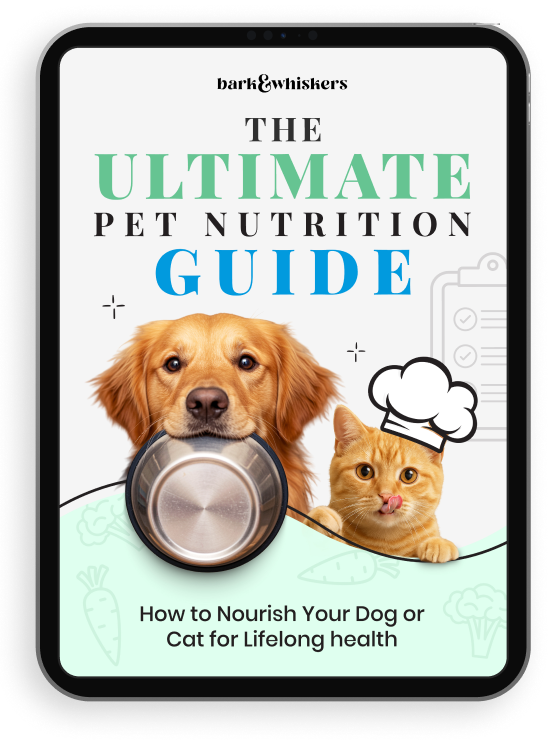
Better Health Begins in the Bowl
The Ultimate Pet Nutrition Guide was created to help dog and cat parents understand what truly supports lifelong health.
In this free guide, you’ll discover:
-

How your pet’s biology influences their nutritional needs
-
Why conventional feeding advice often falls short
-
Practical ways to choose better food for your dog or cat
View our Privacy Policy and Terms of Service.