The Ingredient You Won't Find on the Label
Your dog's food bowl may be delivering a daily dose of an industrial chemical that scientists tie to hormone disruption, thyroid trouble, and gut imbalance — and it never had to pass an ingredient panel to get there.
Reviewed by Dr. Tracy Duffner


Join the Bark & Whiskers™ Family
Sign up today for our FREE newsletter, packed with expert advice and insider tips to keep your beloved pet in tip-top shape.
View our Privacy Policy and Terms of Service.



STORY AT-A-GLANCE
- Bisphenol A (BPA) is an industrial chemical used since the 1950s to make hard plastics and line metal cans, and it acts as an endocrine disruptor that mimics estrogen in the body
- A 2016 University of Missouri study found that dogs eating canned food for just two weeks saw circulating BPA levels roughly triple, even when one of the diets was labeled BPA-free
- Exposure has been linked to fertility issues, diabetes, obesity, neurological changes, thyroid disruption including hyperthyroidism, gut microbiome imbalance, and altered serum chemistry
- BPA is not only in cans — it also shows up in kibble bag linings, plastic food and water bowls, storage bins, measuring cups, and any hard plastic your dog chews on regularly
- Practical fixes include switching to fresh food, using stainless steel or ceramic bowls, transferring kibble to glass containers, filtering drinking water, and choosing brands with transparent packaging testing
You read the label and choose the good brand. You look for real meat first — no by-products or mystery fillers. Yet still, because of how modern pet food is packaged, stored, and shipped, a chemical your dog is being exposed to twice a day never appears on any ingredient list.
Independent research keeps confirming that pet foods packaged in metal cans and plastic bags carry measurable amounts of an industrial chemical called BPA — one that ends up in your dog's bloodstream within days of switching diets. And even brands marketed as "BPA-free" do not always live up to the label.
What Is BPA (and Why Is It Getting So Much Attention)?
Bisphenol A is a synthetic chemical that has been used since the 1950s to make hard plastics and to line the inside of metal food and beverage cans. You will find it in water bottles, food storage containers, cash-register receipts, canned goods, plastic bowls, and a long list of everyday items. The chemistry that makes BPA useful — it hardens plastic, prevents corrosion, and creates a smooth barrier between food and metal — also means small amounts leach out of packaging and into the food or drink stored inside.
What makes BPA a bigger deal than most industrial chemicals is that it is an endocrine disruptor. That means it mimics the hormone estrogen and can interfere with the body's own hormone signaling. In humans and animals, this has been linked to a range of concerns from reproductive issues to metabolic disease. Despite decades of controversy, the FDA still approves BPA as a "food contact material" for most applications.1,2,3
How BPA Ends Up in Your Pet’s Food Bowl
The main exposure route for pets — as for humans — is diet. A 2017 industry analysis found that 81% of dog food cans tested contained BPA, and 95% of cat food cans contained PVC (a related plastic chemical). Every single can tested had one or the other, or both.4
Canned pet food is the obvious source, but kibble is not off the hook. The plastic bags used to package dry food can also contain BPA, and the chemical can migrate into the food during storage — especially with heat, moisture, or extended shelf life. In one study, researchers who tested dogs before switching them to canned food found that baseline BPA was already detectable in the animals' blood, even though the dogs had been eating kibble (more on this study later).
That is a strong hint that dry food packaging is a real exposure source, not just cans. Every step in the supply chain — from ingredient sourcing to final packaging to storage on your kitchen shelf — is a potential contact point.5
Beyond food packaging, BPA also shows up in plastic pet water bowls, food bowls, measuring cups, food storage bins, toys, and any hard plastic your dog chews on or drinks from all day. Warm dishwasher cycles and prolonged sun exposure can accelerate the leaching of BPA from these products, meaning a bowl that was low-exposure when new can become a bigger source of contamination over time as it ages, scratches, and cycles through repeated heat.
What the Research Actually Shows
The most cited study on BPA in dogs came out of the aforementioned 2016 study, published in the Science of the Total Environment journal. A research team from the University of Missouri took blood and stool samples from 14 healthy privately owned dogs before switching them to one of two commercially available canned diets, one of which was marketed as BPA-free. After just two weeks on either diet, the dogs' circulating BPA concentrations had roughly tripled, jumping from an average of 0.7 nanograms per milliliter at baseline to 2.2 nanograms per milliliter.6
The elevated BPA did not just circulate quietly. It correlated with changes in the dogs' plasma bicarbonate levels — a marker of shifting metabolism — and with meaningful alterations in the gut microbiome. Specifically, elevated BPA appeared to reduce populations of a specific bacterium that helps metabolize BPA and related environmental chemicals. In other words: more BPA in, less ability to clear it out.7,8
Dr. Cheryl Rosenfeld, a professor of biomedical sciences in the University of Missouri College of Veterinary Medicine and one of the study authors, made a point worth repeating: Dogs share our homes, our food supplies, and our environmental exposures. What shows up in their blood is often a preview of what is showing up in ours. In her words, our canine companions may be the best bio-sentinels for human health concerns.9
What BPA May Do Over Time
Chronic BPA exposure in pets has been associated with a growing list of health concerns. Even short-term consumption — as brief as two weeks — has been shown to affect metabolic markers and the microbiome. Longer-term exposure has been tied to:
- Fertility and reproductive issues
- Increased risk of diabetes and insulin resistance
- Obesity
- Neurological changes
- Thyroid disruption — including links to hyperthyroidism in cats and thyroid dysfunction in dogs
- Gut microbiome imbalance
- Alterations to serum chemistry and metabolism
As with most environmental toxins, the concern is not a single meal. It is the cumulative effect of daily low-dose exposure over the 10 to 15 years a pet is with you.
Small numbers compound. And because BPA acts on hormone-driven systems like thyroid, reproductive, and metabolic system, the effects often do not show up as a dramatic event but as a slow drift toward chronic conditions that get chalked up to "just aging." Integrative and holistic veterinarians increasingly view this kind of background chemical load as one piece of the puzzle behind the rise in chronic disease across companion animals.10,11
Even ‘BPA-Free’ Is Not Always What It Sounds Like
Here is a wrinkle worth knowing about: One of the two canned diets in the featured study was labeled BPA-free, yet still produced a rise in circulating BPA in the dogs eating it. Both diets showed BPA in the actual food.12,13 There are a couple of reasons this happens:
- Testing standards vary — A can may be labeled BPA-free based on its can lining alone, while the food inside was already contaminated during processing or from ingredient supply chains.
- Many BPA-free products simply substitute a closely related compound like BPS or BPF — These behave similarly in the body and are less well studied. Emerging research on these bisphenol substitutes suggests they may carry many of the same endocrine-disrupting properties as BPA itself, and in some cases may be more persistent in the environment. "BPA-free" is a start, but it is not automatic safety.
The takeaway is not to distrust every label. It is to remember that packaging chemistry is complex, regulation lags behind the science, and no single certification tells the whole story. Combining multiple strategies — better packaging, better storage, and better bowls — makes more difference than chasing any one label.
What You Can Actually Do
You cannot eliminate BPA exposure for your pet any more than you can for yourself. But you can meaningfully reduce it, and small choices repeated daily are what actually shift a pet's total chemical burden over time. Practical steps that add up:
- Move away from canned food when possible. Fresh, gently cooked, or frozen pet foods packaged in cartons, glass, or Tetra Pak avoid the can lining problem entirely.
- If you feed kibble, consider transferring the food to an airtight glass or stainless steel storage container. Do not leave it sitting in the plastic bag for weeks. Be aware, though, that transferring the kibble out of the original bag, where it is most likely packed in nitrogen to displace oxygen and prevent spoilage, can lead to the food going rancid much more quickly. Transfer to an alternate storage container only if you are keeping small amounts of food on hand and purchasing more frequently.
- Choose brands that use BPA-free packaging and are transparent about it. Some brands publish their testing; those are worth rewarding.
- Ditch plastic bowls. Switch to stainless steel or ceramic for both food and water. Plastic bowls are also known for causing chin acne in some pets.
- Do not microwave plastic containers. Heat accelerates leaching. Same goes for putting hot food in plastic.
- Wash bowls daily with hot soapy water. Biofilm builds up faster on plastic and can trap contaminants.
- Filter your pet's drinking water. A quality filter reduces overall chemical load, especially if you are on municipal water.
- Skip plastic toys that your dog chews for hours. Choose rubber, cotton, or natural materials for heavy chewers.
From an integrative and holistic veterinary perspective, the goal is not a chemical-free life — it is not achievable in the modern world. The goal is to reduce cumulative load enough that your pet's natural detoxification pathways can keep up. Support that with clean water, quality diet, and thoughtful choices about packaging and containers, and you have done most of what is realistic.13
A Wider Lens on Pet Food
BPA is not unique; it is part of a larger conversation about industrial chemicals that are quietly present in your pet's food, water, and environment, like heavy metals, PFAS "forever chemicals," phthalates, and other endocrine disruptors that never appear on any ingredient panel because they are not ingredients in the technical sense. They are packaging residues, processing byproducts, and environmental contaminants that end up in the final product without ever being disclosed to the consumer.
Independent research groups have been raising red flags on this for years. And dogs — with their shorter lifespans, faster metabolisms, and total dependence on whatever we put in their bowl — often show the effects of these exposures years before humans in the same household do.
Chronic diseases that veterinarians have watched steadily climb in dogs and cats over the past few decades, such as cancer, autoimmune conditions, thyroid disorders, allergies, obesity, diabetes, all have plausible ties to the cumulative chemical burden of modern life. That is what makes companion animals such useful early-warning systems, and it is also what makes it worth paying attention.14
Your dog cannot read the label. They also cannot ask why their food comes in a can lined with an estrogen-mimicking chemical, or why their water bowl leaches plastic residues after a hot summer day. You are the one who does that work for them.
Small changes — a switch from canned food or kibble to fresh food, from plastic bowls to stainless steel, from plastic chew toys to natural products — add up over a lifetime in a way that matters more than most pet parents realize. Talk to an integrative or holistic veterinarian if you want to build a more comprehensive plan around reducing your pet's environmental toxin load, especially if they are already dealing with thyroid, gut, or metabolic issues where BPA and similar chemicals are known to play a role.
The best ingredient in any dog's dinner is the one you thought carefully about. And sometimes the most important part of that thought is not what is on the label — it is what is not. What is not disclosed. What is not tested. What is not regulated. Being the person who thinks about that on your pet's behalf is one of the quiet, ongoing ways of loving them well.
Sources and References

Better Health Begins in the Bowl
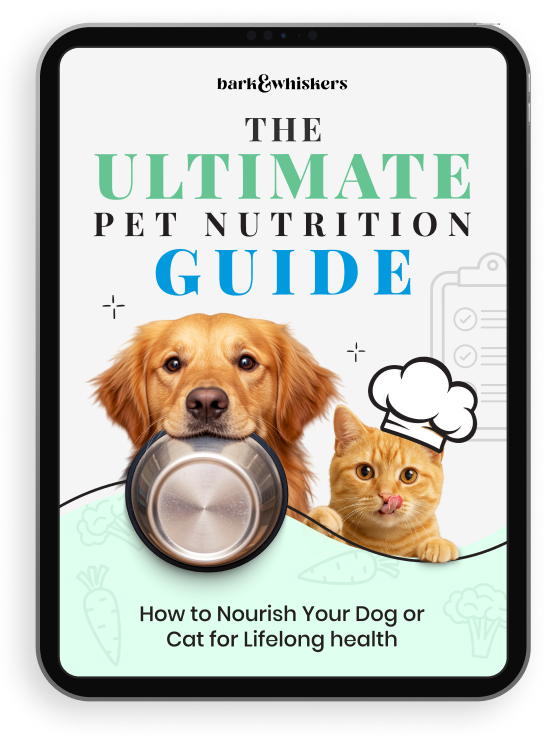
Better Health Begins in the Bowl
The Ultimate Pet Nutrition Guide was created to help dog and cat parents understand what truly supports lifelong health.
In this free guide, you’ll discover:
-

How your pet’s biology influences their nutritional needs
-
Why conventional feeding advice often falls short
-
Practical ways to choose better food for your dog or cat
View our Privacy Policy and Terms of Service.