Is Your Furry Housemate Ready for Cozy Season?
Cooler air, shorter days, and a house full of pumpkins change more for your cat than you might expect — from how much fur ends up on your couch to which 'cozy' decorations turn into a trip to the vet.
Reviewed by Dr. Tracy Duffner



Join the Bark & Whiskers™ Family
Sign up today for our FREE newsletter, packed with expert advice and insider tips to keep your beloved pet in tip-top shape.
View our Privacy Policy and Terms of Service.


STORY AT-A-GLANCE
- The arrival of fall shifts your cat's sleep, appetite, and grooming habits, so the routine that worked in July may need small adjustments by October
- Cats shed heavily as they trade a summer coat for a winter one, and all that swallowed fur means more hairballs — regular brushing is the simplest fix
- Fleas, ticks, and parasite-carrying rodents stay active well into fall, sometimes past the first frost, and indoor-only cats can still be exposed to these pests
- Autumn brings a specific hazard list: antifreeze from vehicles, rodent bait, moldy leaves, lawn chemicals, late-blooming plants, and open-flame decorations
- Senior cats feel cold, damp weather in their joints. It is reported that roughly 90% of cats over age 12 show signs of arthritis, which often flares when temperatures drop
You notice the arrival of fall in your own routine first. The sweaters come out; the heater kicks on and fills the house with that faint burnt-dust smell. Remarkably, your cat already felt the change weeks ago.
Two factors drive most of the changes that you will eventually see: less light and less warmth. Shorter days shift your cat's internal clock, and many cats simply sleep more in cooler months. Appetite can also climb, which is an ancestral instinct to stock up before a lean season. The coat starts a full renovation as well, shedding the summer layer to make room for a denser winter one.1,2
A few small adjustments on your end can make the difference between a cat who coasts into winter comfortably and one who spends fall itchy, bored, or sick.
The Fur Situation During Fall
Fall is peak shedding season, and all that fur needs to go somewhere. It lands on your pants, your furniture, and your floor, while some gets swallowed during grooming and can come back up as hairballs.3,4
Brushing is the best thing you can do to help your cat, and it only takes five minutes. Short-haired cats generally do fine with a weekly session; long-haired cats may need daily attention, since their fur mats quickly. Either way, every bit of fur you capture is something your cat will not swallow. While you are brushing, use the time as a health check too, feeling for lumps, scabs, sore spots, or fleas.5,6
For cats who still struggle with hairballs, feeding a wet food diet, feeding fiber-rich food, and offering a hairball supplement can help move swallowed hair through the digestive tract instead of back up, but check with your veterinarian first. That said, spotting the occasional hairball on the floor can be normal; up to twice a month is considered normal. However, retching several times a week, bald patches, or red, irritated skin is not — spotting these means a trip to your veterinarian.7
Shorter Days Can Mean a Bored Cat
Again, your cat sleeps longer hours than humans, more so during fall. But a cat stuck indoors with the windows closed has fewer outlets for their pent-up energy.
Aim for two to three short play sessions a day. Cats hunt in bursts, so 10 focused minutes with a wand toy beats an hour of a toy being ignored. In addition, window perches turn migration season into good sightseeing entertainment for them, and puzzle feeders stretch mealtime while cutting the boredom that leads to overeating. You can also use pesticide-free dry leaves in a shallow box for hiding toys, clean pine cones for batting practice, and small gourds to shove around the floor.8,9,10
If your cat starts asking for more food this month, know that their instinct is real. So is the weight it causes, and keep in mind, obesity remains one of the biggest health problems in house cats. Complications from excess weight gain include diabetes risk, stiff joints, and more difficult grooming, which brings you right back to mats and hairballs.11
If your cat has kidney disease, diabetes, or another ongoing condition, fall is a good time to review the feeding plan before the holidays scramble everyone's routine.12
Fleas and Ticks Do Not Read the Calendar
Fleas and ticks stay active into fall, and in many areas, they are still around after the first frost. As temperatures drop, they actively seek warmth, such as heated houses and warm animals. Fall also brings a rodent surge, which means more chances of parasite infections. And even if your cat never goes outside, fleas can still hitch a ride on your shoes, pant legs, and grocery bags.13,14
That is why year-round prevention is recommended. Ask your veterinarian the appropriate strategy based on your cat's age, weight, and health — and never use a dog product on a cat, since some canine ingredients are deadly to them. For more tips, read “Could Your Pet’s Flea Collar Be Harming Them?”
Fall Is Also the Sneezy Season
Cats get seasonal allergies, too. Common triggers include mold spores from damp leaf piles, pollen from late-blooming plants, and dust stirred up when the furnace runs for the first time in months. At home, clear wet leaf piles near doors and change the furnace filter before you turn on the heat.15,16
The signs do not always look like a human’s seasonal allergies — symptoms may include sneezing or coughing, watery eyes, patchy fur loss, or licking one spot until the fur thins. Those symptoms overlap with fleas and several other conditions, so guessing rarely works. Get your cat examined so you are treating the real, underlying cause.17,18
When the House Gets Busy
If you have several cats, that means more friction during fall, because warm spots become valuable real estate and competition over cozy corners raises tension. Provide more warm resting places than you have cats, keep feeding times regular, and keep up the interactive play.19
Halloween deserves its own warning. Cats are more likely to sustain injury around Halloween than at any other time of year due to increased opportunity for escape, increased exposure to toxins and harmful decor, and due to harm related to Halloween culture itself.20 There is a pervasive belief that black cats in particular may come to harm at Halloween due to being adopted for a Halloween theme and then abandoned, or worse, due to human cruelty. While there is not peer-reviewed evidence supporting this belief, some shelters pause black cat adoptions during the Halloween season because of this possibility.
Black cats are already the least likely color of cat to be adopted out of shelters, and the ASPCA and other humane organizations are working hard to bring awareness to the need for more black cats to be adopted into loving homes. Whether increased risk to black cats is true or not, there is definitely the added stress for cats of a doorbell ringing all evening and heavier holiday traffic. So, keep every cat indoors, set up a quiet room away from the front door with a litter box, water, and a bed, and make sure they are microchipped.21 If your cat is comfortable wearing a collar, you can also consider GPS trackers for added peace of mind.
Thanksgiving brings the same crowd problem. Give your cat a quiet space where they can be alone and brief your guests about foods that are toxic to felines, which include onions and chocolate.22
Every decoration you put out during this season is also new, dangling, and within easy reach for your cat. Examples include:23,24
- Open flame — Candles and lit jack-o'-lanterns get knocked over, risking burns and fire, and a passing tail can catch a flame
- Natural decorations — Corn husks, dried flowers, and potpourri can cause stomach upset if chewed and swallowed
- Cords and strings — Light strands, garlands, tinsel, ribbon, and fake spiderwebs invite chewing and tangling, and swallowed string can cause an intestinal emergency needing surgery
- Anything small or sharp — Plastic bags, wrappers, and twist ties need to go up high or be stored properly
Warm Beds and a Warm Bathroom
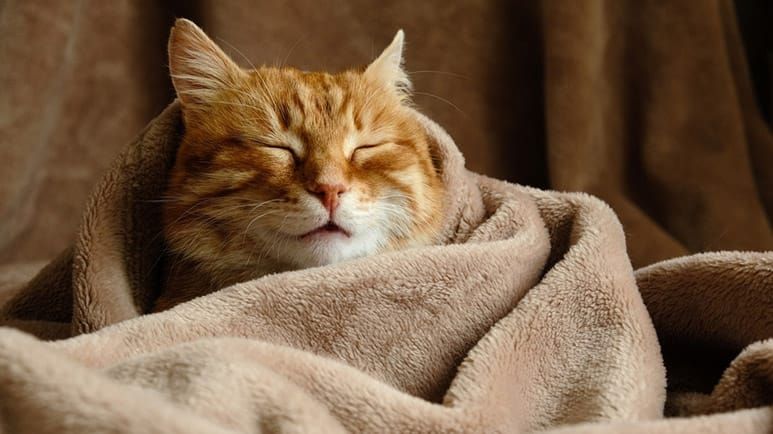
Cats chase warmth with real determination. Kittens cannot regulate their own body temperature for about their first month of life and rely on their mother and littermates for heat, and cats never fully outgrow that habit.
So, give them good options before they invent bad ones. Folded blankets on a sofa, chair, or wicker basket work as well as a store-bought bed. Keep at least one spot away from drafty windows, and for a cat who is always cold, try a bed near a heat vent or a thermal bed made for pets.25,26,27
Apply the same logic to the litter box. A restroom in a cold, drafty corner is something your cat may start avoiding — and that often gets blamed on "behavior" when the real problem is simply the location.28
Older Cats and Cold, Damp Weather
If you have a senior cat, this section matters most. According to Pawsome Vet Care, roughly 90% of cats over 12 years old show signs of arthritis. This is based on a landmark study by Hardie et al. that looked at radiographic (X-ray) evidence of arthritis changes in 100 cats.29 Cold, damp weather tends to make stiff joints worse.30,31
Cats also hide pain well. Instead of limping, an arthritic cat usually just does less: hesitating before jumping, sleeping in new, low spots, stepping just outside the litter box, or looking scruffier.
Here is what you can do to help — give your cat a soft, warm bed away from drafts, and install ramps or steps to their favorite perches. You can also consider adding a night light, since older cats navigate better with a little light, as well as a low-sided litter box. Lastly, you can optimize their nutrition with a focus on joint support — ask your veterinarian about supplements and gentle options like massage, acupuncture, or laser therapy. Twice-yearly exams can also catch age-related problems while they are still manageable.32,33,34
The Fall Hazard List
Most veterinarians recommend keeping cats indoors, and fall is a good illustration of why:35,36
- Antifreeze — Ethylene glycol is deadly in very small amounts and tastes sweet; while cats do not have sweet receptors, other animals do. Your cat only has to walk through a driveway puddle and groom their paws to ingest a lethal dose.
- Rodent bait — Rodenticides get used heavily in fall, and cats are poisoned either by eating bait or by catching a rodent that already ate it.
- Lawn chemicals — These can cling to their fur and paws and get swallowed during grooming. If you treat your yard, water the area afterward.
- Plants and mushrooms — Chrysanthemums and dahlias are toxic to cats and can cause vomiting and diarrhea, and the wild mushrooms that are poisonous tend to be severely so.
- Mold and wildlife — Wet, decaying leaf piles grow mold, and animals looking to hibernate can turn aggressive if disturbed.
If you suspect your cat encountered these, call your vet immediately. Do not wait for symptoms.
Set Your Cat Up for a Good Season
Preparing your cat for fall does not have to be challenging. If you are only going to do five things this month, these tips are enough to support their well-being:
- Brush your cat — weekly for short coats, daily for long ones — and check their skin while you do.
- Keep parasite prevention going. Talk to your veterinarian about natural options that are available.
- Swap real candles for flameless, and keep dangling decorations out of reach.
- Add a warm, draft-free bed, and make the litter box accessible.
- Book a wellness exam, especially if your cat is over 12 or has a chronic condition.
Sources and References
- 1,5,7,9,11,12,13,15,17,22,23,26,33 North Shore Veterinary Hospital, Fall Cat Care: Keeping Your Feline Happy and Healthy This Season
- 2,4,6,10,14,16,18,19,21,24,27,28,31,34,36 Arch Creek Animal Clinic, Autumn Cat Care
- 3,8,25,30,32,35 Pawsome Vet Care, Fall Health & Safety Tips for Cats
- 20 Animals (Basel). 2020 Sep 23;10(10):1720
- 29 J Am Vet Med Assoc. 2002 Mar 1;220(5):628-32

Better Health Begins in the Bowl

Better Health Begins in the Bowl
The Ultimate Pet Nutrition Guide was created to help dog and cat parents understand what truly supports lifelong health.
In this free guide, you’ll discover:
-

How your pet’s biology influences their nutritional needs
-
Why conventional feeding advice often falls short
-
Practical ways to choose better food for your dog or cat
View our Privacy Policy and Terms of Service.