Could This Soothe Your Dog from Nose to Toes?
That windowsill plant that saves your family from sunburn has a lot more to offer than most pet parents realize. Used correctly, it can soothe itchy skin, calm inflamed joints, ease digestive trouble, and support recovery in ways most household ingredients cannot.
Reviewed by Dr. Tracy Duffner




Join the Bark & Whiskers™ Family
Sign up today for our FREE newsletter, packed with expert advice and insider tips to keep your beloved pet in tip-top shape.
View our Privacy Policy and Terms of Service.


STORY AT-A-GLANCE
- Aloe vera can help dogs from nose to toes — soothing skin irritations, moisturizing dry noses and paws, easing digestive discomfort, supporting joint health, and calming urinary inflammation
- The important rule: Only use the clear inner gel, never the yellow latex layer under the skin. The latex contains aloin, a strong laxative that can cause severe diarrhea in dogs
- Topically, aloe gel helps with hot spots, rashes, insect bites, minor cuts, burns, sunburn, dry paw pads, and cracked noses — thanks to its cooling, anti-inflammatory, antibacterial, and antifungal action
- Internally, small amounts of properly prepared gel can support gut health, arthritis, urinary comfort, blood sugar, liver health, and immune function — typical dosing is about 1/4 teaspoon per 10 pounds daily
- Skip aloe for cats, pregnant or nursing dogs, and dogs on blood thinners or diabetes medications without veterinary guidance — always choose 100% pure, organic, latex-free products
The windowsill plant that has saved every human sunburn in your family has quietly been earning a reputation in the pet world too. Aloe vera, long called the plant of immortality in ancient Egypt and the elixir of youth in Russia, has been used for centuries to calm skin, soothe wounds, and support internal health. What many pet parents do not realize is that the same plant, used correctly, can do a lot of that same work for dogs.
But there is one critical catch. Not every part of the aloe leaf is safe, and using the wrong part can cause real problems. Here is what you need to know to use aloe vera safely and effectively for your dog — from nose to toes.
The One Detail That Changes Everything
An aloe leaf has two very different substances inside. The clear inner gel is where all the healing benefits live. The yellow layer just under the outer skin — called latex — contains anthraquinones, such as a compound called aloin, which act as a strong laxative. These compounds can cause severe diarrhea, intestinal irritation, cramping, and electrolyte loss in dogs.
The rule is simple: clear gel, yes. Yellow latex, no. Any aloe product you give your dog — homemade or store-bought — should be latex-free and free from aloin. This one distinction is what separates helpful aloe use from an accidental trip to the vet.
Also worth flagging: aloe vera is not recommended for cats. Ingesting aloe can cause vomiting and diarrhea in cats, so keep it in the dog category only.1,2
What Is Inside the Gel
Aloe vera gel is 98% water, which is part of what makes it so gentle. The remaining 2% is where the magic lives — a rich blend of vitamins, minerals, enzymes, amino acids, and plant compounds. It contains vitamins A, C, E, B12, folic acid, and choline, along with minerals like calcium, magnesium, potassium, and zinc. It also carries 20 amino acids, including eight of the 10 essential ones for dogs.
Add in polysaccharides like acemannan (a documented immune stimulant), salicylic acids, lignin, saponins, and antioxidants, and you have a plant that pulls off a genuinely wide range of biological effects.3,4
Topical Uses: From Nose to Paws
The best-known use of aloe vera is what your grandmother probably reached for — soothing skin. And that same soothing action translates well to dogs. Aloe gel applied topically can help with:5,6,7
- Hot spots and itchy skin patches
- Rashes, eczema, and flaky skin
- Insect and flea bites
- Minor cuts, abrasions, and abscesses
- Sunburn and mild burns
- Lick granulomas
- Poison ivy exposure
- Dry paw pads and cracked, dry noses
- Surgical or old scars
Aloe stimulates blood flow to the area, creates a cooling effect, and reduces inflammation. It also has natural antibacterial and antifungal properties, which help prevent infection while damaged skin heals. That is especially useful for dogs with recurrent yeast issues or hot spots that keep coming back.8
For dry noses and paw pads, a small dab of pure gel massaged in a few times a week can restore softness without any greasy residue. Because most dogs will eventually lick some of it off, always use a product or fresh gel that is latex-free.
Internal Uses (With Care)
Aloe vera can also be used internally in small, carefully prepared amounts. Never feed unprepared aloe to a pet; always used aloe that has been appropriately processed and labeled for ingestion. It is a laxative by nature, so more is not better. Used correctly, though, it supports various body functions, including:9,10,11
- Digestion — Aloe's high water content and gentle motility-stimulating effects help with constipation and mild stomach upset. Its enzymes and prostaglandins soothe irritation along the digestive tract.
- Leaky gut support — Aloe stimulates mucus secretions that protect and soothe the intestinal lining. This can help tighten the gaps between cells that are widened in a leaky gut, reducing the passage of undigested proteins and inflammatory particles into the bloodstream.
- Joint health — Aloe's anti-inflammatory action extends to the joints. Both topical application to swollen joints and low internal doses have been used to help ease the discomfort of arthritis.
- Urinary health — A significant portion of bladder issues in dogs involves inflammation without active infection. Aloe produces a mucilaginous substance that may help to coat the urinary tract and reduce inflammation, which may lower the chance of infection taking hold.
- Blood sugar — Aloe vera has been studied for its ability to lower blood glucose in diabetic animals. For diabetic dogs, it may help alongside conventional care — but always under veterinary supervision, since it can influence insulin needs.
- Parasite control — Aloe has natural anthelmintic properties that can help expel intestinal worms and reduce egg production, offering gentle assistance to some parasite issues.
- Immune support — The polysaccharide acemannan in aloe has been shown to stimulate immune cells and support the body's ability to fight infections.
- Liver support — Emerging research has shown that aloe can reduce liver enzyme levels, which could be beneficial for patients predisposed to liver disease or for patients living with medical conditions or on medications that impact liver function.12
Dosing for Internal Use
Because aloe is a natural laxative, introducing it gradually is important. Always consult your veterinarian before giving any supplement, including aloe. Common holistic veterinary guidance suggests these reminders:13,14
- Start with tiny amounts and work up over several days.
- A typical maintenance range is about 1/4 teaspoon of pure gel per 10 pounds of body weight daily.
- For general wellness, 1 teaspoon of a properly prepared aloe gel or juice product per 10 pounds of body weight daily is a common starting point.
- Higher doses (up to 1 tablespoon per 10 pounds daily) may be used for more serious conditions under veterinary guidance.
- Mix into food or dilute with water or bone broth to soften the slightly bitter taste.
If your dog develops loose stool, cut back or pause. As stated above, always coordinate with your veterinarian — especially if your dog is on medications, has a chronic condition, or is very young or elderly.
How to Prepare Fresh Aloe at Home
If you have an aloe plant at home or you buy fresh leaves at the grocery store, you can prepare gel safely with a little care.
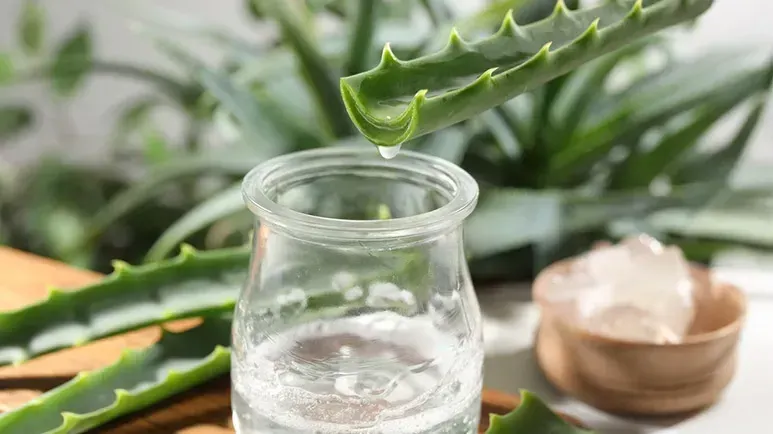
Be sure you are starting with true aloe vera (Aloe barbadensis); other ornamental aloes can be toxic. Wash a broad, thick leaf and use a sharp knife to trim off the serrated edges. Peel away the outer green skin. Between the skin and the clear inner gel, you will see a yellow layer — that is the latex. Carefully scrape it away completely and then follow that with a thorough rinsing to remove all latex residue. Cut the remaining clear gel into small chunks.
Use the fresh gel right away, or store it in the fridge for up to three days. Freezing works well too — freeze cubes on a tray and transfer to a sealed bag for longer storage. For an aloe juice you can add to food, blend 2 tablespoons of gel with 16 ounces of water.15 Please note, home-processed aloe still carries a risk of latex residue and could be irritating to sensitive digestive systems.
Choosing a Good Store-Bought Product
If prepping fresh aloe is not your thing, a well-chosen bottled product works too. But be picky about labels. Many products marketed as pure aloe vera contain a long list of extras that do not belong anywhere near your dog. Look for products that are:16,17
- Certified 100% pure aloe vera, ideally organic
- Explicitly latex-free and aloin-free (especially for internal use)
- Free from preservatives, sweeteners, flavorings, and artificial colors
- Free from carbomer, hexanediol, triethanolamine, and similar synthetic additives
- Sold in dark or opaque packaging to preserve freshness
For internal use, choose a food-grade product clearly labeled for consumption. For topical use, a plain gel formulated for pets is ideal, or a pure gel intended for human use that meets the standards above.
When to Avoid Aloe Vera
Aloe vera is not the right fit for every dog, every situation. Skip or use only under close veterinary guidance if:
- Your dog is pregnant or nursing — aloe passes through milk and can cause diarrhea in nursing pups
- You have a cat in the household who might ingest it
- Your dog has a known aloe allergy or sensitivity
- Your dog is on blood-thinning or blood-sugar medications — talk to your vet first
- Your dog has severe digestive disease that needs a specific treatment plan
- You cannot confirm that the product is latex-free
Before using aloe topically for the first time, always test a small patch of skin and wait several minutes for any signs of redness or irritation. Rare reactions do occur.18
What to Do if Your Dog Eats a Whole Aloe Leaf
If your dog gets into your indoor aloe plant, do not panic. Depending on how much they consumed, they may develop vomiting or diarrhea from the aloin in the leaf. Make sure they have access to fresh water and monitor closely.19 It is always helpful to call the Pet Poison Helpline at (855) 764-7661 or the ASPCA Veterinary Poison Control at (888) 426-4435 for support and advice.
If they ate a significant amount, or if symptoms are severe (persistent vomiting, extreme lethargy, or bloody stools), call your veterinarian right away. They may recommend bringing your dog in for induction of vomiting or for supportive care.
A Soothing Ally, Handled with Care
Aloe vera is one of those rare plants that lives up to a lot of the hype. Used the right way, a little bit of clear gel can soothe a hot spot on a summer afternoon, moisturize a cracked paw pad in the winter, ease a bout of digestive discomfort, and support a body dealing with chronic inflammation — all without harsh chemicals or side effects.
The whole story, though, is in the details. Clear gel is a gift, while yellow latex is a problem. Pure and organic is worth the extra cost. And any use for a diabetic, pregnant, or medicated dog deserves a conversation with your veterinarian first.
From that pink nose that keeps drying out to the paw pads that could use a little rescue, from the itchy hot spot on the belly to the aging joint that could use some relief — aloe vera really can soothe your dog from nose to toes. As long as you know exactly which part of the plant is doing the work.
Sources and References

Better Health Begins in the Bowl

Better Health Begins in the Bowl
The Ultimate Pet Nutrition Guide was created to help dog and cat parents understand what truly supports lifelong health.
In this free guide, you’ll discover:
-

How your pet’s biology influences their nutritional needs
-
Why conventional feeding advice often falls short
-
Practical ways to choose better food for your dog or cat
View our Privacy Policy and Terms of Service.