The Dog Chew That Can Turn Into an Emergency
Rawhide is one of the most popular dog chews on the market, but how it is made and the risks it carries once your dog starts chewing may change the way you think about it.
Reviewed by Dr. Tracy Duffner


Join the Bark & Whiskers™ Family
Sign up today for our FREE newsletter, packed with expert advice and insider tips to keep your beloved pet in tip-top shape.
View our Privacy Policy and Terms of Service.


STORY AT-A-GLANCE
- Rawhide chews are made from the inner layer of animal hides and undergo multiple processing steps before being shaped, dried, flavored, and sold as dog chews
- A dog's size, age, and chewing style all influence how risky rawhide can be, with smaller dogs and aggressive chewers facing the greatest chance of choking or intestinal blockage
- Rawhide is poorly digestible and can pose a choking hazard. Swallowed fragments may also swell, clump together, irritate the digestive tract, or create an intestinal blockage that requires emergency treatment
- Beyond the immediate dangers, rawhide raises concerns about chemical and bacterial contamination, excess calories, and lack of regulatory oversight
- Safer alternatives include raw recreational bones, bully sticks, dehydrated fish skins, and whole-food options like raw carrots, dehydrated sweet potato, and single-ingredient meat treats
Chewing is a normal part of life for dogs. Puppies use their mouths to explore the world and tend to chew more while teething, while adult dogs often chew for enjoyment and stimulation. Giving your dog something appropriate to chew can also help redirect that instinct away from shoes, furniture, and other household items.
For decades, rawhide chews have been marketed as one way to satisfy that urge. They are widely available, relatively inexpensive, and sold in countless sizes, shapes, flavors, and forms. However, these seemingly safe products can come with serious drawbacks. Before handing one to your dog, it is worth understanding what rawhide actually is, how it is made, why some dogs are more vulnerable to its risks, and which safer alternatives can satisfy the same urge to chew.
What Exactly Is Rawhide?
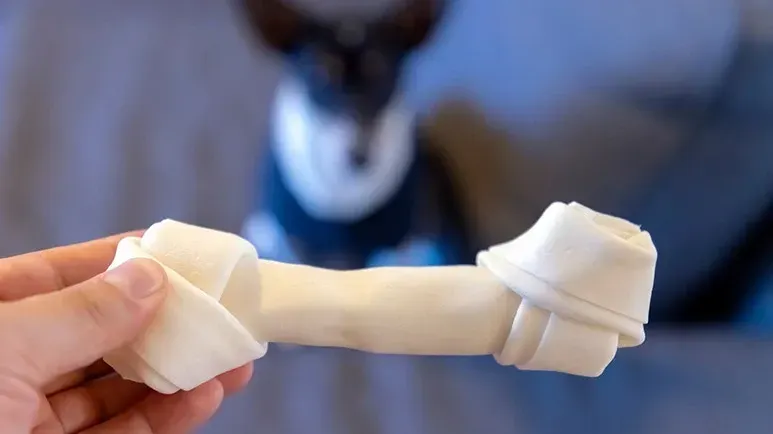
Despite the name, rawhide is not simply a strip of untreated animal skin. It is a byproduct of the leather industry, made from the inner layer of animal hides, usually cattle, though pig, horse, deer, and bison hides are sometimes used as well. When a hide is split, the outer layer goes to leather goods like shoes and bags. The inner layer is what eventually becomes the rawhide chew sitting on a store shelf.
Getting from raw hide to finished chew involves a long manufacturing chain. After collection at slaughterhouses, hides are packed in high-salt brines to slow down decay, then stored for weeks or even months before being shipped to tanneries, often overseas. At the tannery, hides are soaked in lime to separate fat from skin, then scrubbed with chemicals to remove hair, and rinsed again.
In some facilities, the hides are also soaked in bleach or hydrogen peroxide to whiten them. They are then rehydrated, shaped into bones, braids, rings, or twists, and dried again until hard. Flavoring is also sometimes added to make them more appealing to dogs. By the time a rawhide chew reaches the shelf, it has gone through many stages of chemical processing.1,2
Why Some Dogs Are More at Risk Than Others
Some dogs are more likely than others to run into problems with rawhide. The main factors that influence that risk include:3
- Chewing style — Some dogs take their time and gnaw gradually on chews, while others bite down with more force, tear at the material, or try to finish it as quickly as possible. Strong or enthusiastic chewers are generally poorer candidates for rawhide because they can break or tear it into larger, less manageable pieces.
- Size — A chew should always be appropriate for your dog's body size. Smaller dogs have less room for error because even a relatively small piece of rawhide can be large in proportion to their throat and digestive tract, increasing the chance of problems if it is swallowed.
- Age — Chewing strength and habits change over a dog's lifetime. Puppies generally have less powerful jaws than adult dogs and may be more inclined to mouth or gulp objects as they explore, while senior dogs often chew less forcefully than they did when they were younger. This means a chew that suits your dog at one stage of life may no longer be appropriate later.
Keeping those factors in mind can help with any chew decision. With rawhide specifically, the risks are tied as much to the product itself as to the dog chewing it.
4 Ways Rawhide Can Send Your Dog to the Vet
Most of the problems rawhide can cause come down to what happens once your dog starts breaking it apart. Some are emergencies, while others develop slowly and are easy to miss until they get serious.4,5
- Choking — As your dog chews, rawhide absorbs saliva and softens into a gooey, pliable mass. In that state, a determined chewer can tear off a large, slippery piece that can lodge in their throat. Because softened rawhide is sticky, it can form a seal over the airway that is difficult to dislodge, turning an ordinary chewing session into an emergency in seconds.
- Intestinal blockage — Dogs lack the enzymes to fully digest rawhide, so any piece your dog swallows has to pass through the digestive tract more or less intact. Rawhide also continues to absorb fluid and swell in the stomach, and pieces can clump together. Either scenario can create a blockage that requires surgical intervention to resolve.
- Digestive irritation — Even when a swallowed piece is too small to cause a complete blockage, it can still irritate the digestive tract as it passes through. Hardened fragments with rough or pointed edges may scrape the lining of the digestive tract, causing irritation and inflammation. Some of the pieces may also sit in the stomach for weeks or even months and cause ongoing discomfort.
- Dental damage — In its dried, hardened state, rawhide is firm enough to fracture teeth or chip enamel, particularly in smaller dogs whose teeth are not built to withstand that kind of sustained pressure over a long chewing session.
If your dog is chewing on rawhide or has recently finished one, watch for gagging, excessive drooling, or repeated attempts to vomit, which can point to choking or a piece lodged in the throat. Repeated vomiting, loss of appetite, lethargy, or signs of abdominal discomfort may indicate a blockage or digestive irritation that needs veterinary attention. If you notice any of these signs, contact your veterinarian right away.6
Other Concerns About Rawhide Chews
The physical risks of rawhide are only part of the picture. How these chews are processed, stored, and formulated can introduce additional concerns that are easy to overlook when you see a simple-looking bone or twist on the shelf.
- Chemical contamination — Rawhide has been found to contain toxic chemicals including arsenic, mercury, lead, chromium, and formaldehyde. Some of these are used intentionally during processing, while others carry over from the source animals. The bleach and hydrogen peroxide used to whiten hides are not meant to be ingested either.7
- Bacterial contamination — Animal hides can pick up bacteria during processing, transport, or storage. Rawhide products have been associated with contamination by organisms such as Salmonella and E. coli, creating a potential risk for dogs as well as people who handle the chews.8
- Extra calories — Rawhide chews are often treated more like a toy than a food, but dogs can consume a substantial amount of calories from it during a chewing session. A study published in the journal Veterinary Record9 found that rawhide treats can account for over 25% of a small dog's daily energy needs and 18% for a medium-sized dog, well above the widely recommended 10% ceiling for treats.10
- Hydroxyproline — The same study also found high levels of hydroxyproline in rawhide treats.11 Hydroxyproline comes from collagen and can contribute to calcium oxalate stone formation, making it a concern for dogs already predisposed to these bladder stones.12
- Lack of regulatory oversight — Rawhide chews are not classified as "food" by the U.S. Food and Drug Administration (FDA) and are therefore exempt from the Association of American Feed Control Officials (AAFCO) registration and labeling requirements. That means manufacturers are not required to include a calorie content statement, a guaranteed nutritional analysis, or a complete ingredient list on the packaging.13
These concerns paint a clearer picture of why so many veterinarians have moved away from recommending rawhide as a go-to chew. The good news is that there are plenty of alternatives that can satisfy your dog's need to chew without the same risks.
5 Safer Alternatives to Rawhide
Dogs still need an appropriate outlet for chewing, so avoiding rawhide does not mean taking chews away altogether. The goal is to choose safer options that are better suited to your dog's size, age, and chewing habits. Some alternatives to consider include:14
- Raw recreational bones — Large, raw knucklebones or femur bones give dogs a satisfying surface to gnaw on and can help break down tartar in the process. Choose a bone large enough that your dog cannot attempt to swallow it whole.
Avoid cooked, smoked, or otherwise heat-processed bones, as processing makes them more brittle and prone to splintering. For overweight dogs or those on a low-fat diet, scoop the marrow out and replace it with canned pumpkin before refreezing. - Edible raw bones — Softer, non-weight-bearing bones like poultry necks or wings are meant to be consumed rather than used as long-lasting chews. They provide calcium and phosphorus and are more easily digested than recreational bones.
- Bully sticks and other single-ingredient animal chews — Bully sticks, tendon chews, and dehydrated fish skins are all single-ingredient options that satisfy the urge to gnaw. Choose pieces long enough that your dog cannot swallow them whole. A good rule of thumb is to take them away once they become short enough to gulp down. It is also helpful to use a bully stick holder for bully sticks and tendon chews; these help to prevent dogs from ingesting small pieces.
- Whole-food options — Fully edible options include products made from ingredients such as tapioca, compressed vegetables, or yak milk, along with simpler choices like raw carrots, dehydrated sweet potato, cooked chicken, and freeze-dried single-ingredient meat.
Some are designed for longer chewing, while others work better as lighter snacks, training rewards, or occasional treats. Edible dental chews made from natural ingredients like rice flour, chicken, and parsley are another option that also help support oral health. - Durable non-edible chews — Rubber toys like Kongs can be stuffed with a small amount of peanut butter or other fillings to keep a dog occupied. Braided rope toys also give dogs something to work on and can help clean between teeth. These are not consumed, so they carry less digestive risk, but they still need to be replaced once they show signs of wear.
Whatever you choose, always supervise your dog while they are chewing. When buying commercial chews or treats, look for products from companies that are transparent about sourcing, ingredients, and manufacturing standards.
Sources and References

Better Health Begins in the Bowl

Better Health Begins in the Bowl
The Ultimate Pet Nutrition Guide was created to help dog and cat parents understand what truly supports lifelong health.
In this free guide, you’ll discover:
-

How your pet’s biology influences their nutritional needs
-
Why conventional feeding advice often falls short
-
Practical ways to choose better food for your dog or cat
View our Privacy Policy and Terms of Service.