The Tiny Hitchhiker That Can Strike Months Later
A tick bite in July can quietly hide inside your dog until October — and by the time the limping starts, the connection to that summer walk is easy to miss entirely. Know what to watch for and how to prevent these tiny parasites from attaching to you and your furry friend.
Reviewed by Dr. Tracy Duffner




Join the Bark & Whiskers™ Family
Sign up today for our FREE newsletter, packed with expert advice and insider tips to keep your beloved pet in tip-top shape.
View our Privacy Policy and Terms of Service.


STORY AT-A-GLANCE
- Lyme disease is caused by the bacterium Borrelia burgdorferi, spread through the bite of an infected blacklegged (deer) tick
- Dogs, cats, horses, and people can all be infected, and while only about 5% to 10% of infected dogs get sick, those that do can face serious illness
- Deer ticks generally need to be attached for 24 to 48 hours before they transmit Lyme bacteria, which means daily tick checks and prompt removal can often prevent infection even after a bite
- The delayed-onset nature of Lyme is what makes it especially tricky: symptoms typically show up 2 to 5 months after a tick bite, long after the outdoor adventure that caused it
- Prevention is where the biggest gains come from: prescription tick prevention, vaccination, natural tick deterrents, daily tick checks, prompt removal with fine-tipped tweezers, tick-unfriendly yard maintenance, and sticking to cleared trails on hikes
You take your dog on a long summer hike. You come home, check them over, brush them out, and move on with your life. Weeks pass. Everything seems fine.
Then, months later, in the middle of an ordinary afternoon, your dog starts limping. It shifts from one leg to another. Their appetite dips. They seem tired in a way that does not match the day.
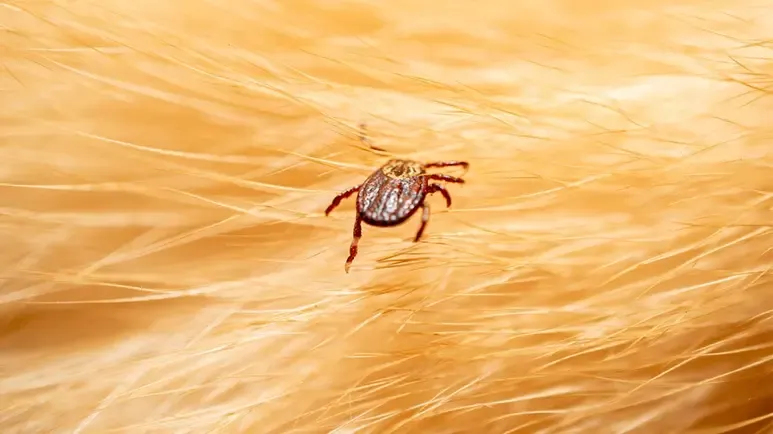
The connection is easy to miss because so much time has gone by. But somewhere in the background of that summer hike, a tiny hitchhiker may have quietly gotten on board.
Lyme disease is one of the few illnesses your dog can pick up in a moment and not show signs of for two to five months or longer. Knowing what to look for — and how to prevent it in the first place — is one of the most important pieces of outdoor-dog knowledge you can carry.
What Lyme Disease Actually Is
Lyme disease is caused by a bacterium called Borrelia burgdorferi. It is transmitted through the bite of an infected blacklegged tick, also known as a deer tick.1 Dogs, cats, horses, and people can all become infected, though little is known about whether cats actually become ill from it.
Only about 5% to 10% of infected dogs go on to develop clinical signs of illness.2 The rest carry antibodies to the bacteria but never show symptoms. That is a striking difference from humans, of whom about 90% become ill after infection.
For the dogs who do get sick, though, Lyme disease can be serious — and the small percentage that develop a specific kidney complication can face a life-threatening situation. That is the reason to take prevention seriously even when the odds of illness after any single bite are relatively low.3
The Tick That Carries It
Blacklegged ticks are small. Adult ticks are about the size of a sesame seed. Nymphs — the immature stage most likely to bite in spring and summer — are more like a poppy seed. Both are easy to miss in a thick coat.
They pick up the bacteria as immature ticks, feeding on infected wildlife like rodents, and carry it with them through the rest of their life stages. When an infected nymph or adult female tick attaches to your dog and takes a blood meal, it can pass Borrelia into the bloodstream.
Here is the crucial detail: The tick generally needs to be attached for at least 24 to 48 hours before it transmits the bacteria. That window is your opportunity. A daily tick check after outdoor time, followed by prompt tick removal, can often prevent Lyme infection even after a bite.4,5 Please note, though, that other tick-borne pathogens carried by the blacklegged tick, such as Anaplasma, can transmit in under 24 hours.
Where the Risk Is Highest
Blacklegged ticks are most established in forested regions across the eastern United States and along parts of the Pacific Coast. Historically, the Northeast, mid-Atlantic, and upper Midwest have had the highest concentrations. Areas like New England, New York, Pennsylvania, New Jersey, Maryland, Virginia, Minnesota, and Wisconsin come up often.
But the range is expanding. High-risk zones are predicted to keep pushing further south and west, and warmer winters have allowed ticks to remain active for more of the year. Any time the temperature is above 32 degrees Fahrenheit,6 blacklegged ticks can be looking for a meal.
The U.S. Centers for Disease Control and Prevention (CDC) maintains a public map of reported human Lyme cases.7 Areas with human cases can be presumed to be high-risk for dogs too.8,9
The Delayed-Onset Problem
This is one of the hardest parts of Lyme disease. In dogs that do get sick, signs typically do not appear until two to five months after the tick bite. By that point, the summer hike is long forgotten, the infection has had time to spread through the body, and the symptoms can look confusing on their own. Common signs of Lyme disease in dogs include:10,11,12
- Intermittent limping or lameness that shifts from leg to leg
- Fever
- Lethargy or decreased activity
- Loss of appetite
- Painful, swollen joints
- Swollen lymph nodes
The shifting-leg lameness is often the most distinctive tell. One day it is the right front leg. A day or two later, it might be the left hind. That pattern is unusual with most orthopedic problems and can point a veterinarian toward a Lyme test.
Lyme Nephritis: The Serious Complication
A smaller but significant subset of infected dogs — about 1% to 5% — develop Lyme nephritis, a kidney complication that can be life-threatening. Lyme nephritis causes protein loss through the kidneys and can produce edema, weight loss, vomiting, diarrhea, and in some cases, death. Certain breeds — including Golden Retrievers, Labradors, Bernese Mountain Dogs, and Shetland Sheepdogs — appear to be at higher risk, though it can happen in any dog.13
This is the outcome pet parents and veterinarians most want to avoid, and it is a big part of the reason prevention gets the emphasis it does.
Which Dogs Are Most at Risk
Any dog that spends time outdoors in a Lyme-endemic area can be exposed. But certain factors raise the risk, such as:
- Spending time in wooded areas, tall grasses, brush, or hiking trails
- Living in or traveling through endemic regions
- Living in rural or suburban areas with strong deer populations
- Having inconsistent or missing tick prevention
- Having a weakened immune system from age, medication, or illness
Ticks are also easily missed in long-coated or working dogs. And while rural areas have higher tick populations, urban and city dogs are not immune either. Ticks can show up in city parks, backyards, and greenbelts more often than most owners realize.14
How It Is Diagnosed
Diagnosing Lyme disease in dogs is trickier than it sounds. Blood tests can show whether a dog has been exposed to Borrelia by measuring antibodies; this shows up generally about 3 to 6 weeks after exposure. But a positive test does not automatically mean the dog is sick from Lyme — it just means they were exposed at some point. Most exposed dogs never become ill. To land on a Lyme diagnosis, veterinarians look at the whole picture:15
- Whether the dog has a history of possible tick exposure
- What signs and symptoms they are showing
- Lab results, including quantitative antibody tests, blood work, and urinalysis
- Whether other tick-borne diseases (like anaplasmosis or ehrlichiosis) might explain the symptoms
- How the dog responds to treatment
A definitive Lyme diagnosis is often a working diagnosis built on all these pieces together, rather than one test result.
Lyme Disease Treatment
The standard treatment for dogs actively sick with Lyme disease is a 30-day course of antibiotics. Doxycycline is the most common choice, and most dogs start to feel better within a day or two of starting. Pain relief may also be prescribed to help with joint discomfort during recovery.
Dogs with Lyme nephritis need a longer, more involved treatment plan that addresses the kidney complications alongside the infection.
Antibiotic therapy is generally not recommended for exposed dogs who are not clinically sick, and it is not recommended as an automatic follow-up to a tick bite either. Most tick bites do not result in illness, and giving antibiotics preventively contributes to antibiotic resistance without a clear benefit.
Supportive Care Alongside Treatment
Some pet parents also incorporate supportive strategies during and after antibiotic treatment. These are complements to conventional care, not replacements for it, and should always be discussed with your vet.16
- Anti-inflammatory foods and omega-3 fatty acids to help joint health
- Probiotics to support gut health during and after antibiotic use
- Rest and reduced stress to help the immune system recover
- Careful monitoring for signs of relapse or kidney involvement
- Alternative modalities such as acupuncture, herbal therapies, and homeopathy to support healing
Prevention: The Real Win
Because diagnosing and treating Lyme disease is complicated, preventing it in the first place is where the biggest gains come from. The three pillars are (natural or prescription) tick prevention, tick checks, and being prepared during hikes or outdoor activities.
- Use natural tick deterrents — Options like food-grade diatomaceous earth (used topically), or an apple cider vinegar and neem oil solution may help ward off ticks. Chemical spot-on and pest-repellent products may lead to problems ranging from skin irritation to seizures and paralysis, so talk to your veterinarian about what is best and safest for your pet. Ultrasonic wearable devices such as Tickless can repel the majority of ticks, but are not 100% effective.
- Do daily tick checks — Run your hands over your dog’s entire body, especially during high-risk seasons and after any outdoor adventure. Feel around the ears, under collars and harnesses, between toes, in armpits and groin, and along the belly. Ticks are small but they do leave a bump you can feel.
- Remove ticks promptly — If you find a tick, use fine-tipped tweezers or a tick removal tool to grasp it as close to the skin as possible and pull straight out with steady pressure. Do not twist, and do not use matches, alcohol, or petroleum jelly to try to make it detach — those methods can cause the tick to regurgitate infected material into the bite. Save the tick in a small container if you would like your veterinarian to identify it.
- Yard-level prevention — Making your yard less tick-friendly matters too. Mow the lawn regularly, trim shrubs, remove brush piles and leaf litter, and create a barrier of gravel or wood chips between wooded areas and lawn spaces. Discouraging deer, mice, and other wildlife from spending time in your yard also prevents ticks from proliferating.
- Smart hiking habits — When possible, stick to cleared trails. Avoid brushing against overhanging branches, tall grass, or shrubs where ticks wait for a host to walk by.
Lyme disease does not spread directly from dog to human, but you and your dog often share the same outdoor spaces, which means you are exposed to the same ticks. If your dog is diagnosed with Lyme, that is a signal to be extra vigilant about ticks in your household — checking yourself, your family, and any other pets. If a family member is diagnosed with Lyme, it is reasonable to talk to your veterinarian about testing the dog too.
There is also a vaccination available for Lyme, but it has limitations; it does not protect against other tick-borne illnesses and it may not be right for your pet. This may be part of the conversation with your veterinarian.
Small Bug, Long Shadow
There is something almost unfair about how a bite from a poppy-seed-sized bug in July can produce lameness in October. But that delayed-onset window is exactly what makes prevention worth doing well. By the time symptoms show up, the infection has often already spread.
Fortunately, this is one of the more preventable diseases in modern veterinary medicine. Reliable year-round tick prevention. Daily tick checks after outdoor time. Prompt tick removal. Thoughtful landscaping. Individually, each of these is small. Together, they close most of the window a tiny hitchhiker needs.
If your dog spends time outdoors — in the woods, on trails, or just in the backyard — talk to your vet about your local risk and your prevention plan. And if your dog suddenly starts limping, running a fever, or looking off weeks or months after a summer outing, mention Lyme disease during the visit. The earlier it is caught and treated, the better the outcome tends to be.
A tick is a very small enemy. But a good defense plan is much smaller work than treating what can come next.
Sources and References

Better Health Begins in the Bowl

Better Health Begins in the Bowl
The Ultimate Pet Nutrition Guide was created to help dog and cat parents understand what truly supports lifelong health.
In this free guide, you’ll discover:
-

How your pet’s biology influences their nutritional needs
-
Why conventional feeding advice often falls short
-
Practical ways to choose better food for your dog or cat
View our Privacy Policy and Terms of Service.