When One Tiny Snip Turns Into a Bloody Mess
That moment when a routine nail trim suddenly turns into blood on the carpet is a scene that plays out in a lot of households — and knowing the right five steps (plus what to keep in your kit) turns a scary mess into a 5-minute fix.
Reviewed by Dr. Tracy Duffner


Join the Bark & Whiskers™ Family
Sign up today for our FREE newsletter, packed with expert advice and insider tips to keep your beloved pet in tip-top shape.
View our Privacy Policy and Terms of Service.


STORY AT-A-GLANCE
- Every dog nail contains a quick — a central bundle of blood vessels and nerves — so cutting into it during a trim, or snagging a nail on carpet, produces dramatic bleeding from a minor injury
- The most effective first-aid tool is styptic powder, which contains ferric subsulfate and helps to clot small nail bleeds within seconds
- Staying calm matters more than people realize — an anxious dog's higher blood pressure prolongs bleeding, so slow movements, a soothing voice, and a distraction like a lick mat help as much as powder
- Most nail bleeds resolve at home within minutes, but call your veterinarian if bleeding lasts past 20 minutes, your dog is limping or clearly painful, the nail bed is exposed, or infection appears
- Prevention comes down to habits: use sharp, dog-specific clippers, trim in small increments, keep nails short with regular trims, pair trims with treats, and keep styptic powder ready before starting
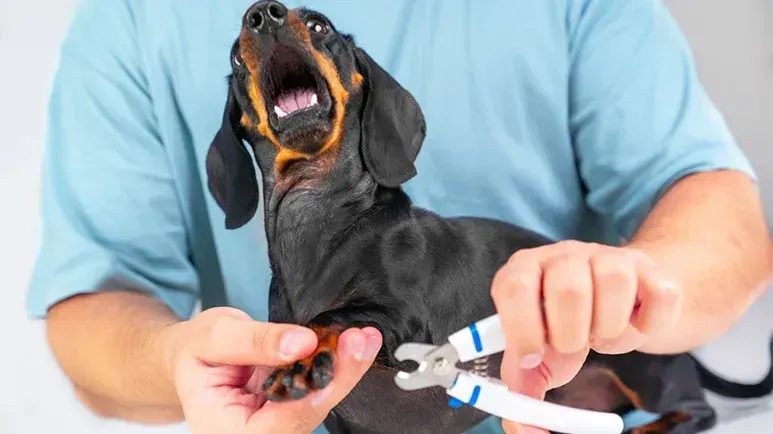
You are three nails into a home trim. So far, so good. Then, on the fourth, the clippers close a fraction of a millimeter too far, and suddenly your dog yelps, jerks their paw back, and there is blood everywhere — on your hands, on the floor, on your shirt, on the coffee table.
Take a breath: This scene plays out in a lot of households. Even professional groomers occasionally experience this situation. The good news is that a bleeding nail is almost always something you can handle at home, if you know what to do and if you can stay just a little calmer than the situation feels.
Why a Cut Nail Bleeds So Much
The center of every dog nail contains what veterinarians call the quick — a bundle of blood vessels and nerves running through the middle of the nail. The outer part of the nail is made of keratin, the same hard, non-living material as your own fingernails.1
Trimming or filing the keratin portion does not hurt at all. But the moment the clippers go past the keratin and into the quick, you have two problems: nerves that are suddenly very awake, and small blood vessels that are open to the air. That is why a tiny snip can produce a surprising amount of blood.
Dogs with light-colored nails have it easier. You can usually see the pink quick through the keratin and stop before you reach it. Dogs with dark or black nails are much harder to trim safely, because the quick is invisible until you are right on top of it.2
First Aid in 5 Steps
Whether you have nicked the quick during a trim or your dog has broken a nail while jumping off the couch, the response is largely the same. The steps below work for most at-home situations, and moving through them in order tends to produce the calmest outcome for both of you. Here is the sequence that works:3,4,5
- Stay calm — Your dog is watching you. If you panic, they panic. The more anxious they get, the higher their blood pressure, and the more the nail keeps oozing. A calm voice, slow movements, and a matter-of-fact tone all help slow the bleed.
- Restrain gently, if needed — Even the sweetest dog can snap when startled or in pain. A soft hug from another person, or a light muzzle if your dog is very upset, can protect both of you.
- Apply styptic powder — This is the go-to product for bleeding nails. Styptic powder (active ingredient ferric subsulfate) helps small bleeds to clot within seconds. Press a small amount firmly into the nail tip for 15 to 30 seconds. A Q-tip works if you would rather not use your finger. Reapply if the bleeding restarts.
- Apply pressure — If you do not have styptic powder, wrap the paw in gauze or a clean cloth and press firmly for five to 10 minutes. Pressure alone can do the trick.
- Discourage licking — As tempting as it is for your dog, licking a bleeding nail slows clot formation and introduces mouth bacteria to the nail bed. A recovery cone, a clean sock loosely taped over the paw, or a few minutes of distraction with a favorite treat can help.
What to Use if You Do Not Have Styptic Powder
A well-stocked pet first aid kit really should include styptic powder — it is inexpensive, keeps forever, and is worth its weight in gold in a moment like this. But if you are caught without it, several household items work in a pinch.
- Cornstarch, alone or mixed with baking soda and flour
- Plain flour
- A bar of Ivory or another mild, unscented soap — press the nail firmly into the soap
- Liquid bandage
None of these will help the wound clot as quickly as styptic powder, but they will help buy you time while you apply pressure. Small amounts of styptic powder are safe if your dog licks a bit off, but do not let them consume the whole tin. Keep your pet mildly distracted while the styptic does its job.
When It Is More Than a Nick
A trim mishap is one thing. A dog who suddenly yelps, holds up a paw, and starts bleeding on their own — often after snagging a nail on carpet, upholstery, grass, a fence, or a wooden step — is another.
Torn or broken nails can involve much more of the nail structure. Sometimes there is a loosely attached sliver you can trim off carefully at home. Other times, the break exposes the quick or nail bed and needs veterinary attention.
Older dogs’ nails often become brittle and are more prone to breaking. Long nails are especially vulnerable to getting snagged. Dew claws (those extra nails higher up on the leg) do not wear down with walking and break more often than the others.6
Once a nail is injured, either through a torn or snagged claw or a nail-trim gone wrong, be careful to not let your dog walk on wet grass or in dirt or mud while the nail is healing. Though small, this is an open wound and needs to be kept as clean as possible.
What the Vet May Do for a Broken Nail
Not every broken nail needs professional care, but when the damage is significant, a quick clinic visit can spare your dog a lot of discomfort and prevent complications down the road. Knowing what to expect ahead of time also makes the trip feel less alarming. Here is roughly what happens once you arrive:7
- The veterinarian or technician will safely restrain your dog, sometimes with a muzzle for their safety and yours. The bleeding is controlled with pressure and a styptic product.
- The damaged portion of the nail is trimmed away above the break to allow a clean regrowth. This step can be uncomfortable, so sedation or a nerve block may be used depending on the location and severity of the break.
- Because the quick is attached to bone, preventing infection is important. Your veterinarian may apply an antibiotic ointment or powder to the exposed nail bed, bandage the paw, and prescribe oral or injectable antibiotics.
- Pain medication is often part of the plan too. Follow-up visits to change the bandage and reassess the nail are common.
When to Call the Vet
Most nail bleeds resolve at home in a few minutes. Call your veterinarian if any of the following show up:8,9
- The bleeding has not stopped after 20 minutes of proper first aid
- Your dog is limping, guarding the paw, or refusing to put weight on it
- The nail is badly torn or the nail bed is exposed
- Excessive licking that you cannot redirect
- Signs of infection over the following days — redness, swelling, discharge, or a warm, sore-looking toe
- Your dog seems to be in significant pain that is not easing
How to Prevent It Next Time
The best way to handle a bleeding nail is not to have one in the first place. Prevention comes down to a small set of habits that are easy to build into your routine, and over time they make trims safer, faster, and far less stressful for everyone involved. A few of them go a long way:
- Use the right tools — Sharp, dog-specific clippers sized for your dog’s nails do a much cleaner job than dull or wrong-size ones. Dull clippers shred the nail and increase the odds of a break. A Dremel or nail grinder gives more control, since you are taking off small amounts at a time rather than making one committing snip.
- Trim in small increments — Especially with dark nails, take off tiny slices rather than one big cut. Look at the nail end-on. When you start to see a small dark or gray dot in the center of the cut surface, stop — you are close to the quick.
- Trim more often — Ironically, long nails are riskier because the quick grows out with the nail. Regular short trims — every couple of weeks — gradually push the quick back and give you more room to work with.
- Keep styptic powder on hand before you start — It is a small thing that saves a big mess.
- Ask for a demo — If you are unsure, your vet, a veterinary technician, or an experienced groomer can walk you through proper trimming for your specific dog’s nails. It only takes one hands-on session to feel much more confident.
Making Trims Less Stressful
A lot of nail-trim accidents happen because a dog is squirming and a pet parent is trying to move fast. Turning trims into a low-stress ritual reduces the risk.
Get your dog used to having their paws handled long before you start trimming. Touch each toe, gently press each nail, and follow with a small treat. Do this daily until it is boring and expected.
At trim time, use high-value distractions. A lick mat with peanut butter, a small dab of squeeze cheese, or a food puzzle can keep your dog occupied while you work. Two people can help — one handling, one distracting.
Some dogs are so anxious about nail trims that veterinarian-prescribed calming medication given ahead of time is the kindest option. If your dog is genuinely fearful — biting, flailing, panicking — leave the job to a groomer, vet technician, or, in some cases, your veterinarian under light sedation.
Be Prepared for Your Pet's Nail Trim
A bleeding nail looks like a disaster and is really just a minor injury with dramatic packaging. In almost every case, calm handling, a little styptic powder, and a few minutes of gentle pressure are all it takes to sort it out.
Keep a small first-aid kit ready before your next home trim: styptic powder, gauze, and a Q-tip or two. Add a favorite treat and a good deal of patience. If you are ever unsure — bleeding that will not stop, obvious pain, a nail that looks structurally damaged — your veterinarian is a phone call away.
One tiny snip does not have to derail your afternoon. With the right tools within reach and a calm approach, you will clean up the mess, comfort your dog, and both walk away wiser about the quick. Nail trims will still be part of life. So will the occasional slip. Now you know exactly what to do about it.
Sources and References

Better Health Begins in the Bowl

Better Health Begins in the Bowl
The Ultimate Pet Nutrition Guide was created to help dog and cat parents understand what truly supports lifelong health.
In this free guide, you’ll discover:
-

How your pet’s biology influences their nutritional needs
-
Why conventional feeding advice often falls short
-
Practical ways to choose better food for your dog or cat
View our Privacy Policy and Terms of Service.