Is Your Pet's Brain Aging Faster Than Their Body?
Watching a beloved pet's body outlast their sharpness is one of the harder parts of loving them into their later years — and one shaggy, unusual-looking food is quietly emerging as one of the more promising natural supports for the aging brain.
Reviewed by Dr. Tracy Duffner


Join the Bark & Whiskers™ Family
Sign up today for our FREE newsletter, packed with expert advice and insider tips to keep your beloved pet in tip-top shape.
View our Privacy Policy and Terms of Service.


STORY AT-A-GLANCE
- As dogs and cats live longer, more of them are developing cognitive dysfunction, which can show up as confusion, nighttime pacing, altered sleep-wake cycles, forgotten routines, and reduced responsiveness to familiar cues
- Lion's Mane (Hericium erinaceus) is an edible medicinal mushroom containing bioactive compounds that stimulate nerve growth factor (NGF), a protein essential for the growth, maintenance, and repair of neurons throughout the brain and nervous system
- Beyond cognitive support, Lion's Mane offers a rare combination of benefits — reducing brain inflammation, fighting oxidative stress, feeding beneficial gut bacteria (a link to the gut-brain axis), modulating immunity, and supporting peripheral nerve regeneration
- Human trials show improved cognitive scores in adults with mild cognitive impairment after 16 weeks of Lion's Mane, and a 2022 canine study found meaningful favorable shifts in the gut microbiome of aged dogs receiving the mushroom for 16 weeks — though direct cognitive trials in dogs and cats are still emerging
- Lion's Mane has an excellent safety profile with rare mild side effects (loose stool, brief lethargy); typical prevention dosing is around 1/4 teaspoon per 10 pounds of body weight daily, and consistency over 2 to 4 weeks matters more than any single dose
Your senior dog can still trot around the block. Your senior cat still jumps up to their favorite windowsill. Physically, they seem to be doing okay for their age. But if you look closer, you will see signs that something quieter has changed.
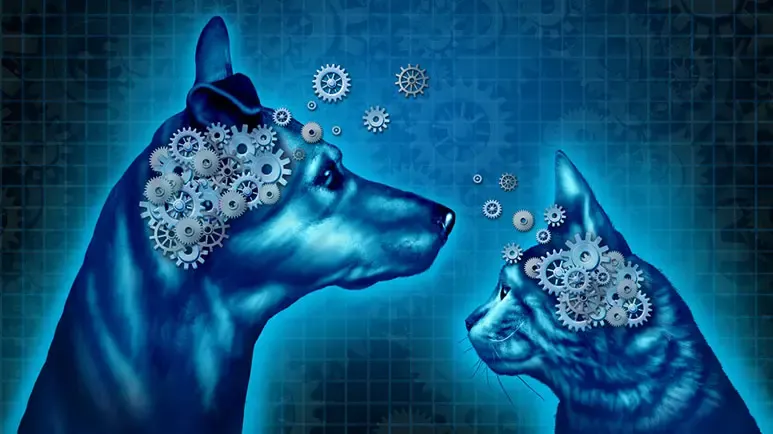
You may notice your dog wandering into corners and forgetting why they went there. Or your cat might start crying in the middle of the night, while staring at a wall. They pace at night. They seem foggy sometimes, or a little more anxious than they used to be. The body is holding up, but the mind seems to be aging on its own timeline.
This mismatch is more common than most pet parents realize, and as dogs and cats live longer, we are seeing more of it. And one of the most talked-about natural supports for the aging pet brain is a shaggy, unusual-looking mushroom called Lion’s Mane.
When the Body Outlasts the Brain
As pets age, they can develop something similar to Alzheimer’s or age-related dementia in humans. In dogs, this is called canine cognitive dysfunction, sometimes referred to as “doggie dementia.” Cats have their own version as well.
Early signs of cognitive dysfunction can be easy to miss or may be dismissed as “just getting old.” They may include:1,2,3
- Confusion, getting stuck in corners or behind furniture, or standing in the wrong room
- Wandering, especially at night
- Restlessness or altered sleep-wake cycles
- Increased anxiety or irritability
- Appetite changes, often showing up as an increased appetite or appetite for foods the pet would not eat previously
- Less interest in play, toys, or familiar people
- Forgotten commands, cues, or household routines
- Vocalizing more, especially at odd hours
- Reduced responsiveness when called by name
Cognitive dysfunction is not something to panic about, but it is worth naming. Once you can see it, you can start doing something about it — and Lion’s Mane is one of the tools that keeps coming up in that conversation.4
What Lion’s Mane Actually Is
Lion’s Mane (Hericium erinaceus) is an edible medicinal mushroom native to hardwood forests in North America, Europe, and Asia. It gets its name from its white, shaggy, cascading appearance that really does look a bit like a lion’s mane.5 It has been used in traditional Chinese medicine for centuries to “nourish the gut and calm the mind.” Buddhist monks reportedly drank Lion’s Mane tea before meditation to sharpen their focus. What is newer is the growing body of research trying to understand exactly how it works.
Lion’s Mane contains a set of bioactive compounds that make it interesting for brain health. Two in particular — hericenones and erinacines — are believed to stimulate the production of nerve growth factor (NGF), a protein essential for the growth, maintenance, and repair of nerve cells.6,7 It also contains beta-glucan polysaccharides, isoindolinones, sterols, and antioxidants that appear to have neuroprotective and anti-inflammatory effects.8
How It Works
Lion’s Mane’s most celebrated action is its ability to support brain health from multiple directions at once. Rather than a singular effect, it appears to work simultaneously on nerve growth, inflammation, oxidative stress, and gut function — which is a rare profile for a single natural ingredient:9,10
- Encouraging NGF production — NGF helps neurons grow, survive, and repair themselves. In animal studies, Lion’s Mane compounds have been shown to help regenerate myelin along damaged nerve fibers11 — the insulation that helps nerves conduct signals properly.
- Reducing brain inflammation — Chronic low-grade inflammation in the brain is a driver of age-related decline. Lion’s Mane has demonstrated anti-inflammatory activity in the nervous system in a range of studies.
- Fighting oxidative stress — The compounds in Lion's Mane are antioxidant-rich, which may help to neutralize the free radicals that damage brain cells over time.
- Supporting the gut-brain axis — Lion’s Mane also acts as a prebiotic, feeding beneficial gut bacteria. Since roughly 70% to 80% of the immune system lives in the digestive tract, and gut health increasingly appears to influence brain health, this matters.
Together, these effects make Lion's Mane one of the more compelling natural options for comprehensively supporting an aging brain — not as a cure, but as a multi-front helper.
What the Research Actually Shows
Most of the strongest research on Lion's Mane comes from preclinical trials, limited human trials, and lab studies in rodents. Direct research in dogs and cats is still emerging. Here is what the evidence looks like right now.
- In human trials with adults who had mild cognitive impairment, taking Lion’s Mane daily for 16 weeks led to significantly improved cognitive scores compared to placebo.12 Notably, when subjects stopped taking it, those improvements faded — suggesting consistent use is what maintains the benefit.13
- A separate 12-week clinical trial in humans found that Lion’s Mane safely enhanced cognitive function on memory and recognition tests.14 A small study also found reductions in anxiety and depression in adults taking Lion’s Mane for four weeks.15
- In canines specifically, a 2022 peer-reviewed study fed aged dogs a diet supplemented with Lion’s Mane for 16 weeks. The dogs receiving the mushroom showed meaningful, favorable shifts in their gut microbiome — beneficial bacteria increased and harmful bacteria decreased. Researchers concluded that Lion’s Mane could “regulate the gut microbial community in aged dogs,” with potential downstream benefits for immunity and metabolic health.16
Formal cognitive trials in dogs are limited so far, but many integrative veterinarians report seeing improvements in their aging patients — better alertness, calmer nights, more engagement — after several weeks of Lion’s Mane. That is real-world observation, not controlled data, but it is consistent with what the underlying science suggests.
Beyond the Brain
While cognitive support is the headliner, Lion’s Mane has a wide-ranging list of other potential effects that make it appealing for senior pets.17,18
- Immune modulation, thanks to its beta-glucans
- Anti-inflammatory and antioxidant properties
- Gut and digestive support, including prebiotic effects
- Support for peripheral nerve regeneration
- Blood sugar regulation in animal studies19,20
- Cardiovascular and metabolic support
This is one reason integrative veterinarians increasingly reach for Lion’s Mane in older dogs and cats. It touches many of the systems that quietly wear down with age at the same time.
Who Might Benefit
Lion's Mane is not just for pets who already have obvious cognitive decline. It is also being used preventively for senior animals whose brains are still working well but who are entering a life stage where support matters. Situations where a veterinarian might consider Lion's Mane include:
- Senior dogs or cats showing early signs of cognitive change
- Older pets with anxiety, especially nighttime restlessness
- Pets with peripheral nerve issues or degenerative myelopathy
- Recovery from spinal cord injuries or disc disease
- Chronic gut issues, inflammatory bowel disease (IBD), or gastritis
- Immune support, including as part of an integrative cancer care plan
- General wellness support for aging animals eating a diet you would like to enrich
This is not a supplement to hand out casually. It is a tool with real biological effects that deserves a conversation with your vet — especially if your pet is on medications or has existing health conditions.
Safety and Side Effects
Lion’s Mane has an excellent safety profile in the research so far. Rodent toxicology studies have used extraordinarily high doses for months without adverse effects, and no serious side effects have been documented in dogs, cats, or humans consuming it long-term. When side effects do happen in pets, they are usually mild and short-lived:21,22,23
- Loose stool or soft stool when first starting
- Mild digestive upset, especially at higher doses on an empty stomach
- Occasional lethargy during the first few days
A few situations warrant extra caution and a veterinary conversation before starting. Do not give Lion’s Mane if your pet is:
- Allergic to mushrooms (rare but real)
- Being given blood thinners or NSAIDs, since Lion’s Mane may slightly affect clotting
- Taking immunosuppressive drugs or have certain autoimmune conditions, since Lion’s Mane stimulates the immune system
- Pregnant or nursing, where safe use has not been established
Bring a list of your pet's medications and supplements to the conversation. Natural does not automatically mean interaction-free.
Dosage Basics
Dosing depends on your pet's size, the concentration of the product, and the reason you are using it. In an Animal Wellness Magazine article, the late Ihor J. Basko, DVM, CVA, shared his common integrative-vet guidelines for powdered Lion’s Mane extract:24
- Prevention or general support — 1/4 teaspoon per 10 pounds body weight, given once daily
- Active health concern — 1/2 teaspoon per 10 pounds body weight, given twice daily
For extract capsules, a rough range often used is around 20 to 40 milligrams (mg) per kilogram of body weight per day. Practically, that lands at roughly 250 mg to 500 mg for a 25-pound dog, 500 mg to 1,000 mg for a 50-pound dog, and 750 mg to 1,500 mg or more for larger breeds.25 Here are a few tips that make dosing easier:
- Start low and build up over three to five days.
- Give it with meals to improve absorption and reduce GI upset.
- Mix powder into warm bone broth or wet food if the taste is a barrier.
- Stay consistent — the effects fade if you stop, so daily use is the goal.
Most owners start noticing subtle changes within two to four weeks. Some pets take longer. Consistency matters more than any single dose.
What to Look for in a Lion’s Mane Supplement
Mushroom supplements vary wildly in quality. If you are going to use Lion’s Mane, spending a little more on a good product is worth it. Keep in mind these tips:26,27
- Fruiting body vs. mycelium — The fruiting body is the actual mushroom. Mycelium is the root-like network, often grown on grain. Some cheap supplements are almost entirely mycelium-on-grain, meaning most of what’s in the bottle is starch, not mushroom. Look for products labeled 100% fruiting body.
- Extraction — Hot-water and dual (hot water plus alcohol) extractions pull out the active compounds much more efficiently than raw powdered mushrooms. Extracts tend to be more potent per gram.
- Beta-glucan content — A quality Lion’s Mane product will disclose its beta-glucan percentage, ideally somewhere in the 20% to 40% range. Vague labels that only mention “polysaccharides” can hide a lot of filler starch.
- Third-party testing — Look for organic sourcing and independent testing for heavy metals, pesticides, and microbial contamination.
- Free of harmful additives — Skip anything with sweeteners like xylitol (highly toxic to dogs) or unfamiliar flavor blends. A pet-specific supplement or a plain, unflavored powder is usually the safest bet.
- Proper packaging — Dark or opaque containers protect the mushroom from light degradation. Check expiration dates.
Setting Realistic Expectations
Lion's Mane is not a miracle cure. It will not reverse advanced dementia, and it does not replace veterinary care for serious conditions, but it may help support the aging brain in a meaningful, low-risk way.
Pet parents with older canine companions often notice effects such as seeming more “present” during the day, less pacing at night, better recognition of familiar people, easier settling into sleep, and slightly more spark than the weeks before. It is nothing dramatic, but it is real and cumulative over time.
This is a supplement that pairs beautifully with the other pillars of senior pet care: high-quality nutrition, regular veterinary checkups (at least twice yearly for older pets), mental enrichment, gentle daily exercise, weight management, and a calm home environment. It complements those areas of health — it does not replace them.
The Bigger Picture
Watching a beloved pet's body outlast their sharpness is one of the harder parts of loving them into their later years. The confusion, the wandering, the little forgotten things — none of it means you are losing them all at once. It just means their brain is entering the same aging conversation their joints and eyes and heart already know.
Lion's Mane is not the answer to every part of that. But it is one of the few natural options with a plausible biological mechanism, a good safety record, and a growing body of supportive research. That combination is rare in the world of supplements.
If your pet is starting to feel a little foggier than they used to, talk to your veterinarian. Ask about Lion's Mane specifically. Ask about a quality product, an appropriate dose, and a reasonable timeline for seeing whether it helps. And keep supporting all the other things — enrichment, food, checkups, and connection — that also help an old brain stay a little sharper for a little longer.
Your pet has been paying close attention to you for their whole life. Returning that attention now, when the wiring is starting to slow, is one of the kindest things you can offer them.
Sources and References
- 1,4,5,6,9,17,21,25,27 Seaweed for Dogs, All about Lion’s Mane Mushrooms for Dogs
- 2,8,10,17,22,24 Animal Wellness Magazine, March 23, 2026
- 3,7,23,26 Woof Doctor on Wheels, Exploring the Benefits of Lion’s Mane Mushroom for Senior Dogs and Cats
- 11 Sci Rep. 2021 Mar 22;11:6551, Results
- 12 Phytother Res. 2009 Mar;23(3):367-72
- 13 Nutrients. 2023 Nov 20;15(22):4842
- 14 Biomedical Research 40(4):125-131, August 2019
- 15 Biomed Res. 2010 Aug;31(4):231-7
- 16 J Anim Sci Technol. 2022 Sep;64(5):937-949
- 19 Sci Rep. 2017 Sep 7;7:10847
- 20 Process Biochemistry, Volume 88, January 2020, Pages 180-188

Better Health Begins in the Bowl
Better Health Begins in the Bowl
The Ultimate Pet Nutrition Guide was created to help dog and cat parents understand what truly supports lifelong health.
In this free guide, you’ll discover:
-

How your pet’s biology influences their nutritional needs
-
Why conventional feeding advice often falls short
-
Practical ways to choose better food for your dog or cat
View our Privacy Policy and Terms of Service.