The 3 AM Zoomies Finally Explained
There is a scientific reason your cat sprints across your face in the middle of the night, and once you know what is really going on inside their body clock, you can nudge those midnight marathons into a much more civilized hour.
Reviewed by Dr. Tracy Duffner




Join the Bark & Whiskers™ Family
Sign up today for our FREE newsletter, packed with expert advice and insider tips to keep your beloved pet in tip-top shape.
View our Privacy Policy and Terms of Service.


STORY AT-A-GLANCE
- Cat zoomies — formally known as Frenetic Random Activity Periods (FRAPs) — are sudden, one-to-two-minute bursts of energy that can hit any cat at any age
- Cats are crepuscular, not nocturnal, meaning their peak activity hours fall around dawn and dusk, which is why zoomies so often line up perfectly with your bedtime
- Other predictable zoomie triggers include after-litter-box sprints, moments of excitement (like you coming home), displaced hunting instinct, and mild stress or overstimulation
- Zoomies can occasionally signal a health issue, especially in older cats — a sudden change in pattern, escalation, or aggression alongside the sprinting can point to hyperthyroidism, feline cognitive dysfunction or flea irritation
- The most effective way to shift the schedule is to burn energy earlier: 10 to 15 minutes of active hunt-style play in the evening, followed by the largest meal of the day, plenty of vertical space and puzzle feeders, and a consistent routine
You bolt upright in bed. Something just thundered past your door. You reach for your phone, ready to call whoever needs calling, and then you see it. A blur of tail rounding the corner. Two glowing eyes. Your cat, looking at you like you are the one behaving strangely.
This is the zoomie. If you have lived with a cat for any length of time, you have witnessed it, usually at the worst possible hour. The good news is that these midnight sprints have a name and a reason. Here is what you can actually do about them.
What Are Zoomies (and Why Does Your Cat Get Them)?
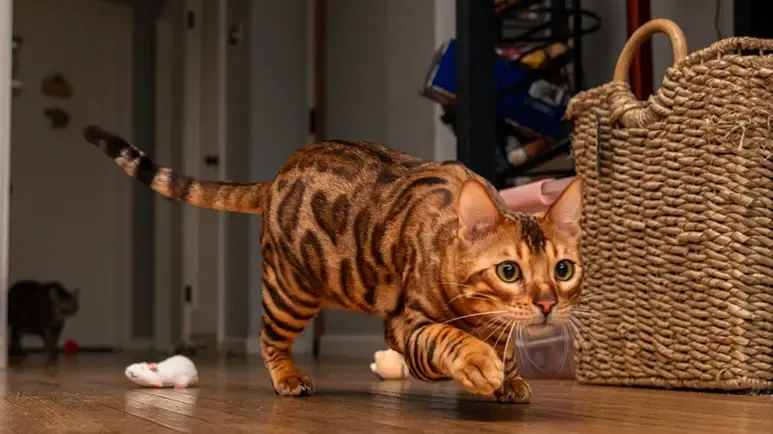
Cat zoomies are those sudden, frenetic bursts of energy that make your cat look like a small furry tornado. Formally, veterinarians and behaviorists call them Frenetic Random Activity Periods (FRAPs).1
They typically last a minute or two. That is because sprinting at full speed burns through a serious amount of energy, and cats are built for short, explosive bursts rather than long endurance. Think sprinter, not marathoner.2
Zoomies can happen at any age and in any personality of cat. The most dignified, reserved lap cat can flip into a track star at 2 a.m. and back again just as quickly.
If your cat's zoomie looks a little wild-eyed, puffed tail, dilated pupils, ears back, that is normal too. It is the physical signature of an animal running at full sensory intensity. Their body is dumping out stored energy in the most efficient way it knows how.3
Why the Middle of the Night?
The biggest clue to the timing lies in a word most cat parents have not heard: crepuscular. Cats are not truly nocturnal. They are crepuscular, which means they are naturally most active at dawn and dusk, the hours when their wild ancestors did their best hunting.
A pet cat's day works something like this: you leave for work, they nap for hours, they nap some more, they nap through the afternoon. By the time you finally settle in for the evening with a book or a show, your cat has essentially finished a long rest and is ready for prime time.4,5
Add in a body clock that quietly whispers hunt now at dusk, and you have the perfect setup for a midnight spectacle. Their peak energy hours often line up almost exactly with your bedtime.6
Other Common Triggers
Nighttime is the classic zoomie hour, but there are a few other predictable ones worth knowing. Learning to recognize the trigger behind a specific sprint often takes some of the mystery — and some of the frustration — out of the moment:7,8
- Post-litter-box sprints — Many cats zoom right after using the box, and yes, this is a real occurrence. Theories vary, some suggest a sense of physical relief, others point to instinctual behavior around leaving no trace behind, others suggest underlying inflammatory bowel disease or bladder pain causing a zoomie after relief of pain from defecating. Either way, it is common and usually harmless,9 but if this happens frequently, should warrant a conversation with your veterinarian.10
- Excitement — A door opening, you walking through the door after work, a new toy, a bird outside the window, any of these can flip the switch.
- Displaced hunting instinct — Domestic cats retain a powerful prey drive. That mad dash from one end of the house to the other is often just a modern version of pouncing and running down invisible dinner.
- Mild stress or overstimulation — Sometimes a zoomie is a release valve after tension has been building up, a new pet in the house, a loud noise, an unfamiliar visitor.
Kittens vs. Adult Cats
Every cat can zoom, but kittens are on another level. Their world is brand new. Every rustling bag, flickering hallway light, or unfamiliar sound is a call to action. Kitten zoomies are more frequent, more dramatic, and often more spontaneous than the adult version.11
The good news is that as kittens grow up, their zoomie sessions typically become less frequent, though usually no less enthusiastic when they do happen.
For kitten households, the fix is patience and outlets. A kitten burning off energy at midnight is doing exactly what nature designed them to do. Structured play in the evening, safe climbing options, and consistent routines all help ease that intensity as they mature.12
When Zoomies Might Signal Something Medical
The vast majority of zoomies are completely normal and healthy. But a few patterns are worth paying attention to, especially when the behavior seems to appear from nowhere or starts to look different from your cat's usual rhythm. Knowing what to watch for can help you catch a health issue early, before it has a chance to become something bigger.13,14,15
- Sudden onset in a previously calm cat — If your normally sedate cat suddenly starts sprinting at all hours, that shift is worth a call to the vet.
- Escalation — Zoomies that are becoming more frequent, more intense, or accompanied by loud vocalization can be a signal to look closer.
- Hyperthyroidism — Common in middle-aged and senior cats, an overactive thyroid can cause restlessness, increased appetite, weight loss, and hyperactivity that can be mistaken for zoomies. It is very treatable when caught early.
- Cognitive dysfunction — Older cats may develop something similar to dementia, which can produce nighttime disorientation, pacing, yowling, and restlessness that can look zoomie-like.
- Fleas or skin irritation — Sometimes what looks like a zoomie is actually a sudden reaction to a bite or an itch. Keeping flea prevention up to date rules this out.
- Aggression or anxiety alongside the zoomies — If the sprinting comes with hissing, growling, or fear signals, that is a good reason to loop in your veterinarian.
The rule of thumb: Normal zoomies fit your cat's usual patterns. Abnormal zoomies do not. A short video of what you are seeing can be genuinely helpful at a veterinary visit, since these bursts are often gone before the exam room door closes.
How to Shift the Midnight Schedule
You cannot rewrite thousands of years of feline evolution, but you can absolutely nudge your cat's clock closer to yours. The core strategy: Burn energy earlier so there is less left over for 3 a.m. Consider doing these:16,17,18
- Play with them intensely before bed — About 10 to 15 minutes of active play in the evening, wand toys, feather teasers, laser pointers ending on a physical toy they can catch, mimics the burst of a real hunt. The goal is to get them panting slightly. That is when you know you have tired them out.
- Follow the hunt with a feast — In the wild, cats hunt, eat, groom, then sleep. You can replicate that cycle at home. After the evening play session, feed your cat their largest meal of the day. A full belly triggers the natural instinct to rest and digest.
- Provide vertical space — Cat trees, wall shelves, and window perches give your cat a place to climb, jump, and observe the world. That kind of enrichment burns mental energy during the day and reduces the need for after-hours sprinting.
- Use puzzle feeders and food-based enrichment — Hiding small amounts of kibble in puzzle toys (or ideally canned food in foraging feeders designed for this) around the house lets your cat hunt throughout the day. An automatic feeder set to dispense a small breakfast early in the morning can also keep hungry cats from becoming the alarm clock at 4 a.m. Dry food is not recommended for cats as more than a treat, so keep kibble to less than 10% of their diet. Wet food automatic feeders and foraging toys are available on the market now and provide options for enrichment that still honor your cat’s needs for higher water content and lower carbohydrate content in their diet.
- Stick to a routine — Cats thrive on predictability. Consistent play times, feeding times, and quiet times help their body clock line up with yours.
Do Not Reward the Behavior
Here is the part most exhausted cat parents get wrong: When you get out of bed at 3 a.m. to hiss at, chase, feed, or play with a zooming cat, you have just handed them a reward. From their perspective, they hunted you and won.
Instead, ignore the behavior in the moment. Redirect them the next day by front-loading exercise, mental stimulation, and food into the evening hours. That is where the real behavior change happens.
If your cat has taken to jumping on the bed and kneading your face during a zoomie, resist the urge to interact. Gently move them off the bed, do not make eye contact, and go back to sleep. It feels heartless in the moment, but it is one of the most effective long-term fixes.19,20
Build a Sleep Sanctuary
A comfortable, warm, secure sleeping spot away from your bedroom can help your cat settle into their own rhythm. High-sided beds, a cozy corner in a quiet room, or a self-warming mat can all help.
Pheromone diffusers (like Feliway) can also help create a calming environment in the evening for cats who are overstimulated or stressed. And a clean, well-maintained litter box is a small detail that matters more than most people realize. Dirty boxes can drive nighttime restlessness.21
A Note on Litter Box Zoomies
If your cat has always sprinted out of the litter box, that is almost certainly normal. But if litter-box zoomies suddenly start showing up in a cat who did not previously do them, or if they are paired with signs of discomfort like straining or vocalizing, that can be an early flag for something like a urinary issue or bowel pain and is worth a call to the veterinarian.22
The Real Secret to a Quiet 3 AM
Your cat is not being possessed in the middle of the night — they are simply being a cat. Their body clock, their prey drive, and their long lazy day have all lined up perfectly to produce a burst of energy that has nowhere else to go.
Occasional zoomies are a sign of a healthy, playful, satisfied cat. Chronic middle-of-the-night sprints are usually a sign that they need more physical and mental engagement earlier in the day. However, a sudden change in the pattern, new zoomies, more intense zoomies, or zoomies with vocalization or aggression, is worth mentioning to your vet.
A little bit of evening play, a proper hunting-style dinner, some good vertical territory, and a firm rule about not rewarding the 3 a.m. sprint. That is usually all it takes to turn the midnight marathon into a sunset stroll, and to give both of you the sleep you actually need.
Sources and References
- 1,4,13,16,19,21 Ploof, June 25, 2026
- 2,6,7,14,17,22 Prydepets, Uncover the Mystery Behind Your Cat's Late-Night Zoomies
- 3,5,8,11,15,18,20 Lords and Labradors, July 21, 2025
- 9 ScienceFocus, August 24, 2025
- 10 Toronto Humane Society, November 8, 2024
- 12 arxiv.org, November 5, 2024

Better Health Begins in the Bowl

Better Health Begins in the Bowl
The Ultimate Pet Nutrition Guide was created to help dog and cat parents understand what truly supports lifelong health.
In this free guide, you’ll discover:
-

How your pet’s biology influences their nutritional needs
-
Why conventional feeding advice often falls short
-
Practical ways to choose better food for your dog or cat
View our Privacy Policy and Terms of Service.