Can This Little Shellfish Keep Your Furry Friend Moving?
A small shellfish from the coast of New Zealand is quietly earning attention in the world of canine joint care. Find out what it can do for your furry friend's well-being.
Reviewed by Dr. Tracy Duffner




Join the Bark & Whiskers™ Family
Sign up today for our FREE newsletter, packed with expert advice and insider tips to keep your beloved pet in tip-top shape.
View our Privacy Policy and Terms of Service.


STORY AT-A-GLANCE
- Osteoarthritis is the number one cause of chronic pain in dogs, with more than 1 in 5 dogs developing progressively worsening joint problems
- Green-lipped mussel, a mollusk native to New Zealand, is rich in a unique combination of joint-supporting compounds
- It works in two ways at once — quieting inflammation through both the COX and LOX pathways (without the digestive and bleeding side effects sometimes associated with NSAIDs) and supplying the building blocks that help maintain, repair, and lubricate joint cartilage
- A Journal of Nutrition study found 83% of dogs on green-lipped mussel had lower pain scores and fewer arthritis signs after six weeks, with Clemson University research showing a number of compounds in green-lipped mussel including ETA can offer pain relief comparable to NSAIDs
- Green-lipped mussel takes weeks to show its full effect, and it works best alongside weight management, regular low-impact exercise, a balanced diet, other joint-supportive supplements like glucosamine and chondroitin, and good veterinary care
There comes a moment many dog parents recognize: your dog hesitates at the bottom of the stairs. They take a beat too long to stand up after a nap. The morning trot turns into a careful walk.
Joint pain in dogs is more common than most people realize, and it is one of the biggest reasons our companions slow down as they age. But there is a small green-lipped shellfish from the coast of New Zealand that has been quietly earning attention for what it might do for those stiff, aching joints — and you do not have to look very far in pet wellness circles before you hear about it.
A Small Mussel with a Long Backstory
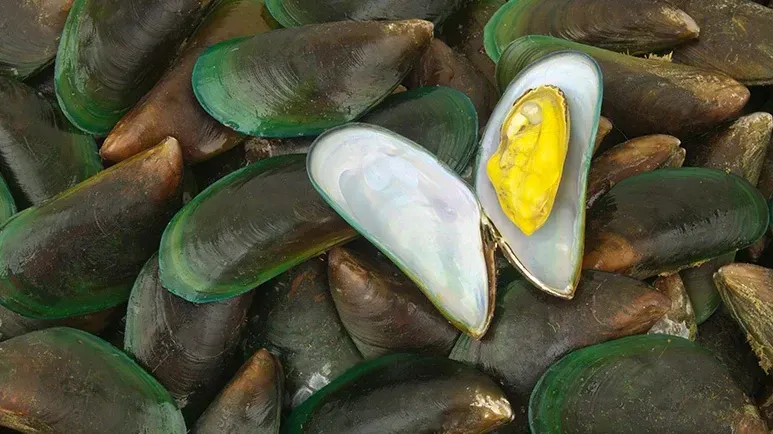
Green-lipped mussel (Perna canaliculus) is a mollusk native to the coastal waters of New Zealand. It gets its name from the bright green band that runs along the lip of its shell.
The story of how scientists got interested in it is a good one. For centuries, the indigenous Maori people of New Zealand have eaten green-lipped mussels as part of their traditional diet. Researchers noticed that coastal Maori communities — the ones with regular access to the mussels — had unusually low rates of joint problems and arthritis compared to Maori living inland. That observation kicked off decades of research into what exactly was in this little shellfish that seemed to be making the difference.1,2
The Joint Problem in Dogs
Before getting into what green-lipped mussel can do, it helps to understand why so many dogs need joint support in the first place.
Osteoarthritis — sometimes called degenerative joint disease — is the number 1 cause of chronic pain in dogs. According to the AKC Canine Health Foundation, more than 1 in 5 dogs will develop progressively worsening joint problems4 in their lifetime. The condition can begin early — it affects roughly 20% of dogs over the age of 1 and up to 80% of dogs over the age of 8.3 Signs of joint trouble can include:5
- Slowing down on walks
- Difficulty rising from a lying position or going up stairs
- Stiffness, especially after rest
- Hesitation to jump or climb
- Visible limping or favoring a leg
- Decreased activity or playfulness
- Discomfort when stroked near the affected joint
Risk factors include age, weight, breed, repetitive stress, prior injuries, and conditions like hip or elbow dysplasia.6
What Is Actually in Green-Lipped Mussel
Green-lipped mussel contains a remarkable combination of compounds that work together to support joints from multiple angles. These include:7,8,9
- Omega-3 fatty acids — These include EPA (eicosapentaenoic acid) and DHA (docosahexaenoic acid), which are known for their anti-inflammatory effects
- Eicosatetraenoic acid (ETA) — A rare form of omega-3 that has been a particular focus of research
- Glycosaminoglycans (GAGs), including glucosamine and chondroitin — The building blocks of healthy cartilage
- Vitamins C and E — Antioxidants that help protect cells from damage
- Minerals like copper, zinc, and selenium — Important for joint tissue health
- Amino acids — These contribute to overall joint structure and function
How It Works
The way green-lipped mussel supports joint health is best understood through its effects on inflammation and on cartilage. On the inflammation side, the EPA and DHA in green-lipped mussel can block an enzyme called cyclooxygenase (COX) that triggers the production of inflammatory chemicals in the body. This is the same general pathway that non-steroidal anti-inflammatory drugs (NSAIDs) target — but with one important difference.
NSAIDs can also block protective enzymes elsewhere in the body, which is why they sometimes cause side effects in the stomach lining or liver. The COX inhibition from green-lipped mussel does not appear to carry that same risk.10,11
Then there is ETA — the rare omega-3 mentioned earlier. ETA blocks a second inflammatory pathway called the LOX pathway, which means green-lipped mussel can quiet inflammation from two angles instead of just one. Researchers at Clemson University have found that ETA in particular has been shown to provide pain relief comparable to NSAIDs.12,13,14
On the structural side, the glycosaminoglycans in green-lipped mussel help build, maintain, and repair joint cartilage. Cartilage is the spongy material that cushions the ends of bones inside a joint, and healthy cartilage is what makes smooth, pain-free movement possible. Green-lipped mussel also appears to stimulate the joint capsule to produce more hyaluronic acid — the substance that gives joint fluid its lubricating, cushioning quality.15,16
What the Research Shows
Studies in both dogs and humans have looked at green-lipped mussel's effects on osteoarthritis. The results, while not unanimous, are generally encouraging.
One study published in the Journal of Nutrition found that 83% of dogs on a green-lipped mussel supplement showed lower pain scores and fewer signs of arthritis after just six weeks.17 A separate Canadian study reported improvements in mobility along with higher blood levels of omega-3s in dogs taking the supplement.18,19
Clinical studies of green-lipped mussel have shown that oral doses given to arthritic dogs over a sufficient period of time were associated with reduced joint pain and inflammation, along with improvements in mobility. When combined with glucosamine and chondroitin, green-lipped mussel contributes to what is considered a well-rounded supplement approach to canine osteoarthritis.20
One caveat worth knowing upfront: green-lipped mussel takes time to work. It is not a fast-acting painkiller. Most veterinarians who use it report seeing improvement in patients after a couple of weeks of consistent daily dosing, though the more dramatic changes tend to show up at six weeks and beyond.21,22
Is It Safe?
Green-lipped mussel has a strong safety profile. Several characteristics make it a relatively gentle option:23
- It has been shown to reduce inflammation effectively while being well tolerated, without the digestive and bleeding side effects sometimes associated with NSAIDs
- New Zealand waters where the mussels are farmed are regularly tested for biotoxins, with strict limits — making contamination risk very low
- There is no established minimum age restriction, and some veterinarians feel comfortable starting it in younger dogs to help maintain joint health proactively
- It has no reported significant interactions with other medications
That said, safe use has not been specifically established in pregnant, lactating, or breeding dogs, so check with your veterinarian in those situations. And as with any supplement, talk to your veterinarian before starting your dog on anything new — especially if they are already on other medications or have existing health conditions.
How to Use It
Green-lipped mussel is widely available in several formats, such as powders (can be sprinkled over food), capsules, soft chews, or treats. Whichever form you choose, a few principles apply:24,25
- Follow the recommended serving guidelines on the label
- Introduce it gradually, particularly with picky eaters
- Look for products that clearly list green-lipped mussel as an active ingredient with the amount in milligrams
- Choose products sustainably sourced from New Zealand, which has strict regulatory oversight
- Give it consistently — daily use is what produces the benefit over time
Even Better in Combination
Most veterinarians do not think of green-lipped mussel as a standalone fix. Its real value tends to show up when it is part of a broader joint care plan that includes:26,27
- Weight management — every extra pound puts more load on already-stressed joints
- Regular, low-impact exercise to keep muscles strong and joints mobile
- A balanced, nutrient-rich diet
- Other joint-supportive nutrients like glucosamine and chondroitin
- Physiotherapy or rehabilitation when needed
- Veterinary-prescribed treatments for advanced cases
When to Call the Vet
Supplements can be helpful, but they are not a substitute for veterinary care. Check in with your vet if you notice:28
- Persistent or worsening stiffness
- Noticeable pain or limping
- Sudden changes in mobility
- Reluctance to do activities they used to enjoy
These can be signs of underlying conditions that need a proper diagnosis and treatment plan. Your veterinarian can help you figure out the right combination of approaches for your dog's specific situation.
The Bottom Line
Joint stiffness in dogs is one of the most common — and one of the most heartbreaking — signs of aging. Watching a dog who used to bound up the stairs hesitate at the bottom is hard. But it is also one of the most addressable problems in canine health, especially when you catch it early.
Green-lipped mussel is one of the more interesting tools in the toolkit. It is a natural source of anti-inflammatory omega-3s (including the rare ETA), the building blocks of cartilage, and a host of supporting vitamins and minerals — all packed into one small shellfish from the coast of New Zealand. The research base is not perfect, but it is promising. The safety profile is strong. And when combined with weight control, gentle exercise, and good veterinary care, it can be a meaningful part of helping your dog stay mobile, comfortable, and engaged in the everyday joys they live for.
Talk to your vet about it. For a dog starting to feel their years, a small shellfish from halfway around the world just might help keep them moving.
Sources and References
- 1,3,6,7,13,20,22,23,27 American Kennel Club, May 26, 2022
- 2,8,10,12,15,18,21,24 Dr. Buzby’s ToeGrips, February 15, 2021
- 4 The Veterinary Journal, Volume 305, June 2024, 106132
- 5,9,16,25,26,28 Veterinary Formula, April 27, 2026
- 11 Inflammopharmacology. 2021 Mar 18;29(4):925–938
- 14 VetriScience, New Research and a Clinical Report on the Use of Perna Canaliculus in the Management of Arthritis
- 17 The Journal of Nutrition, Volume 132, Issue 6, p1634S-1636S, June 2002
- 19 Can J Vet Res. 2013 Jan;77(1):66–74

Better Health Begins in the Bowl

Better Health Begins in the Bowl
The Ultimate Pet Nutrition Guide was created to help dog and cat parents understand what truly supports lifelong health.
In this free guide, you’ll discover:
-

How your pet’s biology influences their nutritional needs
-
Why conventional feeding advice often falls short
-
Practical ways to choose better food for your dog or cat
View our Privacy Policy and Terms of Service.